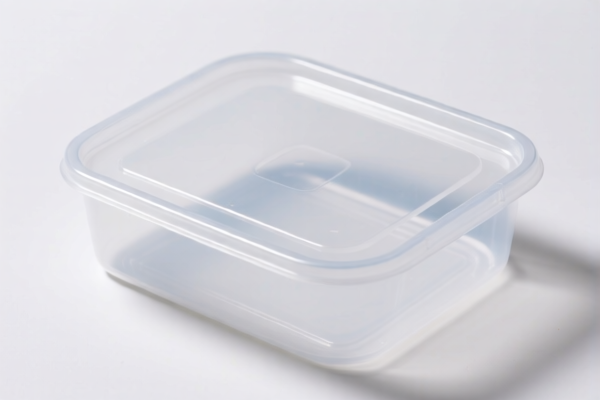
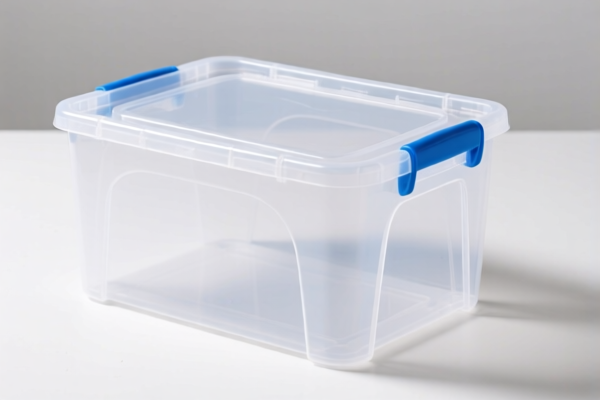
25L Plastic Brake Fluid Container
CN → US| HS Code | Tariff Rate | Origin | Destination | Doc |
|---|---|---|---|---|
| 3926901000 | 20.9% | CN | US | Official Doc |
| 3926909989 | 22.8% | CN | US | Official Doc |
| 3923300090 | 38.0% | CN | US | Official Doc |
| 3923900016 | 38.0% | CN | US | Official Doc |
| 8708305090 | 0.0% | CN | US | Official Doc |
| 8708998180 | 12.5% | CN | US | Official Doc |
Product Images

AI Analysis
🚗 25L Plastic Brake Fluid Container: The Ultimate Guide to HS Code & US Import Duties (2026)
🌐 HS Code Reference & Customs Clearance Strategy | 2026 Tariff Breakdown | Professional Logistics Protocol
📌 One: Product Definition & Classification: Are You Shipping "Buckets" or "Fluid Carriers"?
The 25L Plastic Brake Fluid Container is a specialized vessel used in the automotive industry for transporting, storing, and dispensing brake fluids. Despite its specific use (brake fluid), customs classification in the US relies heavily on its physical characteristics (material, shape, capacity) and function (conveyance vs. storage).
Critical Distinction: * Buckets & Pails: Plastic containers with a capacity of 22.71 liters (6 gallons) or more are legally classified as "Buckets and pails" regardless of what they hold (unless they are specific carboys/bottles with narrow necks). * Carboys/Bottles: Smaller vessels (typically <6 gallons) used for conveyance/packing fall under different sub-headings.
⚠️ Key Differentiator: * If the container is a rigid plastic vessel with a capacity ≥ 22.71 Liters (6 Gallons): It falls under 3923.90.00.16. * If the container is a general "other" plastic article < 22.71L: It falls under 3926.90.10.00 or 3926.90.99.89. * Crucial Warning: Do NOT classify this under 8708 (Vehicle Parts) unless it is an integrated part of the vehicle (e.g., a factory-installed reservoir). A standalone shipping container is Packaging, not a Vehicle Part.
📦 Two: HS Code Classification Details (2026 Tariff Authority)
| HS Code | Product Description | Capacity Threshold | Key Attributes |
|---|---|---|---|
3923.30.00.90 |
Carboys, bottles, flasks, similar articles (Plastic) | < 6 Gallons (22.71L) | Narrow neck, specific for liquids, "Other" category |
3923.90.00.16 |
Buckets and pails, 6 gallons or more | ≥ 6 Gallons (22.71L) | THIS IS YOUR LIKELY CODE for 25L containers |
3926.90.10.00 |
Other plastic articles: Buckets and pails (General) | Any capacity (General) | Less specific than 3923.90 |
3926.90.99.89 |
Other articles of plastics (Miscellaneous) | N/A | Fallback for items not fitting above |
8708.30.50.90 |
Vehicle Parts: Brakes/Servo-brakes | N/A | INCORRECT for standalone containers (Brake fluid container ≠ Brake part) |
8708.99.81.80 |
Vehicle Parts: Other parts (Miscellaneous) | N/A | INCORRECT for standalone packaging |
🔍 Focus Alert: For a 25L container, the capacity alone dictates the primary classification. * 25L > 22.71L (6 Gallons) $\rightarrow$
3923.90.00.16is the most precise fit. * If the container has a specific narrow neck (like a large bottle),3923.30.00.90might apply, but "Bucket/Pail" is the standard for 25L rigid containers.
💰 Three: 2026 Tariff Rate Analysis (Including Additional Taxes)
✅ Applicable Country: United States (US) ✅ Country of Origin: China (CN) ✅ Effective Date: 2025/2026 Trade Rules (Section 301)
🎯 Scenario A: The 25L "Bucket" Classification (3923.90.00.16)
This is the most likely code for a standard 25L plastic bucket.
| Item | Content |
|---|---|
| Base Tariff (MFN) | 3.0% |
| Section 301 Additional Tariff | +25.0% (China-specific punitive tariff) |
| Total Effective Tax | 28.0% |
| Calculation Method | CIF Value × 28% |
| De Minimis Exemption | ❌ NOT APPLICABLE (Commercial shipments only) |
| Legal Basis | HTSUS 3923.90.00.16 + Section 301 Trade Action |
📌 Interpretation: * This is a "Bucked" item. The US treats 25L plastic buckets as a specific category of industrial packaging. * High Risk: The 28% total tariff is significant for low-margin plastic packaging. * No Exemption: There is currently no "De Minimis" (800 threshold) exemption for this specific HS code from China.
🎯 Scenario B: Alternative "Other Plastic" (3926.90.10.00)
If the container is deemed a generic article not fitting the "Bucket" definition perfectly.
| Item | Content |
|---|---|
| Base Tariff | 0.0% |
| Section 301 Additional | 0.0% |
| Total Effective Tax | 0.0% |
| Risk | ⚠️ High Audit Risk if declared incorrectly. Customs may reclassify to 28% and levy back-taxes. |
🎯 Scenario C: The "Vehicle Part" Trap (8708.30.50.90 / 8708.99.81.80)
Common Mistake: Trying to ship brake fluid containers as "Brake Parts".
| Item | Content |
|---|---|
| Base Tariff | 2.5% |
| Section 301 Additional | +25.0% |
| Total Effective Tax | 27.5% (or 2.5% + 25% stacked) |
| Verdict | ❌ Wrong Classification. Standalone packaging is NOT a part of the vehicle. This will lead to severe delays and fines for misclassification. |
🛠️ Four: Customs Clearance Practical Advice (Pitfall Avoidance)
✅ 1. Documentation Checklist (Mandatory)
| Document | Requirement | Why it Matters |
|---|---|---|
| Commercial Invoice | Must explicitly state "Plastic Bucket, 25L, Empty" | Must distinguish from "Brake Fluid" (which might be hazardous) |
| Packing List | Clearly list dimensions and volume | Proof of capacity (25L) is needed to justify 3923.90.00.16 |
| Product Specification | Material (HDPE/LDPE), shape, lid type | Confirms "Plastic" classification under Chapter 39 |
| HS Code Justification | Explanation of why it is NOT a "Carboy" or "Vehicle Part" | Prevents Customs from rejecting the claim for 3926 or 8708 |
| Material Safety Data Sheet (MSDS) | IF CONTAINING FLUID | If shipping with fluid, you need HAZMAT handling. If Empty, state "Empty Container". |
✅ 2. Strategic Declaration Tips
🔥 Golden Rule: "Empty is Easy, Full is Hard, Wrong is Dangerous."
| Situation | Correct Declaration | Incorrect Declaration (Risk) |
|---|---|---|
| Empty 25L Container | "Plastic Bucket, 25L, Empty, for transport of brake fluid" | "Brake Fluid Container" (Ambiguous) |
| Full 25L Container | HAZMAT Declaration Required (UN Class 3) | Declared as "Plastic" (Will result in seizure) |
| Standalone Container | HS 3923.90.00.16 |
HS 8708.30.50.90 (Vehicle Parts) |
| Small Bottle (2L) | HS 3923.30.00.90 |
HS 3923.90.00.16 (Capacity error) |
✅ 3. Special Handling for "Brake Fluid" Context
- If Shipping EMPTY: Ensure the container is triple-rinsed and labeled "Empty". Do not claim it contains hazardous goods unless it is filled.
- If Shipping FILLED: Brake fluid (DOT 3/4/5.1) is a Class 3 Flammable Liquid. You need:
- UN Certification for the container.
- Hazardous Materials Declaration.
- Higher security screening.
- Note: If filled, the classification might shift to 3923.30.00.90 (Articles for conveyance) if the fluid is the primary value, but the container still dictates the HS code. However, the 25L size pushes it towards 3923.90.00.16.
- Crucial: The liquid is hazardous, but the container classification remains 3923.90.00.16. The 28% tariff applies to the container value.
🌍 Five: Global Market Comparison (2026)
| Market | Recommended HS Code | Base Duty | 301/Additional Tax | Total Duty | Note |
|---|---|---|---|---|---|
| 🇺🇸 USA | 3923.90.00.16 |
3.0% | +25.0% | 28.0% | Highest Cost |
| 🇨🇳 China | 3923.90.00.16 |
0.0% | 0.0% | 0.0% | Low cost |
| 🇪🇺 EU | 3923.90.00 |
3.7% | 0.0% | 3.7% | Standard |
| 🇦🇺 Aus. | 3923.90.00 |
3.5% | 0.0% | 3.5% | Low risk |
📌 Conclusion: The US market is the most expensive for importing 25L plastic buckets from China due to the 25% Section 301 surcharge. * Strategy: If possible, source these containers from Vietnam, Thailand, or Mexico to avoid the 25% penalty. * Warning: Ensure the "Made in" label is accurate. Transshipment (shipping from China to Vietnam then to US) is a fraud risk and can lead to massive fines.
📌 Six: Common Mistakes & Avoidance Guide (Blood & Tears Lessons)
❌ Mistake 1: Misclassifying as "Vehicle Part" (8708)
* Result: Customs rejects it as "Non-Vehicle Part".
* Consequence: 27.5% Tax applied anyway, plus delays and storage fees.
* Fix: Clearly state "Empty Packaging" or "Container", not "Brake Part".
❌ Mistake 2: Ignoring the 6-Gallon Threshold
* Result: Declaring 25L as "Bottle/Carboy" (3923.30).
* Consequence: 0% Duty might be claimed, but Customs will reclassify to 3923.90.00.16 and demand 28%.
* Fix: Verify capacity. 25L = 6.6 Gal > 6 Gal. Must be 3923.90.00.16.
❌ Mistake 3: Shipping "Brake Fluid" without Hazardous Declaration * Result: Cargo seizure at port. * Consequence: Total Loss + Fines. * Fix: If filled, use proper HAZMAT shipping. If empty, state "Empty".
✅ Correct Action:
"Plastic Bucket, 25 Liters Capacity, Polyethylene Material, Empty, For Transport of Brake Fluid, HS Code 3923.90.00.16."
🎯 Seven: Final Verdict & Action Plan
🎯 The Bottom Line:
For a 25L Plastic Brake Fluid Container (Empty):
1. HS Code: 3923.90.00.16 (Buckets/Pails ≥ 6 Gallons).
2. Total Duty: 28.0% (3% Base + 25% Section 301).
3. Risk: High. Do not attempt to classify as vehicle parts.
🔹 Pro Tip: "Check the Gallon Count! 25 Liters is bigger than 6 Gallons. If you ship from China, pay 28% or find a non-China supplier!" 🔹 Cost Saving: "Calculate your margin. 28% on plastic buckets eats 25% of your profit. Consider sourcing from Vietnam."
📌 Final Reminder: Always request an Advance Ruling (Binding Ruling) from US Customs (CBP) if your shipment is high-volume. It provides legal certainty and protects you from future audits.
📣 Ready to Ship?
📞 Contact your freight forwarder with the Specs (25L, Plastic, Empty). 🚀 Avoid the "Vehicle Part" Trap! 💼 Your Margin depends on the correct HS Code!
✨ Professional Customs Compliance Starts with Accuracy! 💰 Every percentage point saved is pure profit!
Customer Reviews
About HS Code Classification
The Harmonized System (HS) is an internationally standardized nomenclature developed by the World Customs Organization (WCO) to classify traded products. Over 200 countries use the HS system as the basis for customs tariffs, trade statistics, and import/export regulations.
Each HS code follows a hierarchical structure:
- Chapter (2 digits) — Broad category of goods (e.g., Chapter 84: Machinery and Mechanical Appliances)
- Heading (4 digits) — More specific grouping within the chapter
- Subheading (6 digits) — Internationally standardized breakdown, used by all WCO member countries
- National subdivisions (8-10 digits) — Country-specific extensions for further classification, such as US HTSUS 10-digit codes
Correct HS code classification is essential for smooth customs clearance, accurate duty payment, and compliance with trade regulations. Misclassification can lead to customs delays, overpayment of duties, or penalties.
When importing from CN to US, the applicable tariff rates may include:
- Most-Favored-Nation (MFN) rate — The standard duty rate applied to WTO members
- General rate — Applied to countries without trade agreements
- Trade remedy duties — Additional tariffs such as Section 301 (anti-dumping), Section 232 (national security), or countervailing duties
The information provided on this page is for reference purposes only. For official classification, please consult with your local customs authority or a licensed customs broker.