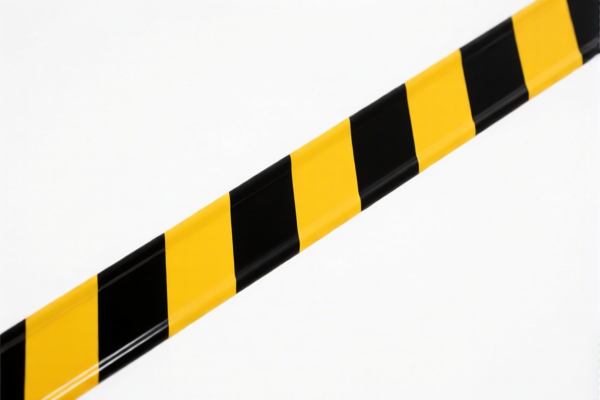
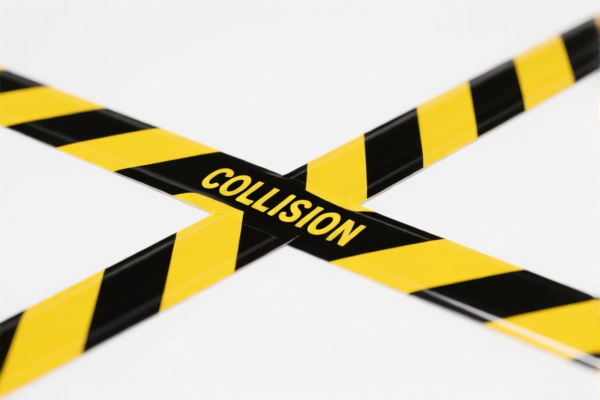
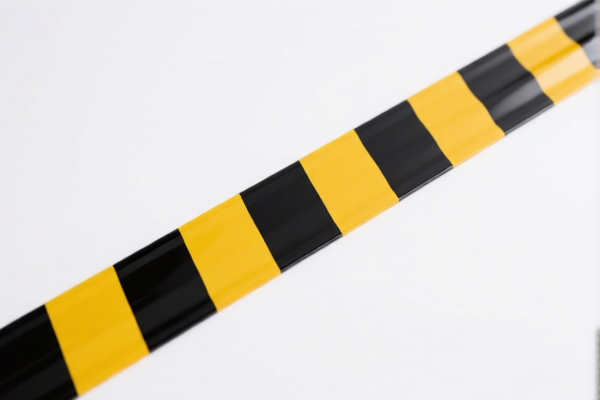
2m White Anti Collision Strip
CN → US| HS Code | Tariff Rate | Origin | Destination | Doc |
|---|---|---|---|---|
| 7326908688 | 87.9% | CN | US | Official Doc |
| 4016940000 | 39.2% | CN | US | Official Doc |
| 3926906090 | 39.2% | CN | US | Official Doc |
| 3926909940 | 22.8% | CN | US | Official Doc |
| 3919101050 | 41.5% | CN | US | Official Doc |
Product Images

AI Analysis
🛡️ Anti-Collision Strip (2m White)
🌐 HS Code Reference & Customs Clearance Guide | 2026 Latest Tariff Breakdown | Professional Logistics Strategy
📌 I. Product Definition & Classification: What Exactly is an "Anti-Collision Strip"?
The 2m White Anti-Collision Strip is a protective barrier component primarily used in warehouses, factories, loading docks, and vehicle ramps to prevent impact damage to walls, columns, and equipment from forklifts, pallet jacks, or trucks.
In international trade, classification depends heavily on Material Composition and Specific Application. Misclassification is the #1 cause of customs delays and unexpected tax liabilities.
⚠️ Critical Distinction:
- Is it Metal/Steel? → Industrial hardware category.
- Is it Rubber/Elastomer? → Marine/Transport protection category.
- Is it Plastic/PVC? → General plastics category.
- Is it Self-adhesive Tape? → Adhesive plastics category.
📦 II. HS Code Classification Details (2026 Latest Tariff Authority Mapping)
Based on the material inference, here are the four most likely HS Code pathways. You must select the one that matches your physical product.
| HS Code | Product Description | Material Inference | Application Scenario |
|---|---|---|---|
7326.90.86.88 |
Other articles of iron/steel, not elsewhere specified | Iron/Steel | Heavy-duty metal guards for industrial racking or heavy machinery. |
4016.94.00.00 |
Other articles of vulcanized rubber, nautical or for transport | Vulcanized Rubber | Marine bumpers, dock fenders, or heavy-duty rubber guards for loading docks. |
3926.90.60.90 |
Other plastic articles, strips, bands, etc. | Plastic (Rigid/Flexible) | General-purpose plastic guards, PVC edge guards for walls or shelves. |
3926.90.99.40 |
Other plastic articles, strips/bands | Plastic (Strip Form) | Thin plastic strip guards, often used for lighter duty or aesthetic protection. |
3919.10.10.50 |
Self-adhesive plastic plates, sheets, film, foil, tape, etc. | Plastic (Adhesive/Tape) | White adhesive tape or strip applied directly to surfaces for collision marking/protection. |
🔍 Key Reminder:
- Rubber (4016.94.00.00) is specifically for "nautical/transport" or heavy-duty damping. If it’s just a simple plastic guard, do not use this code.
- Steel (7326...) incurs the highest tariff burden due to Section 232 tariffs on steel/aluminum.
- Plastic (3926...or3919...) offers varied tax rates depending on whether it is rigid, flexible, or adhesive.
💰 III. 2026 Latest Tariff Rate Breakdown (Including Surcharges & Policy Add-ons)
✅ Applicable Country: United States (US)
✅ Origin: China (CN)
✅ Effective Date: November 10, 2025 onwards (includes subsequent imports)
🎯 1. 7326.90.86.88 —— Articles of Iron/Steel
| Item | Content |
|---|---|
| Base Rate | 2.9% (ad valorem) |
| USITC Additional Duty (Section 301) | +25.0% |
| Section 232 Additional Duty | +10.0% (Specifically for steel/aluminum products under Section 232) |
| Other Anti-Dumping/Countervailing | +50.0% (If applicable under specific 122 clauses for steel/aluminum/copper) |
| Total Tax Rate | 87.9% |
| Tax Calculation | CIF Value × 87.9% |
| De Minimis Eligibility | ❌ No (deny_de_minimis) |
| Legal Basis Path | USITC:7326.90.86.88 → Section 232: Steel → Section 301: Footnote 9903.88.01 |
📌 Explanation:
- This is the highest tariff bucket due to the combination of Section 301 (25%) and Section 232 (10% or 50% depending on specific steel product codes).
- Warning: If your product is not truly steel but labeled as such, or vice versa, this error can lead to severe penalties.
🎯 2. 4016.94.00.00 —— Vulcanized Rubber Articles (Nautical/Transport)
| Item | Content |
|---|---|
| Base Rate | 4.2% |
| USITC Additional Duty (Section 301) | +25.0% |
| Section 232 Additional Duty | N/A (Applies to steel/aluminum, not rubber) |
| Other Surcharges | +10.0% (If classified under specific 122 clauses for certain rubber goods) |
| Total Tax Rate | 39.2% |
| Tax Calculation | CIF Value × 39.2% |
| De Minimis Eligibility | ❌ No |
| Legal Basis Path | USITC:4016.94.00.00 → Section 301: Footnote 9903.01.24 |
📌 Explanation:
- This code is for rubber fenders/bumpers used in maritime or heavy transport.
- If your product is a simple rubber strip for a warehouse, verify if it meets the "nautical/transport" definition. If not, this code may be challenged.
🎯 3. 3926.90.60.90 —— Other Plastic Articles (Strips/Bands)
| Item | Content |
|---|---|
| Base Rate | 4.2% |
| USITC Additional Duty (Section 301) | +25.0% |
| Section 232 Additional Duty | N/A |
| Other Surcharges | +10.0% (122 Clause) |
| Total Tax Rate | 39.2% |
| Tax Calculation | CIF Value × 39.2% |
| De Minimis Eligibility | ❌ No |
| Legal Basis Path | USITC:3926.90.60.90 → Section 301: Footnote 9903.01.24 |
📌 Explanation:
- Suitable for rigid or semi-rigid plastic guards (e.g., PVC corner guards).
- Moderate tax burden, but still high due to Section 301.
🎯 4. 3926.90.99.40 —— Other Plastic Articles (Strips/Bands)
| Item | Content |
|---|---|
| Base Rate | 5.3% |
| USITC Additional Duty (Section 301) | +7.5% |
| Section 232 Additional Duty | N/A |
| Other Surcharges | +10.0% (122 Clause) |
| Total Tax Rate | 22.8% |
| Tax Calculation | CIF Value × 22.8% |
| De Minimis Eligibility | ❌ No |
| Legal Basis Path | USITC:3926.90.99.40 → Section 301: Footnote 9903.01.24 |
📌 Explanation:
- This is a more favorable rate for certain plastic strips/bands not specified elsewhere.
- Recommendation: If your plastic strip qualifies under this specific sub-heading, it saves significant duty compared to other plastic codes.
🎯 5. 3919.10.10.50 —— Self-Adhesive Plastic Tape/Strip
| Item | Content |
|---|---|
| Base Rate | 6.5% |
| USITC Additional Duty (Section 301) | +25.0% |
| Section 232 Additional Duty | N/A |
| Other Surcharges | +10.0% (122 Clause) |
| Total Tax Rate | 41.5% |
| Tax Calculation | CIF Value × 41.5% |
| De Minimis Eligibility | ❌ No |
| Legal Basis Path | USITC:3919.10.10.50 → Section 301: Footnote 9903.01.24 |
📌 Explanation:
- Only applies if the product is self-adhesive (has glue backing).
- If it’s a rigid clip-on guard, do not use this code. Misclassification here is common.
🛠️ IV. Customs Clearance Practical Advice (Real-World Pitfall Guide)
✅ 1. Document Checklist (Non-Negotiable)
| Document | Required? | Explanation |
|---|---|---|
| ✅ Product Specification Sheet | ✔️ | Must clearly state: Material (PVC, Rubber, Steel), Dimensions (2m), Application (Warehouse, Dock, etc.) |
| ✅ Material Test Report | ✔️ | Third-party lab report confirming material composition (e.g., Vulcanized Rubber vs. Thermoplastic). |
| ✅ Product Photos | ✔️ | Show cross-section, adhesive side (if any), and installation context. |
| ✅ Commercial Invoice | ✔️ | Must NOT just say "Strip." Use precise terms: "2m White PVC Anti-Collision Guard, Non-Adhesive." |
| ✅ HS Code Pre-Ruling | ✔️ | Highly recommended for steel/plastic hybrids or ambiguous rubber products. |
| ✅ Packing List | ✔️ | Detail quantity per box, net/gross weight. |
✅ 2. Declaration Tips (Critical Keywords)
🔥 “Material is King, Function is Queen, Name Must Match!”
| Scenario | Correct Declaration | Wrong Declaration | Consequence |
|---|---|---|---|
| Steel Guard | "Steel Anti-Collision Guard, 2m, Industrial" | "Plastic Strip" | ❌ 87.9% Tax + Penalty for misdeclaration |
| Rubber Fender | "Vulcanized Rubber Dock Bumper, 2m" | "Plastic Guard" | ❌ 39.2% Tax (Correct) vs. 22.8% (Wrong code) → Audit Risk |
| PVC Corner Guard | "PVC Edge Guard Strip, 2m, Non-Adhesive" | "Adhesive Tape" | ❌ 39.2% (Correct) vs. 41.5% (Wrong code) → Overpayment |
| Adhesive Tape | "Self-Adhesive White Plastic Strip, 2m" | "Rigid Guard" | ❌ 41.5% (Correct) vs. 22.8% (Wrong code) → Audit Risk |
✅ 3. Special Situations
| Situation | Handling Advice |
|---|---|
| Hybrid Products (e.g., Steel core with Rubber coating) | Declare based on essential character. Usually, if rubber coating is thin, it may still be steel. If rubber is thick, it may be rubber. Provide cross-section photo. |
| White Color Marking | If the product is purely for visual marking (reflective tape), it may fall under different codes. Ensure it’s not just a "marking" but a "protection" item. |
| Custom Dimensions | If length varies, declare as "Custom Length" or standard "2m" as per invoice. Consistency is key. |
🌍 V. Global Market Clearance Comparison (2026 Latest)
| Country/Region | Recommended HS Code | Est. Tariff (China Origin) | Certification | Notes |
|---|---|---|---|---|
| 🇺🇸 USA | 3926.90.99.40 (Plastic) or 4016.94.00.00 (Rubber) |
22.8% - 39.2% | None specific | Steel (7326) hits 87.9% → Avoid if possible. |
| 🇨🇳 China | 3926.90.90.90 |
5-6% | N/A | Low duty, no Section 301. |
| 🇪🇺 EU | 3926.90.97 |
0-6.5% | CE (if applicable) | No Section 301 equivalents, but anti-dumping may apply. |
| 🇬🇧 UK | 3926.90.90 |
0-6.5% | UKCA | Post-Brexit rules align closely with EU. |
| 🇯🇵 Japan | 3926.90.90 |
0-5% | JIS | Very competitive market. |
📌 Conclusion:
- USA is the most expensive market due to Section 301 and Section 232 tariffs.
- Plastic (3926...) is generally safer and cheaper than Steel (7326...).
- Rubber (4016...) is mid-range but requires proof of "nautical/transport" use.
📌 VI. Common Errors & Pitfalls (Blood Lessons)
❌ Error 1: Declaring Steel guards as Plastic to avoid Section 232 tariffs.
👉 Consequence: Customs inspection reveals steel core → 87.9% tax + fraud penalties.
❌ Error 2: Using 3919.10.10.50 (Adhesive) for a non-adhesive rigid strip.
👉 Consequence: Rate difference (41.5% vs 22.8%) → Overpayment or audit flag.
❌ Error 3: Ignoring the "122 Clause" surcharges.
👉 Consequence: Some plastic/rubber items have additional 10% surcharges. Total tax might be higher than expected.
❌ Error 4: Vague Description "Anti-Collision Strip."
👉 Consequence: Customs cannot determine material → Manual Inspection Delay (7-14 days).
✅ Correct Practice:
"2m White PVC Anti-Collision Guard, Rigid, Non-Adhesive, Industrial Warehouse Use"
HS Code:3926.90.99.40→ 22.8% Total Tax
🎯 VII. Conclusion: Professional Declaration, Cost Savings, Efficient Clearance
🎯 Remember the Mantra:
🔹 "Steel is 87%, Rubber is 39%, Plastic Strip is 22%!"
🔹 "Know your material, know your tax, save your margin!"
📌 Pro Tip:
If your product is exported to Vietnam, Mexico, or Thailand before entering the US, you may be eligible for IEEPA Exemptions or lower Section 301 rates.
Recommendation: Apply for an HS Code Pre-Ruling with US Customs (CBP) before bulk shipment to lock in the correct rate and avoid surprises.
📣 Immediate Action:
📞 Contact a licensed customs broker + Provide product photos + Request HS Code Pre-Ruling
🚀 Ensure your 2m White Anti-Collision Strip clears customs smoothly, efficiently, and profitably!
✨ Professional Customs Clearance Starts with Precise Classification!
💼 Every cent of duty saved is pure profit!
Customer Reviews
About HS Code Classification
The Harmonized System (HS) is an internationally standardized nomenclature developed by the World Customs Organization (WCO) to classify traded products. Over 200 countries use the HS system as the basis for customs tariffs, trade statistics, and import/export regulations.
Each HS code follows a hierarchical structure:
- Chapter (2 digits) — Broad category of goods (e.g., Chapter 84: Machinery and Mechanical Appliances)
- Heading (4 digits) — More specific grouping within the chapter
- Subheading (6 digits) — Internationally standardized breakdown, used by all WCO member countries
- National subdivisions (8-10 digits) — Country-specific extensions for further classification, such as US HTSUS 10-digit codes
Correct HS code classification is essential for smooth customs clearance, accurate duty payment, and compliance with trade regulations. Misclassification can lead to customs delays, overpayment of duties, or penalties.
When importing from CN to US, the applicable tariff rates may include:
- Most-Favored-Nation (MFN) rate — The standard duty rate applied to WTO members
- General rate — Applied to countries without trade agreements
- Trade remedy duties — Additional tariffs such as Section 301 (anti-dumping), Section 232 (national security), or countervailing duties
The information provided on this page is for reference purposes only. For official classification, please consult with your local customs authority or a licensed customs broker.