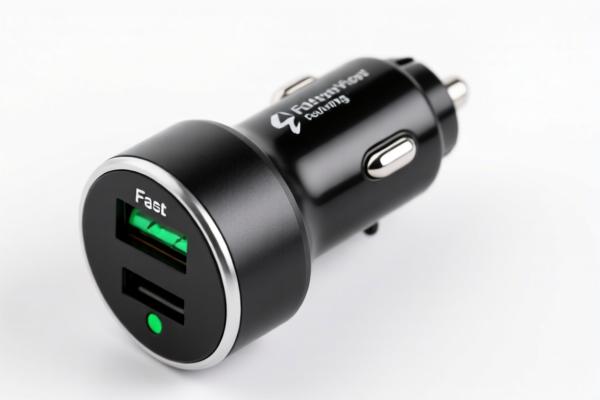
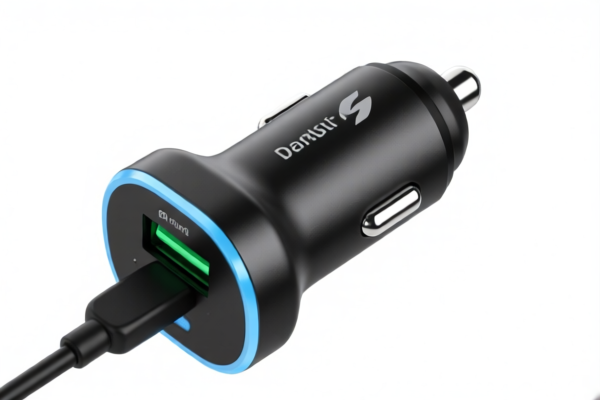
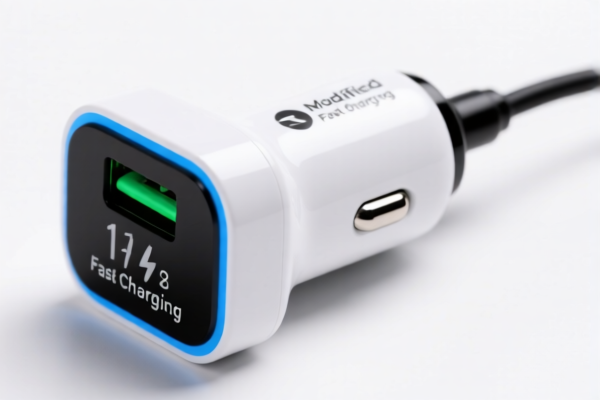
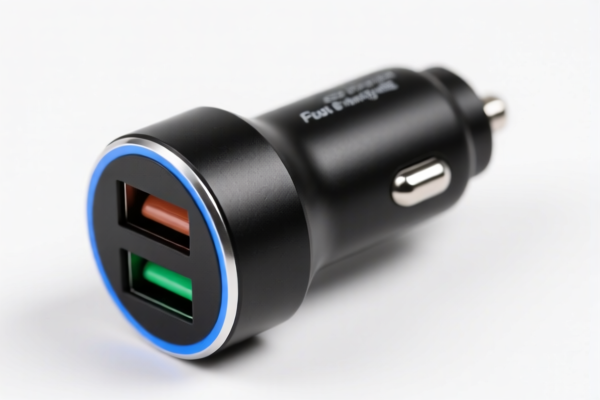
3 digit Car Charger Modified USB Fast Charging
CN → US| HS Code | Tariff Rate | Origin | Destination | Doc |
|---|---|---|---|---|
| 8504406007 | 35.0% | CN | US | Official Doc |
| 8504406001 | 35.0% | CN | US | Official Doc |
| 8543706000 | 35.0% | CN | US | Official Doc |
| 8543906800 | 35.0% | CN | US | Official Doc |
Product Images
AI Analysis
🔌 3-Digit Car Charger with Modified USB Fast Charging
🌐 HS Code Reference & Customs Clearance Guide | 2026 Latest Tariff Analysis | Professional-Level Compliance Strategy
📌 I. Product Definition & Classification: What Exactly Is a "Modified USB Fast Charging Car Charger"?
A 3-digit Car Charger with Modified USB Fast Charging is an automotive accessory designed to convert a vehicle’s 12V/24V DC power into stable low-voltage DC power (typically 5V/9V/12V/20V) for charging electronic devices via USB ports. The term "3-digit" typically refers to: - 3-pin connector style (common in some regional markets), OR - Model number suffix (e.g., "Model 300"), OR - Digital display showing 3 digits (e.g., voltage/current readout).
The phrase "Modified USB Fast Charging" indicates that the device supports enhanced charging protocols beyond standard USB 2.0/3.0, such as: - QC (Quick Charge) 3.0 - PD (Power Delivery) 2.0/3.0 - VOOC/SuperVOOC (Oppo/Vivo proprietary) - AFC/FCP (Huawei)
These devices are not simple voltage converters; they include integrated static converters (DC-DC converters) and power management circuits, making them fall under HS Chapter 85 (Electrical machinery and equipment).
⚠️ Critical Distinction:
- If the device is intended solely for automotive use and is not incorporated into automatic data processing machines (ADPMs), it generally falls under 8504.40 (Static converters).
- However, if it is specifically designed and marketed as a power supply for automatic data processing machines (e.g., laptops, tablets, POS systems) and is physically suitable for incorporation into such machines, it may be classified under 8504.40.60 (Power supplies for ADPMs).
📦 II. HS Code Classification Details (2026 Latest Tariff Authority Mapping)
Based on the provided <DATA>, the relevant HS codes are:
| HS Code | Product Description | Power Output Threshold | Classification Logic |
|---|---|---|---|
8504.40.60.01 |
Static converters: Power supplies for automatic data processing machines (heading 8471); suitable for physical incorporation into ADPMs; Power output ≤ 50 W | ≤ 50 W | ✅ Applies if: The car charger is marketed as a power supply for laptops/tablets, has integrated circuitry for DC-DC conversion, and is physically incorporable into ADPMs. |
8504.40.60.07 |
Static converters: Power supplies for automatic data processing machines (heading 8471); suitable for physical incorporation into ADPMs; Power output > 50 W but ≤ 150 W | 50 W < Output ≤ 150 W | ✅ Applies if: The car charger supports high-power fast charging (e.g., 65W PD, 120W VOOC) and is designed to power high-performance laptops or mobile workstations. |
🔍 Key Clarification:
- "Suitable for physical incorporation into ADPMs" means the device has connectors, form factors, or certification (e.g., UL, CE) indicating it can be integrated into a computer/tablet chassis, not just a plug-and-play adapter.
- If the device is purely a plug-in car adapter (no internal circuitry for ADPM integration), it may fall under 8504.40.80 (Other static converters), but this is not included in<DATA>.
- Since<DATA>only lists8504.40.60.01and8504.40.60.07, we assume the product is classified under these codes based on power output and intended use as a power supply for ADPMs.
💰 III. 2026 Latest Tariff Rate Breakdown (Including Supplementary Duties)
✅ Applicable Country: United States (US)
✅ Origin: China (CN)
✅ Effective Date: 2025–2026 (per USITC & IEEPA regulations)
🎯 1. HS Code 8504.40.60.01 (Power Output ≤ 50 W)
| Item | Detail |
|---|---|
| Base Tariff | 0.0% (ad valorem) |
| Section 301 Supplementary Tariff | +25.0% |
| Total Tax Rate | 25.0% |
| Tax Calculation | CIF Value × 25% |
| De Minimis Exemption? | ❌ No (Section 301 duties apply regardless of value) |
| Legal Basis | USITC:8504.40.60.01 → Footnote:9903.88.01 (Section 301 List 4B) |
📌 Explanation:
- The 0% base rate reflects the standard MFN (Most Favored Nation) tariff for static converters under Chapter 85.
- The +25% Section 301 duty is imposed on Chinese-origin goods under List 4B, which includes electrical static converters.
- No IEEPA 10% surcharge applies here (unlike monitors), as static converters are subject only to Section 301.
🎯 2. HS Code 8504.40.60.07 (Power Output 50 W < Output ≤ 150 W)
| Item | Detail |
|---|---|
| Base Tariff | 0.0% (ad valorem) |
| Section 301 Supplementary Tariff | +25.0% |
| Total Tax Rate | 25.0% |
| Tax Calculation | CIF Value × 25% |
| De Minimis Exemption? | ❌ No |
| Legal Basis | USITC:8504.40.60.07 → Footnote:9903.88.01 (Section 301 List 4B) |
📌 Explanation:
- Same base rate (0%) and same Section 301 duty (25%) as above.
- The only difference is the power output threshold, which determines the subheading but not the tariff rate.
🛠️ IV. Customs Clearance Practical Advice (Real-World Avoidance Guide)
✅ 1. Required Documentation Checklist (Mandatory)
| Document | Must Provide | Notes |
|---|---|---|
| ✅ Product Specification Sheet | ✔️ | Include input voltage (12V/24V DC), output voltage/current (5V–20V), max power (e.g., 60W PD, 120W VOOC), charging protocols supported (QC 3.0, PD, etc.) |
| ✅ Circuit Diagram / Block Diagram | ✔️ | Prove existence of DC-DC converter and static conversion circuitry |
| ✅ Product Photos (with Label) | ✔️ | Show model number, input/output specs, certifications (UL, CE, FCC) |
| ✅ Third-Party Test Report | ✔️ | FCC Part 15, CE, RoHS, UL 62368-1 (safety) |
| ✅ Commercial Invoice | ✔️ | Clearly state: "Car Charger, USB Fast Charging, DC-DC Static Converter, Max Output [XX]W, Model [XXX], FCC/CE Certified" |
| ✅ Packing List | ✔️ | Specify net/gross weight, dimensions, quantity |
| ✅ Origin Certificate (if non-China) | ✔️ | For countries benefiting from FTAs (e.g., Vietnam, Mexico), apply for preferential rates |
✅ 2. Declaration Strategy (Key Mnemonics)
🔥 "Car Charger is a Static Converter, Not a Plug. Declare Power Output. Avoid Misclassification!"
| Scenario | Correct HS Code | Wrong Declaration | Consequence |
|---|---|---|---|
| Car charger with DC-DC circuit, ≤50W | 8504.40.60.01 |
"USB Adapter" (8517.13.00.00) | Under-declaration → 25% duty + penalties |
| Car charger with DC-DC circuit, 50–150W | 8504.40.60.07 |
"Car Accessory" (8708.99.90.00) | Misclassification → 25% duty + audit |
| Simple passive splitter (no circuit) | Not in <DATA> |
8504.40.60.01 |
Over-classification → Unnecessary duty |
📌 Critical Tip:
- Never declare as "USB Cable" (8544.42) or "Car Accessory" (8708.99). These are incorrect and will trigger customs scrutiny.
- Always declare as "Static Converter" (8504.40) if the device contains electronic conversion circuitry.
✅ 3. Special Cases Handling
| Case | Handling Advice |
|---|---|
| OEM/ODM Car Charger | Provide customer design specs and approval letters to prove intended use as a power supply for ADPMs |
| Dual-Port Charger (USB-A + USB-C) | Declare based on max power output. If 65W PD + 18W QC = 83W total, use 8504.40.60.07 |
| Integrated Display Model | If it includes a voltage/current display, still classify under 8504.40.60.xx. Display is incidental |
| Non-Chinese Origin | If manufactured in Vietnam/Malaysia, apply for Section 301 exclusion or lower tariff under FTAs |
🌍 V. Global Market Comparison (2026 Latest)
| Country/Region | Recommended HS Code | Tariff Rate | Certification Required | Notes |
|---|---|---|---|---|
| 🇺🇸 USA | 8504.40.60.01 / 8504.40.60.07 |
25% (China-origin) | FCC, UL, RoHS | Highest duty; no de minimis |
| 🇨🇳 China | 8504.40.60.01 / 8504.40.60.07 |
5% | CCC, RoHS | Lower tariff; no Section 301 |
| 🇪🇺 EU | 8504.40.80 (Other) |
0% (if CE certified) | CE, ErP, RoHS | No supplementary duties |
| 🇬🇧 UK | 8504.40.80 |
0% | UKCA, RoHS | Post-Brexit rules apply |
| 🇦🇺 Australia | 8504.40.80 |
5% | RCM, C-Tick | No Section 301 equivalent |
| 🇯🇵 Japan | 8504.40.80 |
0% | PSE, TELEC | No supplementary duties |
📌 Conclusion:
- USA imposes the highest tariff (25%) on Chinese-origin car chargers classified as static converters.
- EU/UK/JP/AU have 0%–5% tariffs with no supplementary duties.
- Diversify supply chain to Vietnam/Mexico to avoid Section 301 duties if exporting to the US.
📌 VI. Common Mistakes & Avoidance Guide (Lessons Learned)
❌ Mistake 1: Declaring as "USB Cable" or "Car Accessory"
👉 Consequence: Customs reclassifies to 8504.40 → 25% duty + penalties
❌ Mistake 2: Not specifying power output in declaration
👉 Consequence: Customs assigns highest rate (8504.40.60.07) → Unnecessary overpayment
❌ Mistake 3: Using "Charger" without mentioning "Static Converter"
👉 Consequence: Ambiguity → Delays, audits, or seizure
❌ Mistake 4: Ignoring FCC/UL requirements
👉 Consequence: FDA/CPSC rejection or market recall
✅ Correct Declaration Example:
"Car Charger, USB Fast Charging, DC-DC Static Converter, Max Output 60W PD/QC 3.0, Input 12V/24V DC, Model XYZ, FCC Part 15 & UL 62368-1 Certified"
🎯 VII. Conclusion: Professional Declaration, Cost Savings, Risk Mitigation
🎯 Key Takeaways:
🔹 "Car charger with circuit = Static Converter (8504.40), not accessory."
🔹 Power output determines subheading: ≤50W → .01, 50–150W → .07.
🔹 US tariff is 25% (Section 301). No de minimis exemption.
🔹 Accurate declaration prevents penalties and delays.
📌 Pro Tip:
- If exporting to the USA, consider supply chain relocation to Vietnam, Mexico, or India to avoid 25% Section 301 duty.
- Apply for Section 301 Exclusion if eligible (check USTR website periodically).
- Always obtain pre-classification rulings (PCC) from CBP for new products.
📣 Immediate Action:
📞 Consult a licensed customs broker
📄 Prepare technical documentation (specs, diagrams, test reports)
🚀 Ensure FCC/UL/CE compliance before shipment
💡 Save costs, avoid penalties, clear customs smoothly!
✨ Precision in Classification, Profit in Clearance!
💼 Every dollar saved starts with the right HS Code!
Customer Reviews
About HS Code Classification
The Harmonized System (HS) is an internationally standardized nomenclature developed by the World Customs Organization (WCO) to classify traded products. Over 200 countries use the HS system as the basis for customs tariffs, trade statistics, and import/export regulations.
Each HS code follows a hierarchical structure:
- Chapter (2 digits) — Broad category of goods (e.g., Chapter 84: Machinery and Mechanical Appliances)
- Heading (4 digits) — More specific grouping within the chapter
- Subheading (6 digits) — Internationally standardized breakdown, used by all WCO member countries
- National subdivisions (8-10 digits) — Country-specific extensions for further classification, such as US HTSUS 10-digit codes
Correct HS code classification is essential for smooth customs clearance, accurate duty payment, and compliance with trade regulations. Misclassification can lead to customs delays, overpayment of duties, or penalties.
When importing from CN to US, the applicable tariff rates may include:
- Most-Favored-Nation (MFN) rate — The standard duty rate applied to WTO members
- General rate — Applied to countries without trade agreements
- Trade remedy duties — Additional tariffs such as Section 301 (anti-dumping), Section 232 (national security), or countervailing duties
The information provided on this page is for reference purposes only. For official classification, please consult with your local customs authority or a licensed customs broker.