3 in 1 Blender
CN → US| HS Code | Tariff Rate | Origin | Destination | Doc |
|---|---|---|---|---|
| 8509400015 | 14.2% | CN | US | Official Doc |
| 8509400040 | 14.2% | CN | US | Official Doc |
| 8438100010 | 17.5% | CN | US | Official Doc |
Product Images
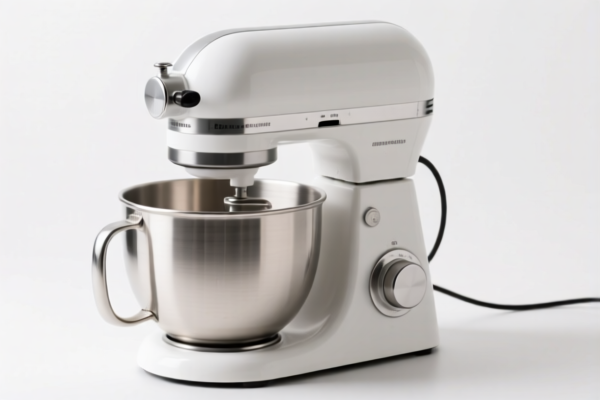
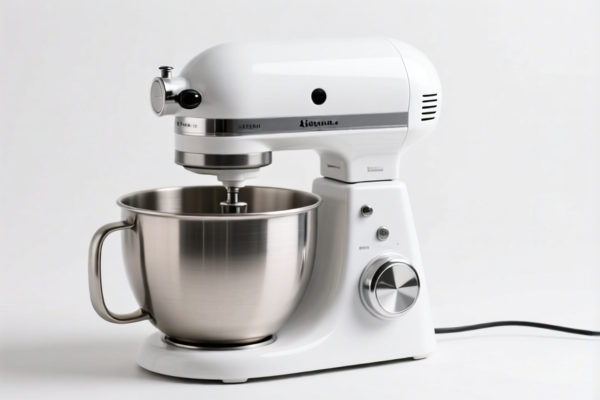
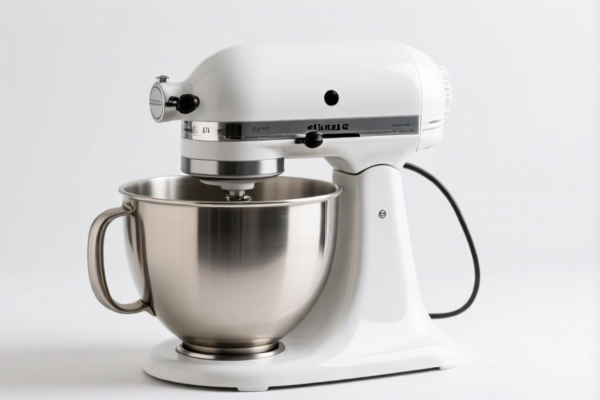
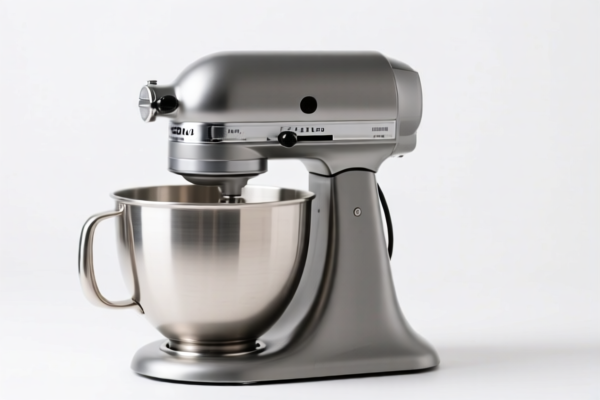
AI Analysis
🥤 3-in-1 Blender: The Ultimate Homewares vs. Food Processing Dilemma
🌐 HS Code Reference & Customs Clearance Guide | 2026 Latest Tariff Analysis | Strategic Classification Strategy
📌 I. Product Definition & Classification: What Exactly is a "3-in-1 Blender"?
A 3-in-1 Blender is a versatile kitchen appliance that typically combines multiple functions, such as blending, grinding, and processing food, within a single unit or via interchangeable attachments. In international trade, the critical distinction lies in its primary function and intended use:
- Home-use Electric Appliances: Designed for domestic kitchens, powered by electricity, and intended for general household food preparation.
- Food Processing Machinery: Often categorized under industrial or semi-industrial food processing equipment, especially if marketed for high-volume or specialized processing tasks.
⚠️ Key Classification Criteria:
- If the device is compact, portable, and marketed for home use → It likely falls under Chapter 85 (Electrical Machinery) as household appliances.
- If the device is larger, more robust, and marketed for food processing/commercial use → It may fall under Chapter 84 (Nuclear Reactors, Boilers, Machinery) as food/beverage processing machinery.
📦 II. HS Code Classification Details (2026 Latest Tariff Authority Comparison)
| HS Code | Product Description | Applicable Scenario | Is it Home-use? |
|---|---|---|---|
8509.40.00.15 |
3-in-1 Blender as Household Electric Appliance | Compact blender, grinder, and processor for home kitchens | ✅ Yes |
8509.40.00.40 |
3-in-1 Blender as Food Processor/Grinder | Functions similar to food grinders and processors, categorized under household food handling appliances | ✅ Yes |
8438.10.00.10 |
3-in-1 Blender as Food Processing Machinery | Industrial/semi-industrial food or beverage processing equipment | ❌ No |
🔍 Critical Reminder:
- Home-use blenders (even with multiple functions) are generally classified under 8509.40 because they are electric household appliances.
- Food processing machinery under 8438.10 applies to equipment that is not primarily designed for home use, often featuring larger capacities or industrial-grade components.
💰 III. 2026 Latest Tariff Rate Breakdown (Including Surcharges, Policy Add-ons)
✅ Applicable Country: USA (US)
✅ Origin: China (CN)
✅ Effective Date: November 10, 2025 (and subsequent imports)
🎯 1. 8509.40.00.15 —— 3-in-1 Blender as Household Electric Appliance
| Item | Details |
|---|---|
| Base Tariff Rate | 4.2% (ad valorem) |
| USITC Surtax (Section 301) | 0.0% |
| IEEPA Surtax (Section 122) | +10.0% (applies to Chinese/Hong Kong products) |
| Total Tariff Rate | 14.2% |
| Tax Calculation | CIF Value × 14.2% |
| De Minimis Eligibility | ❌ No (deny_de_minimis) |
| Legal Basis Path | IEEPA:9903.01.24 → USITC:8509.40.00.15 → FOOTNOTE:122 |
📌 Explanation:
- Base Tariff 4.2%: Standard duty for household electric blenders under Chapter 85.
- Section 301 Surcharge 0.0%: This specific subheading is exempt from Section 301 additional tariffs.
- Section 122 Surcharge 10.0%: Applied under the International Emergency Economic Powers Act (IEEPA) for certain Chinese goods.
- Total 14.2%: Relatively moderate compared to other electrical appliances, but still significant for margin-sensitive goods.
🎯 2. 8509.40.00.40 —— 3-in-1 Blender as Food Processor/Grinder
| Item | Details |
|---|---|
| Base Tariff Rate | 4.2% (ad valorem) |
| USITC Surtax (Section 301) | 0.0% |
| IEEPA Surtax (Section 122) | +10.0% (applies to Chinese/Hong Kong products) |
| Total Tariff Rate | 14.2% |
| Tax Calculation | CIF Value × 14.2% |
| De Minimis Eligibility | ❌ No (deny_de_minimis) |
| Legal Basis Path | IEEPA:9903.01.24 → USITC:8509.40.00.40 → FOOTNOTE:122 |
📌 Note:
- Identical to 8509.40.00.15: Both subheadings fall under the same tariff structure because they are both household electrical appliances.
- Functional Nuance: Even if marketed as a "grinder" or "processor," as long as it is for home use, it remains in Chapter 85.
🎯 3. 8438.10.00.10 —— 3-in-1 Blender as Food Processing Machinery
| Item | Details |
|---|---|
| Base Tariff Rate | 0.0% (ad valorem) |
| USITC Surtax (Section 301) | +7.5% |
| IEEPA Surtax (Section 122) | +10.0% (applies to Chinese/Hong Kong products) |
| Total Tariff Rate | 17.5% |
| Tax Calculation | CIF Value × 17.5% |
| De Minimis Eligibility | ❌ No (deny_de_minimis) |
| Legal Basis Path | IEEPA:9903.01.24 → USITC:8438.10.00.10 → FOOTNOTE:122 |
📌 Critical Distinction:
- Base Tariff 0.0%: Food processing machinery under Chapter 84 often enjoys lower base rates.
- Section 301 Surcharge 7.5%: Unlike household appliances, some food processing machinery is subject to Section 301 tariffs.
- Section 122 Surcharge 10.0%: Also applies to Chinese-origin food processing equipment.
- Total 17.5%: Higher than household blenders due to the Section 301 surcharge. This classification is disadvantageous for cost efficiency.
🛠️ IV. Customs Clearance Practical Advice (Real-World Pitfall Avoidance Guide)
✅ 1. Documentation Checklist (All Required)
| Document | Required | Notes |
|---|---|---|
| ✅ Product Specification Sheet | ✔️ | Dimensions, power rating, voltage, frequency, material |
| ✅ Photos of Product & Label | ✔️ | Clear view of model number, brand, input/output specs |
| ✅ Commercial Invoice | ✔️ | Must clearly state "3-in-1 Blender for Home Use" or "Food Processing Machinery" |
| ✅ Packing List | ✔️ | Detail contents (blender, blades, cups, manuals) |
| ✅ Certificate of Origin (CO) | ✔️ | If eligible for preferential treatment (unlikely for China) |
| ✅ Third-Party Certifications | ✔️ | UL, ETL, FCC (if applicable), CE (for EU reference) |
✅ 2. Declaration Strategy (Key Tips)
🔥 "Home Use Goes to 85, Industrial Goes to 84, Check Your Marketing!"
| Scenario | Correct Declaration | Wrong Approach |
|---|---|---|
| Compact Blender for Home | 8509.40.00.15 or 8509.40.00.40 |
Declare as "Food Machine" → 17.5% |
| Large-capacity Blender for Cafe | 8438.10.00.10 |
Declare as "Home Appliance" → Risk of reclassification + penalties |
| Blender with Multiple Attachments | Declare as Single Unit under 8509.40 | Split into "Blender + Grinder" → Complex & risky |
| OEM/White-label Product | Provide Customer Order + Specs | Vague description → Customs delay |
✅ 3. Special Cases Handling
| Scenario | Handling Advice |
|---|---|
| Marketed as "Commercial Blender" | Likely classified under 8438.10.00.10 → Higher duty (17.5%). Avoid if cost-sensitive. |
| Marketeted as "Home Blender" | Classify under 8509.40.00.15/40 → Lower duty (14.2%). Ensure marketing materials reflect "home use." |
| Blender + Grinder Combo | If integrated into one motor unit → Classify as single appliance under 8509.40. |
| Blender with Industrial Features | (e.g., stainless steel body, heavy-duty motor) → May trigger reclassification to 8438.10.10. |
🌍 V. Global Market Customs Comparison (2026 Latest)
| Country/Region | Recommended HS Code | Tariff Rate | Certification Requirements | Notes |
|---|---|---|---|---|
| 🇺🇸 USA | 8509.40.00.15 / .40 |
14.2% (China) | UL/ETL, FCC | Best option for cost |
| 🇺🇸 USA | 8438.10.00.10 |
17.5% (China) | N/A | Avoid if possible |
| 🇨🇳 China | 8509.40.00.15 |
8-10% | CCC | No additional surcharges |
| 🇪🇺 EU | 8509.40.00.15 |
4-6% | CE, RoHS, WEEE | No additional surcharges |
| 🇬🇧 UK | 8509.40.00.15 |
4-6% | UKCA, RoHS | Post-Brexit rules apply |
| 🇦🇺 Australia | 8509.40.00.15 |
5% | RCM, C-Tick | No additional surcharges |
📌 Conclusion:
- USA is the most complex market due to Section 301 and Section 122 surcharges.
- Classifying as a Home Appliance (8509.40) is significantly cheaper than as Food Processing Machinery (8438.10).
- Marketing and product design should align with the desired classification to avoid customs disputes.
📌 VI. Common Mistakes & Pitfalls (Lessons Learned)
❌ Mistake 1: Declaring a home-use blender as food processing machinery
👉 Consequence: Duty increases from 14.2% to 17.5% → Higher costs + potential audit.
❌ Mistake 2: Declaring a commercial blender as a home appliance
👉 Consequence: Customs reclassifies to 8438.10 → Back taxes, penalties, delays.
❌ Mistake 3: Using vague terms like "Kitchen Machine"
👉 Consequence: Customs ambiguity → Inspection delays, additional documentation requests.
❌ Mistake 4: Ignoring Section 122 surcharge
👉 Consequence: Underpaying duties → Seizure, fines, or blacklisting.
✅ Correct Approach:
"3-in-1 Electric Blender for Home Use, 1000W, 120V, with Grinding & Processing Attachments, Model XYZ, UL Certified"
🎯 VII. Conclusion: Strategic Classification for Cost Efficiency
🎯 Key Takeaway:
🔹 "Home Use = 8509.40 (14.2%) | Industrial Use = 8438.10 (17.5%)"
🔹 "Marketing Matters: Align Product Image with Classification"
🔹 "Always Declare Accurately: Misclassification Risks Penalties & Delays"
📌 Pro Tip:
- If your product is borderline (e.g., large capacity but for home use), provide detailed specs and marketing materials to justify classification under 8509.40.
- Consider applying for an Advance Ruling from US Customs to secure classification certainty before shipping.
📣 Immediate Action Required:
📞 Engage a Licensed Customs Broker + Provide Product Photos & Specs + Confirm Marketing Claims
🚀 Optimize Your HS Code Classification to Save 3.3% in Duties!
✨ Professional Customs Clearance Starts with Precise Classification!
💼 Every Dollar Saved in Duties is Pure Profit!
Customer Reviews
About HS Code Classification
The Harmonized System (HS) is an internationally standardized nomenclature developed by the World Customs Organization (WCO) to classify traded products. Over 200 countries use the HS system as the basis for customs tariffs, trade statistics, and import/export regulations.
Each HS code follows a hierarchical structure:
- Chapter (2 digits) — Broad category of goods (e.g., Chapter 84: Machinery and Mechanical Appliances)
- Heading (4 digits) — More specific grouping within the chapter
- Subheading (6 digits) — Internationally standardized breakdown, used by all WCO member countries
- National subdivisions (8-10 digits) — Country-specific extensions for further classification, such as US HTSUS 10-digit codes
Correct HS code classification is essential for smooth customs clearance, accurate duty payment, and compliance with trade regulations. Misclassification can lead to customs delays, overpayment of duties, or penalties.
When importing from CN to US, the applicable tariff rates may include:
- Most-Favored-Nation (MFN) rate — The standard duty rate applied to WTO members
- General rate — Applied to countries without trade agreements
- Trade remedy duties — Additional tariffs such as Section 301 (anti-dumping), Section 232 (national security), or countervailing duties
The information provided on this page is for reference purposes only. For official classification, please consult with your local customs authority or a licensed customs broker.