3.3 V to 5 V Converter
CN → US| HS Code | Tariff Rate | Origin | Destination | Doc |
|---|---|---|---|---|
| 8542390040 | 60.0% | CN | US | Official Doc |
| 8542390050 | 60.0% | CN | US | Official Doc |
| 8543709860 | 37.6% | CN | US | Official Doc |
| 8543709810 | 37.6% | CN | US | Official Doc |
| 8504409580 | 35.0% | CN | US | Official Doc |
Product Images
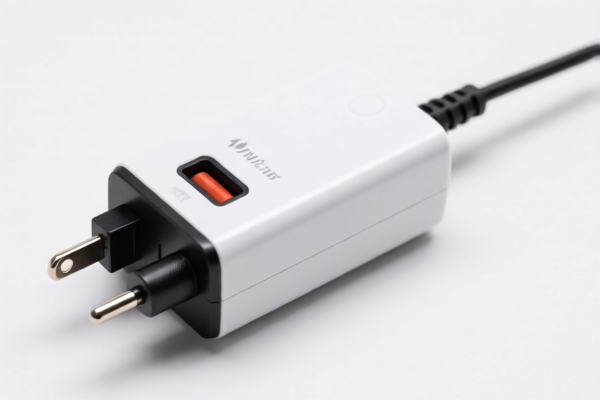
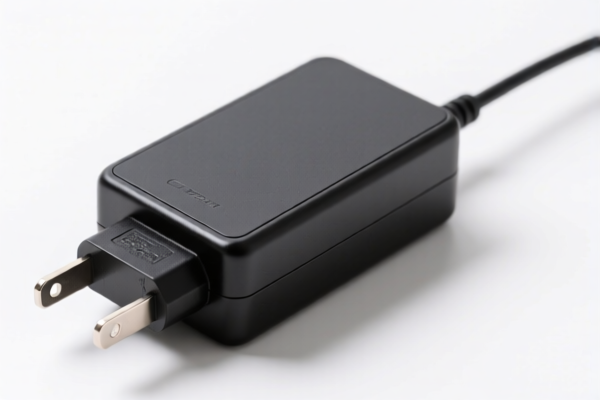
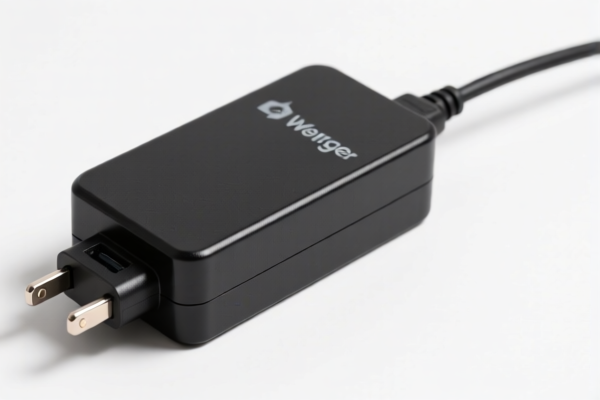
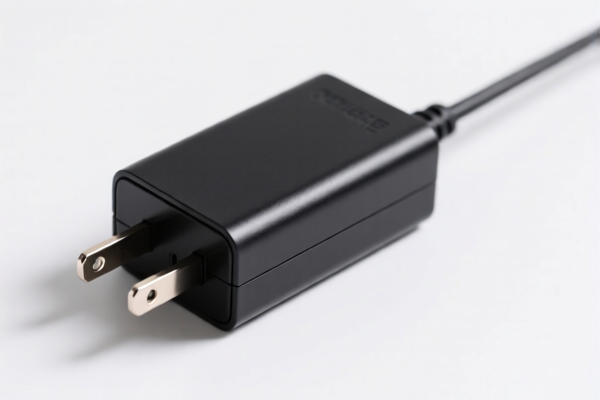
AI Analysis
⚡ Voltage Converter (3.3 V to 5 V)
🌐 HS Code Reference & Customs Clearance Guide | 2026 Latest Tariff Analysis | Professional Clearance Strategy
📌 I. Product Definition & Classification: What is a "3.3 V to 5 V Converter"?
A 3.3 V to 5 V Converter is a device designed to step up or regulate voltage from 3.3 Volts to 5 Volts. In international trade, its classification is highly controversial because it sits at the intersection of two major categories:
1. Integrated Circuits (ICs): If it is a bare chip/module that performs data or signal conversion logic.
2. Electrical Apparatus: If it is a standalone power supply unit (PSU) or a functional device with specific power conversion capabilities.
⚠️ Key Distinction Point:
- If it is a Data/Signal Converter (processing information, not just power) → Chapter 8542 (ICs).
- If it is a Power Converter (changing voltage levels for power distribution) → Chapter 8504 (Static Converters) OR Chapter 8543 (Other Electrical Machines).
- Risk: Misclassification leads to massive duty differences (60% vs. 35%).
📦 II. HS Code Classification Details (2026 Latest Tariff Authority Comparison)
| HS Code | Product Description | Applicable Scenario | Tax Rate (Total) |
|---|---|---|---|
8542.39.00.40 |
Data Converter Circuits | ICs where the core function is data/logic conversion, categorized under electronic integrated circuits. | 60.0% |
8542.39.00.50 |
Data Converters (General) | Electronic integrated circuits where 'CONVERTER' explicitly matches the definition of data converters. | 60.0% |
8543.70.98.60 |
Other Machines & Apparatus | Standalone electrical devices with independent functions, fitting the "Other machines and apparatus" definition. | 37.6% |
8543.70.98.10 |
Other Independent Electrical Equipment | Fallback category for other具有独立功能的电气设备 (independent electrical equipment). | 37.6% |
8504.40.95.80 |
Static Converters | Voltage converters falling under "Static Converters," with functions matching the converter category exactly. | 35.0% |
🔍 Critical Analysis:
- 8542 Codes (60%): Apply if the device is considered an Integrated Circuit (IC) primarily for data/signal processing. High duty!
- 8543 Codes (37.6%): Apply if it is viewed as a standalone functional device that doesn’t fit neatly into other specific power categories. Moderate-High duty.
- 8504 Code (35%): Apply if it is a pure power converter (Voltage Converter). Lowest duty!
- Strategic Goal: Argue for 8504.40.95.80 to save 25% in duties compared to the IC classification.
💰 III. 2026 Latest Tariff Rate Details (Including Surtaxes & Policy Add-ons)
✅ Applicable Country: United States (US)
✅ Country of Origin: China (CN)
✅ Effective Date: 2025年11月10日起 (Including subsequent imports)
🎯 1. 8542.39.00.40 & 8542.39.00.50 — Electronic Integrated Circuits (Data Converters)
| Item | Details |
|---|---|
| Base Duty Rate | 0.0% (ad valorem) |
| Section 301 Surtax (Additional Duty) | +50.0% |
| IEEPA Section 122 Surtax | +10.0% |
| Total Duty Rate | 60.0% |
| Tax Calculation | CIF Value × 60% |
| De Minimis Eligibility | ❌ Not Eligible (deny_de_minimis) |
| Legal Basis Path | USITC:8542.39.00.40 → FOOTNOTE:301 → IEEPA:122 |
📌 Explanation:
- These codes classify the item as a high-tech integrated circuit.
- The 50% Section 301 tariff is triggered due to its origin (China) and classification under Chapter 85 ICs.
- The 10% IEEPA surtax is an additional penalty on Chinese goods.
- Total 60% is the highest possible burden in this dataset. Avoid if possible.
🎯 2. 8543.70.98.60 & 8543.70.98.10 — Other Independent Electrical Apparatus
| Item | Details |
|---|---|
| Base Duty Rate | 2.6% |
| Section 301 Surtax (Additional Duty) | +25.0% |
| IEEPA Section 122 Surtax | +10.0% |
| Total Duty Rate | 37.6% |
| Tax Calculation | CIF Value × 37.6% |
| De Minimis Eligibility | ❌ Not Eligible (deny_de_minimis) |
| Legal Basis Path | USITC:8543.70.98.10 → FOOTNOTE:301 → IEEPA:122 |
📌 Explanation:
- This classification treats the converter as a general electrical machine with independent function.
- The Section 301 surtax is reduced to 25% (compared to 50% for ICs).
- Total 37.6% saves you 22.4% in duties compared to the 8542 classification.
🎯 3. 8504.40.95.80 — Static Converters (Voltage Converter)
| Item | Details |
|---|---|
| Base Duty Rate | 0.0% |
| Section 301 Surtax (Additional Duty) | +25.0% |
| IEEPA Section 122 Surtax | +10.0% |
| Total Duty Rate | 35.0% |
| Tax Calculation | CIF Value × 35.0% |
| De Minimis Eligibility | ❌ Not Eligible (deny_de_minimis) |
| Legal Basis Path | USITC:8504.40.95.80 → FOOTNOTE:301 → IEEPA:122 |
📌 Explanation:
- This is the most favorable classification if the product is strictly a power voltage converter.
- It falls under "Static Converters," which have a 0% base duty.
- The Section 301 surtax is 25% and IEEPA is 10%.
- Total 35.0% is the lowest duty in the provided data, saving 25% compared to the IC classification.
🛠️ IV. Customs Clearance Practical Advice (Avoid Pitfalls)
✅ 1. Documentation Checklist (Essential)
| Document | Required? | Description |
|---|---|---|
| ✅ Product Specification Sheet | ✔️ | Must clearly state "Input: 3.3V, Output: 5V, Type: DC-DC Voltage Converter." |
| ✅ Circuit Diagram / Block Diagram | ✔️ | Crucial to prove it is a power converter (8504) and not a data processor (8542). |
| ✅ Product Photos (with Label) | ✔️ | Show model number, input/output ratings, and any certifications. |
| ✅ Commercial Invoice | ✔️ | Describe accurately: "Voltage Converter, 3.3V to 5V, Static Converter." DO NOT use "Data Converter" or "Signal Processor" if incorrect. |
| ✅ Third-Party Test Report | ✔️ | FCC, CE, RoHS, or UL reports to prove safety and function. |
| ✅ Origin Certificate | ✔️ | If not from China, may help, but IEEPA still applies to many Chinese origins. |
✅ 2. Declaration Strategy (Key Mnemonics)
🔥 “Power vs. Data: Declare Correctly, Save Thousands!”
| Scenario | Correct Declaration | HS Code | Duty | Mistake Risk |
|---|---|---|---|---|
| Pure Voltage Conversion | "DC-DC Voltage Converter, Static Converter" | 8504.40.95.80 |
35% | If misclassified as IC → 60% |
| Standalone Function Unit | "Independent Electrical Apparatus, Voltage Regulator" | 8543.70.98.10 |
37.6% | If misclassified as IC → 60% |
| Data/Signal Processing | "Data Converter IC, Logic Circuit" | 8542.39.00.40 |
60% | Intentional only if it IS data processing |
| Mixed Use (Data + Power) | "Integrated Circuit with Voltage Conversion" | 8542.39.00.50 |
60% | High risk, high duty |
✅ 3. Special Handling Tips
| Situation | Recommendation |
|---|---|
| Is it a Module or IC? | If it’s a PCBA module with external components, argue for 8504 (Static Converter) or 8543 (Apparatus), NOT 8542 (IC). |
| Naming Convention | Avoid "Digital Converter" or "Signal Converter" in descriptions. Use "Voltage Converter" or "DC-DC Power Supply." |
| Pre-Ruling Application | Highly Recommended. Apply for an Advance Ruling from CBP to lock in 8504.40.95.80 or 8543 classification. |
| Component Analysis | Provide a bill of materials (BOM) showing resistors, capacitors, and power ICs (no logic gates) to prove it’s not a data processor. |
🌍 V. Global Market Comparison (2026 Latest)
| Country/Region | Recommended HS Code | Duty (China Origin) | Certification | Notes |
|---|---|---|---|---|
| 🇺🇸 USA | 8504.40.95.80 |
35.0% | FCC + RoHS | Lowest duty in US dataset |
| 🇨🇳 China | 8504.40.95.80 |
~10-15% (Est.) | CCC + RoHS | No Section 301 in China |
| 🇪🇺 EU | 8504.40.90 |
0-4% | CE + ErP | No IEEPA/Section 301 |
| 🇬🇧 UK | 8504.40.90 |
0-4% | UKCA | Post-Brexit rules apply |
📌 Conclusion:
- USA has the most complex and high-duty environment for converters.
- Target Classification: 8504.40.95.80 (Static Converter) to minimize duty to 35%.
- Avoid: 8542 codes (60%) unless it is strictly a data-processing IC.
📌 VI. Common Errors & Pitfall Guide (Lessons Learned)
❌ Error 1: Calling it "Data Converter" when it’s a Power Converter
👉 Result: Duty jumps from 35% to 60% → $25 extra per $100 lost.
❌ Error 2: Misusing "Voltage Regulator" vs. "Static Converter"
👉 Result: May fall into 8543 (37.6%) instead of 8504 (35%). Small difference, but precision matters.
❌ Error 3: Not providing Circuit Diagrams
👉 Result: CBP may default to 8542 (IC) if they suspect data processing → 60% duty.
❌ Error 4: Using "Module" without context
👉 Result: Ambiguity leads to audits, delays, and potential reclassification.
✅ Correct Practice:
"DC-DC Voltage Converter, Input 3.3V, Output 5V, Static Converter, Model XYZ, FCC Certified"
HS Code:8504.40.95.80
Duty: 35.0%
🎯 VII. Conclusion: Professional Declaration, Cost Optimization
🎯 Remember the Golden Rule:
🔹 "Power vs. Data: Name it Power, Classify it as Static Converter (8504)."
🔹 "35% vs. 60%: A 25% difference can save your profit margin."
🔹 "Pre-Rule Before Ship: Lock in the 35% rate with CBP Advance Ruling."
📌 Pro Tip:
- If your converter is part of a larger system, ensure the main function is power conversion, not data processing.
- For low-volume imports, the 25% duty difference is critical. For high-volume, it’s a business-maker.
- Always include a Circuit Diagram and Bill of Materials in your customs submission to support the 8504 classification.
📣 Immediate Action:
📞 Consult a Customs Broker + Submit Product Diagrams + File for Advance Ruling for
8504.40.95.80.
🚀 Clear your goods smoothly, reduce duties to 35%, and maximize profits!
✨ Professional Clearance Starts with Precise Classification!
💼 Every cent saved in duty is pure profit!
Customer Reviews
About HS Code Classification
The Harmonized System (HS) is an internationally standardized nomenclature developed by the World Customs Organization (WCO) to classify traded products. Over 200 countries use the HS system as the basis for customs tariffs, trade statistics, and import/export regulations.
Each HS code follows a hierarchical structure:
- Chapter (2 digits) — Broad category of goods (e.g., Chapter 84: Machinery and Mechanical Appliances)
- Heading (4 digits) — More specific grouping within the chapter
- Subheading (6 digits) — Internationally standardized breakdown, used by all WCO member countries
- National subdivisions (8-10 digits) — Country-specific extensions for further classification, such as US HTSUS 10-digit codes
Correct HS code classification is essential for smooth customs clearance, accurate duty payment, and compliance with trade regulations. Misclassification can lead to customs delays, overpayment of duties, or penalties.
When importing from CN to US, the applicable tariff rates may include:
- Most-Favored-Nation (MFN) rate — The standard duty rate applied to WTO members
- General rate — Applied to countries without trade agreements
- Trade remedy duties — Additional tariffs such as Section 301 (anti-dumping), Section 232 (national security), or countervailing duties
The information provided on this page is for reference purposes only. For official classification, please consult with your local customs authority or a licensed customs broker.