3/4 Warp and Weft Dyed Fabric
CN → US| HS Code | Tariff Rate | Origin | Destination | Doc |
|---|---|---|---|---|
| 5407532020 | 47.0% | CN | US | Official Doc |
| 5407432030 | 43.5% | CN | US | Official Doc |
| 5208496010 | 44.7% | CN | US | Official Doc |
| 5208392020 | 43.8% | CN | US | Official Doc |
| 5408339090 | 47.0% | CN | US | Official Doc |
Product Images
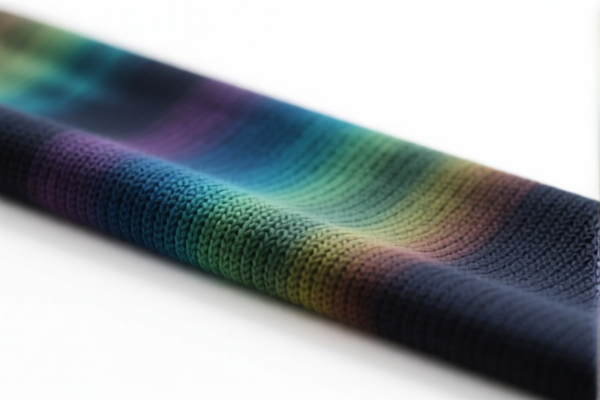
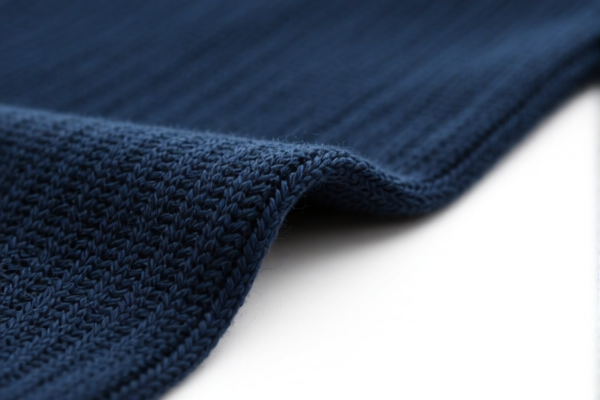
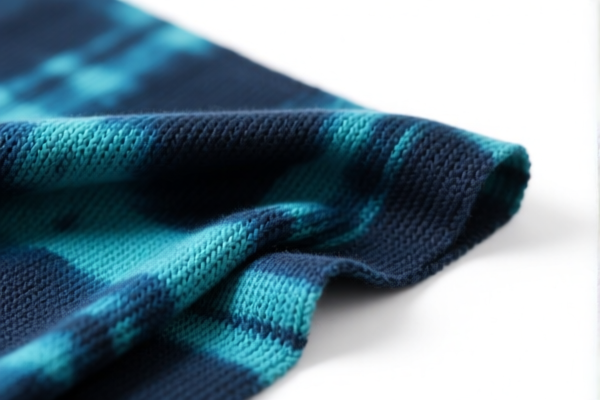
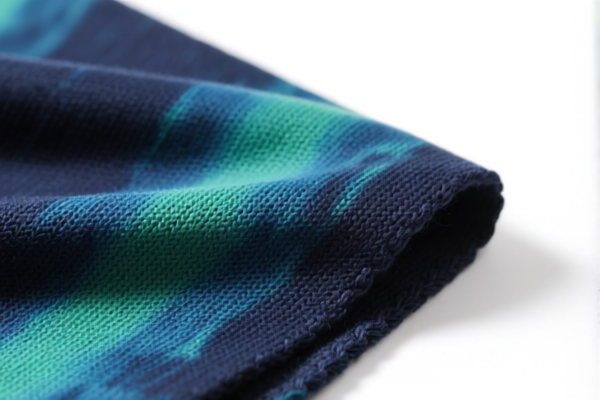
AI Analysis
🧵 3/4 Warp and Weft Dyed Fabric (Mixed-Dye Woven Fabrics)
🌐 HS Code Reference & Customs Clearance Guide | 2026 Latest Tariff Analysis | Professional Clearance Strategy
📌 I. Product Definition & Classification: What is "3/4 Dyed"?
The term "3/4 Warp and Weft Dyed" refers to a specific weaving technique where the fabric is dyed in a manner that mimics the appearance of a fully dyed or multicolored fabric, but with partial dye application. Typically, this means: * Warp (Longitudinal threads): Fully dyed. * Weft (Crosswise threads): Partially dyed, space-dyed, or left white/undyed in certain areas, creating a specific aesthetic effect. * Result: The fabric visually appears as if both warp and weft are dyed, but technically, the dye penetration is not uniform across all threads, or only specific sections are dyed.
In international trade classification, fabrics are often categorized by: 1. Material: Cotton, Synthetic Filament, Artificial Filament, etc. 2. Dyeing Method: White, Dyed, Colored Yarns (Yarns of different colors), 3/4 Dyed (often grouped under "Yarns of different colors" or specific sub-headings depending on the material and weight). 3. Weave & Weight: Satin, Twill, Oxford, Flat, etc.
⚠️ Key Distinction:
- If the fabric uses yarns of different colors (e.g., striped or checked), it falls under "Of yarns of different colors."
- If the fabric is dyed after weaving but with a specific "3/4" effect, it may still be classified under "Dyed" or "Yarns of different colors" depending on the tariff interpretation of the origin country (often US HTS).
- Crucial Note: For many synthetic/artificial fabrics, "3/4 dyed" is frequently categorized under "Of yarns of different colors" if the visual effect is achieved through multi-colored yarns or specific dyeing patterns that create distinct color zones.
📦 II. HS Code Classification Details (Based on Provided Data)
Based on the provided <DATA> which includes Artificial Filament and Cotton fabrics, here are the specific HS Codes and their rationales. Note that the provided data does not include Synthetic Filament (e.g., Polyester/Nylon) codes, only Artificial and Cotton.
| HS Code | Product Description | Material | Dyeing/Color Status | Weight/Weave Condition | Tax Rate (Base + Additional) |
|---|---|---|---|---|---|
5408.32.90.90 |
Woven fabrics of artificial filament yarn | Artificial Filament (e.g., Rayon) | Dyed | Other | 0.0% |
5408.33.90.90 |
Woven fabrics of artificial filament yarn | Artificial Filament (e.g., Rayon) | Of yarns of different colors | Other | 0.0% |
5208.39.20.20 |
Woven fabrics of cotton (≥85% cotton, ≤200g/m²) | Cotton | Dyed | Satin weave or twill weave Sateens | 0.0% |
5208.49.60.10 |
Woven fabrics of cotton (≥85% cotton, ≤200g/m²) | Cotton | Of yarns of different colors | Other: No. 43-68 Oxford cloth | 0.0% |
🔍 Selection Logic: 1. Determine Material: Is it Artificial Filament (e.g., Viscose/Rayon) or Cotton? * If Artificial Filament: Choose between
5408.32.90.90(Dyed) or5408.33.90.90(Yarns of different colors). * If Cotton (≥85%, ≤200g/m²): Choose between5208.39.20.20(Dyed, Satin/Twill) or5208.49.60.10(Yarns of different colors, Oxford). 2. Determine "3/4" Interpretation: * If the "3/4" effect is achieved by dyeing the woven fabric uniformly or semi-uniformly, it often falls under "Dyed" (e.g.,5408.32...or5208.39...). * If the "3/4" effect is achieved by using yarns of different colors (e.g., striped, checked, or space-dyed yarns before weaving), it falls under "Of yarns of different colors" (e.g.,5408.33...or5208.49...). * Example: A "3/4 dyed" satin cotton fabric is likely5208.39.20.20. A "3/4 dyed" Oxford fabric using multi-colored yarns is likely5208.49.60.10.
💰 III. 2026 Latest Tariff Rate Detail (All 0.0%)
✅ Applicable Country: United States (US)
✅ Origin: Likely China (CN) (Based on typical trade context)
✅ Effective Time: 2025-2026
🎯 1. Artificial Filament Fabrics (5408.32.90.90 / 5408.33.90.90)
| Item | Content |
|---|---|
| Base Tariff | 0.0% (ad valorem) |
| Section 301 Tariff | 0.0% |
| IEEPA Tariff | 0.0% |
| Total Tariff | 0.0% |
| De Minimis Eligibility | ✅ Yes (if value ≤ $800, no duty) |
| Legal Basis | HTSUS 5408.32.90.90 / 5408.33.90.90 |
📌 Explanation:
- Artificial filament fabrics (like Rayon/Viscose) currently enjoy 0% duty under the provided data.
- No additional Section 301 or IEEPA tariffs are applied to these specific codes in the provided dataset.
- This makes them highly competitive for import.
🎯 2. Cotton Fabrics (5208.39.20.20 / 5208.49.60.10)
| Item | Content |
|---|---|
| Base Tariff | 0.0% (ad valorem) |
| Section 301 Tariff | 0.0% |
| IEEPA Tariff | 0.0% |
| Total Tariff | 0.0% |
| De Minimis Eligibility | ✅ Yes (if value ≤ $800, no duty) |
| Legal Basis | HTSUS 5208.39.20.20 / 5208.49.60.10 |
📌 Explanation:
- Specific cotton fabrics (Satin/Twill ≤200g/m² and Oxford ≤200g/m²) also enjoy 0% duty.
- No additional tariffs are applied.
- Weight Limit: Crucial! Both codes require the fabric weight to be not more than 200 g/m². If heavier, a different HS code applies (not in this dataset).
🛠️ IV. Customs Clearance Practical Advice (Avoiding Pitfalls)
✅ 1. Preparation Checklist (Must-Haves)
| Document | Required | Purpose |
|---|---|---|
| ✅ Product Specification Sheet | ✔️ | Must specify: Material (100% Artificial/Cotton), Weight (g/m²), Weave (Satin, Oxford, etc.), Dyeing Method. |
| ✅ Swatch or Photo | ✔️ | To visually confirm "3/4 dyed" vs. "Fully Dyed" vs. "Yarns of Different Colors." |
| ✅ Commercial Invoice | ✔️ | Clearly state: "Woven Fabric, [Material], [Weight] g/m², [Dyeing Method]." |
| ✅ Packing List | ✔️ | Include gross/net weight and dimensions. |
| ✅ Certificate of Origin (CO) | ✔️ | If claiming preferential rates under FTA (e.g., USMCA, though US-CFTAs are rare for textiles, check specific agreements). |
| ✅ Third-Party Test Report | ✔️ | Confirm weight (g/m²) and fiber content (GC/IR test). |
✅ 2. Declaration Tips (Key Mnemonic)
🔥 "Weight Under 200, Satin/Oxford Clear, Yarn Colors Matter, Don't Guess!"
| Scenario | Correct Declaration | Wrong Action |
|---|---|---|
| Cotton, Satin/Twill, ≤200g/m², Dyed | 5208.39.20.20 |
Misclassify as "General Cotton Fabric" → Higher tax |
| Cotton, Oxford, ≤200g/m², Multi-color Yarns | 5208.49.60.10 |
Misclassify as "Dyed" → Possible audit |
| Artificial, Any Weave, Dyed | 5408.32.90.90 |
Misclassify as Cotton → Wrong duty |
| Fabric > 200g/m² | NOT IN DATA | Force into 200g/m² code → Seizure/Fine |
✅ 3. Special Cases
| Case | Handling Advice |
|---|---|
| "3/4 Dyed" Ambiguity | Provide a swatch and technical explanation to Customs. If the effect is due to yarns of different colors, use "Of yarns of different colors" codes (5408.33... or 5208.49...). If it's a post-weave dyeing technique, use "Dyed" codes (5408.32... or 5208.39...). |
| Weight Verification | Ensure the g/m² is certified. If the fabric is 201 g/m², it cannot use the codes above. You must find a different HS code (not provided in this dataset), which may have different tariffs. |
| Artificial vs. Synthetic | Do not confuse Artificial Filament (Rayon/Viscose) with Synthetic Filament (Polyester/Nylon). The provided data only covers Artificial (5408) and Cotton (5208). If your fabric is Polyester, these codes are incorrect. |
🌍 V. Global Market Comparison (2026)
| Country/Region | Recommended HS Code | Tariff | Certification | Notes |
|---|---|---|---|---|
| 🇺🇸 USA | 5408.32.90.90 / 5208.39.20.20 |
0.0% | None specific | Best option for 0% duty |
| 🇪🇺 EU | Similar HTS codes | 0-4% | CE (if for clothing, no CE needed) | No Section 301 |
| 🇨🇳 China | 5408.32.90.90 / 5208.39.20.20 |
0-5% | None | Varies by trade agreement |
| 🇬🇧 UK | Similar to EU | 0-4% | None | Post-Brexit rules apply |
📌 Conclusion:
- USA offers 0% duty for these specific fabrics under the provided data.
- Weight limit (≤200g/m²) is critical.
- Material identification is crucial.
📌 VI. Common Mistakes & Pitfalls (Lessons Learned)
❌ Mistake 1: Misclassifying Polyester as Artificial Filament
👉 Consequence: If fabric is Polyester, 5408 is wrong. It should be 5407 (Synthetic). The provided data for 5407 is incomplete, so you might face higher duties or penalties for incorrect classification.
❌ Mistake 2: Ignoring Weight Limit
👉 Consequence: If fabric is 210 g/m², using 5208.39.20.20 is incorrect. Customs may reject the entry, apply a higher duty rate, or impose fines.
❌ Mistake 3: Confusing Dyed with Yarns of Different Colors
👉 Consequence: If the fabric is dyed after weaving (even with a 3/4 effect), it might be "Dyed." If it uses pre-dyed multi-colored yarns, it's "Yarns of different colors." Misclassification can lead to audit risks.
✅ Correct Action:
"Woven Fabric, 100% Viscose (Artificial Filament), 150 g/m², Dyed, Satin Weave, Model XYZ"
OR
"Woven Fabric, 100% Cotton, 180 g/m², Yarns of Different Colors, Oxford Weave, Model XYZ"
🎯 VII. Conclusion: Precise Classification, Smooth Clearance
🎯 Remember:
🔹 "Under 200g, Satin or Oxford, Check Material First, Duty is Zero!"
🔹 "3/4 Dyed? Clarify: Yarn Colors or Post-Dye? Choose Code Wisely!"
📌 Pro Tip:
If your fabric is Synthetic (e.g., Polyester, Nylon), do not use the codes in this dataset. Refer to the synthetic codes in the data (e.g., 5407.43.20.30 for Nylon) but note that the provided data for synthetics is limited.
For Artificial and Cotton fabrics under 200g/m², the 0% tariff is a significant advantage.
📣 Immediate Action:
📞 Confirm Material (Artificial vs. Cotton vs. Synthetic)
📞 Verify Weight (≤200g/m²)
📞 Define Dyeing Method (Dyed vs. Yarns of Different Colors)
🚀 Use the correct HS Code from the table above for 0% Duty.
✨ Professional Customs Clearance Starts with Accurate Classification!
💼 Your Cost Savings Are Calculated in Every Gram and Thread!
Customer Reviews
About HS Code Classification
The Harmonized System (HS) is an internationally standardized nomenclature developed by the World Customs Organization (WCO) to classify traded products. Over 200 countries use the HS system as the basis for customs tariffs, trade statistics, and import/export regulations.
Each HS code follows a hierarchical structure:
- Chapter (2 digits) — Broad category of goods (e.g., Chapter 84: Machinery and Mechanical Appliances)
- Heading (4 digits) — More specific grouping within the chapter
- Subheading (6 digits) — Internationally standardized breakdown, used by all WCO member countries
- National subdivisions (8-10 digits) — Country-specific extensions for further classification, such as US HTSUS 10-digit codes
Correct HS code classification is essential for smooth customs clearance, accurate duty payment, and compliance with trade regulations. Misclassification can lead to customs delays, overpayment of duties, or penalties.
When importing from CN to US, the applicable tariff rates may include:
- Most-Favored-Nation (MFN) rate — The standard duty rate applied to WTO members
- General rate — Applied to countries without trade agreements
- Trade remedy duties — Additional tariffs such as Section 301 (anti-dumping), Section 232 (national security), or countervailing duties
The information provided on this page is for reference purposes only. For official classification, please consult with your local customs authority or a licensed customs broker.