30 Piece Gold and Platinum Cutlery Set
CN → US| HS Code | Tariff Rate | Origin | Destination | Doc |
|---|---|---|---|---|
| 8215100000 | 0.0% | CN | US | Official Doc |
| 8211911000 | 17.5% | CN | US | Official Doc |
| 3924104000 | 13.4% | CN | US | Official Doc |
| 8211100000 | 13.4% | CN | US | Official Doc |
| 8215200000 | 0.0% | CN | US | Official Doc |
Product Images
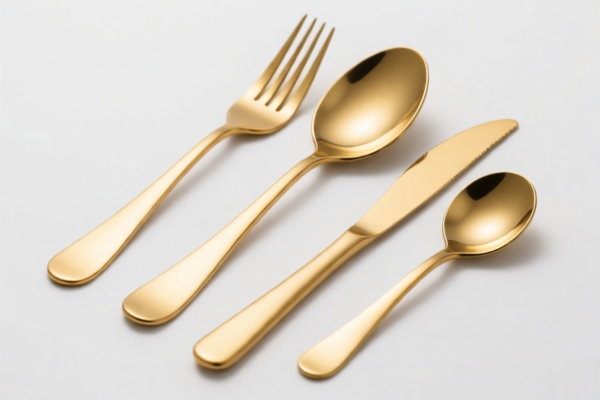
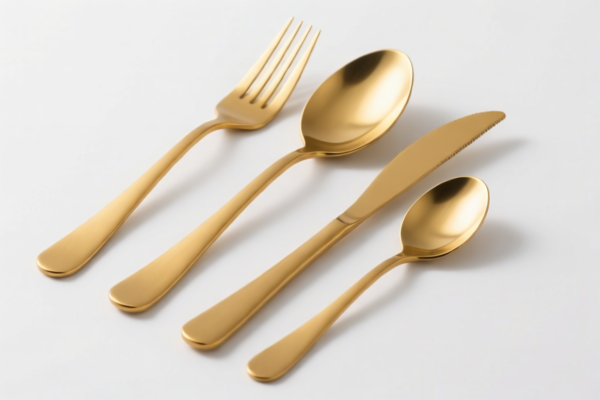
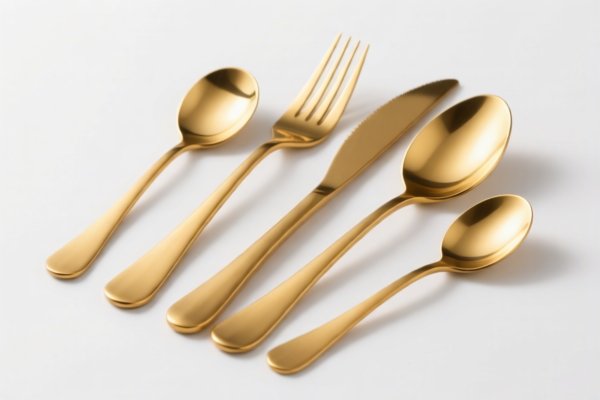
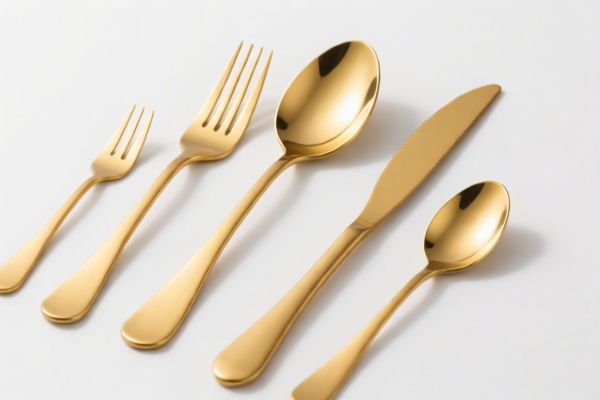
AI Analysis
🍴 30 Piece Gold and Platinum Cutlery Set
🌐 HS Code Reference & Customs Clearance Guide | 2026 Latest Tariff Analysis | Professional Clearance Strategy
📌 I. Product Definition & Classification: What Exactly is a "Cutlery Set"?
A 30-piece cutlery set is a composite goods item typically comprising knives, forks, and spoons packaged together for table service. In international trade, the classification depends heavily on the material composition and the specific type of cutting edge present in the set.
Key Distinction Points:
- Precious Metal Appearance: If the set features gold/platinum plating or significant precious metal content, it may fall under base metal articles with precious metal characteristics.
- Functional Classification: If it contains functional cutting knives (e.g., steak knives with serrated or sharp edges), it is often classified under cutting instruments rather than general utensils.
- Material Composition: Stainless steel or base metal alloys without cutting edges fall under general tableware.
⚠️ Critical Classification Logic:
- Sets with gold/platinum aesthetic or plating often trigger specific "base metal with precious metal characteristics" clauses.
- Sets containing knives are prioritized under cutting instrument headings if the knives are functional.
- Purely spoon/fork sets (no knives) are classified under general tableware.
📦 II. HS Code Classification Details (2026 Latest Tariff Authority Match)
Based on the provided data, here are the four possible HS Code classifications for a "30 Piece Gold and Platinum Cutlery Set," depending on the exact material verification and inclusion of cutting knives.
| HS Code | Product Description | Applicable Scenario | Material/Feature Logic |
|---|---|---|---|
8215.10.00.00 |
Cutlery sets, containing gold/platinum characteristics | Sets with gold/platinum plating or precious metal appearance | Key Feature: Gold/precious metal color/plating triggers "base metal with precious metal characteristics." |
8211.91.10.00 |
Sets of cutting instruments (knives) | Sets containing functional knives (e.g., steak knives) | Key Feature: Contains knives; metal material aligns with cutting instrument category. |
3924.10.40.00 |
Plastic or non-metal tableware | If the "metal look" is actually coated plastic or non-metal composite | Key Feature: Metal-like appearance but actually plastic/polymer with coating. |
8215.20.00.00 |
Other cutlery sets (Base Metal, non-cutting) | Standard stainless steel/alkali metal sets without precious metal or cutting knives | Key Feature: Base metal (stainless/steel), no precious metal, no functional cutting edges. |
🔍 Important Note:
- The presence of "Gold and Platinum" in the name strongly suggests8215.10.00.00due to precious metal characteristics.
- If the set includes knives,8211.91.10.00might apply if the knives are the dominant functional component.
- Misclassifying a precious-metal-looking set as standard stainless steel (8215.20.00.00) leads to significant duty differences.
💰 III. 2026 Latest Tariff Rate Breakdown (Detailed Tax Clauses)
✅ Applicable Country: United States (US)
✅ Origin: China (CN) (Based on typical 122 Clause/Section 301 applicability in provided data)
✅ Effective Date: Current trade policies including Section 122 & 301 tariffs
🎯 1. 8215.10.00.00 — Cutlery Sets with Precious Metal Characteristics (Gold/Platinum)
| Item | Content |
|---|---|
| Base Duty Rate | Rate applicable to that article in the set subject t (Variable/See Note Below) |
| Retaliatory Tariff | 7.5% |
| Section 122 Tariff | 10% |
| Total Effective Rate | Variable + 17.5% (Base + Retaliatory + 122) |
| Tax Detail Breakdown | Base Duty + 7.5% (Add-on) + 10% (Section 122) |
| Legal Basis | USITC Footnote for precious metal base metal articles + Section 301/122 provisions |
📌 Explanation:
- This classification applies because the "Gold and Platinum" description implies precious metal plating or significant precious metal content, triggering the specific "base metal with precious metal characteristics" duty.
- The base rate varies but is added to 7.5% retaliatory and 10% Section 122 tariffs.
- Total surcharge: 17.5% on top of the base MFN rate.
🎯 2. 8211.91.10.00 — Sets of Cutting Instruments (Knives)
| Item | Content |
|---|---|
| Base Duty Rate | 0.0% |
| Retaliatory Tariff | 7.5% |
| Section 122 Tariff | 10% |
| Total Rate | 17.5% |
| Tax Detail Breakdown | 0% Base + 7.5% Add-on + 10% Section 122 |
| Legal Basis | Section 301 (Cutting instruments) + Section 122 |
📌 Explanation:
- If the set is dominated by functional knives (e.g., chef knives, steak knives), it falls under Chapter 82 cutting instruments.
- The base rate is 0%, but the 17.5% surcharge (7.5% + 10%) still applies due to origin-based trade measures.
🎯 3. 3924.10.40.00 — Plastic Tableware (Metal-Coated)
| Item | Content |
|---|---|
| Base Duty Rate | 3.4% |
| Retaliatory Tariff | 0.0% |
| Section 122 Tariff | 10% |
| Total Rate | 13.4% |
| Tax Detail Breakdown | 3.4% Base + 0% Add-on + 10% Section 122 |
| Legal Basis | Chapter 39 (Plastics) + Section 122 |
📌 Explanation:
- This applies ONLY IF the set is actually plastic with a metallic finish, not real metal.
- Lower total rate (13.4%) due to 0% retaliatory tariff on plastic goods, but still subject to 10% Section 122.
- ⚠️ Risk: Misdeclaring metal cutlery as plastic is customs fraud.
🎯 4. 8215.20.00.00 — Other Cutlery Sets (Base Metal, No Precious Metal)
| Item | Content |
|---|---|
| Base Duty Rate | Rate applicable to that article in the set subject t (Variable/High) |
| Retaliatory Tariff | 25.0% |
| Section 122 Tariff | 10% |
| Total Effective Rate | Variable + 35.0% (Base + Retaliatory + 122) |
| Tax Detail Breakdown | Base Duty + 25% Add-on + 10% Section 122 |
| Legal Basis | USITC Footnote for base metal cutlery + Section 301 (25%) + Section 122 |
📌 Explanation:
- This classification is for standard stainless steel sets without precious metal characteristics.
- However, it attracts a 25% retaliatory tariff (higher than the 7.5% for knives or precious-metal-like items).
- Total surcharge: 35.0% on top of the base rate.
- Why higher?: Section 301 tariffs on certain base metal articles can be 25%.
🛠️ IV. Customs Clearance Practical Advice (Battle-Tested Strategies)
✅ 1. Documentation Checklist (Non-Negotiable)
| Document | Required | Purpose |
|---|---|---|
| ✅ Product Composition Certificate | ✔️ | Must specify if "Gold/Platinum" is plating (gold-plated stainless steel) or solid precious metal. Critical for 8215.10.00 vs 8215.20.00. |
| ✅ Detailed Item List | ✔️ | List each piece: e.g., "4x Steak Knives, 4x Table Forks, etc." to justify 8211.91.10.00 if knives are present. |
| ✅ Material Safety Data Sheet (MSDS) | ✔️ | Proves if the "metallic" look is actually plastic (3924.10.40.00) or metal. |
| ✅ Commercial Invoice | ✔️ | Must clearly state "30-Piece Cutlery Set" and value per piece. |
| ✅ Photographs | ✔️ | Close-ups of plating, knife edges, and brand markings. |
✅ 2. Declaration Strategy (Key Mnemonics)
🔥 “Plating is Metal, Knives are Chapter 82, Plastic is Chapter 39, Don’t Guess!”
| Scenario | Correct HS Code | Why? |
|---|---|---|
| Gold-Plated Stainless Steel Set (No knives) | 8215.10.00.00 |
Precious metal plating triggers specific duty clause. |
| Set with Steak Knives | 8211.91.10.00 |
Functional cutting edge takes precedence over general tableware. |
| Plastic with Metallic Finish | 3924.10.40.00 |
Material is plastic, not metal. Lower tariff, but requires proof. |
| Plain Stainless Steel Set (No plating, no knives) | 8215.20.00.00 |
Standard base metal cutlery. High retaliatory tariff (25%). |
⚠️ Warning:
- Do NOT declare a gold-plated set as plain stainless steel (8215.20.00.00) to avoid duties. Customs will inspect, find plating, and reclassify to8215.10.00.00+ penalties.
- Do NOT declare a set with knives as general tableware (8215.20.00.00). If knives are functional, they must be declared under Chapter 82.
✅ 3. Special Cases & Pitfalls
| Situation | Handling Advice |
|---|---|
| Gold-Plated Set with Knives | Prioritize 8211.91.10.00 if knives are functional. If knives are decorative/non-cutting, use 8215.10.00.00. |
| "Platinum" Finish | If it’s just silver-colored metal, it’s not platinum. Use 8215.20.00.00 or 8215.10.00.00 only if real gold/platinum content is certified. |
| Mixed Materials | If the set includes wooden handles, the primary material (metal) still dictates classification. |
| Gift Sets | Ensure the invoice value is split correctly if accessories (napkins, trays) are included. |
🌍 V. Global Market Comparison (2026)
| Country | Recommended HS Code | Tariff (China Origin) | Notes |
|---|---|---|---|
| 🇺🇸 USA | 8215.10.00.00 (Gold) / 8211.91.10.00 (Knives) |
17.5% Surcharge | Highest scrutiny on precious metal claims. |
| 🇺🇸 USA | 8215.20.00.00 (Plain Steel) |
35.0% Surcharge | High retaliatory tariff on base metals. |
| 🇪🇺 EU | 7323.93.00 (Steel) |
0% - 2.7% | No Section 122/301 equivalent. Lower duty. |
| 🇨🇳 China | 7323.93.00 (Steel) |
9% - 12% | Standard import duty for tableware. |
📌 Conclusion:
- USA is the most complex due to Section 301 and 122 tariffs.
- Gold/Platinum sets face 17.5% surcharge vs 35% surcharge for plain steel.
- Knives face 17.5% surcharge (0% base + 17.5% add-ons).
📌 VI. Common Errors & Pitfalls (Lessons Learned)
❌ Error 1: Declaring a gold-plated set as plain stainless steel (8215.20.00.00)
👉 Consequence: Reclassified by Customs → Back taxes + 10% penalty.
❌ Error 2: Ignoring knives in a cutlery set
👉 Consequence: Misclassification under Chapter 82 → Delay in clearance.
❌ Error 3: Claiming "Platinum" for silver-colored metal
👉 Consequence: Customs rejection → Product held for inspection.
❌ Error 4: Using "Cutlery Set" without specifying material
👉 Consequence: Customs assigns default high-duty rate → Overpayment.
✅ Correct Declaration Example:
"30-Piece Stainless Steel Cutlery Set, Gold-Plated, Includes Knives, Forks, Spoons. Material: Stainless Steel with 18k Gold Plating. HS Code: 8215.10.00.00"
🎯 VII. Conclusion: Precision Classification Saves Money
🎯 Remember:
🔹 “Gold = 8215.10 (17.5% surcharge)”
🔹 “Knives = 8211.91 (17.5% surcharge)”
🔹 “Plain Steel = 8215.20 (35% surcharge)”
🔹 “Plastic = 3924.10 (13.4% surcharge)”📌 Pro Tip:
- If your cutlery set is gold-plated, ensure you have plating thickness certificates to justify8215.10.00.00.
- If it contains knives, declare them explicitly to avoid misclassification under general tableware.
📣 Immediate Action:
📞 Consult a Customs Broker + Provide Material Certificates + Apply for Pre-Ruling
🚀 Ensure Accurate Classification, Avoid Penalties, and Optimize Duty Costs!
✨ Professional Clearance Starts with Accurate Classification!
💼 Every Dollar Saved in Duties is Pure Profit!
Customer Reviews
About HS Code Classification
The Harmonized System (HS) is an internationally standardized nomenclature developed by the World Customs Organization (WCO) to classify traded products. Over 200 countries use the HS system as the basis for customs tariffs, trade statistics, and import/export regulations.
Each HS code follows a hierarchical structure:
- Chapter (2 digits) — Broad category of goods (e.g., Chapter 84: Machinery and Mechanical Appliances)
- Heading (4 digits) — More specific grouping within the chapter
- Subheading (6 digits) — Internationally standardized breakdown, used by all WCO member countries
- National subdivisions (8-10 digits) — Country-specific extensions for further classification, such as US HTSUS 10-digit codes
Correct HS code classification is essential for smooth customs clearance, accurate duty payment, and compliance with trade regulations. Misclassification can lead to customs delays, overpayment of duties, or penalties.
When importing from CN to US, the applicable tariff rates may include:
- Most-Favored-Nation (MFN) rate — The standard duty rate applied to WTO members
- General rate — Applied to countries without trade agreements
- Trade remedy duties — Additional tariffs such as Section 301 (anti-dumping), Section 232 (national security), or countervailing duties
The information provided on this page is for reference purposes only. For official classification, please consult with your local customs authority or a licensed customs broker.