32 Metal Ball Plug
CN → US| HS Code | Tariff Rate | Origin | Destination | Doc |
|---|---|---|---|---|
| 7115906000 | 39.0% | CN | US | Official Doc |
| 7115903000 | 38.9% | CN | US | Official Doc |
| 8482910010 | 39.4% | CN | US | Official Doc |
| 7326190010 | 87.9% | CN | US | Official Doc |
| 7326190080 | 87.9% | CN | US | Official Doc |
Product Images
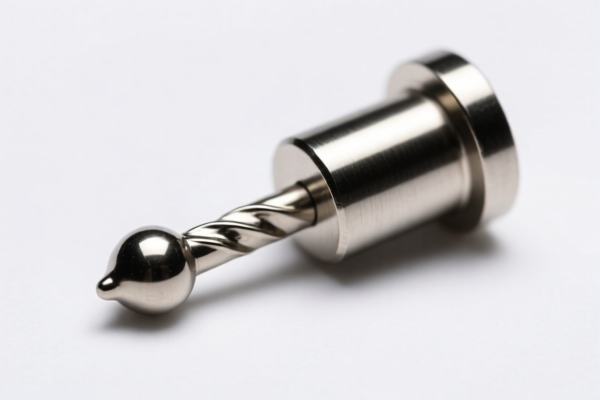
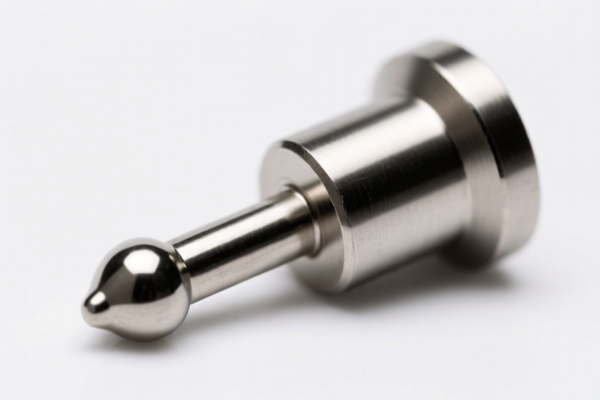


AI Analysis
🖱️ Metal Ball Plug (金属球塞)
🌐 HS Code Reference & Customs Clearance Guide | 2026 Latest Tariff Analysis | Professional Clearance Strategy
📌 I. Product Definition & Classification: What is a "Metal Ball Plug"?
A Metal Ball Plug is a generic industrial component typically characterized by a spherical metallic body. In international trade, its classification depends heavily on its material composition, end-use, and specific geometry. It is not a single standardized commodity but rather a functional item that can fall into several categories depending on its intended application (e.g., sealing, bearing, counterweight, or decorative).
In the context of the provided data, these plugs are primarily classified under Precious Metals/Plated Precious Metals or Articles of Iron/Steel, depending on the material specification.
⚠️ Key Distinction Point:
- If made of Precious Metals (Gold, Silver, Platinum, etc.) or Plated Precious Metals →归类 to Chapter 71.
- If made of Iron/Steel (non-precious) → Classified to Chapter 73.
- If made of Alloy Steel and used as mechanical parts → Potentially Chapter 84.
📦 II. HS Code Classification Details (Based on Provided Data)
| HS Code | Product Description | Material/Category | Total Tax Rate | Key Tax Components |
|---|---|---|---|---|
7115.90.60.00 |
Metal ball plugs, classified as "Other" articles of precious metals or metal-clad precious metals. | Precious Metal / Plated | 39.0% | Base: 4.0% + Sec. 301: 25.0% + Section 122: 10.0% |
7115.90.30.00 |
Other articles of precious metals or metal-clad precious metals, based on metallic material and spherical form. | Precious Metal / Plated | 38.9% | Base: 3.9% + Sec. 301: 25.0% + Section 122: 10.0% |
8482.91.00.10 |
Alloy steel ball parts, matched by metallic ball shape. | Alloy Steel (Mechanical Part) | 39.4% | Base: 4.4% + Sec. 301: 25.0% + Section 122: 10.0% |
7326.19.00.10 |
Other articles of iron or steel; metal material meets iron/steel requirements; spherical plug as a spare part. | Iron/Steel (General) | 87.9% | Base: 2.9% + Sec. 301: 25.0% + Section 122: 10.0% + Steel/Aluminum/Copper Surcharge: 50% |
7326.19.00.80 |
Other articles of iron or steel; metal material and plug form fit the logic of other iron/steel articles. | Iron/Steel (General) | 87.9% | Base: 2.9% + Sec. 301: 25.0% + Section 122: 10.0% + Steel/Aluminum/Copper Surcharge: 50% |
🔍 Critical Observation:
- Precious/Plated Metal Items (7115) have a significantly lower tax burden (~39%) compared to Standard Iron/Steel Items (7326) which carry a massive surcharge (~87.9%).
- Alloy Steel Mechanical Parts (8482) sit in the middle (~39.4%), suggesting that if the ball is a critical mechanical component (e.g., for bearings or valves), it might avoid the heavy "general steel" surcharge.
💰 III. 2026 Latest Tariff Rate Breakdown (Including Additional Duties)
✅ Applicable Country: United States (US)
✅ Origin: China (CN)
✅ Effective Time: Current regulations (including Section 122 and Section 301)
🎯 1. 7115.90.60.00 & 7115.90.30.00 — Precious/Plated Metal Articles
| Item | Content |
|---|---|
| Base Tariff | 3.9% - 4.0% |
| Section 301 Tariff | +25.0% (Standard US-China trade war tariff) |
| Section 122 Tariff | +10.0% (Specific surcharge on certain steel/aluminum/other goods, applied here likely due to metallic nature or specific policy inclusion) |
| Total Tax Rate | ~39.0% |
| Tax Calculation | CIF Value × 39.0% |
| De Minimis Eligibility | ❌ No (High tariff items generally excluded from de minimis benefits for commercial shipments) |
| Legal Basis Path | HTSUS:7115.90 → Section 301: Footnote 9903.88.01 → Section 122 Specific Provisions |
📌 Explanation:
- These codes cover goods made of precious metals or clad with precious metals.
- The 39% rate is relatively manageable compared to the iron/steel category.
- Key Risk: Misclassifying a high-value precious metal item as "steel" could lead to overpayment, but misclassifying steel as "precious metal" is a serious customs violation (fraud). Accuracy of material declaration is paramount.
🎯 2. 8482.91.00.10 — Alloy Steel Ball Parts
| Item | Content |
|---|---|
| Base Tariff | 4.4% |
| Section 301 Tariff | +25.0% |
| Section 122 Tariff | +10.0% |
| Total Tax Rate | 39.4% |
| Tax Calculation | CIF Value × 39.4% |
| De Minimis Eligibility | ❌ No |
| Legal Basis Path | HTSUS:8482.91 → Section 301 → Section 122 |
📌 Explanation:
- This classification assumes the "Metal Ball Plug" is a functional mechanical part (e.g., a ball bearing component, valve ball, or precision instrument part).
- Being classified under Chapter 84 (Machinery) often allows it to escape the heavy "Chapter 73 (General Iron/Steel)" surcharges that apply to raw steel articles.
- Strategy: If the plug serves a mechanical function, this is likely the most accurate and cost-effective classification for steel/alloy steel items.
🎯 3. 7326.19.00.10 & 7326.19.00.80 — Other Articles of Iron or Steel
| Item | Content |
|---|---|
| Base Tariff | 2.9% |
| Section 301 Tariff | +25.0% |
| Section 122 Tariff | +10.0% |
| Steel/Aluminum/Copper Surcharge | +50.0% (Crucial Add-on) |
| Total Tax Rate | 87.9% |
| Tax Calculation | CIF Value × 87.9% |
| De Minimis Eligibility | ❌ No |
| Legal Basis Path | HTSUS:7326.19 → Section 301 → Section 122 → Heavy Steel Surcharge (50%) |
📌 Explanation:
- These codes apply to general iron or steel articles that are not specifically machinery parts (Chapter 84) or precious metal items (Chapter 71).
- The 50% Surcharge is the killer here. It effectively doubles the duty compared to the other categories.
- This classification is likely used for decorative steel balls, simple plugs, or non-functional steel spheres.
- Avoid this classification if possible for mechanical or high-value items, as the tax burden is prohibitive.
🛠️ IV. Customs Clearance Operational Advice (Practical Pitfall Guide)
✅ 1. Preparation Checklist (Must-Have Documents)
| Document | Required | Explanation |
|---|---|---|
| ✅ Product Specification Sheet | ✔️ | Must specify exact material (e.g., "Stainless Steel 304", "Gold-Plated Brass", "Alloy Steel"). Vague terms like "Metal" will lead to misclassification. |
| ✅ Functional Description | ✔️ | Is it a mechanical part (valve, bearing) or a general article (decoration, weight)? This determines Chapter 84 vs. 73. |
| ✅ Product Photos | ✔️ | Clear images showing scale, threading (if any), and surface finish. |
| ✅ Commercial Invoice | ✔️ | Must list HS Code, Duty Rate, and Country of Origin. |
| ✅ Origin Certificate | ✔️ | If applicable, to prove origin for Section 301 and 122 calculations. |
✅ 2. Declaration Strategy (Key Mnemonic)
🔥 "Material Defines Code, Function Defines Rate! Avoid 'General Steel' Trap!"
| Scenario | Correct Declaration | Risk if Wrong |
|---|---|---|
| Plastic/Rubber ball with metal cap | Likely Chapter 71 or 39 (not listed in data, but lower tax) | Do NOT declare as full metal. |
| Precious Metal Ball Plug | 7115.90.60.00 (39.0%) |
Misclassifying as Steel → Overpay. Misclassifying Steel as Precious → Fraud. |
| Alloy Steel Mechanical Part | 8482.91.00.10 (39.4%) |
Declaring as 7326 → 87.9% Tax (Save 48.5%!). |
| Decorative/General Steel Ball | 7326.19.00.80 (87.9%) |
No way to avoid the 50% surcharge unless material/value changes. |
✅ 3. Special Case Handling
| Situation | Recommendation |
|---|---|
| "Metal" is unspecified | Do not guess. Provide detailed material composition. Customs will likely default to the highest tax bracket (7326) if material is unclear. |
| Small Quantity / Personal Use | Still subject to high tariffs. De minimis thresholds do not apply to Section 301/122 goods from China. |
| Composite Products | If the plug has non-metal parts (e.g., rubber seal), the "essential character" rule applies. If metal is essential, it stays in Chapter 71/73/84. |
| Origin Non-China | If the product is made in Vietnam/Mexico/Thailand, Section 301 (25%) and Section 122 (10%) may be reduced or eliminated. Check FTA rules. |
🌍 V. Global Market Clearance Comparison (2026 Latest)
| Country/Region | Recommended HS Code | Est. Tariff (China Origin) | Certification Requirements | Notes |
|---|---|---|---|---|
| 🇺🇸 United States | 7115.90.60.00 / 8482.91.00.10 |
39.0% - 39.4% | N/A | Avoid 7326 (87.9%). High tariffs apply to all metallic goods from China. |
| 🇨🇳 China (Import) | 7326.19.00.90 (General) |
~10-15% | CCC (if applicable) | Lower entry barrier for domestic trade. |
| 🇪🇺 European Union | 7326.90.98 (General) |
~2.7% + VAT | CE (if mechanical) | EU does not have Section 301/122. Tariffs are much lower than US. |
| 🇬🇧 United Kingdom | 7326.90.98 |
~2.7% + VAT | UKCA | Post-Brexit rules apply, but no China-specific surcharges like US. |
| 🇦🇺 Australia | 7326.90.90 |
~5% | RCM | No additional China tariffs. |
📌 Conclusion:
- USA is the most challenging market for Metal Ball Plugs due to Section 301 (25%) + Section 122 (10%) + Potential 50% Steel Surcharge.
- EU/UK/Australia offer much lower tariff burdens. Consider transshipment or final assembly in these regions if shipping directly to the US is too costly.
📌 VI. Common Mistakes & Pitfalls (Lessons from Blood & Tears)
❌ Mistake 1: Declaring an Alloy Steel Mechanical Part as 7326.19.00.80 (General Steel Article)
👉 Consequence: Paying 87.9% instead of 39.4%. Loss of nearly 50% profit margin.
✅ Fix: Prove it is a "part of machinery" (Chapter 84) with technical specifications.
❌ Mistake 2: Declaring Steel Plugs as Precious Metal (7115) to lower tax
👉 Consequence: Customs Fraud. Heavy fines, seizure of goods, and potential criminal charges.
✅ Fix: Only use 7115 if the item actually contains precious metal or is clad with it.
❌ Mistake 3: Assuming "Small Package" = "No Tax"
👉 Consequence: Section 301 and 122 tariffs do not apply to de minimis exemptions for China-origin goods.
✅ Fix: Budget for full tariffs regardless of package size.
❌ Mistake 4: Vague Description: "Metal Ball"
👉 Consequence: Customs officer has discretion. They will likely choose the highest taxable category (7326).
✅ Fix: Use precise descriptions: "Stainless Steel 304 Ball Bearing Plug, for Valve Use, ISO 7261 Standard."
🎯 VII. Conclusion: Professional Declaration, Cost Savings, Efficiency!
🎯 Remember the Mantra:
🔹 "Alloy Steel = Chapter 84 (39%)! General Steel = Chapter 73 (88%)! Precious = Chapter 71 (39%)!"
🔹 "Function over Form! Mechanical Parts avoid the Steel Surcharge!"
📌 Pro Tip:
If your Metal Ball Plug is a high-precision component for machinery, strongly argue for 8482.91.00.10. If it is decorative, accept the 87.9% or consider non-China origins.
For precious metal items, ensure assay reports or plating thickness certificates are available to justify 7115.
📣 Immediate Action:
📞 Contact a Professional Customs Broker + Provide Material Specs + Apply for Advance Ruling (if possible)
🚀 Let your Metal Ball Plugs clear smoothly, legally, and profitably!
✨ Professional Clearance Starts with Accurate Classification!
💼 Every Percent of Duty Saved is Pure Profit!
Customer Reviews
About HS Code Classification
The Harmonized System (HS) is an internationally standardized nomenclature developed by the World Customs Organization (WCO) to classify traded products. Over 200 countries use the HS system as the basis for customs tariffs, trade statistics, and import/export regulations.
Each HS code follows a hierarchical structure:
- Chapter (2 digits) — Broad category of goods (e.g., Chapter 84: Machinery and Mechanical Appliances)
- Heading (4 digits) — More specific grouping within the chapter
- Subheading (6 digits) — Internationally standardized breakdown, used by all WCO member countries
- National subdivisions (8-10 digits) — Country-specific extensions for further classification, such as US HTSUS 10-digit codes
Correct HS code classification is essential for smooth customs clearance, accurate duty payment, and compliance with trade regulations. Misclassification can lead to customs delays, overpayment of duties, or penalties.
When importing from CN to US, the applicable tariff rates may include:
- Most-Favored-Nation (MFN) rate — The standard duty rate applied to WTO members
- General rate — Applied to countries without trade agreements
- Trade remedy duties — Additional tariffs such as Section 301 (anti-dumping), Section 232 (national security), or countervailing duties
The information provided on this page is for reference purposes only. For official classification, please consult with your local customs authority or a licensed customs broker.