320W Desktop PD Charger
CN → US| HS Code | Tariff Rate | Origin | Destination | Doc |
|---|---|---|---|---|
| 8543709860 | 37.6% | CN | US | Official Doc |
| 8504409530 | 35.0% | CN | US | Official Doc |
| 8504409540 | 35.0% | CN | US | Official Doc |
| 8504409540 | 35.0% | CN | US | Official Doc |
| 8543709860 | 37.6% | CN | US | Official Doc |
Product Images
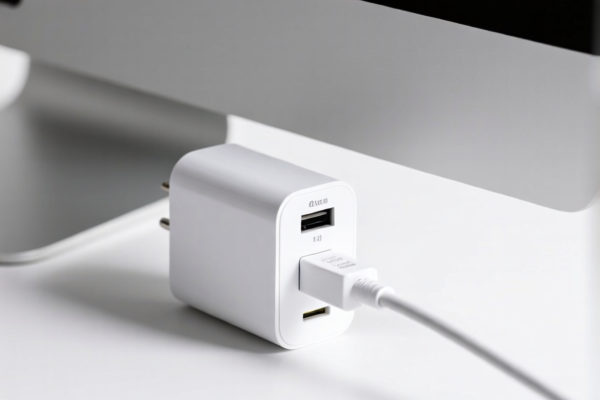
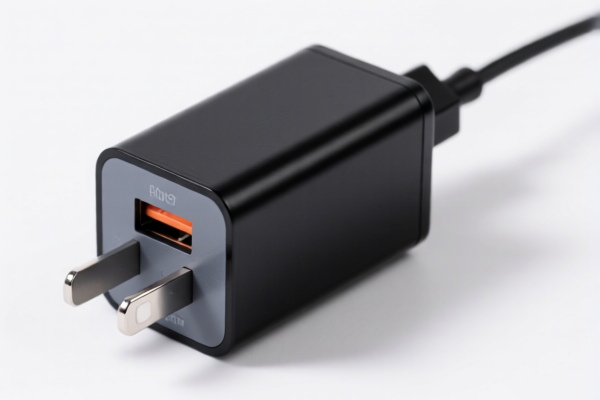
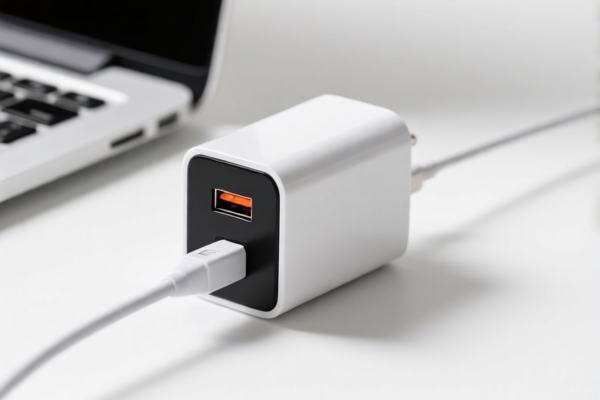
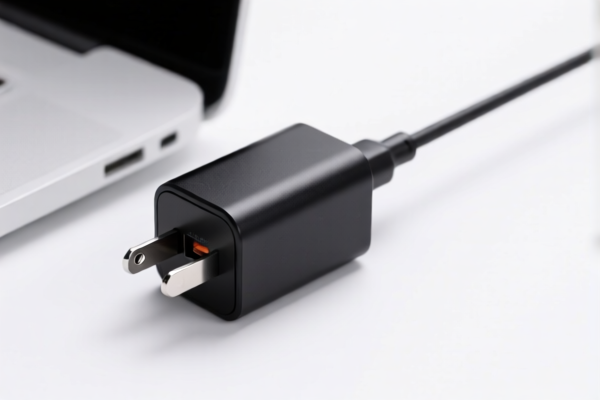
AI Analysis
🔌 320W Desktop PD Charger (USB-C Power Adapter)
🌐 HS Code Reference & Customs Clearance Guide | 2026 Latest Tariff Analysis | Professional Strategy for US Imports from China
📌 I. Product Definition & Classification: What Exactly Is a "320W Desktop Charger"?
A 320W Desktop PD (Power Delivery) Charger is a high-power static converter used to charge laptops, tablets, and other USB-C compatible devices. In international trade, its classification hinges on two critical factors: 1. Function: Is it primarily a power supply (static converter) or a specialized charging device (general machine)? 2. Form Factor: Is it an internal component or a finished external unit?
⚠️ Critical Distinction:
- If classified as a Power Supply (Static Converter): Falls under Chapter 85 (Section III), specifically heading 8504. This is the most common and often favorable classification for general-purpose desktop adapters. - If classified as a General Purpose Charging Device/Machine: Falls under Chapter 85 (Section IV) or Section XVI, specifically heading 8543 ("Other electrical machines and apparatus"). This is often used when the device has specific proprietary charging protocols or is considered a "general apparatus" rather than a standard power supply.
📦 II. HS Code Classification Details (2026 Latest Tariff Data)
Based on the provided data, there are three potential HS codes, split into two main categories: Power Supplies (8504) and General Electrical Apparatus (8543).
🅰️ Category A: Static Converters / Power Supplies (Heading 8504)
| HS Code | Product Description | Power Range / Feature | Key Characteristic |
|---|---|---|---|
8504.40.95.30 |
Static Converters; Power Supplies | 320W (Falls within 150W–500W range) | Specifically categorized for power supplies within this mid-high power bracket. |
8504.40.95.40 |
Static Converters; Rectifiers / Power Supplies | 320W (Does not fit specific narrow sub-intervals, thus "Other") | Classified as "Other" power supplies/rectifiers outside specific low-power or high-power exclusions. |
8504.40.95.40 |
Static Converters; Rectifiers / Power Supplies | 320W (Other category) | Same as above; highlights the "other" classification for this power level. |
🔍 Key Insight for 8504:
- Both8504.40.95.30and8504.40.95.40are considered Power Supplies. - The distinction is often subtle and depends on the exact legal notes of the tariff schedule. However, both fall under the same tax profile in the provided data. - Note: The description explicitly states 320W fits the "150W to 500W" range for.30, or is "Other" for.40.
🅱️ Category B: Other Electrical Machines & Apparatus (Heading 8543)
| HS Code | Product Description | Classification Logic | Key Characteristic |
|---|---|---|---|
8543.70.98.60 |
Electrical Machines and Apparatus; Other | Charging Device with independent function | Classified as a "general apparatus" or "machine" for charging, not just a passive power supply. |
🔍 Key Insight for 8543:
- This code treats the charger as a functional machine rather than a simple component. - It is often used for devices with specific intelligence, multiple ports, or proprietary protocols that don't fit the pure "static converter" definition. - Risk: This code has a higher base tariff (2.6% vs 0% for 8504), leading to a higher total tax burden.
💰 III. 2026 Latest Tariff Rate Breakdown (US Imports from China)
✅ Applicable Country: United States (US)
✅ Origin: China (CN)
✅ Effective Date: Includes Section 301 & IEEPA duties
🎯 1. Power Supply Classifications (8504.40.95.30 & 8504.40.95.40)
| Item | Detail |
|---|---|
| Base Tariff | 0.0% (ad valorem) |
| Section 301 Additional Duty | +25.0% |
| IEEPA Additional Duty | +10.0% (Section 122 clause) |
| Total Tariff Rate | 35.0% |
| Calculation | CIF Value × 35% |
| De Minimis Eligibility | ❌ No (Deny De Minimis) |
| Legal Basis | USITC:8504.40.95.30 → FOOTNOTE:301 + IEEPA:9903.01.25 |
📌 Explanation:
- Base Rate (0%): Power supplies (static converters) generally have zero base duty under US HTSUS. - Section 301 (25%): Applies to most electronics from China. - IEEPA (10%): Additional punitive tariff on Chinese goods. - Total: 35%. This is the most common and recommended classification for standard desktop PD chargers.
🎯 2. General Apparatus Classification (8543.70.98.60)
| Item | Detail |
|---|---|
| Base Tariff | 2.6% (ad valorem) |
| Section 301 Additional Duty | +25.0% |
| IEEPA Additional Duty | +10.0% (Section 122 clause) |
| Total Tariff Rate | 37.6% |
| Calculation | CIF Value × 37.6% |
| De Minimis Eligibility | ❌ No (Deny De Minimis) |
| Legal Basis | USITC:8543.70.98.60 → FOOTNOTE:301 + IEEPA:9903.01.25 |
📌 Explanation:
- Base Rate (2.6%): "Other electrical machines" have a small base duty. - Additional Duties: Same 25% + 10% as above. - Total: 37.6%. This is 2.6% higher than the power supply classification. - Recommendation: Unless your product is legally required to be classified here (e.g., specific functional tests), avoid this code to save on duties.
🛠️ IV. Customs Clearance Practical Advice (Pitfall Avoidance Guide)
✅ 1. Document Preparation Checklist (Essential)
| Document | Required | Purpose |
|---|---|---|
| ✅ Product Specification Sheet | ✔️ | Must clearly state: Input Voltage, Output Power (320W), Protocols (PD 3.1, etc.), Ports (USB-C/A). |
| ✅ Circuit Diagram / Schematic | ✔️ | Critical for proving it is a "Static Converter" (8504) and not a complex machine (8543). Show no microprocessors controlling external devices beyond power conversion. |
| ✅ Product Photos | ✔️ | Show the entire unit, label, and plug type. Must match the "Desktop" description (standalone, not internal). |
| ✅ FCC Certification | ✔️ | Mandatory for electronics in the US. Provide the FCC ID. |
| ✅ Commercial Invoice | ✔️ | Clearly describe as "320W Desktop Power Supply Adapter" or "PD Charger". |
| ✅ Certificate of Origin | ✔️ | Required to determine China origin for Section 301/IEEPA duties. |
✅ 2. Classification Strategy: 8504 vs. 8543
| Scenario | Recommended HS Code | Total Tax | Why? |
|---|---|---|---|
| Standard Desktop Adapter (Plugs into wall, outputs power) | 8504.40.95.30 |
35.0% | Meets definition of "Static Converter" or "Power Supply". Lower base rate. |
| Smart Charging Hub (With software, network connectivity, complex logic) | 8543.70.98.60 |
37.6% | Only if it has independent function beyond simple power conversion. Higher risk of audit. |
| Internal Power Supply (PCB only, for installation inside a device) | Not in Data | Varies | Usually still 8504, but packaging differs. |
🔥 Pro Tip:
Always aim for8504.40.95.30.
- Description: "Power Supply, 320W, Static Converter."
- Justification: It converts AC to DC. The fact that it supports PD (Power Delivery) protocol is a feature of the conversion, not a separate "machine" function.
- Avoid8543unless you have no choice, as it costs you an extra 2.6% on the CIF value plus the impact on other fees.
✅ 3. Special Cases & Warnings
| Case | Handling Advice |
|---|---|
| Multi-Port Charger | If it has multiple USB-C ports, it is still a power supply. Do not split declaration. Declare as one unit. |
| Charging Stand + Charger | If sold together, declare as one "Set" or "Kit". Do not split into "Stand" (8543/9403) and "Charger" (8504) to avoid higher combined duties. |
| Origin Labeling | Must clearly state "Made in China" on the product and packaging to trigger the correct 35% duty. Mislabeling leads to fraud penalties. |
| Voltage Range | Ensure the input is 100-240V AC. If it's DC-DC (car charger), classification may differ. This data assumes AC-DC Desktop Charger. |
🌍 V. Global Market Comparison (2026)
| Market | HS Code | Total Duty (China Origin) | Notes |
|---|---|---|---|
| 🇺🇸 United States | 8504.40.95.30 |
35.0% | High due to 301/IEEPA. |
| 🇺🇸 United States | 8543.70.98.60 |
37.6% | Avoid if possible. |
| 🇪🇺 European Union | 8504.40 |
0% - 4% | No Section 301/IEEPA equivalents. Low base duty. |
| 🇨🇳 China | 8504.40 |
0% - 6% | Varies by specific sub-heading. Usually low for exports. |
| 🇬🇧 United Kingdom | 8504.40 |
0% | Post-Brexit, often 0% for electronics. |
📌 Conclusion:
The US market is the most expensive for Chinese-made chargers due to punitive tariffs.
Cost Saving Strategy:
1. Ensure correct classification as 8504.40.95.30 (35%) rather than 8543 (37.6%).
2. Consider supply chain diversification (Vietnam, Mexico) if volumes are high, as these countries may have IEEPA exemptions or lower Section 301 rates.
📌 VI. Common Mistakes & Pitfalls (Lessons Learned)
❌ Mistake 1: Classifying as 8504 but providing insufficient technical docs.
👉 Result: Customs may downgrade to a higher duty or delay clearance for verification.
Fix: Provide a clear block diagram showing AC input → Transformer/Rectifier → DC output.
❌ Mistake 2: Using "Charger" in the description without specifying "Power Supply".
👉 Result: Risk of being misclassified as 8543 (37.6%).
Fix: Use "320W Desktop Power Supply, Static Converter, USB-C PD" in the commercial invoice.
❌ Mistake 3: Under-declaring value to avoid 35% duty.
👉 Result: Severe penalties, seizure of goods, and blacklist of importer.
Fix: Declare accurate CIF value. 35% is a cost of doing business; optimize logistics instead.
❌ Mistake 4: Ignoring FCC ID on the label.
👉 Result: CBP will reject entry without valid FCC compliance evidence.
Fix: Ensure FCC ID is visible on the product and provided in docs.
🎯 VII. Conclusion: Professional Clearance, Cost Optimization!
🎯 Key Takeaway:
🔹 HS Code
8504.40.95.30is your best friend.
🔹 Total Duty: 35% (0% Base + 25% Sec 301 + 10% IEEPA).
🔹 Avoid8543unless legally mandated (saves 2.6%).
🔹 Documentation is King: Circuit diagrams and specs prove it's a "Power Supply," not a "Machine."
📌 Action Plan for Importers:
1. Apply for Advance Ruling if the product design is complex.
2. Label Clearly: "Made in China," FCC ID, Model Number.
3. Invoice Description: "320W Desktop Power Supply Adapter, Static Converter, USB-C PD."
4. Calculate Landed Cost: Include 35% duty + brokerage + handling in your pricing model.
📣 Final Word:
🚀 Clear Customs with Confidence.
💼 Precision in Classification Saves Money.
🌏 Stay Compliant, Stay Profitable.
✨ This guide is based on the provided HS Code data for 320W Desktop PD Chargers. Always consult a licensed customs broker for final classification decisions.
💼 Your duty bill is calculated, not guessed!
Customer Reviews
About HS Code Classification
The Harmonized System (HS) is an internationally standardized nomenclature developed by the World Customs Organization (WCO) to classify traded products. Over 200 countries use the HS system as the basis for customs tariffs, trade statistics, and import/export regulations.
Each HS code follows a hierarchical structure:
- Chapter (2 digits) — Broad category of goods (e.g., Chapter 84: Machinery and Mechanical Appliances)
- Heading (4 digits) — More specific grouping within the chapter
- Subheading (6 digits) — Internationally standardized breakdown, used by all WCO member countries
- National subdivisions (8-10 digits) — Country-specific extensions for further classification, such as US HTSUS 10-digit codes
Correct HS code classification is essential for smooth customs clearance, accurate duty payment, and compliance with trade regulations. Misclassification can lead to customs delays, overpayment of duties, or penalties.
When importing from CN to US, the applicable tariff rates may include:
- Most-Favored-Nation (MFN) rate — The standard duty rate applied to WTO members
- General rate — Applied to countries without trade agreements
- Trade remedy duties — Additional tariffs such as Section 301 (anti-dumping), Section 232 (national security), or countervailing duties
The information provided on this page is for reference purposes only. For official classification, please consult with your local customs authority or a licensed customs broker.