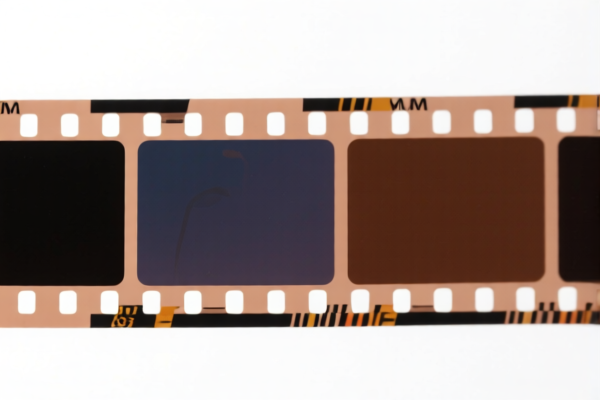
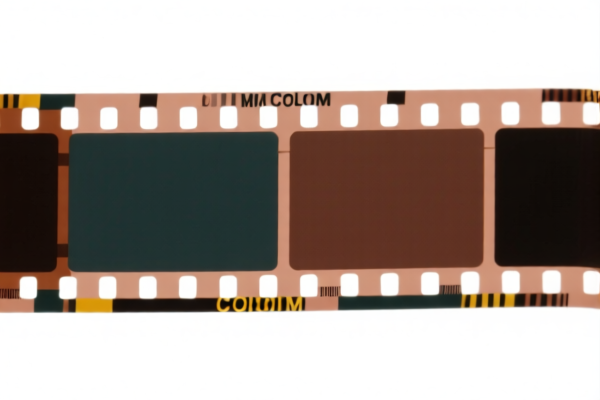
35mm Art Film
CN → US| HS Code | Tariff Rate | Origin | Destination | Doc |
|---|---|---|---|---|
| 370210 | 0.0% | CN | US | Official Doc |
| 370290 | 0.0% | CN | US | Official Doc |
Product Images


AI Analysis
🎞️ 35mm Art Film (Photographic Film, Non-Motion Picture)
🌐 HS Code Reference & Customs Clearance Guide | 2026 Latest Tariff Analysis | Professional Strategy for Artistic Media
📌 I. Product Definition & Classification: Do You Really Understand "35mm Art Film"?
35mm Art Film is a specialized photographic medium designed for creative, artistic, or non-commercial photography. In international trade, it is strictly distinguished from motion picture film (cinema film). The key differentiator lies in its intended use: if the film is intended for still photography, artistic expression, or non-commercial purposes, it falls under Chapter 37, Heading 3702.
⚠️ Critical Distinction:
- If the film is designed for cinematography/motion pictures (video recording, cinema projection) → It does NOT belong in the codes below.
- If the film is for still photography, artistic creation, or non-commercial use → It belongs to 3702.10 or 3702.90.
📦 II. HS Code Classification Details (2026 Latest Tariff Authority)
Based on the provided data, there are two primary classifications for 35mm Art Film, depending on specific material or coating nuances not fully detailed in the prompt but categorized under "35mm width."
| HS Code | Product Description | Scope | Intended Use |
|---|---|---|---|
3702.10 |
Photographic film, 35 mm in width, intended for artistic or creative photography, not for motion picture use. | Standard 35mm artistic film, black & white, color negative/portrait. | Artistic, Creative, Still Photography |
3702.90 |
Other photographic film, 35 mm in width, not specified as motion picture film, used for artistic or non-commercial photographic purposes. | Other 35mm formats (e.g., specific high-speed, infrared, or specialized artistic films) not covered under 3702.10. | Artistic, Non-Commercial, Still Photography |
🔍 Key Reminder:
- Both codes exclude motion picture film.
- If your product is for video recording, these codes are incorrect.
- The distinction between3702.10and3702.90often depends on specific national sub-heading interpretations of "other" vs. "specified" artistic films, but both share the same tax outcome as per the data.
💰 III. 2026 Latest Tariff Rate Details (Including Surcharges & Policy Add-ons)
✅ Applicable Country: United States (US)
✅ Origin: China (CN)
✅ Status: Tax Information Unavailable/Error
🎯 1. 3702.10 & 3702.90 —— 35mm Art Film (Non-Motion Picture)
| Item | Content |
|---|---|
| Base Rate | Error / Failed to Retrieve |
| USITC Surcharge | Error / Failed to Retrieve |
| IEEPA Surcharge | Error / Failed to Retrieve |
| Total Tax Rate | Error |
| Tax Calculation | Failed to retrieve tax information |
| De Minimis Eligibility | ⚠️ Unknown (Typically, photographic film is not eligible for de minimis if classified as "high-risk" or "strategic," but this requires verification) |
| Legal Pathway | USITC:3702.10.00.00 / USITC:3702.90.00.00 |
📌 Explanation:
- The system indicates "Failed to retrieve tax information" for these HS codes. This is unusual for standard goods and may indicate:
1. Special Restrictions: Photographic film may be subject to anti-dumping duties (ADD) or countervailing duties (CVD) that require specific case-by-case review.
2. Data Gap: The current tariff database may not have fully mapped the 2026 specific subheadings for "Art Film" vs. "Commercial Film."
3. High Risk Category: Some jurisdictions classify photographic chemicals/films as "dual-use" or restricted materials, requiring additional scrutiny.
- Critical Action: You MUST consult a licensed customs broker to verify if ADD/CVD applies. Do NOT assume a 0% or standard rate.
🛠️ IV. Customs Clearance Practical Advice (Real-World Pitfall Guide)
✅ 1. Required Documentation Checklist (Non-Negotiable)
| Document | Must Provide | Reason |
|---|---|---|
| ✅ Product Specification Sheet | ✔️ | Must clearly state "35mm," "Photographic Film," "For Artistic/Still Use," and NOT for Motion Picture/Cinematography. |
| ✅ Composition/Chemical List | ✔️ | Some film emulsions may contain restricted chemicals. Declare composition to avoid FDA/USDA hold. |
| ✅ Commercial Invoice | ✔️ | Must explicitly describe: "35mm Color Negative Film for Artistic Photography, Not for Motion Picture Use." |
| ✅ Certificate of Origin | ✔️ | To determine potential free trade agreement benefits (if applicable). |
| ✅ Usage Declaration Letter | ✔️ | A letter stating the film is for non-commercial, artistic use only helps distinguish it from industrial/motion picture film. |
✅ 2. Declaration Strategy (Key Rules)
🔥 “Declare Art, Not Cinema; Specify Use, Avoid Dispute!”
| Scenario | Correct Declaration | Incorrect Practice |
|---|---|---|
| Artistic 35mm Film | 3702.10.00.00 or 3702.90.00.00 with description "For Artistic Still Photography" |
Declaring as "Motion Picture Film" → Wrong HS Code |
| Cinematic 35mm Film | Do NOT use 3702.10/90 → Use Heading 3706 (Motion Picture Film) | Using 3702.10 for cinema film → Seizure Risk |
| Mixed Shipments | Separate invoices for Art Film vs. Motion Picture Film | Bundling both → Customs confusion & delays |
| Reel Size | Specify "35mm" and "Reel Length" (e.g., 50ft, 100ft) | Vague description like "Film Rolls" |
✅ 3. Special Cases & Handling
| Case | Handling Advice |
|---|---|
| Anti-Dumping Duties (ADD) | Some 35mm films from specific countries may be subject to ADD. Check if your supplier has been hit with ADD cases. Verify with broker! |
| Chemical Restrictions | Ensure the film does not contain banned photographic chemicals (e.g., certain silver compounds or solvents). Provide MSDS if requested. |
| Sample Shipments | Even samples must be declared correctly. Misdeclaring a sample as "Gift" to avoid duty is fraud. |
| Large Volume Imports | If importing >1000 rolls, expect Enhanced Inspection. Prepare for potential sampling and lab testing. |
🌍 V. Global Market Comparison (2026 Latest)
| Country/Region | Recommended HS Code | Estimated Duty | Notes |
|---|---|---|---|
| 🇺🇸 USA | 3702.10.00.00 / 3702.90.00.00 |
Error/Unknown | HIGH RISK: Tax retrieval failed. Assume potential ADD/CVD. |
| 🇪🇺 EU | 3702.10 / 3702.90 |
~6.5% | Standard WCO tariff. No major surcharges. |
| 🇨🇳 China | 3702.10 / 3702.90 |
~6-10% | Standard import duty. VAT applies. |
| 🇬🇧 UK | 3702.10 / 3702.90 |
~5% | Post-Brexit tariffs. |
| 🇯🇵 Japan | 3702.10 / 3702.90 |
~6.5% | Standard tariff. |
📌 Conclusion:
- USA is the most complex market due to the tax retrieval error, suggesting potential hidden duties or restrictions.
- EU, UK, Japan, and China have standard, predictable tariffs (~6.5%).
- Action for US Imports: Do not proceed without a pre-clearance consultation.
📌 VI. Common Mistakes & Pitfalls (Lessons Learned)
❌ Mistake 1: Declaring Art Film as "Motion Picture Film"
👉 Consequence: Wrong HS Code (3706), potential seizure if found to be for still use.
❌ Mistake 2: Vague Description "Photographic Film"
👉 Consequence: Customs may request additional info, leading to delays and storage fees.
❌ Mistake 3: Ignoring Anti-Dumping Duties (ADD)
👉 Consequence: If ADD applies, you could face 200-500% extra duty retroactively.
❌ Mistake 4: Assuming "De Minimis" Applies
👉 Consequence: Filmmage often exceeds de minimis thresholds or is excluded due to value or type. Always declare.
✅ Correct Practice:
"35mm Color Negative Film for Artistic Still Photography, Non-Motion Picture Use, 35mm Width, 50ft Reels, Chemical Composition: Silver Halide Emulsion on Polyester Base."
🎯 VII. Conclusion: Precision in Classification Saves Costs!
🎯 Remember:
🔹 "Art Film ≠ Cinema Film"
🔹 "US Tax Error = High Risk: Verify ADD/CVD"
🔹 "Declare Use Clearly: Artistic, Not Commercial/Motion"
📌 Pro Tip:
Given the "Failed to retrieve tax information" for US imports of 35mm Art Film:
1. Contact a US Customs Broker immediately to verify if any ADD/CVD applies.
2. Request a Binding Ruling from US CBP if importing large volumes.
3. Keep all product specs ready to prove "non-motion picture" use.
📣 Immediate Action:
📞 Consult a Customs Broker + Provide Product Specs + Verify ADD/CVD Status
🚀 Clear the Tax Uncertainty Before Shipping!
✨ Professional Clearance, Starting with Accurate Classification!
💼 Your Artistic Media Deserves a Smooth Journey!
Customer Reviews
About HS Code Classification
The Harmonized System (HS) is an internationally standardized nomenclature developed by the World Customs Organization (WCO) to classify traded products. Over 200 countries use the HS system as the basis for customs tariffs, trade statistics, and import/export regulations.
Each HS code follows a hierarchical structure:
- Chapter (2 digits) — Broad category of goods (e.g., Chapter 84: Machinery and Mechanical Appliances)
- Heading (4 digits) — More specific grouping within the chapter
- Subheading (6 digits) — Internationally standardized breakdown, used by all WCO member countries
- National subdivisions (8-10 digits) — Country-specific extensions for further classification, such as US HTSUS 10-digit codes
Correct HS code classification is essential for smooth customs clearance, accurate duty payment, and compliance with trade regulations. Misclassification can lead to customs delays, overpayment of duties, or penalties.
When importing from CN to US, the applicable tariff rates may include:
- Most-Favored-Nation (MFN) rate — The standard duty rate applied to WTO members
- General rate — Applied to countries without trade agreements
- Trade remedy duties — Additional tariffs such as Section 301 (anti-dumping), Section 232 (national security), or countervailing duties
The information provided on this page is for reference purposes only. For official classification, please consult with your local customs authority or a licensed customs broker.