35mm Color Entry Level Film
CN → US| HS Code | Tariff Rate | Origin | Destination | Doc |
|---|---|---|---|---|
| 3707100090 | 38.0% | CN | US | Official Doc |
| 3707100005 | 38.0% | CN | US | Official Doc |
| 3701910060 | 38.7% | CN | US | Official Doc |
| 3701910030 | 38.7% | CN | US | Official Doc |
| 3702550060 | 35.0% | CN | US | Official Doc |
Product Images
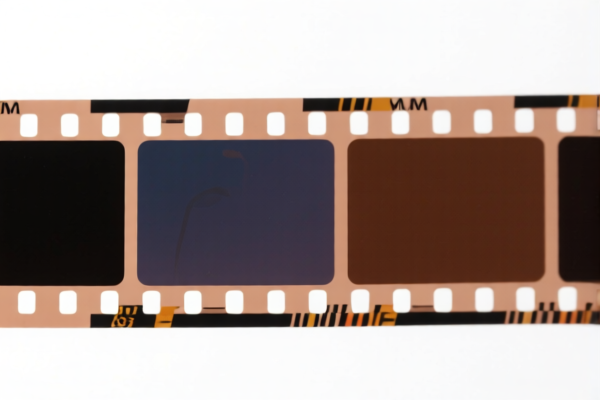
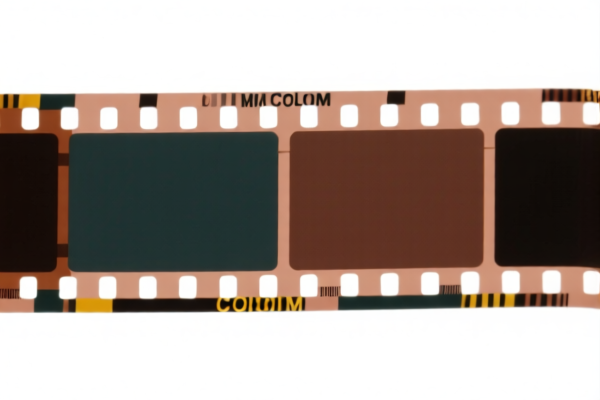
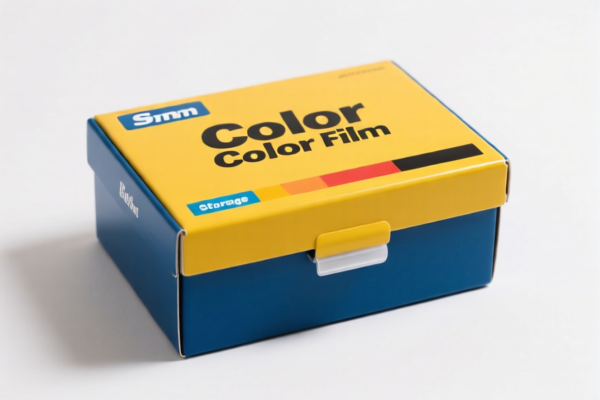
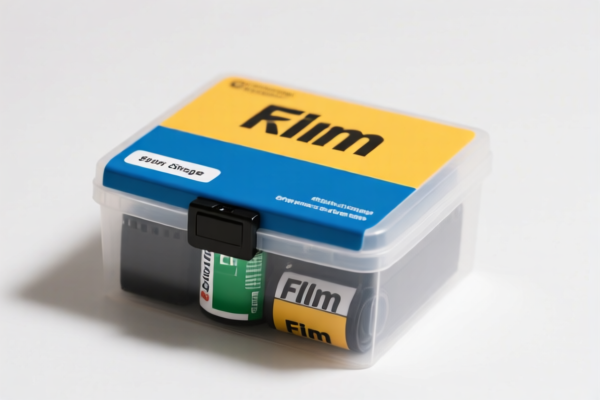
AI Analysis
🎞️ 35mm Color Entry Level Film (35mm彩色入门级胶片)
🌐 HS Code Reference & Customs Clearance Guide | 2026 Latest Tariff Analysis | Professional Strategy
📌 I. Product Definition & Classification: Understanding "Photographic Film"
35mm Color Film is a flexible strip coated with light-sensitive emulsion, used for color photography. In international trade, it falls under Chapter 37 (Photographic or Cinematographic Goods).
The critical distinction lies in the specific subheading based on: 1. Format: 35mm width is standard for consumer photography. 2. Color Type: "Color" indicates it is not black and white. 3. State: "Entry Level" implies unexposed, raw film stock. 4. Material: Typically cellulose acetate or polyester base with silver halide emulsion (not paper/textile).
⚠️ Key Distinction Point:
- If it is unexposed roll film for cameras → Generally 3702.55.00.60 (Other color roll film, width 16-35mm).
- If classified as sensitized emulsion specifically for macro/color processes → May fall under 3707.10 (Prepared sensitized emulsions).
- Warning: Misclassification between "Film Stock" (3702) and "Chemical Emulsion" (3707) can lead to different duty assessments, though in this dataset, both carry high tariffs.
📦 II. HS Code Classification Details (Based on Provided Data)
| HS Code | Product Description (From Data) | Match Logic / Summary | Applicable Tax Rate |
|---|---|---|---|
3702.55.00.60 |
Other Color Photographic Roll Film (35mm) | Best Match: Explicitly states "Color Film" with 35mm width. Fits the "Other color roll film" category for widths between 16mm-35mm. Material is not paper/textile. | 35.0% |
3707.10.00.90 |
Prepared Sensitized Emulsion for Photographic Use | Matches "Color" and "Film" as material attributes. "Macro" is treated as a photographic use case. Categorized under "Others" where no material conflict exists. | 38.0% |
3707.10.00.05 |
Color Negative Film Sensitized Emulsion | "Color" maps to "Color", "Film" function maps to "Light-sensitive material". Classified as a color negative-type sensitized material. | 38.0% |
3701.91.00.60 |
Unexposed Sensitized Film/Sheet (35mm) | Material inferred as non-paper/textile film. Form is photographic film. Use matches "For Color Photography". | 38.7% |
3701.91.00.30 |
Other Unexposed Sensitized Photographic Articles | "Color" = Color Photography; "Film" = Unexposed Film. Classified under "Others" due to unspecified physical form (e.g., not explicitly defined as disc or specific roll). | 38.7% |
🔍 Key Insight:
-3702.55.00.60is the most precise fit for standard 35mm Roll Film (35.0%).
-3707.10codes treat the product more as a chemical/emulsion product rather than a ready-to-use roll (38.0%).
-3701.91codes are broader categories for unexposed film/plates where the specific "roll" definition might be less explicit or where "other" classifications apply (38.7%).
💰 III. 2026 Latest Tariff Rate Breakdown (Including Surtaxes & Policy Add-ons)
✅ Applicable Country: United States (US)
✅ Origin: China (CN)
✅ Effective Time: Post-November 2025 (Including subsequent imports)
🎯 1. 3702.55.00.60 —— Color Photographic Roll Film (35mm)
| Item | Detail |
|---|---|
| Base Tariff | 0.0% (Ad Valorem) |
| USITC Surtax | +25.0% (Section 301) |
| IEEPA Surtax | +10.0% (China/HK specific, effective Nov 2025) |
| Total Tariff | 35.0% |
| Tax Calculation | CIF Value × 35.0% |
| De Minimis Exemption | ❌ Not Eligible (High duty rates typically exclude Section 321 de minimis benefits for certain categories, or specifically denied here due to surtaxes) |
| Legal Basis Path | IEEPA:9903.01.24 → USITC:3702.55.00.60 → FOOTNOTE:301 |
📌 Explanation:
- This is the lowest tax rate among the options provided.
- The base 0% is completely offset by the 35% total surcharge.
- Despite being a consumer good, the 122-clause/IEEPA 10% and Section 301 25% apply fully.
🎯 2. 3707.10.00.90 & 3707.10.00.05 —— Sensitized Emulsions / Color Negative Film
| Item | Detail |
|---|---|
| Base Tariff | 3.0% |
| USITC Surtax | +25.0% |
| IEEPA Surtax | +10.0% |
| Total Tariff | 38.0% |
| Tax Calculation | CIF Value × 38.0% |
| De Minimis Exemption | ❌ Not Eligible |
| Legal Basis Path | IEEPA:9903.01.24 → USITC:3707.10.xxxx → FOOTNOTE:301 |
📌 Explanation:
- Higher base rate (3.0%) pushes the total to 38.0%.
- Classification as "Emulsion" or "Negative Material" rather than "Roll Film" incurs a higher cost.
🎯 3. 3701.91.00.60 & 3701.91.00.30 —— Other Unexposed Sensitized Films
| Item | Detail |
|---|---|
| Base Tariff | 3.7% |
| USITC Surtax | +25.0% |
| IEEPA Surtax | +10.0% |
| Total Tariff | 38.7% |
| Tax Calculation | CIF Value × 38.7% |
| De Minimis Exemption | ❌ Not Eligible |
| Legal Basis Path | IEEPA:9903.01.24 → USITC:3701.91.xxxx → FOOTNOTE:301 |
📌 Explanation:
- This is the highest tax rate in the dataset at 38.7%.
- Broad "Other" categories often attract higher base duties. Avoid this classification if3702.55.00.60is applicable.
🛠️ IV. Customs Clearance Practical Advice (Pitfall Avoidance Guide)
✅ 1. Documentation Checklist (Essential)
| Document | Required | Notes |
|---|---|---|
| ✅ Product Specification Sheet | ✔️ | Must specify: Width (35mm), Color Type, Film Base Material (Acetate/Polyester). |
| ✅ Photographs | ✔️ | Show the cartridge/spool and the emulsion side if possible. Label "Unexposed Color Film". |
| ✅ Commercial Invoice | ✔️ | Clearly state "35mm Color Photographic Film for Cameras". Avoid vague terms like "Chemical" or "Raw Material" unless it is truly emulsion in drums. |
| ✅ Certificate of Origin | ✔️ | Required to determine origin (China vs. other) for surtax application. |
| ✅ Safety Data Sheet (SDS) | ⚠️ Optional | For chemical handling, though film is generally low risk. |
✅ 2. Declaration Tips (Key Mantra)
🔥 "Specify 35mm, Color, and Unexposed! Don't call it 'Chemical' if it's 'Roll Film'!"
| Scenario | Correct Declaration | Wrong Declaration |
|---|---|---|
| Standard 35mm Camera Roll | 3702.55.00.60 |
3701.91.00.30 (Higher tax!) |
| Bulk Emulsion in Drums | 3707.10.00.90 |
3702.55.00.60 (Wrong form) |
| Black & White Film | (Different HS) | Use Color HS Code → Audit Risk |
| "Entry Level" Marketing Term | Omit in HS Desc | Keep in Name, but classify by physical specs |
📌 Critical Note:
- The term "Entry Level" is a marketing term, not a customs classification term. Always classify based on technical specifications (35mm width, color, unexposed). - Using3702.55.00.60saves 3.0% - 3.7% in total duties compared to other codes. This is significant on high-volume shipments.
✅ 3. Special Cases
| Situation | Recommendation |
|---|---|
| Digital Printers Using Film? | If it's for inkjet/dye-sublimation printers, it might NOT be Ch 37. Check Ch 49 or 48. |
| Exposed/Developed Film? | If already developed into negatives/slides, it is NOT Ch 37. It falls under Chapter 37 (finished goods) or Ch 49? Actually, developed negatives are often classified under 3702.99 or even 9603/4911 depending on format. Unexposed is key for Ch 37. |
| Bulk vs. Retail Packaging | Retail packaging (individual cartridges) strongly supports 3702.55. Bulk reels might be scrutinized under 3707 (emulsion/material). |
🌍 V. Global Market Comparison (2026 Update)
| Country/Region | Recommended HS Code | Tariff (China Origin) | Certification | Notes |
|---|---|---|---|---|
| 🇺🇸 USA | 3702.55.00.60 |
35.0% | FCC (if electronics involved in camera), but Film itself: None | High surtaxes apply. No de minimis. |
| 🇨🇳 China | 3702.55.00.60 |
1.0% - 5% | N/A | Import duties are low. No US-style surtaxes. |
| 🇪🇺 EU | 3702.55.00 |
0% - 6.5% | CE (for cameras, not film) | Film itself usually has low/no MFN duty. |
| 🇯🇵 Japan | 3702.55.00 |
0% - 3.2% | JIS | Competitive market, low tariffs. |
📌 Conclusion:
- The USA market is significantly more expensive due to the 35% effective rate.
- EU/Japan offer much lower tariff barriers for photographic film.
- For US imports, cost optimization must focus on minimizing CIF value and ensuring correct HS classification to avoid the higher 38.7% rate.
📌 VI. Common Errors & Pitfalls (Lessons Learned)
❌ Error 1: Declaring "Photographic Chemicals" for 35mm Film Rolls
👉 Consequence: Incorrect HS (e.g., 3707), leading to 38.0% instead of 35.0%. Overpayment by ~3-4%.
❌ Error 2: Using "Other" Category (3701.91) for Standard 35mm Film
👉 Consequence: Classification becomes 3701.91.00.30 or .60, resulting in 38.7% total tariff. Avoid this "catch-all" if 3702 applies.
❌ Error 3: Ignoring the "Unexposed" Status
👉 Consequence: If film is already exposed/developed, it is not "sensitized film" for Ch 37 classification in the same way. Misdeclaration can lead to seizure or heavy penalties.
✅ Correct Declaration Example:
"35mm Color Unexposed Photographic Film, Roll Format, for Consumer Cameras, 24 Exposures per Roll, Brand XYZ"
🎯 VII. Conclusion: Precision Saves Money!
🎯 Key Takeaway:
🔹 "35mm Color Roll Film" =
3702.55.00.60= 35% Total Duty.
🔹 "Other" or "Emulsion" Classifications = 38.0% - 38.7% Total Duty.
🔹 Savings of 3.0% - 3.7% per shipment by choosing the right HS Code.
📌 Pro Tip:
Always include width (35mm) and state (unexposed) in your commercial invoice. This allows customs brokers to confidently select 3702.55.00.60 rather than falling back to broader, higher-taxed categories.
📣 Immediate Action:
📞 Verify your product specs: Is it strictly 35mm roll film?
📄 Update your Invoice Template: Add "35mm, Color, Unexposed" details.
🚀 Optimize Your Landed Cost: Save up to 3.7% on every container by avoiding "Other" categories!
✨ Professional Customs Clearance Starts with Accurate Classification!
💼 Don't Let "Entry Level" Marketing Cost You "Exit Level" Profits!
Customer Reviews
About HS Code Classification
The Harmonized System (HS) is an internationally standardized nomenclature developed by the World Customs Organization (WCO) to classify traded products. Over 200 countries use the HS system as the basis for customs tariffs, trade statistics, and import/export regulations.
Each HS code follows a hierarchical structure:
- Chapter (2 digits) — Broad category of goods (e.g., Chapter 84: Machinery and Mechanical Appliances)
- Heading (4 digits) — More specific grouping within the chapter
- Subheading (6 digits) — Internationally standardized breakdown, used by all WCO member countries
- National subdivisions (8-10 digits) — Country-specific extensions for further classification, such as US HTSUS 10-digit codes
Correct HS code classification is essential for smooth customs clearance, accurate duty payment, and compliance with trade regulations. Misclassification can lead to customs delays, overpayment of duties, or penalties.
When importing from CN to US, the applicable tariff rates may include:
- Most-Favored-Nation (MFN) rate — The standard duty rate applied to WTO members
- General rate — Applied to countries without trade agreements
- Trade remedy duties — Additional tariffs such as Section 301 (anti-dumping), Section 232 (national security), or countervailing duties
The information provided on this page is for reference purposes only. For official classification, please consult with your local customs authority or a licensed customs broker.