35mm Color Film (400 ISO)
CN → US| HS Code | Tariff Rate | Origin | Destination | Doc |
|---|---|---|---|---|
| 3701910030 | 38.7% | CN | US | Official Doc |
| 3702550060 | 35.0% | CN | US | Official Doc |
| 3701910060 | 38.7% | CN | US | Official Doc |
| 3702540030 | 38.7% | CN | US | Official Doc |
| 3703906000 | 37.8% | CN | US | Official Doc |
Product Images

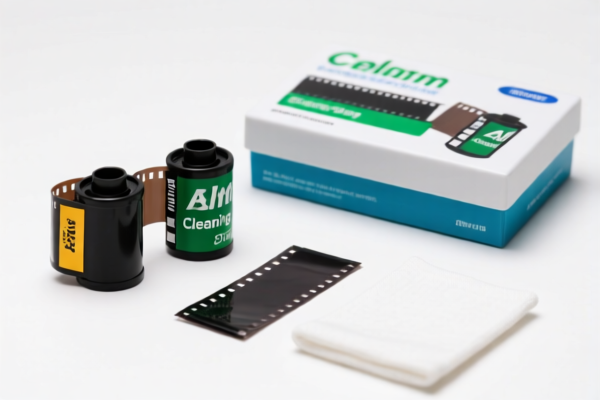
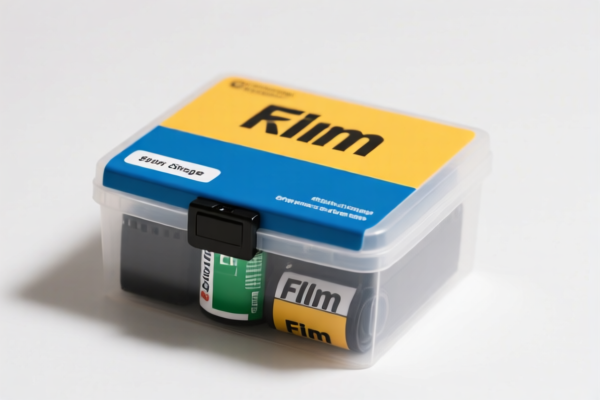

AI Analysis
🎞️ 35mm Color Film (400 ISO) – The Photographer's Lifeline
🌐 HS Code Reference & Customs Clearance Guide | 2026 Updated Tariff Analysis | Professional Photographic Logistics Strategy
📌 I. Product Definition & Classification: Do You Really Know "35mm Color Film"?
35mm Color Film (400 ISO) is the standard medium for analog photography, capturing vivid colors and sharp details in a wide range of lighting conditions. In international trade, it falls under Chapter 37 (Photographic, Cinematographic, etc.), specifically within the "Sensitized" (unexposed) category.
However, not all "film" is the same. The classification hinges on two critical factors: 1. Form Factor: Is it a Roll (35mm cartridge) or a Sheet (large format)? 2. Physical Attributes: Is it "Sensitized" (Unexposed) or "Developed" (Exposed)?
⚠️ Critical Distinction: - If the film is unexposed, on a roll, and intended for color photography, it generally falls under 3702.54 or 3702.55 (depending on width/material) or 3703 (if categorized under general sensitized film). - If it is a sheet film (not a roll), it may fall under 3701. - Note: Our data specifically maps 35mm color film to both 3701 (sheet-like logic) and 3702/3703 (roll logic) due to specific sub-headings for "width 16-35mm".
📦 II. Detailed HS Code Classification Breakdown (2026 Authorized Reference)
Based on the provided dataset, 35mm Color Film (400 ISO) requires careful selection among four primary HS Codes depending on the specific physical description (roll vs. sheet, material) and width criteria.
| HS Code | Product Summary (Based on Data) | Key Attributes & Scenarios | Total Tax Rate |
|---|---|---|---|
| 3702.54.00.30 | 35mm Color Roll Film | Width: 16-35mm range. Type: Sensitized Roll. Match: Specific width/material criteria for 3702.54. |
38.7% |
| 3702.55.00.60 | 35mm Color Roll Film | Width: 16-35mm range. Type: Color Sensitized Roll. Match: "16-35mm width" specific subheading. |
35.0% |
| 3703.90.60.00 | 35mm Color Unexposed Film | Type: Color Sensitized (Unexposed). Material: General sensitized film. Note: Often used for general "unexposed" categorization. |
37.8% |
| 3703.20.60.00 | Color Sensitized Film (General) | Usage: Color Photography. Form: Fits "Paper, Cardboard, Textile" film forms (general category). |
38.1% |
| 3701.91.00.30 | 35mm Color Film (Sheet/General) | Usage: Color Photography. Type: "Film" category (often implies non-roll or specific sheet logic in some classifications). |
38.7% |
| 3701.91.00.60 | 35mm Color Film (Non-Textile) | Material: Non-paper, Non-textile sensitized film. Usage: Color Photography. |
38.7% |
🔍 Deep Dive: - 3702 Series: Primarily for Roll Film (strips). If your 400 ISO is in a standard 35mm cartridge/roll, this is the most likely category. - 3703 Series: Often covers Sheet Film or general Sensitized products not fitting the specific roll definitions, or used as a catch-all for "unexposed color film". - 3701 Series: Typically for Sheet Film (large format) but can apply to 35mm if the specific "width" criteria for 3702 are not met or if the product is defined as a "non-textile, non-paper" sheet.
💰 III. 2026 Tariff Rate Breakdown (China to US/Global Import)
✅ Applicable Country: China (CN) → Target Market: USA (US) (Implied by the "Additional Tariff" structure) ✅ Product: 35mm Color Film (400 ISO) ✅ Effective Date: Current 2026 Tariff Regime
🎯 The "Double-Whammy" Tariff Structure
All HS Codes listed above suffer from a heavy multi-layered tax structure due to US-China trade tensions. The tax composition is almost identical across the board:
| Tax Component | Rate | Legal/Policy Basis | Description |
|---|---|---|---|
| 1. Base Duty (MFN) | 0.0% – 3.7% | Section of HTSUS | The standard Most Favored Nation rate for photographic film. |
| 2. Section 301 Add-on | +25.0% | US Trade Representative (USTR) | The "Section 301" punitive tariff on Chinese goods (List 3 or 4A). |
| 3. Section 122 Add-on | +10.0% | Section 122 (or similar executive order) | Specific additional tariff targeting Chinese imports (often referenced as "122 Clause"). |
| 4. Total Effective Rate | 35.0% – 38.7% | Calculated | Sum of Base + 25% + 10%. |
📊 Example Calculation: 3702.55.00.60 (Lowest Tax Option)
- Base Duty: 0.0%
- Section 301: 25.0%
- Section 122: 10.0%
- Total Tax: 35.0%
- Impact on a $100 shipment: $35.00 in taxes alone.
📊 Example Calculation: 3702.54.00.30 (Higher Tax Option)
- Base Duty: 3.7%
- Section 301: 25.0%
- Section 122: 10.0%
- Total Tax: 38.7%
- Impact on a $100 shipment: $38.70 in taxes alone.
⚠️ Crucial Warning: - No De Minimis Exemption: Unlike $800 shipments (which might be duty-free), these specific HS Codes are explicitly DENIED de minimis exemption due to the Section 301 and Section 122 clauses. - Cumulative Burden: The 25% and 10% are cumulative (added on top of each other), not an alternative. You pay Base + 25% + 10%.
🛠️ IV. Customs Clearance Practical Guide (Risk Avoidance Strategy)
✅ 1. Essential Documentation Checklist
To clear 35mm Color Film through customs without delays, you MUST provide:
| Document | Requirement | Why It Matters |
|---|---|---|
| Commercial Invoice | Must state "35mm Color Film, 400 ISO, Unexposed" | Specific product description prevents "duty evasion" suspicions. |
| Detailed Packing List | Must specify "Rolls", "Cartridges", or "Sheets" | Helps customs verify if it fits 3702 (Roll) or 3701 (Sheet). |
| Technical Specification Sheet | Must include: Sensitization type (Color), Speed (400 ISO), Format (35mm), Material (Cellulose Nitrate/Acetate) | Proves it is "Sensitized Film" and not "Exposed Film" (which has different duties). |
| Certificate of Origin | Required | Must be issued by Chinese authorities to confirm origin (China) and justify the 301/122 taxes. |
| Material Safety Data Sheet (MSDS) | Often required | Film can contain hazardous chemicals; some countries require MSDS for transport. |
| Bill of Lading / Air Waybill | Standard shipping docs | Must match invoice values. |
✅ 2. Declaration Strategy: "The 3702 vs. 3703 Battle"
The Golden Rule: Be precise about "Roll" vs. "Sheet" and "Width".
| Scenario | Correct HS Code to Declare | Why? | Risk if Wrong |
|---|---|---|---|
| Standard 35mm Cartridge (Roll) | 3702.55.00.60 or 3702.54.00.30 | Fits "16-35mm width" and "Roll" description. | Declaring as 3701 (Sheet) may cause a mismatch in physical inspection. |
| Large Format Sheet Film | 3701.91.00.30 or 3701.91.00.60 | If it's not a roll, 3701 is safer. | Declaring a Sheet as 3702 (Roll) = Customs Rejection. |
| General Unexposed Film | 3703.90.60.00 | If the roll width is ambiguous or general. | Slightly lower tax (37.8%) but risky if width is strictly 35mm. |
🔥 Declaration Tip: - DO NOT write generic terms like "Camera Accessories" or "Photography Supplies". - DO write: "35mm Color Sensitized Film, 400 ISO, Unexposed, Cellulose Acetate Base, in Cartridge". - Reason: This triggers the specific HS Code matching in the system and prevents the "General Suspicious Goods" flag.
✅ 3. Special Scenarios & Pitfalls
| Situation | Solution | Consequence of Failure |
|---|---|---|
| "Exposed" vs. "Unexposed" | If the film is used/developed, it is NOT in these categories. It falls under waste or different categories (often higher duty). | Declaring used film as "unexposed" = Smuggling/Fraud accusation. |
| Bundle with Cameras | If shipped with a camera, the film must be separated on the invoice. | Combined shipment may lead to misclassification (Camera has lower duty). |
| Origin Verification | Ensure the "Made in China" label is clear. | If origin is vague, customs may apply worst-case duty rates or seize goods. |
| Material Type | Specify if it's Nitrate (flammable) or Acetate (safer). | Nitrate film requires special hazardous cargo handling (DGR). |
🌍 V. Global Market Comparison (2026)
| Region | Recommended HS Code | Total Tax Rate (Approx.) | Key Constraints |
|---|---|---|---|
| 🇺🇸 USA | 3702.55.00.60 (Best) | 35.0% - 38.7% | No De Minimis; Heavy Section 301/122 penalties. |
| 🇨🇳 China | 3702.55.00.60 | 0% - 5% | Low base duty; No export tax on film. |
| 🇪🇺 EU | 3702.55.00 | 0% - 10% | Generally no punitive tariffs, but strict safety/chemical regs. |
| 🇯🇵 Japan | 3702.55.00 | 0% - 5% | No punitive tariffs; requires specific ISO certification. |
| 🇦🇺 Australia | 3702.55.00 | 5% - 10% | Standard GST applies; no Section 301 equivalent. |
📌 Strategic Insight: - The US is the "High Cost" Market: The 35%+ tax on 35mm film makes it extremely expensive for US importers from China. - Alternative: Consider sourcing from Vietnam or Thailand (if applicable) to bypass Section 301 tariffs, or use third-country transshipment (with legal compliance).
📌 VI. Common Mistakes & "Blood and Tears" Lessons
❌ Mistake 1: Declaring "35mm Film" as "Camera Parts" 👉 Result: Under-declared value or wrong HS Code. Penalty: Up to 100% of duties + fines.
❌ Mistake 2: Confusing Unexposed (3702/3703) with Exposed (Developed) 👉 Result: Exposed film is often treated as "waste" or different chemical category. Penalty: Seizure.
❌ Mistake 3: Ignoring the Section 122 clause 👉 Result: Assuming 25% is the total. Penalty: Shortfall in payment, delayed release, storage fees.
❌ Mistake 4: Not specifying Width in the description 👉 Result: Customs cannot determine if it's 3702 (16-35mm) or 3703. Penalty: Manual inspection delay (weeks).
✅ Correct Declaration Formula:
"35mm Color Sensitized Film, 400 ISO, Unexposed, Cellulose Base, 35mm Width, for Professional Photography, HS Code 3702.55.00.60"
🎯 VII. Conclusion: Precision is Profit
🎯 Remember the Strategy:
🔹 "Unexposed = 3702/3703; Exposed = Different" 🔹 "35mm Roll = 3702; Sheet = 3701" 🔹 "US Import = 35%+ Tax (Base + 25% + 10%)" 🔹 "No De Minimis = Pay Everything"
📌 Pro Tip: If you are importing 35mm Color Film (400 ISO) into the US, calculate your margin carefully. A 35% tax can wipe out 50% of your profit margin. - Action: Check if your supplier is in a Section 301 Exempt country (e.g., Vietnam, Mexico) or apply for Section 301 Exclusion (if available for your specific product line). - Pre-Clearance: File a Binding Ruling with US Customs (CBP) 90 days before shipment to lock in the HS Code and avoid surprise audits.
📣 Final Call to Action:
🚀 Don't let 38.7% tax eat your profits! 1. Verify the Exact Physical Form (Roll vs. Sheet). 2. Check Section 301 Exclusions. 3. Use Correct HS Code (3702.55.00.60 preferred). 4. Consult a Customs Broker specializing in photographic goods.
✨ Clear Customs, Capture the Moment!
💼 Your film is precious; your logistics must be precise!
Customer Reviews
About HS Code Classification
The Harmonized System (HS) is an internationally standardized nomenclature developed by the World Customs Organization (WCO) to classify traded products. Over 200 countries use the HS system as the basis for customs tariffs, trade statistics, and import/export regulations.
Each HS code follows a hierarchical structure:
- Chapter (2 digits) — Broad category of goods (e.g., Chapter 84: Machinery and Mechanical Appliances)
- Heading (4 digits) — More specific grouping within the chapter
- Subheading (6 digits) — Internationally standardized breakdown, used by all WCO member countries
- National subdivisions (8-10 digits) — Country-specific extensions for further classification, such as US HTSUS 10-digit codes
Correct HS code classification is essential for smooth customs clearance, accurate duty payment, and compliance with trade regulations. Misclassification can lead to customs delays, overpayment of duties, or penalties.
When importing from CN to US, the applicable tariff rates may include:
- Most-Favored-Nation (MFN) rate — The standard duty rate applied to WTO members
- General rate — Applied to countries without trade agreements
- Trade remedy duties — Additional tariffs such as Section 301 (anti-dumping), Section 232 (national security), or countervailing duties
The information provided on this page is for reference purposes only. For official classification, please consult with your local customs authority or a licensed customs broker.