35mm Color Film (Slide Film)
CN → US| HS Code | Tariff Rate | Origin | Destination | Doc |
|---|---|---|---|---|
| 3701910060 | 38.7% | CN | US | Official Doc |
| 3701910030 | 38.7% | CN | US | Official Doc |
| 3702530030 | 38.7% | CN | US | Official Doc |
| 3703103030 | 38.7% | CN | US | Official Doc |
| 3703203030 | 38.7% | CN | US | Official Doc |
Product Images

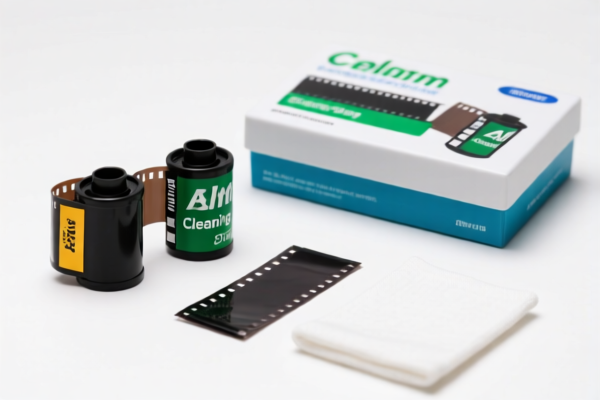
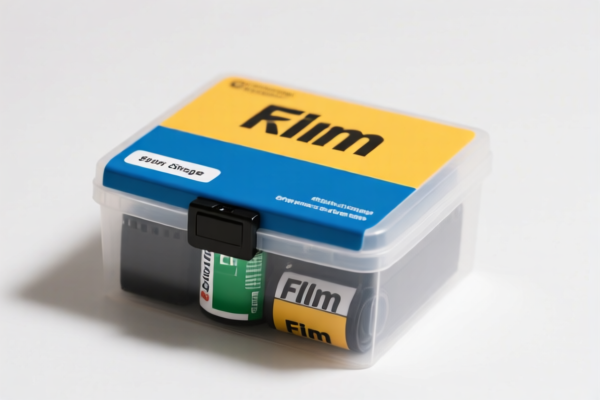

AI Analysis
🎞️ 35mm Color Film (Slide Film) — The Ultimate Guide to HS Codes, Tariffs & Customs Strategy (2026)
🌐 Global Trade Intelligence | HS Code Classification & Tax Breakdown | Professional Customs Strategy
📌 One: Product Definition & Classification: Do You Really Know "Slide Film"?
35mm Color Film (Slide Film), also known as Reversal Film or Ektachrome/Fujichrome, is a high-fidelity photographic medium designed for projecting positive images (slides). It is distinct from standard negative film because it produces a positive image directly after development, requiring specific handling and classification.
In international trade, Slide Film is strictly categorized under Chapter 37 (Photochemical Products) due to its unique light-sensitive emulsion composition.
⚠️ Key Distinction for Classification:
- Form Factor: Must be 35mm (strip format), NOT rolled on a "disk" or "cartridge" that fits a camera without being stripped (unless specified as a "cartridge" type, but standard 35mm roll is the norm).
- Material: Light-sensitive (unexposed) or exposed (exposed slides are often treated differently, but this guide focuses on the raw film).
- Purpose: Primarily for projection, printing, or professional photography.
Common HS Code Candidates for 35mm Color Slide Film: 1. 3701.91.00.60: Color photographic film, 35mm, NOT disk format, made of light-sensitive materials. 2. 3701.91.00.30: Color photographic, Slide Film corresponding to disk film, made of light-sensitive film. 3. 3702.53.00.30: Color Slide Roll Film, 35mm specification, material matches light-sensitive roll film characteristics. 4. 3703.10.30.30: Color Light-sensitive Film, strip form, matches characteristics of unexposed light-sensitive materials. 5. 3703.20.30.30: Color photography, Film corresponding to Silver Halide Paper/Film, used for Color Slides.
📦 Two: HS Code Classification Details (2026 Authoritative Reference)
| HS Code | Product Description | Application Scenario | Key Characteristics |
|---|---|---|---|
3701.91.00.60 |
Color Photographic Film, 35mm, NOT Disk Film, Light-Sensitive Material | Standard 35mm Roll Film (Kodak/Ektachrome), Pro-grade Slide Film | ✅ 35mm Strip, ❌ Not Disk |
3701.91.00.30 |
Color Photographic (Slide Film), Disk Film, Light-Sensitive | Slide Film specifically packaged in a disk/cartridge format | ✅ Disk Format |
3702.53.00.30 |
Color Slide Roll Film, 35mm Spec, Light-Sensitive Character | General 35mm Slide Film (Roll), matches roll film features | ✅ Roll, ✅ Slide |
3703.10.30.30 |
Color Light-Sensitive Film, Strip Form, Unexposed | Raw unexposed film for professional or hobbyist use | ✅ Unexposed, ✅ Strip |
3703.20.30.30 |
Color Photography Film, Silver Halide Paper/Film, Color Slide Use | Specialized slide film using Silver Halide chemistry | ✅ Silver Halide, ✅ Slide |
🔍 Critical Reminder:
- "Disk" vs. "Strip": The difference between3701.91.00.60and3701.91.00.30is physical form. If your film is a standard 35mm roll (strip), use .60. If it is a specific "disk" format (e.g., certain 35mm slide packs), use .30.
- "Slide" Specifics: All these codes are for Slide (Reversal) film, not negative film. Ensure the product description explicitly states "Slide" or "Reversal" to avoid misclassification as negative film (which may have different tax treatments).
- Unexposed Status: Most customs declarations assume unexposed film. If it is exposed, the classification might shift, but usually, trade in raw film is unexposed.
💰 Three: 2026 Tariff Rate Breakdown (High Precision)
✅ Applicable Market: USA (US)
✅ Country of Origin: China (CN)
✅ Effective Date: From November 10, 2025 (including subsequent imports)
🎯 Universal Tariff Structure for All Slide Film HS Codes
All five HS codes listed above share the exact same tariff structure due to the specific nature of "35mm Color Film" being a sensitive material.
| Tax Component | Rate | Legal Basis |
|---|---|---|
| Base Tariff | 3.7% | General MFN Rate (Section 37) |
| Section 301 (Additional Tariff) | 25.0% | "Section 301" Additional Duty (China) |
| Section 122 Clause Tariff | 10.0% | "Section 122" Specific Clause (China) |
| Total Tax Rate | 38.7% | 3.7% + 25.0% + 10.0% |
| Calculation Method | CIF Value × 38.7% | Ad Valorem |
📌 Detailed Explanation:
- "Base Tariff 3.7%": The standard Most-Favored-Nation (MFN) duty for photographic film under Chapter 37.
- "Section 301 Tariff 25.0%": This is the heavy "Section 301" additional duty imposed on Chinese goods (often referred to as the "US-China Trade War" tariff). It applies to almost all Chinese-origin photographic products.
- "Section 122 Clause Tariff 10.0%": A specific additional levy under Section 122 of the US Trade Act, targeting specific Chinese categories, including certain optical and photographic materials.
- 🔥 Total Impact: 38.7% is a significant cost. For a $100 shipment of film, you must pay $38.70 in duties alone, excluding any potential state taxes or broker fees.⚠️ De Minimis Exemption Check:
- Eligible for De Minimis? ❌ NO.
- Reason: High-value photographic materials and those subject to Section 301/122 clauses are strictly excluded from the $800 de minimis exemption. You MUST pay the full 38.7% regardless of shipment value.
🛠️ Four: Customs Clearance Practical Advice (Avoiding Pitfalls)
✅ 1. Documentation Checklist (Non-Negotiable)
| Document | Required? | Why? |
|---|---|---|
| ✅ Product Specification Sheet | ✔️ | Must explicitly state: "35mm Color Slide Film," "Unexposed," "Light-Sensitive," "Reversal Process." |
| ✅ Material Safety Data Sheet (MSDS) | ✔️ | Essential for hazardous material handling (light-sensitive chemicals can be classified as hazardous). |
| ✅ Commercial Invoice | ✔️ | Must clearly list HS Code (e.g., 3701.91.00.60) and Country of Origin: China. |
| ✅ Photograph of Product | ✔️ | Show the packaging to prove it is 35mm roll, not a "disk" or "cassette" (if applying for .60). |
| ✅ Declaration of Unexposed Status | ✔️ | Confirm the film is unexposed. If exposed, classification may change, leading to delays. |
✅ 2. Declaration Strategy (Crucial Rules)
🔥 "Name Precision, Tax Precision, Form Precision!"
| Scenario | Correct Declaration | Incorrect (Pitfall) |
|---|---|---|
| Standard 35mm Slide Roll | 3701.91.00.60 |
Declare as 3702 (wrong chapter) → 25% error margin + penalty |
| Slide Film in Disk Pack | 3701.91.00.30 |
Declare as .60 → Misclassification audit |
| "Unexposed" vs "Exposed" | UNEXPOSED | Declare "Exposed" → Different duty rate or ban |
| Mixed Pack (Slide + Negative) | Split HS Codes | Combine all as "Slide" → Penalty for hidden negative film |
✅ 3. Special Scenarios & Handling
| Situation | Handling Advice |
|---|---|
| OEM / Private Label | Provide Brand Authorization Letter. If no brand, declare as "Generic." |
| Hazardous Material (HazMat) | Light-sensitive chemicals may be classified as UN3077 (Solid Environmental Hazardous) or UN2814 (Biological). Check MSDS for HazMat classification. |
| High-Value Bulk Shipments | Consider Bonded Warehouse for storage before duty payment. |
| Free Trade Agreement (FTA) | No benefit. China is not eligible for FTA preferential rates for this category. |
🌍 Five: Global Market Comparison (2026)
| Country/Region | Recommended HS Code | Tariff Rate | Certification | Note |
|---|---|---|---|---|
| 🇺🇸 USA | 3701.91.00.60 |
38.7% | FDA (if medical), No specific film cert | Highest cost due to Section 301/122 |
| 🇨🇳 China | 3701.91.00.60 |
5%~8% | CNAS | Domestic tax varies, but export to China is rare |
| 🇪🇺 EU | 3701.91.00 |
0%~2% | CE | No Section 301 equivalent; much cheaper |
| 🇯🇵 Japan | 3701.91.00 |
3.5% | PSE | No major additional tariffs |
| 🇦🇺 Australia | 3701.91.00 |
5% | RCM | Moderate tariffs |
📌 Conclusion:
- USA is the most expensive market due to the 38.7% total tariff.
- EU, Japan, and Australia are significantly cheaper options for re-export or alternative markets.
- Strategy: If possible, route film through non-US hubs (e.g., Singapore, Panama) to avoid direct US Section 301/122 tariffs, BUT note that transshipment laws may still require origin declaration.
📌 Six: Common Mistakes & Avoidance Guide (Lessons Learned)
❌ Mistake 1: Declaring "35mm Film" without specifying "Slide" or "Reversal".
👉 Consequence: Customs may classify as negative film (different HS code) → Delay + Retest.
❌ Mistake 2: Failing to specify "Unexposed" status.
👉 Consequence: Classified as waste or used material → Seizure or High Penalty.
❌ Mistake 3: Mixing "Disk" and "Roll" formats in one shipment without splitting HS Codes.
👉 Consequence: Audit Risk → Back-dating of tariffs.
❌ Mistake 4: Ignoring the Section 122 tariff.
👉 Consequence: Underpaying by 10% → Recovery Action + Interest.
✅ Correct Action:
"35mm Color Slide Film, Unexposed, Reversal Process, Light-Sensitive Material, 35mm Roll (Non-Disk), Country: China."
🎯 Seven: Conclusion: Precision is Profit!
🎯 Remember the Golden Rule:
🔹 "Slide = Reversal, 35mm = Roll, 38.7% = Total Cost!"
🔹 "HS Code 3701.91.00.60 is the gold standard for 35mm Slide Film!"
🔹 "301 + 122 = 35% extra cost, plan accordingly!"
📌 Pro Tip:
If your film originates from Vietnam, Thailand, or Mexico, you MAY qualify for IEEPA exemptions or reduced Section 301 tariffs (check current 2026 rules).
Recommendation: Apply for Binding Ruling (Pre-Ruling) with CBP before shipment to avoid 38.7% surprise.
📣 Act Now!
📞 Contact a Customs Broker + Provide MSDS + Pre-Ruling Application
🚀 Ensure your Slide Film Clears Customs Smoothly, High Profit, Low Risk!
✨ Professional Customs, Start with Precise Classification!
💼 Your Every Penny Matters!
Customer Reviews
About HS Code Classification
The Harmonized System (HS) is an internationally standardized nomenclature developed by the World Customs Organization (WCO) to classify traded products. Over 200 countries use the HS system as the basis for customs tariffs, trade statistics, and import/export regulations.
Each HS code follows a hierarchical structure:
- Chapter (2 digits) — Broad category of goods (e.g., Chapter 84: Machinery and Mechanical Appliances)
- Heading (4 digits) — More specific grouping within the chapter
- Subheading (6 digits) — Internationally standardized breakdown, used by all WCO member countries
- National subdivisions (8-10 digits) — Country-specific extensions for further classification, such as US HTSUS 10-digit codes
Correct HS code classification is essential for smooth customs clearance, accurate duty payment, and compliance with trade regulations. Misclassification can lead to customs delays, overpayment of duties, or penalties.
When importing from CN to US, the applicable tariff rates may include:
- Most-Favored-Nation (MFN) rate — The standard duty rate applied to WTO members
- General rate — Applied to countries without trade agreements
- Trade remedy duties — Additional tariffs such as Section 301 (anti-dumping), Section 232 (national security), or countervailing duties
The information provided on this page is for reference purposes only. For official classification, please consult with your local customs authority or a licensed customs broker.