35mm Color Film Amateur Grade
CN → US| HS Code | Tariff Rate | Origin | Destination | Doc |
|---|---|---|---|---|
| 3706106060 | 35.0% | CN | US | Official Doc |
| 3706106090 | 35.0% | CN | US | Official Doc |
Product Images
AI Analysis
🎞️ 35mm Color Film – Amateur Grade (Motion-Picture Film, Exposed & Developed)
🌐 HS Code Reference & Customs Clearance Guide | 2026 Latest Tariff Analysis | Professional Strategy
📌 I. Product Definition & Classification: Do You Really Understand "35mm Color Film"?
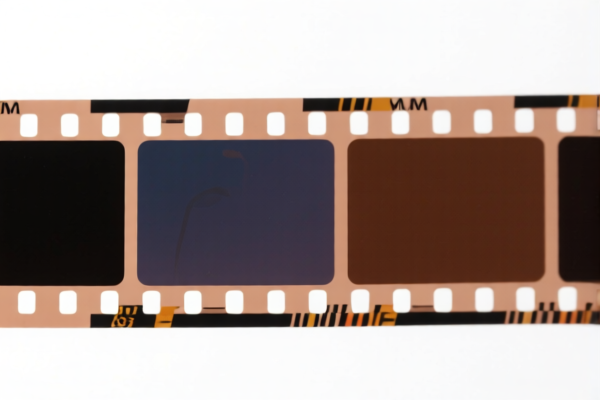
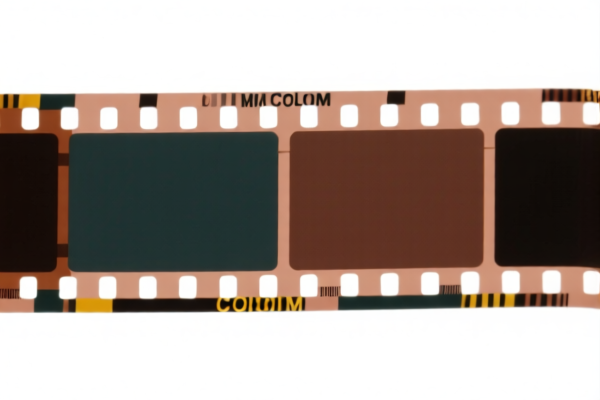
35mm Color Film – Amateur Grade refers to exposed and developed motion-picture film stock, specifically formatted for width of 35 mm, intended for amateur use (non-professional cinema/industrial). It may or may not incorporate a sound track, but in this context, it is classified under "Other" categories within Heading 3706.
In international trade, exposed and developed film is distinct from unexposed film (which falls under Heading 3702). Once exposed and processed, the nature of the good changes significantly due to its recorded content and finished state.
⚠️ Key Distinction:
- If unexposed raw stock → HS Code 3702.xx.xx (e.g., 3702.31.00.00 for color film)
- If exposed & developed (finished film) → HS Code 3706.10.xx.xx (as detailed below)
- Width 35 mm or more triggers specific subheadings; widths below 35 mm fall elsewhere.
📦 II. HS Code Classification Details (2026 Latest Tariff Authority Comparison)
Based strictly on the provided <DATA>, the applicable HS Codes for 35mm Exposed and Developed Color Film (Amateur Grade) are:
| HS Code | Product Description | Applicable Scenario | Key Features |
|---|---|---|---|
| 3706.10.60.60 | Motion-picture film, exposed and developed, whether or not incorporating sound track or consisting only of sound track: Of a width of 35 mm or more: Other Feature films: Other | Feature-length amateur films, non-news, non-documentary | Exposed, developed, 35mm+, feature format |
| 3706.10.60.90 | Motion-picture film, exposed and developed, whether or not incorporating sound track or consisting only of sound track: Of a width of 35 mm or more: Other Other | Other types of exposed/developed 35mm film not fitting "Feature films" (e.g., reels of clips, amateur sequences) | Exposed, developed, 35mm+, non-feature or unspecified |
🔍 Critical Note:
- Both codes apply to exposed and developed film only. Unexposed film is NOT covered here.
- The distinction between.60.60and.60.90hinges on whether the content is classified as a "Feature film." For amateur use, if the content does not meet industry standards for "feature," it typically defaults to 3706.10.60.90.
- Sound track inclusion does not change the primary classification if the width is 35 mm or more.
💰 III. 2026 Latest Tariff Rate Breakdown (Including Additional Duties & Policy Surcharges)
✅ Applicable Country: United States (US)
✅ Origin: China (CN)
✅ Effective Time: As per latest USITC/USTRA rulings (2025–2026)
🎯 1. 3706.10.60.60 – Exposed 35mm Feature Film (Amateur)
| Item | Content |
|---|---|
| Base MFN Rate | 0.0% |
| Additional Duty (Section 301) | +25.0% |
| Total Tariff Rate | 25.0% |
| Tax Calculation | CIF Value × 25.0% |
| De Minimis Exemption | ❌ Not Eligible (Section 301 duties apply regardless of value) |
| Legal Basis Path | USITC:3706.10.60.60 → FOOTNOTE:9903.01.25 (Section 301 List 4B) |
📌 Explanation:
- The base tariff for film is 0%, but 25% additional duty is imposed under Section 301 of the Trade Act of 1974, targeting specific Chinese-origin goods.
- This is a flat 25% on the CIF value. No other surcharges are indicated in the provided data.
- No IEEPA 10% surcharge is listed in the<DATA>for this specific HS code, unlike some electronics or displays. Stick to the provided 25.0% total.
🎯 2. 3706.10.60.90 – Exposed 35mm Film (Other/Non-Feature)
| Item | Content |
|---|---|
| Base MFN Rate | 0.0% |
| Additional Duty (Section 301) | +25.0% |
| Total Tariff Rate | 25.0% |
| Tax Calculation | CIF Value × 25.0% |
| De Minimis Exemption | ❌ Not Eligible |
| Legal Basis Path | USITC:3706.10.60.90 → FOOTNOTE:9903.01.25 (Section 301 List 4B) |
📌 Note:
- Identical tariff treatment to.60.60.
- Whether the film is "feature" or "other" does not affect the duty rate in this context, only the HS code specificity for classification accuracy.
🛠️ IV. Customs Clearance Practical Advice (Battle-Tested Pitfall Avoidance)
✅ 1. Required Documentation Checklist (Non-Negotiable)
| Document | Mandatory? | Explanation |
|---|---|---|
| ✅ Commercial Invoice | ✔️ | Must clearly state: "Exposed and Developed 35mm Color Film, Amateur Grade" |
| ✅ Packing List | ✔️ | Detail number of reels, length, and weight |
| ✅ Product Specifications | ✔️ | Confirm width is 35 mm and state exposed/developed status |
| ✅ Certificate of Origin | ✔️ | To prove Chinese origin (triggers Section 301) |
| ✅ Content Declaration | ✔️ | Clarify if "Feature Film" or "Other" to select correct .60.60 vs .60.90 |
| ✅ Customs Bond | ✔️ | Required for commercial entry |
📌 Critical Warning:
- Do NOT describe as "Blank Film" or "Unexposed Film."
- Do NOT omit "Exposed and Developed" in the description.
- Misclassification can lead to rejection, penalties, or retroactive duty assessments.
✅ 2. Declaration Tips (Key Mnemonics)
🔥 "Exposed = 3706, Unexposed = 3702; 35mm+ = Higher Duty; Say 'Developed' to Save Time!"
| Scenario | Correct HS Code | Incorrect Practice |
|---|---|---|
| Exposed 35mm Color Film | 3706.10.60.60 or .90 |
3702.31.00.00 (Unexposed) → Wrong Classification |
| Unexposed 35mm Color Film | 3702.31.00.00 |
3706.10.60.90 → Duty Risk (0% vs 25%) |
| Super 8mm Exposed Film | Not in this list (Width < 35mm) | 3706.10.60.90 → Wrong Heading |
| Professional Cinema Film (Exposed) | Same HS codes if 35mm+ | Assume different code → Delay |
✅ 3. Special Case Handling
| Situation | Handling Advice |
|---|---|
| Mixed Reels (Feature + Non-Feature) | Declare each type separately if possible. If mixed, use the higher specificity or consult customs broker for averaging (rare). |
| Sound Track Included | Does not change HS code if width is 35mm+. Still 3706.10.60.xx. |
| Samples for Review | Must still pay 25% duty. No de minimis exemption for Section 301 goods. |
| Re-export | If re-exported without U.S. consumption, consider In-Bond entry to defer duty. |
🌍 V. Global Market Comparison (2026 Latest)
| Country/Region | Recommended HS Code | Tariff Rate | Certification/Remarks |
|---|---|---|---|
| 🇺🇸 United States | 3706.10.60.60/.90 |
25.0% (Section 301) | No special certs for film, but origin proof critical |
| 🇨🇳 China | 3706.10.60.60/.90 |
0% | Import tax may apply for other goods, but film often exempt or low |
| 🇪🇺 European Union | 3706.10.60.90 |
0% | No Section 301 equivalent; standard MFN applies |
| 🇬🇧 United Kingdom | 3706.10.60.90 |
0% | Post-Brexit tariff review still generally 0% for film |
| 🇨🇦 Canada | 3706.10.60.90 |
0% | USMCA does not apply to film; MFN 0% |
📌 Conclusion:
- The U.S. is the only major market applying a 25% surcharge to this category under current data.
- For non-U.S. destinations, the tariff is often 0%, making the U.S. a high-cost entry point for Chinese-origin film.
- Strategic Tip: If clearing for the U.S., consider warehousing in Canada/Mexico (if eligible) or re-packaging/labeling in a third country (though origin rules may still tie back to China).
📌 VI. Common Errors & Pitfall Guide (Lessons from the Field)
❌ Error 1: Declaring "35mm Film" without specifying "Exposed & Developed"
👉 Consequence: Customs may assume unexposed (3702) and assess 0% initially, then issue a post-audit penalty when discovered.
👉 Fix: Always state "Exposed and Developed" in the commercial invoice.
❌ Error 2: Using HS Code 3702.31.00.00 for exposed film
👉 Consequence: 25% underpayment → Back duties + interest + penalties.
👉 Fix: Confirm physical state. If processed, it’s 3706.
❌ Error 3: Ignoring "Feature Film" distinction
👉 Consequence: Misclassification between .60.60 and .60.90 may lead to inspection delays but not duty difference in this specific data set. Still, accuracy matters for statistical tracking.
👉 Fix: Provide content description (e.g., "Amateur Home Movie Reels") to support .60.90.
❌ Error 4: Assuming De Minimis (Section 321) applies
👉 Consequence: 25% duty evaded on shipments <$800. CBP is increasingly scrutinizing Section 301 goods under de minimis.
👉 Fix: Pay 25% duty regardless of value for Chinese-origin film.
🎯 VII. Conclusion: Precision Classification Saves Costs!
🎯 Remember Mnemonics:
🔹 "Exposed = 3706, 35mm+ = 25% Duty; Unexposed = 3702, 0% Duty (No 301)"
🔹 "Say 'Developed' to Avoid Penalties; Say '35mm' to Avoid Wrong Heading"
📌 Pro Tip:
If your film is not from China, or if it is unexposed, the duty landscape changes drastically.
Always request a Pre-Ruling from U.S. CBP for high-volume shipments to ensure classification certainty.
📣 Immediate Action:
📞 Consult a licensed customs broker
📄 Ensure invoices state: "35mm Color Film, Exposed & Developed, Amateur Grade"
🚀 Clear the channel, pay the 25% if applicable, and ship with confidence!
✨ Professional Clearance Starts with Accurate Classification!
💼 Every Percent Counts in Tariff Strategy!
Customer Reviews
About HS Code Classification
The Harmonized System (HS) is an internationally standardized nomenclature developed by the World Customs Organization (WCO) to classify traded products. Over 200 countries use the HS system as the basis for customs tariffs, trade statistics, and import/export regulations.
Each HS code follows a hierarchical structure:
- Chapter (2 digits) — Broad category of goods (e.g., Chapter 84: Machinery and Mechanical Appliances)
- Heading (4 digits) — More specific grouping within the chapter
- Subheading (6 digits) — Internationally standardized breakdown, used by all WCO member countries
- National subdivisions (8-10 digits) — Country-specific extensions for further classification, such as US HTSUS 10-digit codes
Correct HS code classification is essential for smooth customs clearance, accurate duty payment, and compliance with trade regulations. Misclassification can lead to customs delays, overpayment of duties, or penalties.
When importing from CN to US, the applicable tariff rates may include:
- Most-Favored-Nation (MFN) rate — The standard duty rate applied to WTO members
- General rate — Applied to countries without trade agreements
- Trade remedy duties — Additional tariffs such as Section 301 (anti-dumping), Section 232 (national security), or countervailing duties
The information provided on this page is for reference purposes only. For official classification, please consult with your local customs authority or a licensed customs broker.