35mm Color Film Classic Colors
CN → US| HS Code | Tariff Rate | Origin | Destination | Doc |
|---|---|---|---|---|
| 3706106060 | 35.0% | CN | US | Official Doc |
| 3706106030 | 35.0% | CN | US | Official Doc |
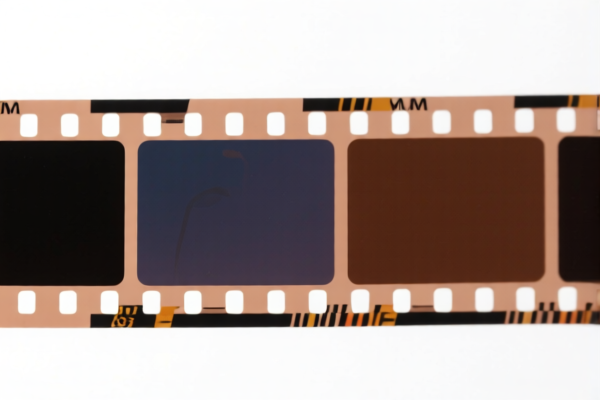
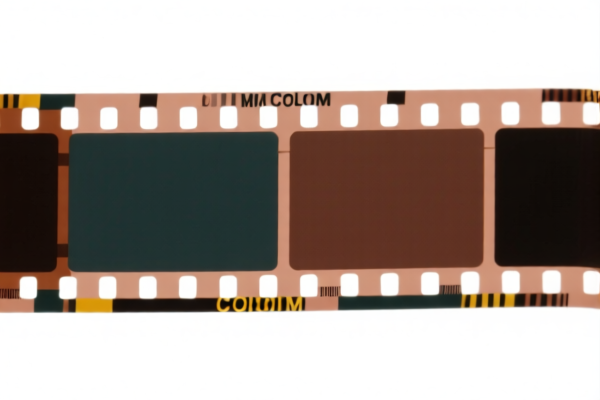
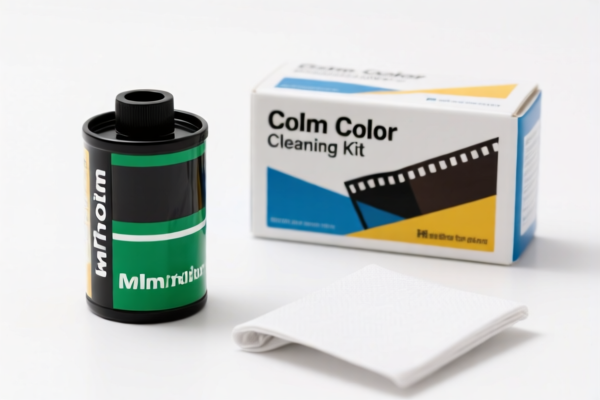
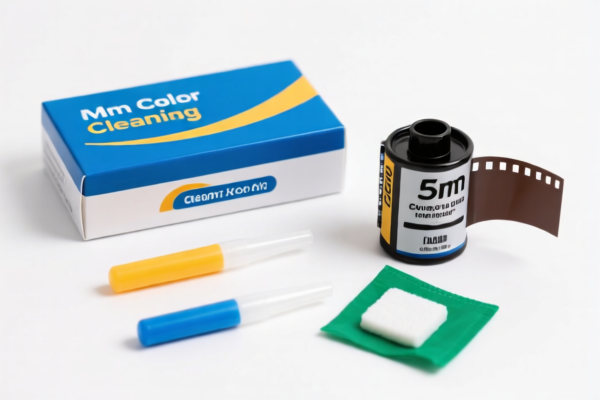
Product Images
AI Analysis
🎞️ 35mm Color Film – Classic Colors (Motion Picture Film)
🌐 HS Code Reference & Customs Clearance Guide | 2026 Latest Tariff Analysis | Professional-Level通关 Strategy
📌 I. Product Definition & Classification: Do You Really Understand “35mm Color Film”?
35mm color film, especially "Classic Colors" varieties, is a specialized exposed and developed motion-picture film used in traditional cinematography, archival preservation, artistic photography, or independent film production. Unlike digital media, this physical film retains analog chemical properties and is subject to specific customs classification under Chapter 37 (Photographic or Cinematographic Goods).
⚠️ Key Distinction Points:
- If the film is exposed and developed (ready for projection/scanning) → It falls under HS Code 3706.10;
- If it is unexposed (blank roll) → It would fall under HS Code 3702.xxxx (different tariff);
- “Classic Colors” is a brand-specific or stylistic descriptor of color development, not a separate technical category — it still belongs to 35mm color film.
📦 II. HS Code Classification Details (2026 Latest Tariff Authority Mapping)
| HS Code | Product Description | Applicable Scenario | Tax Rate (CN→US) |
|---|---|---|---|
3706.10.60.60 |
Motion-picture film, exposed and developed, 35mm+, other feature films, other | Artistic/color-experimental 35mm film, non-release prints, custom-developed | 25.0% |
3706.10.60.30 |
Motion-picture film, exposed and developed, 35mm+, other feature films, positive release prints | Officially distributed theatrical release prints (positive emulsion) | 25.0% |
🔍 Critical Reminder:
- Both HS codes apply only to exposed and developed film;
- The difference between.60.60and.60.30lies in whether the film is a positive release print (for projection) vs. other (e.g., intermediate copies, artistic prints, or non-standard developments);
- “Classic Colors” is a marketing term, not a technical classifier — customs will look at physical state (exposed/developed) and format (35mm).
💰 III. 2026 Latest Tariff Rate Breakdown (Including Surtaxes & Policy Additions)
✅ Applicable Country: United States (US)
✅ Country of Origin: China (CN)
✅ Effective Date: November 10, 2025 onwards (all subsequent imports)
🎯 1. 3706.10.60.60 – Other Feature Films (Exposed & Developed, 35mm)
| Item | Content |
|---|---|
| Base Tariff Rate | 0% (ad valorem) |
| USITC Surtax | +25% (Under USITC Footnote 9903.88.01) |
| IEEPA Surtax | +10% (For China/HK-origin goods, effective Nov 10, 2025) |
| Total Tariff Rate | 35% |
| Tax Calculation | CIF Value × 35% |
| De Minimis Exemption? | ❌ Not Eligible (deny_de_minimis) |
| Legal Pathway | IEEPA:9903.01.25 → IEEPA:9903.01.24 → USITC:3706.10.60.60 → FOOTNOTE:9903.88.01 |
📌 Explanation:
- The 25% USITC surtax is part of Section 301 tariffs on Chinese-origin cinematographic goods;
- The 10% IEEPA surtax is an additional penalty under the International Emergency Economic Powers Act;
- Combined 35% applies regardless of whether it’s a “classic color” artistic print or standard develop;
- This is a high-importance compliance area — misclassification can lead to seizure or heavy back-taxes.
🎯 2. 3706.10.60.30 – Positive Release Prints (Exposed & Developed, 35mm)
| Item | Content |
|---|---|
| Base Tariff Rate | 0% |
| USITC Surtax | +25% |
| IEEPA Surtax | +10% |
| Total Tariff Rate | 35% |
| Tax Calculation | CIF × 35% |
| De Minimis Exemption? | ❌ Not Eligible |
| Legal Pathway | IEEPA:9901.25 → IEEPA:9903.01.24 → USITC:3706.10.60.30 → FOOTNOTE:9903.88.01 |
📌 Note:
- Identical tariff treatment as.60.60;
- Applies only to positive release prints intended for theatrical distribution;
- Even if labeled “Classic Colors” by a lab like Kodak or Fujifilm, if it’s a release print, it goes to.60.30; otherwise,.60.60.
🛠️ IV. Customs Clearance Practical Advice (Battle-Tested Pitfall Avoidance)
✅ 1. Required Documentation Checklist (Non-Negotiable)
| Document | Mandatory | Explanation |
|---|---|---|
| ✅ Product Specification Sheet | ✔️ | Must state: width (35mm), format (color), state (exposed & developed), emulsion type (positive/negative) |
| ✅ Lab Development Certificate | ✔️ | From authorized film lab (e.g., Deluxe, PhotoLab, Kodak) confirming development process |
| ✅ Product Photos (Clear Labeling) | ✔️ | Show film canister, label, color tone, “35mm” marking |
| ✅ Commercial Invoice | ✔️ | Must explicitly state “35mm Color Motion Picture Film, Exposed & Developed” |
| ✅ Packing List | ✔️ | Include number of reels, length per reel, total weight |
| ✅ Certificate of Origin (CO) | ✔️ | If not CN-origin, may reduce tax; if CN, confirm surtax applicability |
✅ 2. Declaration Tips (Critical Mnemonic)
🔥 “Exposed = 3706.10, 35mm = Chapter 37, Positive Print = .60.30, Others = .60.60, Never Split!”
| Situation | Correct Declaration | Wrong Practice |
|---|---|---|
| Exposed & developed 35mm film | 3706.10.60.60 or .60.30 |
Declaring as “camera film” → 90% tax |
| Unexposed blank 35mm roll | 3702.xxxx (different HS) |
Using 3706 → rejection |
| Mixed package: film + scanner | Film declared separately | Bundling → misclassification |
| “Classic Colors” branded film | Same as generic 35mm developed | Assuming special code → delay |
✅ 3. Special Case Handling
| Situation | Handling Advice |
|---|---|
| Artistic/Experimental Films | Use 3706.10.60.60; provide artist statement or lab certificate |
| Theatrical Release Prints | Use 3706.10.60.30; include distributor license if available |
| Mixed Origins (CN + Non-CN) | Split declaration; only CN-origin portion subject to 35% |
| Samples for Evaluation | Still subject to tariff if “commercially viable”; apply for sample exemption if < $800 (but often denied for CN) |
🌍 V. Global Customs Comparison (2026 Latest)
| Country/Region | Recommended HS Code | Tariff | Certification | Notes |
|---|---|---|---|---|
| 🇺🇸 United States | 3706.10.60.60 / .60.30 |
35% (CN-origin) | None specific | High surtax applies |
| 🇨🇳 China | 3706.10.60.60 |
5% | None | Lower base rate |
| 🇪🇺 European Union | 3706.10 |
0–4% | CE (if electronic parts included) | No surtax |
| 🇬🇧 United Kingdom | 3706.10 |
4% | UKCA | Post-Brexit rules |
| 🇯🇵 Japan | 3706.10 |
0% | PSE (if related electronics) | Favorable |
📌 Conclusion:
- US is the only major market imposing 35% on CN-origin 35mm developed film;
- Consider origin diversification (e.g., develop in Japan or EU) to avoid surtax;
- Pre-clearance rulings are highly recommended for large shipments.
📌 VI. Common Mistakes & Pitfall Avoidance (Lessons from the Field)
❌ Mistake 1: Declaring “35mm film” without specifying exposed/developed
👉 Result: Customs rejects → delay or return → 100% cost loss
❌ Mistake 2: Assuming “Classic Colors” gets a special tax code
👉 Result: Still classified under .60.60 or .60.30 → no benefit
❌ Mistake 3: Splitting film into “components” (e.g., “chemicals + emulsion”)
👉 Result: Each part taxed separately → total tax exceeds 100%
❌ Mistake 4: Using “photographic film” generically
👉 Result: Misclassified under 3701.xxxx → higher tax + penalty
✅ Correct Practice:
“35mm Color Motion Picture Film, Exposed and Developed, Positive Release Print (or Other Feature Film), Classic Color Tone, 10 Reels, Total Length 3000m, Origin: China”
🎯 VII. Conclusion: Precision Classification Saves Time & Money!
🎯 Remember the Mnemonic:
🔹 “Exposed = 3706.10, 35mm = Film, Positive = .60.30, Other = .60.60, CN-Origin = 35%!”
🔹 “HS Code decides your cost, 35% tax is real, misdeclare = big fine!”
📌 Pro Tip:
If your film is developed in Japan, South Korea, or Europe, it may qualify for lower or zero surtax under USMCA or FTC agreements.
Consider pre-clearance rulings for shipments over $10,000.
📣 Immediate Action:
📞 Contact a licensed customs broker + Provide lab certificate + Request HS Code advance ruling
🚀 Ensure your 35mm film clears smoothly, avoids penalties, and maximizes profit!
✨ Professional Clearance Starts with Accurate Classification!
💼 Every dollar of tariff saved is profit earned!
Customer Reviews
About HS Code Classification
The Harmonized System (HS) is an internationally standardized nomenclature developed by the World Customs Organization (WCO) to classify traded products. Over 200 countries use the HS system as the basis for customs tariffs, trade statistics, and import/export regulations.
Each HS code follows a hierarchical structure:
- Chapter (2 digits) — Broad category of goods (e.g., Chapter 84: Machinery and Mechanical Appliances)
- Heading (4 digits) — More specific grouping within the chapter
- Subheading (6 digits) — Internationally standardized breakdown, used by all WCO member countries
- National subdivisions (8-10 digits) — Country-specific extensions for further classification, such as US HTSUS 10-digit codes
Correct HS code classification is essential for smooth customs clearance, accurate duty payment, and compliance with trade regulations. Misclassification can lead to customs delays, overpayment of duties, or penalties.
When importing from CN to US, the applicable tariff rates may include:
- Most-Favored-Nation (MFN) rate — The standard duty rate applied to WTO members
- General rate — Applied to countries without trade agreements
- Trade remedy duties — Additional tariffs such as Section 301 (anti-dumping), Section 232 (national security), or countervailing duties
The information provided on this page is for reference purposes only. For official classification, please consult with your local customs authority or a licensed customs broker.