35mm Color Film High Contrast
CN → US| HS Code | Tariff Rate | Origin | Destination | Doc |
|---|---|---|---|---|
| 3707100090 | 38.0% | CN | US | Official Doc |
| 3707100005 | 38.0% | CN | US | Official Doc |
| 3701910060 | 38.7% | CN | US | Official Doc |
| 3701910030 | 38.7% | CN | US | Official Doc |
| 3702550060 | 35.0% | CN | US | Official Doc |
Product Images
AI Analysis
🎞️ 35mm Color Film High Contrast
🌐 HS Code Reference & Customs Clearance Guide | 2026 Latest Tariff Analysis | Professional Compliance Strategy
📌 I. Product Definition: What is "35mm Color Film High Contrast"?
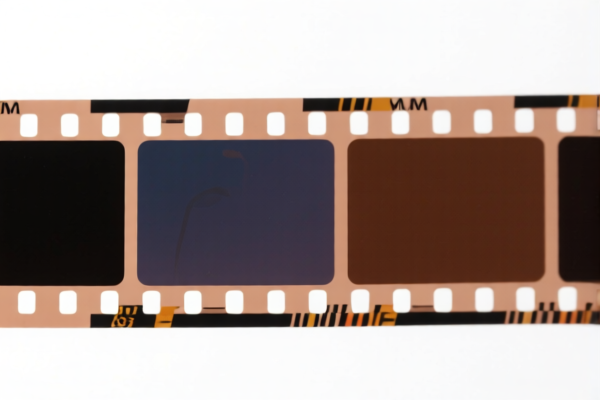
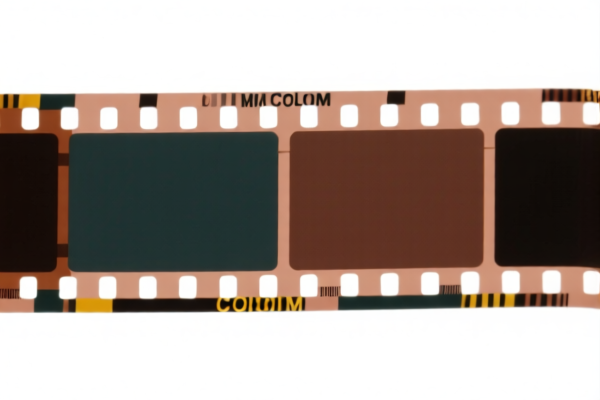
"35mm Color Film High Contrast" refers to a specific type of unexposed photographic film. Key characteristics include: 1. Format: 35mm width (standard for photography). 2. Color Type: Color film (contains multiple light-sensitive layers for color reproduction). 3. Grain/Contrast: "High Contrast" indicates a specific chemical formulation or emulsion property, often used for graphic arts, duplication, or specific artistic effects. 4. Material: Typically cellulose acetate or polyester base with gelatin-based silver halide emulsion. It is not paper or textile.
⚠️ Critical Distinction:
- If the product is unexposed and intended for photography, it falls under Chapter 37 (Photographic Goods).
- Do not confuse with exposed films (negative/positive), which may have different classifications based on whether they are raw or processed.
- "High Contrast" is a technical attribute but does not change the fundamental material category unless it transforms into a different product type (e.g., photographic paper).
📦 II. HS Code Classification Matrix (2026 Latest Tariff Authority)
| HS Code | Product Description | Key Matching Logic from Data | Total Tax Rate |
|---|---|---|---|
3707.10.00.90 |
Other photographic chemically sensitized paper, cloth, or plastic, in rolls or cut to size; other preparations of a kind used in photography | Match: "Color" and "Film" match photographic chemical properties. "Macro" (if applicable) aligns with photographic use. Classified as "Other" due to lack of specific sub-category conflict. | 38.0% |
3707.10.00.05 |
Color photographic chemicals sensitized paper, cloth, or plastic... (Specific sub-category for Color Negative Film) | Match: "Color" maps to "Color"; "Film" is a light-sensitive material. Classified as Color Negative Film. | 38.0% |
3701.91.00.60 |
Other photographic plates and film, sensitized, unexposed: In rolls or cut to size: Other: Other | Match: Explicitly identified as 35mm Color Macro Film. Material inferred as non-paper/textile (plastic base). Purpose matches "for color photography". | 38.7% |
3701.91.00.30 |
Other photographic plates and film, sensitized, unexposed: In rolls or cut to size: Other: Other | Match: "Color" = Color Photography; "Film" = Film. Since physical form (e.g., disc vs. roll) is not explicitly defined as a special category, it falls under the "Other" bucket. | 38.7% |
3702.55.00.60 |
Other color photographic film, sensitized, unexposed: In rolls of a width not exceeding 105 mm | Match: Explicitly stated as 35mm Color Film. 35mm fits within the ≤105mm width requirement. Material is gelatin/silver halide, not paper/textile. Fits "Other Color Photo Film". | 35.0% |
🔍 Analysis of Discrepancies:
-3702.55.00.60(35.0%) is likely the most accurate and cost-effective classification for standard 35mm color roll film, as it specifically addresses "Color photographic film... width not exceeding 105mm".
-3707codes (38.0%) and3701.91codes (38.7%) are broader or more general "Other" categories, often applied if the specific "film roll" category is deemed insufficient or if the product is perceived as a "preparation" rather than raw film stock.
- "High Contrast" is an emulsion property, not a structural one. It does not automatically move the product to Chapter 3707 unless it is classified as a "chemical preparation" rather than "sensitized film."
💰 III. 2026 Tariff Rate Breakdown (USA Import from China)
✅ Applicable Country: United States (US)
✅ Origin: China (CN)
✅ Effective Date: November 10, 2025 (and subsequent imports)
🎯 1. Preferred Classification: 3702.55.00.60 (Color Photo Film, ≤105mm)
| Item | Details |
|---|---|
| Base Tariff | 0.0% |
| Section 301 Tariff (USITC) | +25% (Footnote 9903.88.01) |
| IEEPA Tariff | +10% (China-specific, effective Nov 10, 2025) |
| Total Effective Rate | 35.0% |
| De Minimis Eligibility | ❌ Not Eligible (deny_de_minimis) |
| Legal Path | IEEPA:9903.01.25 → USITC:3702.55.00.60 → FOOTNOTE:9903.88.01 |
📌 Explanation:
- This code has zero base duty, which is favorable compared to others.
- However, it is fully subject to both the 25% Section 301 tariff and the 10% IEEPA tariff.
- Critical: Cannot be shipped via de minimis (e.g., USPS/UPS packages under $800) to avoid inspection and higher duties.
🎯 2. Alternative Classification: 3707.10.00.90 / 3707.10.00.05 (Other Photo Chemicals/Films)
| Item | Details |
|---|---|
| Base Tariff | 3.0% |
| Section 301 Tariff (USITC) | +25% |
| IEEPA Tariff | +10% |
| Total Effective Rate | 38.0% |
| De Minimis Eligibility | ❌ Not Eligible |
| Legal Path | IEEPA:9903.01.25 → USITC:3707.10.00.05/90 → FOOTNOTE:9903.88.01 |
📌 Explanation:
- Higher base duty (3%) results in a higher total tax burden (38.0% vs 35.0%).
- Customs may apply this if the "High Contrast" nature is deemed a "chemical preparation" rather than standard film.
🎯 3. Alternative Classification: 3701.91.00.60 / 3701.91.00.30 (Other Sensitized Film)
| Item | Details |
|---|---|
| Base Tariff | 3.7% |
| Section 301 Tariff (USITC) | +25% |
| IEEPA Tariff | +10% |
| Total Effective Rate | 38.7% |
| De Minimis Eligibility | ❌ Not Eligible |
📌 Explanation:
- The highest total rate among options.
- Likely used for "Macro" or ambiguous film types that don't fit the standard "35mm roll" definition in3702.
🛠️ IV. Customs Clearance Practical Advice
✅ 1. Documentation Checklist (Mandatory)
| Document | Required? | Notes |
|---|---|---|
| ✅ Commercial Invoice | ✔️ | Must explicitly state: "35mm Color Photographic Film, Unexposed, High Contrast Emulsion" |
| ✅ Packing List | ✔️ | Specify number of rolls, length, and total units. |
| ✅ Product Data Sheet | ✔️ | Proof of material (e.g., polyester base, silver halide emulsion). |
| ✅ Composition Analysis | ✔️ | If questioned, prove it is "sensitized film" and not "chemical preparations" (Chapter 38) or "paper" (Chapter 3707). |
| ✅ Certificate of Origin | ✔️ | To confirm China origin for tariff calculation. |
| ✅ Photos of Product | ✔️ | Show packaging, label, and film leader to confirm 35mm format. |
✅ 2. Declaration Strategy (Key Tips)
🔥 "Be Specific on Format and State: '35mm Roll, Unexposed, Color' Wins Over 'High Contrast'."
| Scenario | Correct Declaration | Incorrect/Risky Declaration |
|---|---|---|
| Standard 35mm Roll | 3702.55.00.60 - "35mm Color Negative Film, Unexposed, on Plastic Base" |
"High Contrast Color Film" (Too vague, may trigger Chapter 3707 scrutiny) |
| Specialty/Artistic Film | 3702.55.00.60 (if still standard format) |
3707.10.00.90 (Only if customs argues it's a "chemical preparation") |
| Experienced Films | Do Not Use these codes for processed images. Use Chapter 3703/3704 if applicable. | Using unexposed codes for exposed films → Seizure/Fines |
✅ 3. Risk Mitigation
| Risk | Mitigation Strategy |
|---|---|
| Misclassification as Chemicals (3707) | Provide technical specs showing it is a film strip (base + emulsion), not a liquid or paste chemical. |
| High Tariff Burden (35-38%) | Factor this into pricing. Do not rely on de minimis shipments for bulk imports. |
| Customs Audit on "High Contrast" | Prepare a technical justification: "High Contrast" is an emulsion grade, not a change in material classification. It remains a sensitized photographic film. |
🌍 V. Global Market Comparison (2026)
| Region | Recommended HS Code | Est. Duty (China Origin) | Notes |
|---|---|---|---|
| 🇺🇸 USA | 3702.55.00.60 |
35.0% | Highest cost due to Section 301 + IEEPA. |
| 🇨🇳 China | 3702.55.00.60 |
~3.7% | Lower base duty, no US-style附加 taxes. |
| 🇪🇺 EU | 3702.55.00.60 |
0% | Generally no extra tariffs on photo film. |
| 🇬🇧 UK | 3702.55.00.60 |
0% | Post-Brexit, favorable rates for many goods. |
📌 Conclusion:
The US market is the most expensive for importing 35mm color film from China due to the 35% total tariff.
For non-US markets, the cost is significantly lower.
📌 VI. Common Mistakes & Pitfalls
❌ Mistake 1: Classifying as 3707 (Chemical Preparations)
👉 Result: 38.0% tax + potential audit for misdeclaration.
✅ Fix: Prove it is a film strip on a base, not a loose chemical.
❌ Mistake 2: Assuming "High Contrast" changes the HS Code
👉 Result: Unnecessary complexity and higher potential duty.
✅ Fix: Treat "High Contrast" as a brand/specification detail, not a classification driver.
❌ Mistake 3: Using De Minimis for Large Orders
👉 Result: Package seizure, fines, and mandatory formal entry.
✅ Fix: Use formal air/ocean freight with a licensed customs broker for volumes > $800.
✅ Best Practice Description:
"35mm Color Photographic Film, Unexposed, Polyester Base, High Contrast Emulsion, for Professional Photography, Model XYZ"
🎯 VII. Final Recommendations
🎯 Action Plan:
1. Prioritize 3702.55.00.60: This is the most specific and likely lowest-tariff code for 35mm color film.
2. Prepare Technical Docs: Have a datasheet ready to prove the product is a sensitized film and not a chemical paste.
3. Budget for 35%: In the US, the total landed cost will include ~35% in tariffs. Do not forget this in your margin calculation.
4. Avoid "Other" Categories: Do not default to 3707 or 3701.91 unless you have a specific reason, as they carry higher base duties (3.7%-3.8%).
📞 Pro Tip:
If you are importing large volumes, consider applying for an HTS Exclusion under the US Trade Act if applicable, or explore supply chain diversification to non-China origins to mitigate the 35% tariff hit.
✨ Accurate Classification = Savings & Speed
💼 Don't Let High Contrast High Costs Blur Your Bottom Line!
Customer Reviews
About HS Code Classification
The Harmonized System (HS) is an internationally standardized nomenclature developed by the World Customs Organization (WCO) to classify traded products. Over 200 countries use the HS system as the basis for customs tariffs, trade statistics, and import/export regulations.
Each HS code follows a hierarchical structure:
- Chapter (2 digits) — Broad category of goods (e.g., Chapter 84: Machinery and Mechanical Appliances)
- Heading (4 digits) — More specific grouping within the chapter
- Subheading (6 digits) — Internationally standardized breakdown, used by all WCO member countries
- National subdivisions (8-10 digits) — Country-specific extensions for further classification, such as US HTSUS 10-digit codes
Correct HS code classification is essential for smooth customs clearance, accurate duty payment, and compliance with trade regulations. Misclassification can lead to customs delays, overpayment of duties, or penalties.
When importing from CN to US, the applicable tariff rates may include:
- Most-Favored-Nation (MFN) rate — The standard duty rate applied to WTO members
- General rate — Applied to countries without trade agreements
- Trade remedy duties — Additional tariffs such as Section 301 (anti-dumping), Section 232 (national security), or countervailing duties
The information provided on this page is for reference purposes only. For official classification, please consult with your local customs authority or a licensed customs broker.