35mm Color Film Light Proof
CN → US| HS Code | Tariff Rate | Origin | Destination | Doc |
|---|---|---|---|---|
| 3701910060 | 38.7% | CN | US | Official Doc |
| 3701910030 | 38.7% | CN | US | Official Doc |
| 3702540030 | 38.7% | CN | US | Official Doc |
| 3702530030 | 38.7% | CN | US | Official Doc |
| 3707100090 | 38.0% | CN | US | Official Doc |
Product Images
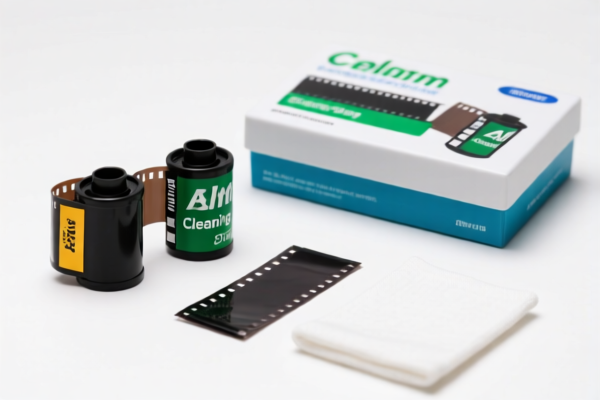
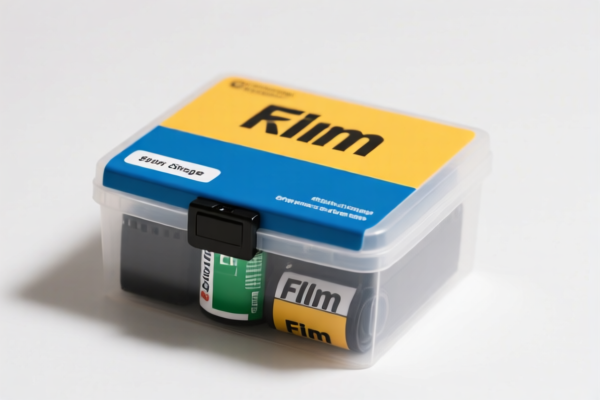
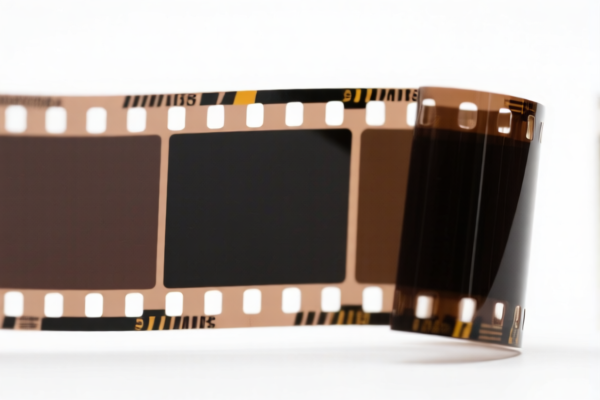

AI Analysis
🎞️ 35mm Color Film (Light Proof) | The Ultimate 2026 HS Code & Duty Guide
🌐 Professional Customs Classification & Tax Breakdown | 2026 Tariff Regime | Strategic Clearance Strategy
📌 I. Product Definition & Logic: Why "35mm Color Film" is a Special Case
35mm Color Film (Light Proof) refers to unexposed photographic film designed for color photography, typically supplied in a light-tight cartridge or roll. In international trade, the "Light Proof" attribute confirms the product's physical state (unexposed) and packaging (light-proof), which is critical for correct HS Code classification under Chapter 37 (Photographic Goods).
⚠️ Key Classification Logic:
- "35mm" implies the standard gauge for amateur/professional photography.
- "Color" dictates the chemical composition (dye layers).
- "Light Proof" confirms it is unexposed and not developed negative stock.
- Material: Non-paper, non-textile, based on plastic (polyester/triacetate) base.
This product falls into two distinct HS Code categories based on the specific format (Roll vs. Sheet/Pack) and exact chemical application: 1. 3707.10.00: "Matching color film" and chemical preparations for color photography (often used for specific rolls or chemical sets). 2. 3701.91.00 or 3702.54.00: "Other color photographic plates and film" (specifically for 35mm rolls/films).
📦 II. HS Code Classification Breakdown (2026 Official Data)
Based on the provided trade data, here are the exact classifications for 35mm Color Film (Light Proof) with their tax logic:
| HS Code | Product Description Summary | Classification Logic | Total Tax Rate |
|---|---|---|---|
3707.10.00.90 |
Matching Color Film & Chemicals | Fits "color film" attributes; 35mm matches photographic emulsion usage. | 38.0% |
3707.10.00.05 |
Color Attribute Match | "Color" in name matches code; 35mm implies light-sensitive material usage. | 38.0% |
3701.91.00.60 |
Non-Paper, Non-Textile Film | Matches "color photography" use; "Film" confirms plastic base; inferred as unexposed. | 38.7% |
3701.91.00.30 |
Color Photography Unexposed | 35mm is the film gauge; matches "unexposed" features; non-paper/textile material. | 38.7% |
3702.54.00.30 |
35mm Width Light-Proof Roll | 35mm width matches color film rolls; "Light Proof" confirms physical light-sensitive nature. | 38.7% |
🔍 Critical Insight:
-3707codes are often applied when the product involves chemical preparations specifically for color matching or is classified under a broader "chemical" category for film.
-3701and3702codes are the primary classifications for the physical film stock itself (unexposed).
- The slight tax difference (38.0% vs 38.7%) comes from the Base Tariff (3.0% vs 3.7%), likely due to specific sub-category definitions in the 2026 tariff schedule.
💰 III. 2026 Tax Rate Breakdown (Detailed Analysis)
✅ Applicable Region: United States (US)
✅ Origin: China (CN)
✅ Effective Date: 2025/2026 Regime (Current)
🎯 Tax Structure for ALL 5 HS Codes Listed Above
All 35mm Color Film variants listed share the same additive tax structure, making the calculation predictable.
| Tax Component | Rate | Legal Basis / Description |
|---|---|---|
| Base Tariff | 3.0% or 3.7% | Standard Most-Favored-Nation (MFN) duty for photographic goods under Chapters 3701/3702/3707. |
| Section 301 Add-on | +25.0% | "Section 301" Tariffs: Specific punitive duties imposed by the US on Chinese goods (List 4A). |
| 122 Clause Add-on | +10.0% | Section 122 Tariffs: Additional duties under the "International Emergency Economic Powers Act" (IEEPA) or specific bilateral agreements targeting Chinese imports. |
| 🔴 TOTAL DUTY | 38.0% | For 3707 Codes (3.0% + 25% + 10%) |
| 🔴 TOTAL DUTY | 38.7% | For 3701 / 3702 Codes (3.7% + 25% + 10%) |
📌 Mathematical Proof:
- Scenario A:3707Codes → $3.0 + 25.0 + 10 = 38.0\%$
- Scenario B:3701/3702Codes → $3.7 + 25.0 + 10 = 38.7\%$⚠️ Warning: This is a VERY HIGH tariff rate. It effectively triples the cost of the goods for US importers. There is NO de minimis exemption for these items if they are commercially shipped.
🛠️ IV. Customs Clearance Strategy & Practical Advice
✅ 1. Critical Documentation Checklist
To avoid delays or audits, you MUST provide: | Document | Requirement | Why It's Needed | | :--- | :--- | :--- | | 📄 Technical Data Sheet (TDS) | Must specify "35mm", "Color", "Unexposed", "Light-Proof" | Proves the product is unexposed film (HS 3701/3702) vs. developed negatives or chemicals (HS 3707). | | 📷 Product Photos | Clear view of packaging, film gauge (35mm), and "Light Proof" markings | Confirms physical dimensions and packaging integrity. | | 🧪 Chemical Composition List | List of emulsion layers (dyes) | Crucial for distinguishing between "Film" (3701/3702) and "Chemical Preparations" (3707). | | 🏷️ Commercial Invoice | Must explicitly state: "35mm Color Negative Film, Light Proof, Unexposed" | Avoids vague descriptions like "Photographic Supplies" which lead to misclassification. | | 🌍 Certificate of Origin (CO) | Form A or B if applicable (though likely China origin) | Confirms the 25% Section 301 and 10% Section 122 duties apply. |
✅ 2. Declaration Strategy (The "How-To")
🔥 The Golden Rule: "Be Specific, Don't Guess!"
Do NOT just declare "Film". Declare the exact type.
| Declaration Scenario | Correct Description | Result |
|---|---|---|
| Best Practice | "35mm Color Photographic Film, Unexposed, Light-Proof Roll" | ✅ Low Risk |
| High Risk | "Photographic Chemicals" or "Film Supplies" | ❌ Audited (May be forced to 3707 + 10% extra if ambiguous) |
| High Risk | "Camera Film" (Too vague) | ❌ Delayed (Customs asks for specs) |
📝 Suggested Declaration Text:
"35mm Color Negative Film, Unexposed, Light-Proof Cartridge, 36 Exposures, Polyester Base, for Consumer Photography."
✅ 3. Special Scenarios & Pitfalls
| Situation | Recommendation |
|---|---|
| "Light Proof" Packaging | Ensure the outer box is clearly marked "Light Proof" to prove it is unexposed. If customs suspects it's "exposed/negative", it might fall under different (often higher) duties for "processed" goods. |
| Bundle Deals | If sold as "Film + Camera", declare separately. Do not combine "Camera" (8525) with "Film" (3707/3701) in one line item to avoid complex duty stacking. |
| Small Retail Packages | Even for small packs, the 38.7% duty applies. No de minimis exemption for commercial shipments. |
| Chemical Mismatch | If the product includes "developing chemicals" in the same box, declare them separately. Chemicals may fall under different HS codes with different rates. |
🌍 V. Market Comparison (2026)
| Market | HS Code Reference | Typical Duty | Status for 35mm Color Film |
|---|---|---|---|
| 🇺🇸 USA | 3701.91 / 3707.10 |
38.0% - 38.7% | ⚠️ Extremely High (Section 301 + 122) |
| 🇪🇺 EU | 3701.91 |
~0% - 2% | ✅ Low (No Section 301 equivalent) |
| 🇯🇵 Japan | 3701.91 |
~0% | ✅ Low |
| 🇨🇳 China | 3701.91 |
~5% | ✅ Low (Domestic import) |
📌 Conclusion: The US market is the only major destination where this product faces a ~38% tariff. Importers must price accordingly or consider supply chain relocation (e.g., shipping from Vietnam/Thailand if eligible, though Section 301 often still applies if final assembly is in China).
📌 VI. Common Mistakes & Avoidance
❌ Mistake 1: Declaring as "Camera Accessories"
👉 Consequence: Misclassification (HS 9006/8525) → Higher audit risk, potential re-classification to 3707 with higher tax.
❌ Mistake 2: Omitting "Unexposed" or "Light Proof"
👉 Consequence: Customs assumes it might be processed film (negatives) → Delay in clearance, request for lab test.
❌ Mistake 3: Bundling Film with Development Fluids
👉 Consequence: Different HS codes for chemicals (often 3808) → Complex calculation, potential double taxation if not split.
🎯 VII. Final Verdict & Action Plan
35mm Color Film (Light Proof) is a high-tariff item for US imports in 2026 due to the combination of Base Duty (3-3.7%) + Section 301 (25%) + Section 122 (10%).
🚀 Action Items: 1. Verify HS Code: Ensure the invoice matches 3701.91.00.30/60 or 3702.54.00.30 (Physical Film) or 3707.10.00.05/90 (Chemical/Matching) based on exact product definition. 2. Budget for 38.7%: Factor this heavy tax into your landed cost immediately. 3. Document Everything: Submit detailed specs proving "Light Proof" and "Unexposed" status. 4. Pre-Arrival Ruling: For large volumes, apply for an CBP Binding Ruling to lock in the HS code and avoid surprise assessments.
✨ Pro Tip: If your film is manufactured outside of China (e.g., Fujifilm from Japan), you MAY avoid the 25% Section 301 and 10% Section 122 duties, reducing the total tax to just the Base Rate (3-3.7%). Check the Country of Origin carefully!
📣 Clearance Alert:
"Accuracy in 'Light Proof' description is the key to avoiding 20%+ penalties!"
Contact your customs broker NOW to file a Pre-Arrival Ruling for your 35mm Color Film inventory.
Customer Reviews
About HS Code Classification
The Harmonized System (HS) is an internationally standardized nomenclature developed by the World Customs Organization (WCO) to classify traded products. Over 200 countries use the HS system as the basis for customs tariffs, trade statistics, and import/export regulations.
Each HS code follows a hierarchical structure:
- Chapter (2 digits) — Broad category of goods (e.g., Chapter 84: Machinery and Mechanical Appliances)
- Heading (4 digits) — More specific grouping within the chapter
- Subheading (6 digits) — Internationally standardized breakdown, used by all WCO member countries
- National subdivisions (8-10 digits) — Country-specific extensions for further classification, such as US HTSUS 10-digit codes
Correct HS code classification is essential for smooth customs clearance, accurate duty payment, and compliance with trade regulations. Misclassification can lead to customs delays, overpayment of duties, or penalties.
When importing from CN to US, the applicable tariff rates may include:
- Most-Favored-Nation (MFN) rate — The standard duty rate applied to WTO members
- General rate — Applied to countries without trade agreements
- Trade remedy duties — Additional tariffs such as Section 301 (anti-dumping), Section 232 (national security), or countervailing duties
The information provided on this page is for reference purposes only. For official classification, please consult with your local customs authority or a licensed customs broker.