35mm Color Film Professional Edition
CN → US| HS Code | Tariff Rate | Origin | Destination | Doc |
|---|---|---|---|---|
| 3707100090 | 38.0% | CN | US | Official Doc |
| 3707100005 | 38.0% | CN | US | Official Doc |
| 3701910060 | 38.7% | CN | US | Official Doc |
| 3701910030 | 38.7% | CN | US | Official Doc |
| 3702550060 | 35.0% | CN | US | Official Doc |
Product Images
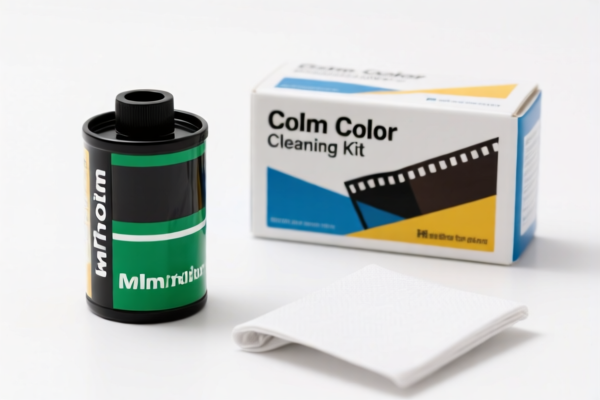
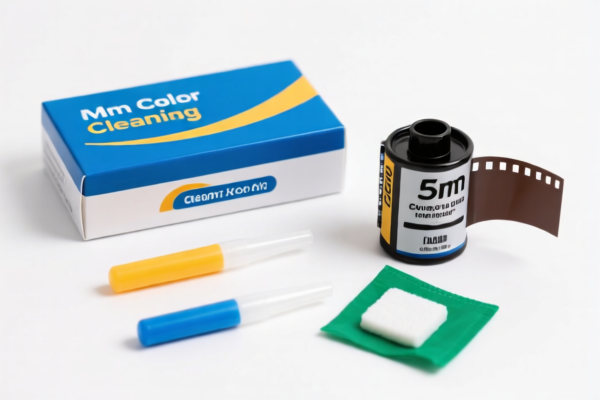
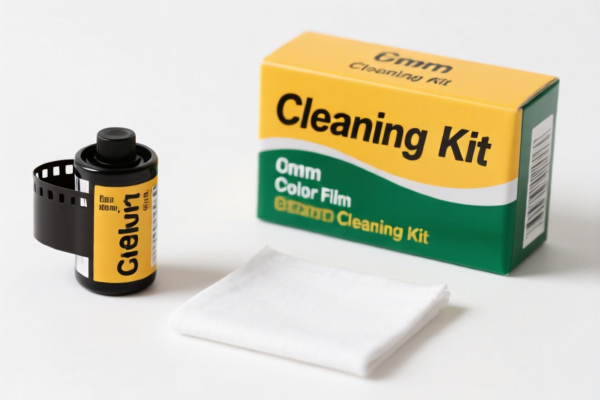
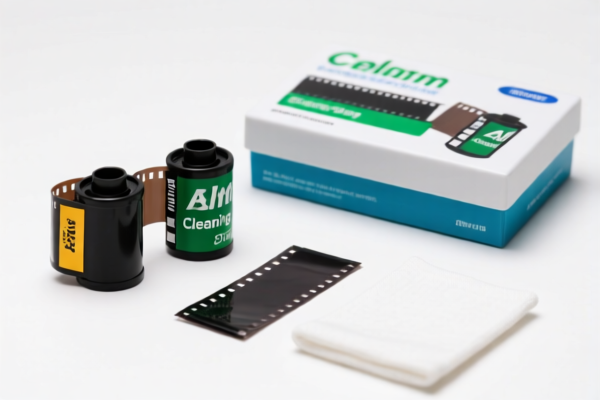
AI Analysis
🎞️ 35mm Color Film Professional Edition
🌐 HS Code Reference & Customs Clearance Guide | 2026 Latest Tariff Analysis | Professional-Level Strategy for Photographic Chemicals
📌 I. Product Definition & Classification: What Exactly Is "Professional Color Film"?
"35mm Color Film Professional Edition" refers to unexposed photographic film coated with light-sensitive emulsion, formatted in 35mm width, designed for high-end, professional, or advanced amateur photography. In international trade, these goods fall under Chapter 37 (Photographic or Cinematographic Goods). The key distinction lies in whether the product is considered a "sensitized emulsion" (liquid/flat) or "sensitized plate/film" (rolled/unexposed strip).
⚠️ Key Distinction Point:
- If the product is described primarily by its chemical composition (emulsion) intended for coating, it may fall under 3707 (Photographic Chemical Preparations).
- If the product is a physical medium (unexposed film roll) ready for use, it generally falls under 3701 (Sensitized Plates/Films) or 3702 (Photographic Film in Rolls).
- Crucial Note: Customs often scrutinizes "Professional Edition" to determine if it implies a specific chemical formulation (3707) vs. a physical format (3701/3702).
📦 II. HS Code Classification Details (2026 Latest Authoritative对照)
| HS Code | Product Description | Application Scenario | Key Classification Logic |
|---|---|---|---|
3707.10.00.90 |
Other photographic sensitized emulsions (Color) | Chemical solutions, coatings, or bulk emulsions where "Color" and "Film" imply the material property rather than the final roll form. | Based on "Color Film" implying material attributes of sensitized emulsions. Categorized under "Other" due to lack of specific material conflict. |
3707.10.00.05 |
Sensitized emulsions for Color Negative Film | Specifically targeting the chemical substrate for color negative film production. | "Color" matches classification; "Film" function aligns with sensitized material attributes. Treated as color negative film class. |
3701.91.00.60 |
Other sensitized unexposed films, for Color Photography (Non-paper/textile) | 35mm Color Macro Film. Physical form is photographic film, not paper or textile. | Material inferred as non-paper/textile film. Use: "For Color Photography." Fits "Other" subheading for sensitized films. |
3701.91.00.30 |
Other sensitized unexposed films, for Color Photography (Generic) | General 35mm Color Film where physical form (disc, roll, etc.) is not explicitly defined as a specific type. | "Color" = Color Photography; "Film" = Unexposed Film. Classified as "Other" due to unspecified physical form. |
3702.55.00.60 |
Other Color Photographic Film in Rolls, Width 16mm-35mm | Standard 35mm Color Film Rolls. Explicitly matches width requirement (16mm-35mm) and format (Rolls). | Most accurate for standard commercial 35mm rolls. Material: Light-sensitive coating, not paper/textile. |
🔍 Priority Advice:
-3702.55.00.60is often the most precise fit for standard 35mm color film rolls because it explicitly covers the 35mm width and roll format.
-3701codes are used if the product is classified broadly as "sensitized film" without specifying the "roll" category under 3702, or if the "macro" aspect is emphasized.
-3707codes are riskier unless the product is sold as a chemical preparation/emulsion rather than a finished photographic medium.
💰 III. 2026 Latest Tariff Rate Breakdown (Including Surtaxes & Policy Surcharges)
✅ Applicable Country: United States (US)
✅ Origin: China (CN)
✅ Effective Date: November 10, 2025 (for subsequent imports)
🎯 1. 3707.10.00.90 & 3707.10.00.05 —— Photographic Chemical Preparations (Emulsions)
| Item | Content |
|---|---|
| Base Tariff | 3.0% (Ad Valorem) |
| USITC Surtax (Section 301) | +25% |
| IEEPA Surtax (China-Specific) | +10% |
| Total Tariff Rate | 38.0% |
| Calculation Method | CIF Value × 38.0% |
| De Minimis Exemption | ❌ Not Eligible (High surtax rates exclude small parcels from exemption) |
| Legal Authority Path | IEEPA:9903.01.25 → IEEPA:9903.01.24 → USITC:3707.10.00.90/05 → FOOTNOTE:9903.88.01 |
📌 Explanation:
- These codes fall under chemical preparations. The 3.0% base rate is low, but the 25% Section 301 tariff and 10% IEEPA tariff push the total to 38%.
- This is a high-cost category for Chinese-origin chemical-photographic goods.
🎯 2. 3701.91.00.60 & 3701.91.00.30 —— Other Sensitized Unexposed Films
| Item | Content |
|---|---|
| Base Tariff | 3.7% (Ad Valorem) |
| USITC Surtax (Section 301) | +25% |
| IEEPA Surtax (China-Specific) | +10% |
| Total Tariff Rate | 38.7% |
| Calculation Method | CIF Value × 38.7% |
| De Minimis Exemption | ❌ Not Eligible |
| Legal Authority Path | IEEPA:9901.25 → IEEPA:9903.01.24 → USITC:3701.91.00.60/30 → FOOTNOTE:9903.88.01 |
📌 Note:
- Slightly higher base rate (3.7%) than the chemical preparation codes, leading to a 38.7% total rate.
- Applies if the product is classified as "Other" sensitized films under heading 3701.
🎯 3. 3702.55.00.60 —— Color Photographic Film in Rolls (16mm-35mm) ⭐ Recommended
| Item | Content |
|---|---|
| Base Tariff | 0.0% (Ad Valorem) |
| USITC Surtax (Section 301) | +25% |
| IEEPA Surtax (China-Specific) | +10% |
| Total Tariff Rate | 35.0% |
| Calculation Method | CIF Value × 35.0% |
| De Minimis Exemption | ❌ Not Eligible |
| Legal Authority Path | IEEPA:9901.25 → IEEPA:9903.01.24 → USITC:3702.55.00.60 → FOOTNOTE:9903.88.01 |
📌 Crucial Advantage:
- Base Tariff is 0%. This is significantly lower than the 3.0%-3.7% base rates for other codes.
- Total Rate is 35.0%, which is 3.0-3.7% lower than the alternative classifications.
- This code is the most cost-effective for standard 35mm color film rolls.
🛠️ IV. Customs Clearance Practical Advice (Pitfall Avoidance Guide)
✅ 1. Preparation Checklist (Must-Haves)
| Document | Required | Description |
|---|---|---|
| ✅ Product Specification Sheet | ✔️ | Must clearly state: "35mm Width," "Color Negative/Positive," "Unexposed Film," and "Material: Cellulose Triacetate/Polyester Base." |
| ✅ Composition/Formula | ✔️ | If using 3707 codes, provide emulsion composition. If using 3702, provide layer structure. |
| ✅ Product Photos (Labeled) | ✔️ | Show packaging, label (35mm, Color, Professional), and roll format. |
| ✅ Commercial Invoice | ✔️ | Must explicitly describe as "35mm Color Photographic Film Rolls, Unexposed," NOT just "Color Film." |
| ✅ Origin Certificate | ✔️ | Proof of Chinese origin is mandatory for surtax calculation. |
| ✅ Packaging List | ✔️ | Detail number of rolls, weight, and dimensions. |
✅ 2. Declaration Tips (Key Mantra)
🔥 “Format Defines Code, Width Dictates Duty, 35mm Roll Wins the Low Rate!”
| Scenario | Correct Declaration | Error to Avoid |
|---|---|---|
| Standard 35mm Color Film Rolls | 3702.55.00.60 (35% Total) |
Misclassifying as 3701 or 3707 → 38-38.7% Total |
| Film sold as Chemical Emulsion | 3707.10.00.90 |
Declaring a finished roll as "emulsion" → Audit Risk |
| 35mm Film, but not in Rolls | 3701.91.00.60/30 |
Assuming all 35mm film is "rolls" → Misclassification |
| Generic "Photographic Materials" | Avoid Vague Terms | Using "Chemical Products" for film → Delay/Rejection |
📌 Critical Warning:
- Do NOT use vague terms like "Camera Accessories" or "Printing Supplies."
- Must specify "Unexposed" and "Photographic Film."
- If the film is in rolls and is 35mm,3702.55.00.60is the strongest, cheapest classification.
✅ 3. Special Cases
| Scenario | Handling Advice |
|---|---|
| "Professional Edition" Marketing Term | This is a marketing term, not a customs classification term. Focus on physical attributes (35mm, Roll, Color) in declaration. |
| Mixed Orders (Film + Chemicals) | Separate lines for 3702 (Film) and 3707 (Chemicals) if applicable. Do not combine. |
| Non-Chinese Origin | If film is made in Japan, Germany, or South Korea, the 25% Section 301 surtax may not apply (verify current USITC lists). IEEPA 10% may still apply depending on origin rules. |
| De Minimis (Section 321) | ❌ Not Applicable. Surtax rates > 20% generally block de minimis exemption for China-origin goods. |
🌍 V. Global Market Customs Comparison (2026 Latest)
| Country/Region | Recommended HS Code | Tariff Rate (CN Origin) | Certification | Note |
|---|---|---|---|---|
| 🇺🇸 USA | 3702.55.00.60 |
35% (Base 0% + 35% Surtax) | None specific | Lowest Base Rate. 3701/3707 codes are 38-38.7%. |
| 🇨🇳 China | 3702.55.00.60 |
0% - 5% (Import Duty) | None | No surtaxes. |
| 🇪🇺 EU | 3702.55 |
0% - 2% | None | Low duty, no major surtaxes. |
| 🇬🇧 UK | 3702.55 |
0% - 2% | None | Post-Brexit, similar to EU. |
| 🇯🇵 Japan | 3702.55 |
0% - 2.5% | PSE (if electronic components) | Low duty. |
📌 Conclusion:
- USA is the only major market with high surtaxes for Chinese-origin photographic films.
-3702.55.00.60is the optimal choice for US clearance, saving 3.0-3.7% compared to other film codes.
- EU/UK/Japan have negligible duties, so classification precision is less critical for cost, but still important for compliance.
📌 VI. Common Mistakes & Pitfalls (Lessons from Experience)
❌ Mistake 1: Classifying 35mm Film under 3707 (Chemicals)
👉 Consequence: Higher base rate (3.0%) → 38.0% total vs. 35.0%. Unnecessary cost increase.
👉 Reason: Film rolls are "photographic goods," not "chemical preparations."
❌ Mistake 2: Ignoring the "35mm Width" in 3702
👉 Consequence: Misclassification under 3702.50 (Other widths) or 3701 (General).
👉 Result: Potential audit or penalty for incorrect subheading.
❌ Mistake 3: Vague Description "Color Film"
👉 Consequence: CBP (Customs) may classify under a general, higher-tariff "Other" code or request additional info.
👉 Solution: Always specify "35mm," "Unexposed," "Rolls."
❌ Mistake 4: Assuming De Minimis Applies
👉 Consequence: Seizure or forced payment of full duties + penalties.
👉 Rule: China-origin goods with surtaxes > 20% are excluded from $800 de minimis.
✅ Correct Approach:
"35mm Color Negative Photographic Film, Unexposed, on Polyester Base, Rolls, Professional Grade, Model XYZ, Origin: China"
🎯 VII. Conclusion: Precision Classification, Maximized Profit!
🎯 Remember the Mantra:
🔹 "35mm Roll = 3702.55, Zero Base Rate, 35% Total!"
🔹 "Chemical Emulsion = 3707, 3% Base, 38% Total!"
🔹 "General Film = 3701, 3.7% Base, 38.7% Total!"
📌 Tip:
- If your film is NOT from China (e.g., Fujifilm Japan, Kodak USA), verify if Section 301 surtaxes apply. They often do not, reducing the total rate to just the base rate (0%).
- For Chinese-origin film, always use 3702.55.00.60 to minimize the 35% total tariff.
📣 Immediate Action:
📞 Contact a licensed Customs Broker + Provide Product Specs + Confirm HS Code
3702.55.00.60.
🚀 Clear Customs Smoothly, Reduce Costs, Maximize Margins!
✨ Professional Clearance Starts with Accurate Classification!
💼 Every Percent Matters in High-Tariff Goods!
Customer Reviews
About HS Code Classification
The Harmonized System (HS) is an internationally standardized nomenclature developed by the World Customs Organization (WCO) to classify traded products. Over 200 countries use the HS system as the basis for customs tariffs, trade statistics, and import/export regulations.
Each HS code follows a hierarchical structure:
- Chapter (2 digits) — Broad category of goods (e.g., Chapter 84: Machinery and Mechanical Appliances)
- Heading (4 digits) — More specific grouping within the chapter
- Subheading (6 digits) — Internationally standardized breakdown, used by all WCO member countries
- National subdivisions (8-10 digits) — Country-specific extensions for further classification, such as US HTSUS 10-digit codes
Correct HS code classification is essential for smooth customs clearance, accurate duty payment, and compliance with trade regulations. Misclassification can lead to customs delays, overpayment of duties, or penalties.
When importing from CN to US, the applicable tariff rates may include:
- Most-Favored-Nation (MFN) rate — The standard duty rate applied to WTO members
- General rate — Applied to countries without trade agreements
- Trade remedy duties — Additional tariffs such as Section 301 (anti-dumping), Section 232 (national security), or countervailing duties
The information provided on this page is for reference purposes only. For official classification, please consult with your local customs authority or a licensed customs broker.