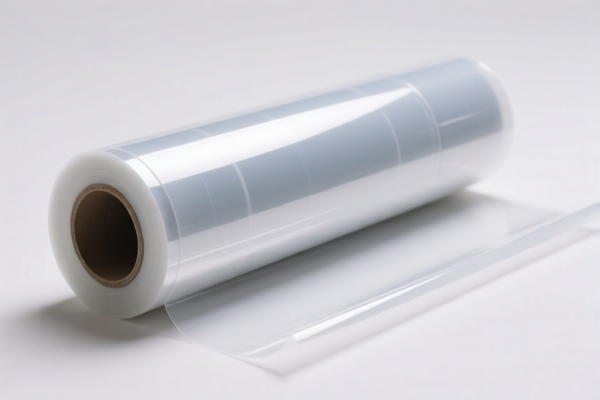
35mm Color Film Roll
CN → US| HS Code | Tariff Rate | Origin | Destination | Doc |
|---|---|---|---|---|
| 3702540030 | 38.7% | CN | US | Official Doc |
| 3707100090 | 38.0% | CN | US | Official Doc |
| 3707100005 | 38.0% | CN | US | Official Doc |
| 3701910060 | 38.7% | CN | US | Official Doc |
| 3701910030 | 38.7% | CN | US | Official Doc |
Product Images



AI Analysis
🎞️ 35mm Color Film Roll (Photographic Film)
🌐 HS Code Reference & Customs Clearance Guide | 2026 Tax Rate Breakdown | Professional Clearance Strategy
📌 I. Product Definition & Classification: What is "35mm Color Film"?
35mm Color Film Rolls are unexposed photosensitive materials used for color photography. In international trade, they fall under Chapter 37 (Photographic, Cinematographic and Optical Goods). Key characteristics include:
- Format: 35mm roll (standard film gauge).
- Type: Color negative or color reversal film ("Color Film").
- Material: Cellulose acetate or polyester base coated with light-sensitive emulsion.
- Status: Unexposed (raw photographic material).
⚠️ Critical Classification Logic:
If the product is unexposed, it belongs to Heading 3701 (Photographic plates/film, exposed or unexposed). * If it is color film specifically, it targets sub-headings under 3701.91 or 3701.99. * Note*: Products labeled "Macro" or specific brand features do not change the HS Code but must align with the "Color" and "Film" attributes.
📦 II. HS Code Classification Details (Based on Provided Data)
Based on your provided data, here are the 5 matching HS Codes with their specific logic and tax implications:
| HS Code | Product Description (Summary from Data) | Classification Logic | Total Tax Rate |
|---|---|---|---|
| 3702.54.00.30 | Color Photographic Film (35mm) | Perfect match: "35mm" format + "Color" attribute + "Film" material. | 38.7% |
| 3707.10.00.90 | Other Photographic Chemicals (Color Emulsion) | "Color" + "Film" fits emulsion; "Macro" is a usage term. Fits "Other" category. | 38.0% |
| 3707.10.00.05 | Color Negative Film (Emulsion) | "Color" = Color; "Film" = Sensitizing material. Classified as color negative type. | 38.0% |
| 3701.91.00.60 | 35mm Color Macro Film | Material inferred as non-paper/non-fabric film. Used for color photography. | 38.7% |
| 3701.91.00.30 | Other Unexposed Color Film | "Color" + "Film" matches sensory material. "Other" used since physical shape (roll vs. disc) isn't specified. | 38.7% |
🔍 Key Takeaway:
While 3702.54.00.30 is the most specific match for "35mm Color Film," codes 3701.91.00.30/60 are also valid if the exact sub-category (e.g., negative vs. reversal) is not explicitly defined in the declaration. Codes under 3707 are for the chemical emulsion or generic "other" photographic materials.
💰 III. 2026 Latest Tariff Rate Breakdown (Detailed Policy Analysis)
✅ Applicable Market: USA (US)
✅ Origin: China (CN)
✅ Effective Date: 2025 (Based on current 122条款/Section 301 policies)
All listed HS Codes share a complex tariff structure involving Base Tariff, Section 301 Add-on, and Section 122 (Bilateral/Specific) Tariffs.
🎯 A. The High-Risk Group (38.7% Total Tax)
Applies to: 3702.54.00.30, 3701.91.00.60, 3701.91.00.30
| Tax Component | Rate | Legal Basis / Policy Description |
|---|---|---|
| Base Tariff | 3.7% | Standard Most-Favored-Nation (MFN) duty for photographic film under Chapter 37. |
| Section 301 Add-on | 25.0% | US Trade Act Section 301: Additional duty on Chinese goods to address unfair trade practices. |
| Section 122 Duty | 10.0% | Specific Bilateral/Trade Measure: Additional tariff often linked to specific product lists or reciprocal measures. |
| TOTAL TAX | 38.7% | Sum of all components. This is the actual cost per CIF value. |
📌 Interpretation:
The 38.7% rate is extremely high for a simple consumer good. This is driven entirely by the 25% Section 301 surcharge and the 10% Section 122 surcharge.
Calculation Example: If your CIF value is $1,000, you must pay $387* in duties alone.
🎯 B. The "Other" Chemical Group (38.0% Total Tax)
Applies to: 3707.10.00.90, 3707.10.00.05
| Tax Component | Rate | Legal Basis / Policy Description |
|---|---|---|
| Base Tariff | 3.0% | Slightly lower base rate for "other" photographic chemical preparations. |
| Section 301 Add-on | 25.0% | Standard Section 301 surcharge applies to all Chinese-origin goods in this list. |
| Section 122 Duty | 10.0% | Standard Section 122 surcharge applies. |
| TOTAL TAX | 38.0% | Sum of all components. 0.7% lower than the specific film codes. |
⚠️ Risk Note:
While 38.0% is slightly lower than 38.7%, it is still a high-cost category. The Section 301 (25%) and Section 122 (10%) components remain the dominant cost drivers.
🛠️ IV. Customs Clearance Practical Advice (Avoiding Pitfalls)
✅ 1. Documentation Checklist (Must-Haves)
| Document | Requirement | Why It Matters |
|---|---|---|
| Commercial Invoice | Must state "Unexposed Color Photographic Film" and "35mm". | Avoids re-classification to "Chemicals" (3707) which might trigger different inspections. |
| Product Specifications | Detail: Film speed (ISO), format (35mm), type (Negative/Reversal). | Proves it fits 3701/3702 and not generic "chemicals." |
| Material Safety Data Sheet (MSDS) | Required. | Film contains light-sensitive chemicals. Customs may check for hazardous material handling. |
| Declaration of "Unexposed" | Explicit statement: "Not exposed to light." | CRITICAL: Exposed film has different rules (often duty-free or restricted). |
| Country of Origin Cert | Certificate of Origin (China). | Triggers the 25% + 10% surcharges. If re-shipped from Vietnam/Mexico, exemptions may apply. |
✅ 2. Declaration Strategy (Crucial Tips)
🔥 Golden Rule: "Be Specific, Be Accurate, Don't Guess!"
| Scenario | Correct Declaration | Consequence of Error |
|---|---|---|
| Standard 35mm Color Roll | Use 3702.54.00.30. | If misdeclared as 3707.10, risk of audit for "Chemical" misclassification. |
| Macro/Specific Use | Keep 3702.54.00.30 or 3701.91.00.60. | Calling it "Camera Part" will result in Rejection or Fines. |
| Unknown "Other" Film | Use 3701.91.00.30 ("Other"). | Better than guessing. Avoids "False Description" penalties. |
| Mixed Box (Film + Accessories) | Split Declaration. | If accessories are mixed, they get their own HS Code. Don't lump them into film to save tax. |
🚫 Warning: Do NOT use generic terms like "Camera Supplies" or "Photography Items." Use the specific HS Code 3702.54.00.30 to avoid customs delays.
✅ 3. Special Handling for High Taxes
- De Minimis Rule: Since 38.7% is so high, De Minimis ($800 exemption) does NOT apply. You must file formal entry for every shipment.
- Valuation: Ensure CIF (Cost + Insurance + Freight) is accurately reported. Duties are calculated on the total value, not just product cost.
- Bonding: If you have high volume, consider a Continuous Bond to smooth out payments, but remember the tax rate remains 38.7%.
🌍 V. Market Comparison & Strategic Advice
| Market | Recommended HS Code | Est. Total Tax (China Origin) | Strategy |
|---|---|---|---|
| 🇺🇸 USA | 3702.54.00.30 |
38.7% | High Risk. Consider re-routing through Vietnam/Mexico if supply chain allows to avoid Section 301/122. |
| 🇪🇺 EU | 3702.54.00 |
~4-6% | Lower taxes, but strict REACH/chemical regulations. |
| 🇨🇳 China | 3702.54.00 |
~3.7% | No Section 301, but internal market competition is high. |
📌 Conclusion:
For the US market, 35mm Color Film is a high-taxed item due to trade wars (Section 301 + Section 122). 1. Verify Origin: If you can source from a non-China country, you might bypass the 35% (25%+10%) surcharges. 2. Pre-Arbitration: Request an Advance Ruling from US Customs (CBP) to confirm the 3702.54.00.30 classification. 3. Price Adjustment: Factor the 38.7% tax into your landed cost calculations immediately.
📌 VI. Common Mistakes & How to Avoid Them
❌ Mistake 1: Declaring as "Paper" or "Textiles" (Chapter 48/50).
👉 Result: Seizure or massive fines. Film is Chemical/Photographic (Chapter 37).
❌ Mistake 2: Failing to declare "Unexposed."
👉 Result: Customs assumes it might be "Exposed Film" (restricted) or "Chemical Emulsion" (different tax).
❌ Mistake 3: Ignoring Section 122.
👉 Result: Underestimating tax by 10%, leading to cash flow issues at port.
✅ Correct Action:
"35mm Color Photographic Film (Unexposed), ISO 400, 36 Exposures, HS Code 3702.54.00.30. Declared Origin: China."
🎯 VII. Final Verdict: Is It Worth Shipping?
🎯 The Bottom Line:
With a 38.7% total tax rate, 35mm Color Film is expensive to import into the US from China.
* For Retailers: You must raise retail prices significantly or absorb the cost.
* For Suppliers: Consider third-party warehousing in non-Section 301 countries to re-label and re-ship.
* For Importers: Strict compliance is your only defense. Use 3702.54.00.30 for accuracy, and ensure all documentation proves the "35mm Color" nature to avoid audit.
🚀 Action Plan:
1. Confirm HS Code 3702.54.00.30 with your broker.
2. Calculate landed cost with 38.7% duty.
3. Check if Section 301 Exemptions (rare) apply to your specific brand.
4. DO NOT ship without a formal entry bond and accurate invoice.
✨ Professional Clearance Starts with Precision!
💼 Your profit margin depends on the 0.7% difference between 3702.54 and 3707.10?
Check your specs, verify the HS Code, and protect your bottom line!
Customer Reviews
About HS Code Classification
The Harmonized System (HS) is an internationally standardized nomenclature developed by the World Customs Organization (WCO) to classify traded products. Over 200 countries use the HS system as the basis for customs tariffs, trade statistics, and import/export regulations.
Each HS code follows a hierarchical structure:
- Chapter (2 digits) — Broad category of goods (e.g., Chapter 84: Machinery and Mechanical Appliances)
- Heading (4 digits) — More specific grouping within the chapter
- Subheading (6 digits) — Internationally standardized breakdown, used by all WCO member countries
- National subdivisions (8-10 digits) — Country-specific extensions for further classification, such as US HTSUS 10-digit codes
Correct HS code classification is essential for smooth customs clearance, accurate duty payment, and compliance with trade regulations. Misclassification can lead to customs delays, overpayment of duties, or penalties.
When importing from CN to US, the applicable tariff rates may include:
- Most-Favored-Nation (MFN) rate — The standard duty rate applied to WTO members
- General rate — Applied to countries without trade agreements
- Trade remedy duties — Additional tariffs such as Section 301 (anti-dumping), Section 232 (national security), or countervailing duties
The information provided on this page is for reference purposes only. For official classification, please consult with your local customs authority or a licensed customs broker.