35mm Color Film Storage Box
CN → US| HS Code | Tariff Rate | Origin | Destination | Doc |
|---|---|---|---|---|
| 3701910030 | 38.7% | CN | US | Official Doc |
| 3701910060 | 38.7% | CN | US | Official Doc |
| 3707906000 | 35.0% | CN | US | Official Doc |
| 3702530030 | 38.7% | CN | US | Official Doc |
Product Images
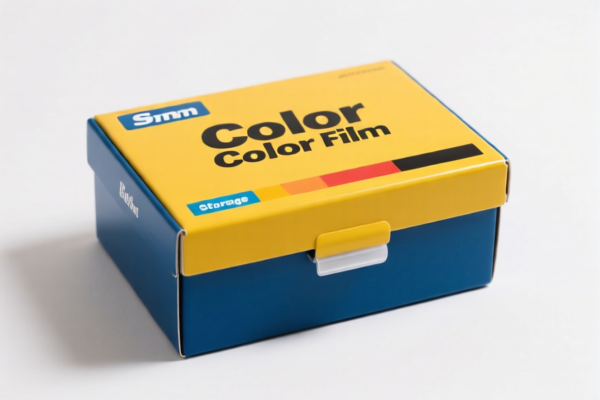
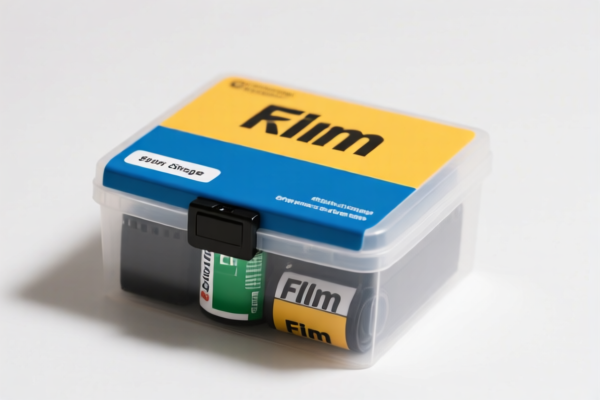
AI Analysis
🎞️ 35mm Color Film Storage Box (Photochemical Products)
🌐 HS Code Reference & Customs Clearance Guide | 2026 Latest Tariff Analysis | Professional Compliance Strategy
📌 I. Product Definition: What Exactly is a "35mm Color Film Storage Box"?
A "35mm Color Film Storage Box" in international trade is not merely a container; it is a classification challenge involving light-sensitive materials and photochemical preparations. The core component is the 35mm color photographic film or the associated chemical developers, packaged in a gift box.
In customs terminology, this product falls squarely under Chapter 37: Photographic or cinematographic goods. It is critical to distinguish between the film itself (light-sensitive emulsion on a base) and the chemicals used to process it. Misclassification can lead to significant tariff discrepancies due to specific US trade policies.
⚠️ Key Distinction:
- If the box contains unexposed, light-sensitive 35mm color film rolls →归入 3701/3702 categories.
- If the box contains unmixed chemical products (developers, fixers) for photo use → 归入 3707.90.
- Gift Box Packaging: Does not change the HS Code. The classification is based on the principal content, not the packaging material.
📦 II. HS Code Classification Details (Based on Provided Data)
| HS Code | Product Description | Applicable Scenario | Material/Content |
|---|---|---|---|
3701.91.00.30 |
35mm Color Photographic Film, Gift Box, Light-Sensitive Material, for Color Photography | Color film plates/sheets or specific roll formats classified as "other color photographic plates/films" | ✅ Light-sensitive film |
3701.91.00.60 |
35mm Color Photographic Film, Gift Box, Light-Sensitive Material, Classified as Other Color Photographic Products | General 35mm color film where specific sub-category distinctions apply | ✅ Light-sensitive film |
3707.90.60.00 |
35mm Color Photography Unmixed Chemical Preparations, Gift Box, Material: Photo Chemicals, for Photography | Developers, fixers, or processing chemicals (NOT film itself) | ❌ Chemicals only |
3702.53.00.30 |
35mm Color Film Roll, Gift Box, Light-Sensitive Material, Spec: 35mm, for Photography | Standard 35mm color negative film rolls | ✅ Light-sensitive film roll |
3701.91.00.30 |
35mm Color Photographic Film, Gift Box, Light-Sensitive Material, for Color Photography, No Material Conflict | Duplicate entry confirming 3701.91.00.30 for specific film types |
✅ Light-sensitive film |
🔍 Important Note:
-3701and3702relate to Photographic Plates and Films (Light-Sensitive).
-3707relates to Chemical Preparations for Photographic Use (Processing Agents).
- Do not mix these in one declaration if the contents differ. If the box contains both film and chemicals, customs may require splitting the declaration or classifying based on the "essential character," which is risky.
💰 III. 2026 Latest Tariff Rate Details (Including Additional Taxes & Policy Surcharges)
✅ Applicable Country: United States (US)
✅ Origin: China (CN)
✅ Effective Date: Post-2025 Trade Policy Updates
🎯 1. 3701.91.00.30 & 3702.53.00.30 & 3701.91.00.60 —— 35mm Color Photographic Film
| Item | Content |
|---|---|
| Base Tariff Rate | 3.7% (Ad Valorem) |
| Section 301 Surcharge | +25.0% (USITC Footnote 9903.88.01 equivalent for Chapter 37) |
| IEEPA Surcharge (Section 122/Other) | +10.0% (Additional surcharge for Chinese-origin photochemical goods) |
| Total Tax Rate | 38.7% |
| Tax Calculation | CIF Value × 38.7% |
| De Minimis Exemption Eligibility | ❌ NOT Eligible (High tariff threshold exceeds $800 de minimis limits for this origin/category combination) |
| Legal Basis Path | HTSUS:3701.91.00.30 → Section 301: 25% → IEEPA/Addition: 10% |
📌 Explanation:
- Base 3.7%: Standard Most Favored Nation (MFN) rate for photographic films.
- 25% Section 301: Applied to many industrial and consumer goods from China, including specific photographic materials.
- 10% IEEPA/122 Clause: This is a critical add-on for Chinese-origin photochemicals.
- Total 38.7%: This is a very high effective tariff. Profit margins on low-value film rolls will be severely impacted.
🎯 2. 3707.90.60.00 —— Unmixed Chemical Preparations for Photography
| Item | Content |
|---|---|
| Base Tariff Rate | 0.0% (Ad Valorem) |
| Section 301 Surcharge | +25.0% |
| IEEPA Surcharge (Section 122/Other) | +10.0% |
| Total Tax Rate | 35.0% |
| Tax Calculation | CIF Value × 35.0% |
| De Minimis Exemption Eligibility | ❌ NOT Eligible |
| Legal Basis Path | HTSUS:3707.90.60.00 → Section 301: 25% → IEEPA/Addition: 10% |
📌 Note:
- Although the base rate is 0%, the additional tariffs still bring the total to 35.0%.
- This is 3.7% cheaper than the film classification, but the risk of misclassifying film as chemicals is high (and penalties for misclassification are severe).
🛠️ IV. Customs Clearance Practical Advice (Pitfall Avoidance Guide)
✅ 1. Essential Documentation Checklist
| Document | Mandatory? | Description |
|---|---|---|
| ✅ Product Specifications | ✔️ | Must specify: 35mm format, Color Negative/Positive, Light-Sensitive vs. Chemical. |
| ✅ Material Composition | ✔️ | Clearly state: "Emulsion on Acetate/PET Base" for film; "Liquid Chemicals" for developers. |
| ✅ Usage Declaration | ✔️ | "For Professional Color Photography Processing" |
| ✅ HS Code Justification | ✔️ | Provide technical data sheets linking the product to HTSUS 3701/3702/3707. |
| ✅ Commercial Invoice | ✔️ | Must list unit price, total CIF value, and correct HS Code. |
| ✅ Gift Box Description | ✔️ | "Packaged in Gift Box" – Note that packaging is non-dutiable separately if included. |
✅ 2. Declaration Strategy (Key Rules)
🔥 “Character Determines Code, Packaging is Secondary!”
| Scenario | Correct Declaration | Wrong Practice |
|---|---|---|
| Box contains ONLY 35mm Film Rolls | 3702.53.00.30 or 3701.91.00.30 |
Do NOT declare as "Packaging" or "Gift Set" |
| Box contains ONLY Chemicals | 3707.90.60.00 |
Ensure chemicals are "Unmixed" and "For Photographic Use" |
| Box contains BOTH Film + Chemicals | Split Declaration or Consult Broker | Do NOT mix into one line item – High risk of audit |
| Empty Gift Box | Not Eligible for this import | Cannot claim photochemical rates for empty boxes |
⚠️ Critical Warning:
- If you import Film but declare under3707(Chemicals), Customs will likely reject the entry, demand reclassification, and impose penalties due to the nature of the goods.
- If you import Chemicals but declare under3702(Film), you may face overpayment of duties (38.7% vs 35.0%) and potential scrutiny for under-declaring value.
✅ 3. Special Considerations for "Gift Boxes"
- No Extra Duty for Packaging: The cardboard/plastic gift box is not taxed separately. Its value is included in the total CIF value.
- Kitting Risk: If the box contains a "Starter Kit" (Film + Developer + Replacer), Customs may classify the entire kit under the principal article. If the film is the main value driver, it might default to the film HS code (
3702), resulting in the 38.7% rate. - Recommendation: If possible, import film and chemicals separately to optimize logistics and potentially claim different duty treatments, though both are subject to high tariffs.
🌍 V. Global Market Comparison (2026)
| Country/Region | Recommended HS Code | Tariff Rate (China Origin) | Notes |
|---|---|---|---|
| 🇺🇸 USA | 3702.53.00.30 / 3707.90.60.00 |
35.0% - 38.7% | Highest cost market due to 25% + 10% surcharges. |
| 🇨🇳 China | 3702.53.00.30 |
10-13% | Standard import duty. No Section 301. |
| 🇪🇺 EU | 3702.53.00.30 |
6% | Standard MFN. No additional political surcharges. |
| 🇬🇧 UK | 3702.53.00.30 |
6% | Post-Brexit standard rate. |
| 🇯🇵 Japan | 3702.53.00.30 |
0% | Many photo goods have 0% MFN. |
📌 Conclusion:
- USA is the most expensive market for importing 35mm film and photo chemicals from China.
- 38.7% total tax significantly erodes margins. Consider sourcing from Vietnam, Thailand, or India (if applicable for origin rules) to potentially mitigate Section 301 tariffs, though IEEPA surcharges may still apply depending on final processing.
📌 VI. Common Errors & Pitfalls (Lessons Learned)
❌ Error 1: Declaring "Photographic Gift Set" without specifying contents.
👉 Consequence: Customs will use "Essential Character" rule, likely assigning the higher film HS code and 38.7% rate, plus potential delays.
❌ Error 2: Using 3707 for light-sensitive film rolls.
👉 Consequence: Misclassification penalty. Film is NOT a chemical preparation. It is a manufactured article with emulsion.
❌ Error 3: Ignoring the "122 Clause" or IEEPA 10% surcharge.
👉 Consequence: Underpayment of duties. The 10% is additional to the 25% Section 301. Total is 35-38.7%, not 25%.
❌ Error 4: Assuming "De Minimis" ($800) exemption applies.
👉 Consequence: Incorrect. Goods from China in these categories are explicitly excluded from de minimis treatment under current US law.
✅ Correct Approach:
"35mm Color Negative Film, 36 exposures, ISO 400, Light-Sensitive, Packaged in Cardboard Box, HS Code 3702.53.00.30"
🎯 VII. Conclusion: Professional Declaration, Cost Control
🎯 Remember the Formula:
🔹 Film = 3701/3702 → 38.7% Total Tax
🔹 Chemicals = 3707 → 35.0% Total Tax
🔹 Packaging = No Separate Tax
🔹 De Minimis = NOT Available🔹 "Accurate HS Code is the key to avoiding audits. High tariffs require strict compliance."
📌 Pro Tip:
If you are importing large volumes, consider:
1. Advance Ruling: Request a binding ruling from US Customs (CBP) to confirm the HS code.
2. Supply Chain Shift: Explore sourcing from non-China origins if tariffs are prohibitive.
3. Bonded Warehouses: Store goods in US bonded warehouses to defer duty payment until sale.
📣 Immediate Action:
📞 Contact a licensed US Customs Broker.
📄 Provide Product Photos and Material Safety Data Sheets (MSDS) for chemicals.
🚀 Ensure your invoice clearly states the HS Code and Country of Origin to prevent hold-ups.
✨ Professional Clearance Starts with Precise Classification!
💼 Your cost per roll depends on your code choice!
Customer Reviews
About HS Code Classification
The Harmonized System (HS) is an internationally standardized nomenclature developed by the World Customs Organization (WCO) to classify traded products. Over 200 countries use the HS system as the basis for customs tariffs, trade statistics, and import/export regulations.
Each HS code follows a hierarchical structure:
- Chapter (2 digits) — Broad category of goods (e.g., Chapter 84: Machinery and Mechanical Appliances)
- Heading (4 digits) — More specific grouping within the chapter
- Subheading (6 digits) — Internationally standardized breakdown, used by all WCO member countries
- National subdivisions (8-10 digits) — Country-specific extensions for further classification, such as US HTSUS 10-digit codes
Correct HS code classification is essential for smooth customs clearance, accurate duty payment, and compliance with trade regulations. Misclassification can lead to customs delays, overpayment of duties, or penalties.
When importing from CN to US, the applicable tariff rates may include:
- Most-Favored-Nation (MFN) rate — The standard duty rate applied to WTO members
- General rate — Applied to countries without trade agreements
- Trade remedy duties — Additional tariffs such as Section 301 (anti-dumping), Section 232 (national security), or countervailing duties
The information provided on this page is for reference purposes only. For official classification, please consult with your local customs authority or a licensed customs broker.