35mm Color Film Wide Dynamic Range
CN → US| HS Code | Tariff Rate | Origin | Destination | Doc |
|---|---|---|---|---|
| 3707100090 | 38.0% | CN | US | Official Doc |
| 3707903290 | 35.0% | CN | US | Official Doc |
| 3701996060 | 35.0% | CN | US | Official Doc |
| 9006596000 | 16.8% | CN | US | Official Doc |
| 9006599100 | 17.5% | CN | US | Official Doc |
Product Images
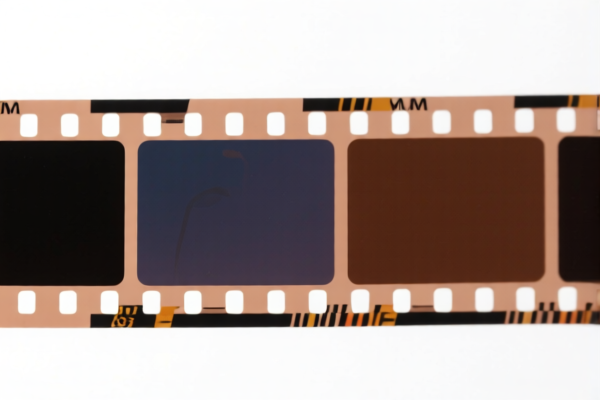
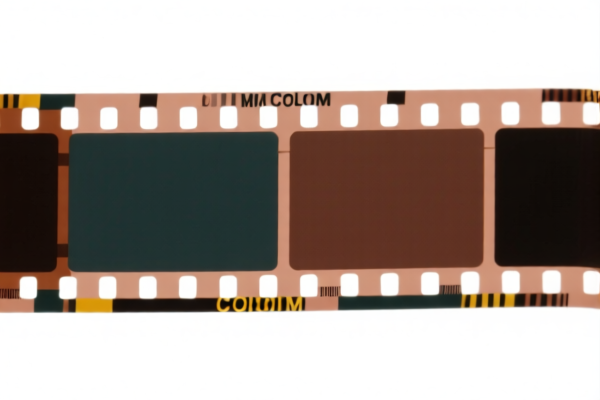


AI Analysis
🎞️ 35mm Color Film & Wide Dynamic Range Cameras (Photographic Equipment)
🌐 HS Code Reference & Customs Clearance Guide | 2026 Latest Tariff Analysis | Professional Clearance Strategy
📌 Part I: Product Definition & Classification: Do You Really Understand "35mm Film" and "Cameras"?
In international trade, photographic materials are strictly divided based on their physical state and functional components:
1. 35mm Color Film (Chemical/Photo-sensitive Material):
Refers to unexposed photographic film used for capturing images. It is categorized based on its specific chemical composition (e.g., emulsion type) or physical support (non-paper/non-textile). The key distinction lies in whether it is classified under "Chemical Preparations for Photography" or "Unexposed Photographic Film."
2. Wide Dynamic Range (WDR) Cameras (Optical/Electronic Equipment):
Refers to digital or film cameras equipped with specific functions to handle high-contrast scenes. The classification depends on whether the camera is a specific type (e.g., non-standard zoom, specialized function) or a general-purpose camera.
⚠️ Key Distinction Points:
- If the product is unexposed 35mm film, it falls under Chapters 37 (Photochemical/Photographic Goods). The exact HS code depends on whether it is treated as a "chemical preparation" or "film support."
- If the product is a camera, it falls under Chapter 90 (Optical/Photographic Instruments). "Wide Dynamic Range" is a feature, but the HS code often hinges on specific sub-categories like "non-standard" or "specific function" vs. general use.
📦 Part II: HS Code Classification Details (2026 Latest Tariff Authority Comparison)
| HS Code | Product Description | Application Scenario | Material/Structure |
|---|---|---|---|
3707.10.00.90 |
35mm Film, fits photographic chemical use, material is sensitized emulsion coating, belongs to other categories of film. | Standard 35mm color film, specifically defined by its emulsion coating chemistry. | ✅ Chemical Emulsion Coating |
3707.90.32.90 |
35mm Film, belongs to photo-sensitive materials for photography, material is chemical preparation containing sensitized emulsion, non-specific coupling agent. | 35mm film classified under broader "other" photographic chemical preparations. | ✅ Chemical Preparation with Emulsion |
3701.99.60.60 |
35mm Film, fits unexposed photo-sensitive attribute, material is non-paper, non-textile photo-sensitive material. | Unexposed film where the focus is on the physical support (not paper/textile). | ✅ Non-paper/Non-textile Support |
9006.59.60.00 |
Color Wide Dynamic Range Camera, belongs to non-standard zoom or specific function cameras, no material conflict. | Cameras with specialized WDR capabilities that do not fit standard fixed-lens or general purpose categories. | ✅ Optical/Electronic Camera |
9006.59.91.00 |
Color Wide Dynamic Range Camera, belongs to non-standard zoom camera category, fits camera usage description. | General WDR cameras classified under "other" non-standard zoom types. | ✅ Optical/Electronic Camera |
🔍 Key Reminder:
- Film Classification: The choice between3707and3701depends on whether customs views the product primarily as a chemical preparation (3707) or a physical unexposed film (3701).
- Camera Classification: "Wide Dynamic Range" is a feature, but the HS code9006.59indicates a non-standard or specific function camera. Do not confuse with general consumer cameras (often9006.3xor9006.51), which may have different tax rates.
💰 Part III: 2026 Latest Tariff Rate Details (Including Surcharge & Policy Additions)
✅ Applicable Country: United States (US)
✅ Origin: China (CN)
✅ Effective Time: Post-November 2025 (Including subsequent imports)
🎯 1. 3707.10.00.90 —— 35mm Film (Emulsion Coating Category)
| Item | Content |
|---|---|
| Base Tariff | 3.0% (ad valorem) |
| Section 301 Surcharge | +25.0% |
| Section 122 Surcharge | +10.0% |
| Total Tariff | 38.0% |
| Tax Calculation | CIF Value × 38.0% |
| De Minimis Eligibility | ❌ No (Not eligible for Section 321 de minimis exemption due to high value/complexity) |
| Legal Basis Path | HTS:3707.10.00.90 → USITC Footnote: 301 (25%) → USITC Footnote: 122 (10%) |
📌 Explanation:
- Base (3%): Standard Most Favored Nation (MFN) rate for photographic chemicals.
- Section 301 (25%): Standard retaliatory tariff on Chinese goods.
- Section 122 (10%): Additional tariff for specific strategic goods or based on recent trade policy adjustments.
- Total 38%: High cost for chemical film imports. Consider if the product can be classified under a lower-tax bracket.
🎯 2. 3707.90.32.90 —— 35mm Film (Chemical Preparation Category)
| Item | Content |
|---|---|
| Base Tariff | 0.0% |
| Section 301 Surcharge | +25.0% |
| Section 122 Surcharge | +10.0% |
| Total Tariff | 35.0% |
| Tax Calculation | CIF Value × 35.0% |
| De Minimis Eligibility | ❌ No |
| Legal Basis Path | HTS:3707.90.32.90 → USITC Footnote: 301 (25%) → USITC Footnote: 122 (10%) |
📌 Note:
- Although the base rate is 0%, the surcharges bring the total to 35%.
- This is slightly cheaper than3707.10.00.90(38%) because the base MFN rate is lower.
- Strategic Tip: If your product qualifies as "other chemical preparations" rather than "emulsion-coated film," this code may save 3% in duty.
🎯 3. 3701.99.60.60 —— 35mm Film (Non-paper/Textile Support)
| Item | Content |
|---|---|
| Base Tariff | 0.0% |
| Section 301 Surcharge | +25.0% |
| Section 122 Surcharge | +10.0% |
| Total Tariff | 35.0% |
| Tax Calculation | CIF Value × 35.0% |
| De Minimis Eligibility | ❌ No |
| Legal Basis Path | HTS:3701.99.60.60 → USITC Footnote: 301 (25%) → USITC Footnote: 122 (10%) |
📌 Note:
- Same total rate as3707.90.32.90.
- The key is proving the material is "non-paper, non-textile." If customs disputes this, they may reclassify to3707.10(38%). Ensure your product description clearly states "Polyester Base" or "Plastic Support."
🎯 4. 9006.59.60.00 —— WDR Camera (Specific Function/Non-Standard Zoom)
| Item | Content |
|---|---|
| Base Tariff | 6.8% |
| Section 301 Surcharge | 0.0% |
| Section 122 Surcharge | +10.0% |
| Total Tariff | 16.8% |
| Tax Calculation | CIF Value × 16.8% |
| De Minimis Eligibility | ❌ No (Typically excluded for electronic/optical equipment of this nature) |
| Legal Basis Path | HTS:9006.59.60.00 → USITC Footnote: 122 (10%) |
📌 Explanation:
- Base (6.8%): Standard rate for "Other" photographic cameras.
- Section 301 (0%): Interestingly, this specific sub-category does not attract the 25% Section 301 tariff. This is a critical advantage.
- Section 122 (10%): Applies due to recent policy updates.
- Total 16.8%: Significantly lower than the film tariffs (35-38%).
🎯 5. 9006.59.91.00 —— WDR Camera (Other Non-Standard Zoom)
| Item | Content |
|---|---|
| Base Tariff | 0.0% |
| Section 301 Surcharge | +7.5% |
| Section 122 Surcharge | +10.0% |
| Total Tariff | 17.5% |
| Tax Calculation | CIF Value × 17.5% |
| De Minimis Eligibility | ❌ No |
| Legal Basis Path | HTS:9006.59.91.00 → USITC Footnote: 301 (7.5%) → USITC Footnote: 122 (10%) |
📌 Note:
- Base (0%): Lower base rate.
- Section 301 (7.5%): Partial surcharge (not full 25%).
- Section 122 (10%): Standard surcharge.
- Total 17.5%: Comparable to9006.59.60.00(16.8%), but slightly higher.
- Strategic Tip: Between the two camera codes,9006.59.60.00(16.8%) is marginally cheaper than9006.59.91.00(17.5%).
🛠️ Part IV: Customs Clearance Practical Advice (Battle-Tested Pitfall Avoidance)
✅ 1. Documentation Checklist (Essential Items)
| Document | Must Provide | Description |
|---|---|---|
| ✅ Product Specification Sheet | ✔️ | Details on film base material (e.g., Polyester), emulsion type, or camera sensor specs. |
| ✅ Product Photos | ✔️ | Clear images of the label, showing "35mm," "Color," "WDR," etc. |
| ✅ Commercial Invoice | ✔️ | Must clearly state "Unexposed Photographic Film" or "Digital Camera" and HS Code. |
| ✅ Packing List | ✔️ | Separate film from cameras if shipped together to avoid classification ambiguity. |
| ✅ Origin Certificate | ✔️ | Required for determining surcharge applicability. |
| ✅ FCC Declaration | ✔️ | For Cameras: Mandatory for electronic devices in the US. |
✅ 2. Declaration Strategies (Key Mnemonics)
🔥 "Film: Emulsion vs. Support; Camera: Function vs. General. Name Precisely, Save Tax!"
| Scenario | Correct Declaration | Wrong Practice |
|---|---|---|
| 35mm Film (Emulsion Focus) | 3707.10.00.90 |
Mislabeling as "Digital Film" → Rejection |
| 35mm Film (Support Focus) | 3701.99.60.60 |
Calling it "Chemical" when it's "Film" → 38% vs 35% |
| WDR Camera (Specific Function) | 9006.59.60.00 |
General "Camera" → Potential 25% surcharge risk |
| WDR Camera (Other) | 9006.59.91.00 |
No significant risk, but slightly higher tax |
✅ 3. Special Situation Handling
| Situation | Handling Advice |
|---|---|
| Mixed Shipment (Film + Camera) | Declare Separately! Do not bundle under one HS code. Film goes to Ch. 37, Camera to Ch. 90. |
| OEM Camera Components | If importing only the lens or sensor, check if 9006.99 (parts) applies. Parts may have different tariffs. |
| "Wide Dynamic Range" Claim | Ensure technical specs support this claim. If it's just a standard camera, misclassification could lead to penalties. |
| China-Origin Cameras | Verify if the specific model qualifies for the 7.5% or 0% Section 301 rate under 9006.59. Many general cameras face 25%, but these specific sub-codes are favored. |
🌍 Part V: Global Market Customs Comparison (2026 Latest)
| Country/Region | Recommended HS Code | Tariff (China Origin) | Certification | Remarks |
|---|---|---|---|---|
| 🇺🇸 United States | 3707.10.00.90 / 9006.59.60.00 |
38% (Film) / 16.8% (Camera) | FCC (Camera) | High surcharges due to Section 301/122 |
| 🇨🇳 China | 3707.10.00.90 / 9006.59.60.00 |
3.0% (Film) / 6.8% (Camera) | CCC (Camera) | Low import duties, no surcharges |
| 🇪🇺 European Union | 3701.99 / 9006.59 |
0-4% | CE / RoHS | No Section 301/122 equivalent |
| 🇬🇧 United Kingdom | 3701.99 / 9006.59 |
0-4% | UKCA | Post-Brexit rules apply |
📌 Conclusion:
- US Market is the most challenging due to high surcharges.
- Cameras (16.8-17.5%) are significantly more tax-efficient than Film (35-38%).
- If exporting to the US, prioritize correct classification for cameras to leverage the lower Section 301 rate.
📌 Part VI: Common Errors & Pitfall Guide (Lessons from Experience)
❌ Error 1: Declaring 35mm Film as "Chemical Solution" without specifying emulsion
👉 Consequence: Customs may reclassify to 3707.10 (38%) if the description is vague.
❌ Error 2: Labeling a Camera as "Electronic Device" instead of "Photographic Camera"
👉 Consequence: Could be misclassified under Chapter 85, leading to complex verification and delays.
❌ Error 3: Ignoring Section 122 Surcharge
👉 Consequence: Unexpected 10% cost increase. Always check current USITC footnotes.
✅ Correct Practice:
"Unexposed 35mm Color Photographic Film on Polyester Base, Emulsion Coated"
"Digital Photographic Camera, Color, Wide Dynamic Range Function, Model XYZ, FCC Certified"
🎯 Part VII: Conclusion: Professional Declaration, Time-Saving, Cost-Reducing!
🎯 Remember the Mnemonic:
🔹 "Film: 38% or 35%, Base Rate Differs!"
🔹 "Camera: 16.8% or 17.5%, Section 301 Low!"
🔹 "HS Code Determines Destiny, 20% Difference is Huge!"
📌 Tip:
- For Cameras, ensure the "Wide Dynamic Range" feature is documented in the spec sheet to support the 9006.59 classification.
- For Film, if you can prove it is "non-paper, non-textile," use 3701.99.60.60 to save 3% compared to 3707.10.00.90.
- Always apply for a Pre-Ruling (Advance Ruling) from US Customs (CBP) if importing large volumes. This provides legal certainty on the HS code and tariff rate.
📣 Immediate Action:
📞 Contact a Professional Customs Broker + Provide Product Specs + Request HS Code Pre-Ruling
🚀 Let Your Products Clear Customs Smoothly, Efficiently Go Global, and Maximize Profits!
✨ Professional Customs Clearance Starts with Precise Classification!
💼 Every Penny of Your Cost Deserves Precise Calculation!
Customer Reviews
About HS Code Classification
The Harmonized System (HS) is an internationally standardized nomenclature developed by the World Customs Organization (WCO) to classify traded products. Over 200 countries use the HS system as the basis for customs tariffs, trade statistics, and import/export regulations.
Each HS code follows a hierarchical structure:
- Chapter (2 digits) — Broad category of goods (e.g., Chapter 84: Machinery and Mechanical Appliances)
- Heading (4 digits) — More specific grouping within the chapter
- Subheading (6 digits) — Internationally standardized breakdown, used by all WCO member countries
- National subdivisions (8-10 digits) — Country-specific extensions for further classification, such as US HTSUS 10-digit codes
Correct HS code classification is essential for smooth customs clearance, accurate duty payment, and compliance with trade regulations. Misclassification can lead to customs delays, overpayment of duties, or penalties.
When importing from CN to US, the applicable tariff rates may include:
- Most-Favored-Nation (MFN) rate — The standard duty rate applied to WTO members
- General rate — Applied to countries without trade agreements
- Trade remedy duties — Additional tariffs such as Section 301 (anti-dumping), Section 232 (national security), or countervailing duties
The information provided on this page is for reference purposes only. For official classification, please consult with your local customs authority or a licensed customs broker.