35mm Color Motion Picture Film
CN → US| HS Code | Tariff Rate | Origin | Destination | Doc |
|---|---|---|---|---|
| 3707100090 | 38.0% | CN | US | Official Doc |
| 3707100005 | 38.0% | CN | US | Official Doc |
| 3701910060 | 38.7% | CN | US | Official Doc |
| 3701910030 | 38.7% | CN | US | Official Doc |
| 3702550060 | 35.0% | CN | US | Official Doc |
Product Images
AI Analysis
🎞️ 35mm Color Motion Picture Film
🌐 HS Code Reference & Customs Clearance Guide | 2026 Latest Tariff Analysis | Professional Clearance Strategy
📌 I. Product Definition & Classification: Do You Really Understand "Color Film"?
35mm Color Motion Picture Film is the traditional analog medium for recording motion pictures. It consists of a transparent cellulose acetate or polyester base coated with light-sensitive emulsion layers (cyan, magenta, and yellow dyes).
In international trade, this product is primarily categorized under Chapter 37: Photographic or cinematographic goods. The classification depends heavily on the form (roll, strip, or sheet) and the specific chemical nature of the emulsion.
⚠️ Key Distinction Points:
- If the product is a raw, unexposed photographic film (not yet processed) → It falls under HS 3701, 3702, or 3707.
- If it is a photographic emulsion product intended for coating → It falls under HS 3707.
- Critical Factor: The width (35mm) and usage (cinematography/color) dictate whether it is classified as "photographic film" (3701/3702) or "photographic chemicals/emulsions" (3707).
📦 II. HS Code Classification Details (Based on Provided Data)
The following HS Codes are derived from the provided dataset. Each code represents a different interpretation of the product's material state and specific use case.
| HS Code | Product Description (Based on Summary) | Applicable Scenario | Key Matching Logic |
|---|---|---|---|
3707.10.00.90 |
Other Photographic Sensitizing Preparations | General photographic chemical emulsions or bulk sensitizing agents | Matches "Color" & "Film" as material attributes; "Macro" implies photographic use. Classified as "Other" due to lack of specific material conflict. |
3707.10.00.05 |
Color Negative Photographic Emulsions | Raw film stock specifically identified as color negative material | "Color" matches "Color"; "Film" functional attribute aligns with light-sensitive emulsion. Classified as color negative emulsion. |
3701.91.00.60 |
Other Photographic Plates and Film (Non-paper/Textile), for Color Photography | 35mm Color Macro Film (Non-paper basis) | Material inferred as non-paper/non-textile; form is photographic film; use matches "for color photography". |
3701.91.00.30 |
Other Photographic Plates and Film (Unexposed) | Unexposed 35mm Color Film (General "Other" category) | "Color" matches "Color Photography"; "Film" matches "Unexposed Film". Classified as "Other" due to undefined physical form. |
3702.55.00.60 |
Other Color Photographic Film of Width > 16mm and ≤ 35mm | 35mm Color Photographic Roll Film | Explicitly matches "Color Film" and "35mm" width (within 16-35mm range); material is sensitive coating, not paper/textile. |
🔍 Key Insight:
-3702.55.00.60is the most precise match for standard 35mm color roll film intended for cinematography.
-3707codes are more likely used if the product is a liquid emulsion or a specialized chemical preparation for coating films, rather than the finished film stock itself.
-3701codes are broader categories for unexposed film where specific sub-classification (like 3702) might be too restrictive or if the physical form is ambiguous.
💰 III. 2026 Latest Tariff Rate Breakdown (Including Surcharges & Policy Add-ons)
✅ Applicable Country: USA (US)
✅ Origin: China (CN)
✅ Effective Date: Post-November 10, 2025 (Including subsequent imports)
🎯 1. HS Code 3707.10.00.90 & 3707.10.00.05
Product: Photographic Sensitizing Preparations / Color Emulsions
| Item | Detail |
|---|---|
| Base Tariff Rate | 3.0% (Ad Valorem) |
| USITC Additional Tariff | +25.0% (Section 301 Duties) |
| IEEPA Additional Tariff | +10.0% (1221 Clause Tariff, targeting Chinese products) |
| Total Tariff Rate | 38.0% |
| Tax Calculation | CIF Value × 38.0% |
| De Minimis Exemption | ❌ Not Eligible (deny_de_minimis) |
| Legal Basis Path | IEEPA:9903.01.25 → IEEPA:9903.01.24 → USITC:3707.10.00.05/90 → FOOTNOTE:9903.88.01 |
📌 Explanation:
- The 3% base tariff applies to photographic chemicals/emulsions.
- The 25% USITC tariff is the standard Section 301 duty on Chinese imports.
- The 10% IEEPA tariff is an additional penalty tariff for Chinese-origin goods under the 1221 clause.
- Total 38% is a high cost factor, requiring careful margin calculation.
🎯 2. HS Code 3701.91.00.60 & 3701.91.00.30
Product: Other Photographic Film (Unexposed, Non-paper)
| Item | Detail |
|---|---|
| Base Tariff Rate | 3.7% (Ad Valorem) |
| USITC Additional Tariff | +25.0% (Section 301 Duties) |
| IEEPA Additional Tariff | +10.0% (1221 Clause Tariff) |
| Total Tariff Rate | 38.7% |
| Tax Calculation | CIF Value × 38.7% |
| De Minimis Exemption | ❌ Not Eligible (deny_de_minimis) |
| Legal Basis Path | IEEPA:9903.01.25 → IEEPA:9903.01.24 → USITC:3701.91.00.30/60 → FOOTNOTE:9903.88.01 |
📌 Note:
- Slightly higher base rate (3.7% vs 3.0%) due to classification under general photographic film (3701) rather than chemicals (3707).
- Same high additional tariffs apply.
- Total 38.7% is the highest effective rate in the dataset.
🎯 3. HS Code 3702.55.00.60
Product: Other Color Photographic Film (35mm)
| Item | Detail |
|---|---|
| Base Tariff Rate | 0.0% (Ad Valorem) |
| USITC Additional Tariff | +25.0% (Section 301 Duties) |
| IEEPA Additional Tariff | +10.0% (1221 Clause Tariff) |
| Total Tariff Rate | 35.0% |
| Tax Calculation | CIF Value × 35.0% |
| De Minimis Exemption | ❌ Not Eligible (deny_de_minimis) |
| Legal Basis Path | IEEPA:9903.01.25 → IEEPA:9903.01.24 → USITC:3702.55.00.60 → FOOTNOTE:9903.88.01 |
📌 Key Advantage:
- This code has a 0% base tariff, making it the most cost-effective option if the product strictly qualifies as "Color Photographic Film of width >16mm and ≤35mm".
- Total 35% is 3.7% lower than the other options.
- Crucial: You must prove the product is a finished film roll and not a chemical emulsion or unclassified photographic plate.
🛠️ IV. Customs Clearance Practical Advice (Battle-Tested Pitfall Guide)
✅ 1. Required Documentation Checklist (All Mandatory)
| Document | Required? | Explanation |
|---|---|---|
| ✅ Product Specification Sheet | ✔️ | Must detail: Base material (Acetate/Polyester), Emulsion type (Color/Negative/Positive), Width (35mm), Sensitivity (ISO), Pack size. |
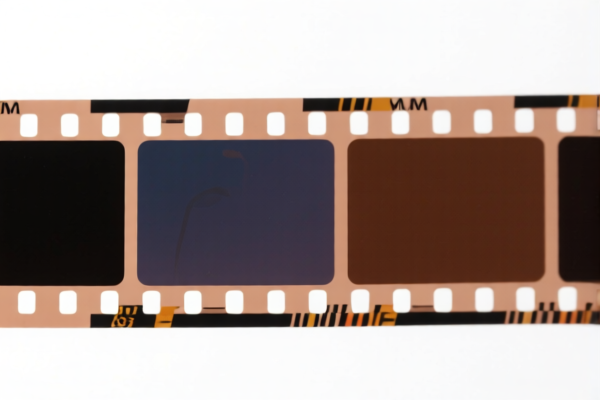
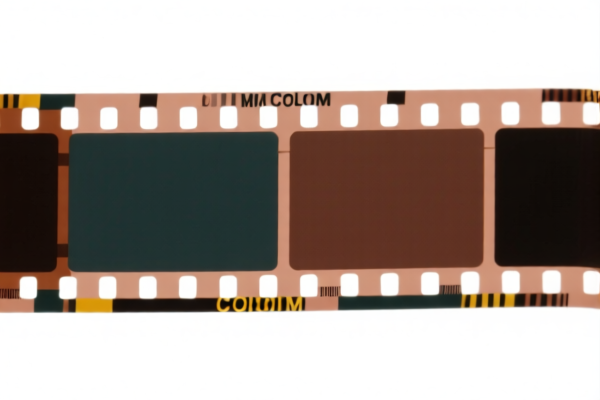
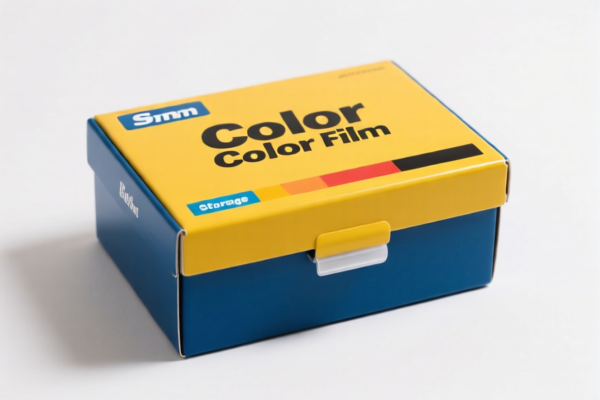
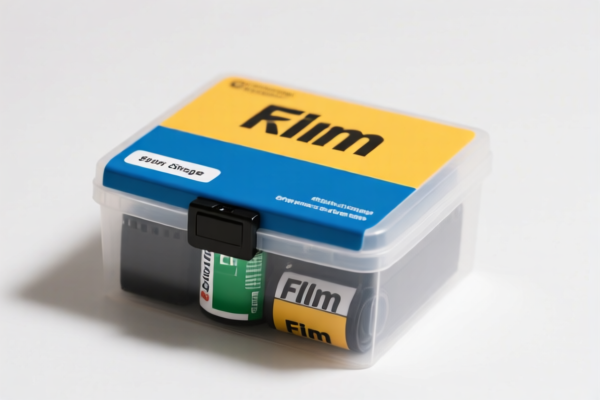
| ✅ Product Photos | ✔️ | Clear images of the packaging, label, and the film strip itself to show it is finished film, not liquid or powder. |
| ✅ Commercial Invoice | ✔️ | Description must be precise: "35mm Color Motion Picture Film, Unexposed, for Cinematography" |
| ✅ Packing List | ✔️ | Itemize rolls, cores, and protective casings. Avoid vague terms like "Camera Accessories". |
| ✅ Certificate of Origin (CO) | ✔️ | Essential for determining Section 301 applicability. If non-China origin, different rules may apply. |
| ✅ Manufacturer Info | ✔️ | Name and address of the producer, as US Customs scrutinizes Chinese-origin goods. |
✅ 2. Declaration Tips (Critical Mantras)
🔥 "Be Specific: Width, Color, Unexposed! Don't say 'Film' alone!"
| Scenario | Correct Declaration | Incorrect Declaration |
|---|---|---|
| Standard 35mm Color Roll | 3702.55.00.60"35mm Color Photographic Film, Unexposed" |
3707.10.00.90"Photographic Chemicals" → Over-taxed by 3.7% |
| Raw Emulsion Liquid | 3707.10.00.05"Color Photographic Emulsion" |
3702.55.00.60"35mm Film" → Misclassification Risk |
| Unexposed Film (General) | 3701.91.00.30"Unexposed Photographic Film, Other" |
3702.55.00.60"35mm Film" → If width/format doesn't match, penalty risk |
| Macro Film (Special Use) | 3701.91.00.60"35mm Color Macro Film" |
3702.55.00.60"Standard Color Film" → If specific macro properties define the good |
✅ 3. Special Situation Handling
| Situation | Handling Advice |
|---|---|
| "Motion Picture" vs "Photographic" | If it's strictly for cinematography (movie cameras), 3702 is often preferred over 3707. Avoid "Chemical" language. |
| Finished vs Raw | Ensure documents clearly state "Unexposed" and "Finished Roll". Do not imply it requires further processing. |
| OEM/White Label | Provide the original manufacturer's specs. US Customs looks for consistency between the physical product and the declared HS Code. |
| Sample Shipments | Even samples are subject to 35%-38.7% duty. No de minimis exemption applies. Budget for taxes even for free samples. |
🌍 V. Global Market Clearance Comparison (2026 Latest)
| Country/Region | Recommended HS Code | Tariff (China Origin) | Certification Required | Notes |
|---|---|---|---|---|
| 🇺🇸 USA | 3702.55.00.60 |
35.0% | None (General) | Highest Cost. Avoid 3707 if possible due to higher base rate. |
| 🇨🇳 China | 3702.55.00.60 |
Low/Zero | None | Domestic trade has minimal barriers. |
| 🇪🇺 EU | 3702.55.00.60 |
0% - 1.7% | CE (if applicable components) | No Section 301 equivalent. Much lower cost than US. |
| 🇬🇧 UK | 3702.55.00.60 |
0% - 1.7% | UKCA (if applicable) | Post-Brexit, tariffs are low for Chinese goods unless specific trade wars exist. |
| 🇯🇵 Japan | 3702.55.00.60 |
0% | PSE (if electronic) | Generally tariff-free for photographic film. |
📌 Conclusion:
- USA is the most expensive market for 35mm Color Film from China due to the 35%-38.7% total tariff burden.
- EU/UK/Japan offer significant cost advantages (0% - 1.7%).
- Strategy: If exporting to the US, consider supply chain diversification (e.g., sourcing from non-China origins) or value engineering to absorb the 35% duty.
📌 VI. Common Mistakes & Pitfall Guide (Lessons Learned)
❌ Mistake 1: Declaring as "Photographic Chemicals" (3707) for finished film
👉 Consequence: 38.0% Tariff instead of 35.0%. You pay 3.7% more unnecessarily.
Fix: Always use 3702 for finished rolls of film.
❌ Mistake 2: Using vague descriptions like "Camera Film"
👉 Consequence: Customs may downgrade or audit, causing delays or misclassification penalties.
Fix: Use precise terms: "35mm Color Negative Motion Picture Film, Unexposed".
❌ Mistake 3: Assuming De Minimis ($800) applies
👉 Consequence: Full duty collection (35%-38.7%) on small shipments.
Fix: Budget for duties on all shipments, regardless of value.
❌ Mistake 4: Confusing "Color Film" with "Black & White Film"
👉 Consequence: Wrong HS sub-category, potential audit flags.
Fix: Explicitly state "Color" and "Negative/Positive" in the declaration.
✅ Correct Practice:
"35mm Color Motion Picture Film, Unexposed, Polyester Base, Cyan/Magenta/Yellow Emulsion, Width 35mm, Pack of 100ft Reels, Model XYZ"
🎯 VII. Conclusion: Professional Declaration, Save Time, Reduce Costs!
🎯 Remember the Mantra:
🔹 "Finished Roll? Use 3702! 0% Base! 35% Total!"
🔹 "Liquid Emulsion? Use 3707! 3% Base! 38% Total!"
🔹 "No De Minimis! Pay Every Dollar of Duty!"
📌 Pro Tip:
- For US Imports, try to qualify for 3702.55.00.60 to save 3.7% on the base rate.
- If you are a manufacturer, ensure your Product Data Sheet clearly distinguishes between finished film stock and raw emulsion chemicals.
- Consider Advance Rulings from US Customs (CBP) if you have large volumes, to lock in the correct HS Code and avoid future disputes.
📣 Act Now:
📞 Contact a Professional Customs Broker + Provide Product Specs + Verify HS Code Pre-Ruling
🚀 Ensure Your 35mm Film Cleares US Customs Smoothly, Minimizing Costs and Delays!
✨ Professional Clearance Starts with Precise Classification!
💼 Your Margins Depend on the Right HS Code!
Customer Reviews
About HS Code Classification
The Harmonized System (HS) is an internationally standardized nomenclature developed by the World Customs Organization (WCO) to classify traded products. Over 200 countries use the HS system as the basis for customs tariffs, trade statistics, and import/export regulations.
Each HS code follows a hierarchical structure:
- Chapter (2 digits) — Broad category of goods (e.g., Chapter 84: Machinery and Mechanical Appliances)
- Heading (4 digits) — More specific grouping within the chapter
- Subheading (6 digits) — Internationally standardized breakdown, used by all WCO member countries
- National subdivisions (8-10 digits) — Country-specific extensions for further classification, such as US HTSUS 10-digit codes
Correct HS code classification is essential for smooth customs clearance, accurate duty payment, and compliance with trade regulations. Misclassification can lead to customs delays, overpayment of duties, or penalties.
When importing from CN to US, the applicable tariff rates may include:
- Most-Favored-Nation (MFN) rate — The standard duty rate applied to WTO members
- General rate — Applied to countries without trade agreements
- Trade remedy duties — Additional tariffs such as Section 301 (anti-dumping), Section 232 (national security), or countervailing duties
The information provided on this page is for reference purposes only. For official classification, please consult with your local customs authority or a licensed customs broker.