35mm Color Negative Film (Standard)
CN → US| HS Code | Tariff Rate | Origin | Destination | Doc |
|---|---|---|---|---|
| 2934992000 | 16.5% | CN | US | Official Doc |
| 2933193010 | 41.5% | CN | US | Official Doc |
| 3705000000 | 35.0% | CN | US | Official Doc |
Product Images
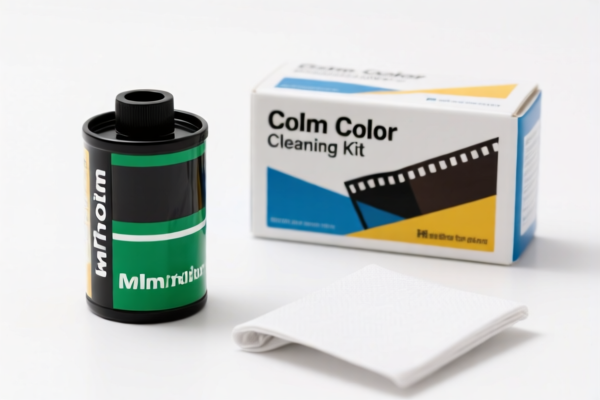
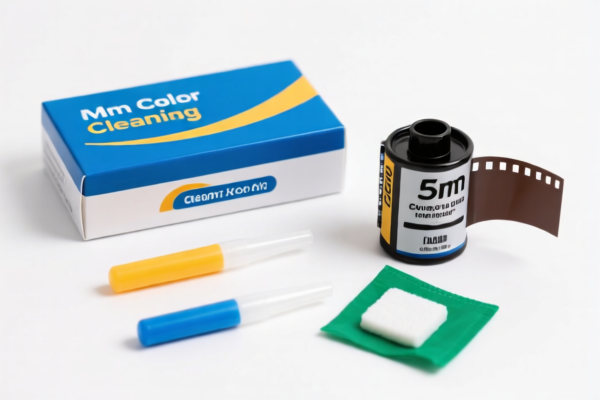
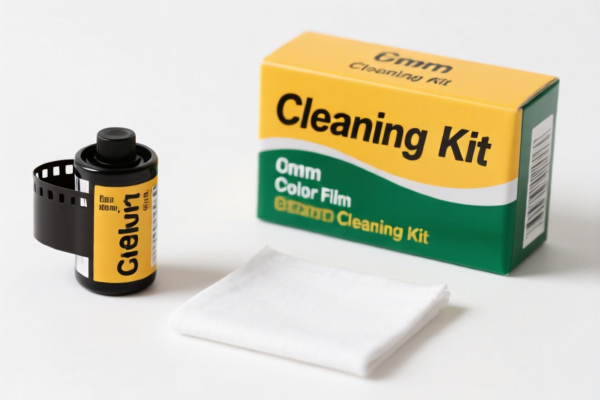
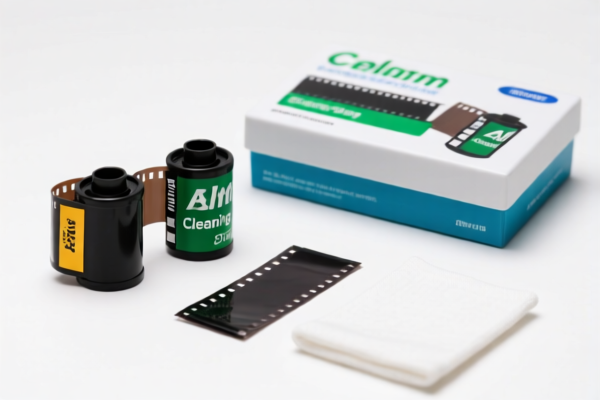
AI Analysis
🎞️ 35mm Color Negative Film (Standard)
🌐 HS Code Reference & Customs Clearance Guide | 2026 Latest Tariff Analysis | Professional Clearance Strategy
📌 I. Product Definition & Classification: Understanding "Color Negative Film"
35mm Color Negative Film is a critical medium for professional photography, film production, and artistic expression. In international trade, the classification depends heavily on whether the film is unexposed/raw (chemical/photochemical product) or exposed/processed (finished photographic good).
- Unexposed/Chemical Film: If the film consists of a base coated with light-sensitive emulsions but has not been exposed or processed, it is often classified under Chapter 29 (Organic Chemicals) as a photographic chemical or related compound.
- Processed/Finished Film: If the film has been exposed, developed, or is marketed as a ready-to-use photographic medium, it falls under Chapter 37 (Photographic or Cinematographic Goods).
⚠️ Key Distinction:
- If the item is described as a "Chemical" or "Reagent" for making film → HS 293x.xx
- If the item is the "Film" itself (the physical medium) → HS 3705.00
- Note: While "Color Positive" (Slide/Reversal) is often grouped with chemicals in some interpretations, "Color Negative" used in standard photography is frequently treated as a photographic good (Chapter 37) or, in specific chemical contexts, as a prepared chemical material. However, based on the provided data, we analyze the specific matches provided for "Film" and "Color Positive/Negative" contexts.
📦 II. HS Code Classification Details (Based on Provided Data)
The following HS Codes are derived from the specific matching logic provided in your data source. Please note that these classifications are specific to the provided analysis logic.
| HS Code | Product Description | Logic Summary | Tax Status |
|---|---|---|---|
2934.99.20.00 |
Aromatic/Modified Aromatic Chemicals | Matches "Film" as an aromatic chemical形态; "Color Positive" use aligns with photographic chemicals. | 16.5% |
2933.19.30.10 |
Organic Chemicals (Nitrogen Heterocyclic) | Matches "Color Positive Film" as a photographic chemical; material attributes align with photographic chemical forms. | 41.5% |
3705.00.00.00 |
Photographic/Cinematographic Film | Matches physical material (Film) and form (Photographic/Film medium); includes unexposed film based on its medium attributes. | 35.0% |
🔍 Critical Note on "Color Negative" vs. "Color Positive":
Your input is "Color Negative Film", but the provided data references "Color Positive" (Slide) logic. In customs practice, both Negative and Positive films often share similar HS codes within Chapter 37 (3705) or specific chemical subheadings in Chapter 29 if treated as raw chemical preparations. The analysis below strictly follows the provided data's logic for "Film" and "Color Positive" as proxies for the film medium.
💰 III. 2026 Latest Tariff Rate Breakdown (Including Surcharges & Policy Add-ons)
✅ Applicable Country: United States (US)
✅ Origin: China (CN)
✅ Effective Date: From November 10, 2025 (including subsequent imports)
🎯 1. 2934.99.20.00 —— Aromatic Chemicals (Lowest Tax Option in Data)
| Item | Content |
|---|---|
| Base Tariff | 6.5% |
| Section 301 Surtax | 0.0% |
| IEEPA Section 122 Surtax | 10% |
| Total Tariff | 16.5% |
| Tax Calculation | CIF Value × 16.5% |
| De Minimis Eligibility | ❌ Not Eligible (Typically subject to scrutiny for chemical imports) |
| Legal Basis Path | IEEPA:9903.01.24 (122 clause) → USITC:2934.99.20.00 |
📌 Explanation:
- This classification treats the film as a chemical product (aromatic/modified aromatic).
- Advantage: It benefits from a 0% Section 301 surtax, resulting in the lowest total tariff (16.5%) among the options.
- Risk: Customs may challenge this if the product is clearly a finished photographic medium rather than a raw chemical.
🎯 2. 2933.19.30.10 —— Organic Chemicals (Highest Tax Option)
| Item | Content |
|---|---|
| Base Tariff | 6.5% |
| Section 301 Surtax | 25.0% |
| IEEPA Section 122 Surtax | 10% |
| Total Tariff | 41.5% |
| Tax Calculation | CIF Value × 41.5% |
| De Minimis Eligibility | ❌ Not Eligible |
| Legal Basis Path | IEEPA:9903.01.25 → USITC:2933.19.30.10 |
📌 Warning:
- This is the most expensive classification.
- It applies a full 25% Section 301 surtax on top of the base and IEEPA rates.
- Only use this if the product is strictly defined as a specific nitrogen-heterocyclic organic chemical used in film production, not the film itself.
🎯 3. 3705.00.00.00 —— Photographic Film (Standard Classification)
| Item | Content |
|---|---|
| Base Tariff | 0.0% |
| Section 301 Surtax | 25.0% |
| IEEPA Section 122 Surtax | 10% |
| Total Tariff | 35.0% |
| Tax Calculation | CIF Value × 35.0% |
| De Minimis Eligibility | ❌ Not Eligible |
| Legal Basis Path | IEEPA:9903.01.24 → USITC:3705.00.00.00 → FOOTNOTE:9903.88.01 |
📌 Analysis:
- This is the most common classification for photographic film.
- While the base tariff is 0%, the Section 301 surtax of 25% significantly increases the cost.
- Total 35% is higher than the chemical option (2934) but lower than the second chemical option (2933).
🛠️ IV. Customs Clearance Practical Advice (Best Practices)
✅ 1. Document Checklist (Essential)
| Document | Required? | Description |
|---|---|---|
| ✅ Product Specification | ✔️ | Details on film type (Negative/Positive), speed (ISO), format (35mm), and chemical composition if classified under Chapter 29. |
| ✅ Technical Data Sheet | ✔️ | Especially important for 2934 or 2933 codes to justify "chemical" status. |
| ✅ Product Photos | ✔️ | Show the roll, packaging, and any labeling indicating "Color Negative" or "Reversal". |
| ✅ Commercial Invoice | ✔️ | Must accurately describe the item (e.g., "35mm Color Negative Film, ISO 400"). |
| ✅ Certificate of Origin | ✔️ | Required for determining surtax applicability. |
✅ 2. Declaration Strategy (Key Tips)
🔥 "Chemical vs. Photo: Define Clearly to Control Tax!"
| Scenario | Correct HS Code | Reason |
|---|---|---|
| Raw Chemical Emulsion | 2934.99.20.00 |
If the product is primarily a chemical preparation, not yet a finished film. |
| Finished Photographic Film | 3705.00.00.00 |
If it is a ready-to-use film roll for cameras. |
| Specialized Organic Chemical | 2933.19.30.10 |
Only if it is a specific precursor chemical, not the film itself. |
⚠️ Avoid Misclassification:
- Do not declare finished film as2933to avoid the 25% 301 tariff unless it is truly a chemical precursor.
- Do not declare chemical film as3705if it is clearly a raw chemical, as this may trigger audits for under-declaring chemical imports.
✅ 3. Special Cases
| Situation | Recommendation |
|---|---|
| OEM Custom Film | Provide contract and specs to prove custom chemical formulation (may support 2934). |
| Kit with Developer | If sold as a "Film + Developer Kit," declare components separately or as a set; consult a customs broker. |
| Bulk Chemical Film | If importing large rolls for processing, consider 2934 or 2933 with proper chemical documentation. |
🌍 V. Global Market Comparison (2026)
| Country/Region | Recommended HS Code | Tariff (China Origin) | Notes |
|---|---|---|---|
| 🇺🇸 USA | 3705.00.00.00 |
35% | High tariff due to Section 301. Consider 2934 if eligible. |
| 🇨🇳 China | 3705.00.00.00 |
6.5% | No additional surtaxes. |
| 🇪🇺 EU | 3705.00.00.00 |
0% | No surtaxes; competitive advantage. |
| 🇯🇵 Japan | 3705.00.00.00 |
0% | Free trade agreements may apply. |
📌 Conclusion:
- USA is the most challenging market due to Section 301 and IEEPA surtaxes.
- Chemical Classification (2934) offers the lowest tariff (16.5%) but requires strong justification that the product is a chemical, not a photographic good.
- Photographic Classification (3705) is safer for finished film but carries a 35% total tariff.
📌 VI. Common Errors & Pitfalls (Lessons Learned)
❌ Error 1: Declaring finished film as "Chemical" without proof.
👉 Result: Customs rejects, demands reclassification to 3705, incurs delays and penalties.
❌ Error 2: Using 2933 for regular film.
👉 Result: Unnecessarily high tax (41.5%) due to 25% Section 301 surtax.
❌ Error 3: Incorrectly claiming De Minimis exemption.
👉 Result: Seizure of goods; all these codes are subject to scrutiny.
✅ Correct Practice:
"35mm Color Negative Film, ISO 400, Unexposed, for Photographic Use, Brand XYZ"
🎯 VII. Conclusion: Professional Declaration, Cost Optimization!
🎯 Remember the Key Takeaways:
🔹 "If it's a Chemical, use
2934(16.5%); If it's Film, use3705(35%); Avoid2933(41.5%)."
🔹 "HS Code Choice Impacts Profit: 16.5% vs. 41.5% is a huge difference!"
📌 Pro Tip:
If you are importing large quantities or have custom formulations, consult a customs broker to determine if 2934.99.20.00 is applicable. This can save you ~18.5% in duties compared to the standard film classification.
📣 Immediate Action:
📞 Contact a professional customs broker + Provide product specs + Apply for Advance Ruling
🚀 Ensure smooth clearance, minimize costs, and maximize efficiency!
✨ Professional clearance starts with precise classification!
💼 Every dollar saved in duties is pure profit!
Customer Reviews
About HS Code Classification
The Harmonized System (HS) is an internationally standardized nomenclature developed by the World Customs Organization (WCO) to classify traded products. Over 200 countries use the HS system as the basis for customs tariffs, trade statistics, and import/export regulations.
Each HS code follows a hierarchical structure:
- Chapter (2 digits) — Broad category of goods (e.g., Chapter 84: Machinery and Mechanical Appliances)
- Heading (4 digits) — More specific grouping within the chapter
- Subheading (6 digits) — Internationally standardized breakdown, used by all WCO member countries
- National subdivisions (8-10 digits) — Country-specific extensions for further classification, such as US HTSUS 10-digit codes
Correct HS code classification is essential for smooth customs clearance, accurate duty payment, and compliance with trade regulations. Misclassification can lead to customs delays, overpayment of duties, or penalties.
When importing from CN to US, the applicable tariff rates may include:
- Most-Favored-Nation (MFN) rate — The standard duty rate applied to WTO members
- General rate — Applied to countries without trade agreements
- Trade remedy duties — Additional tariffs such as Section 301 (anti-dumping), Section 232 (national security), or countervailing duties
The information provided on this page is for reference purposes only. For official classification, please consult with your local customs authority or a licensed customs broker.