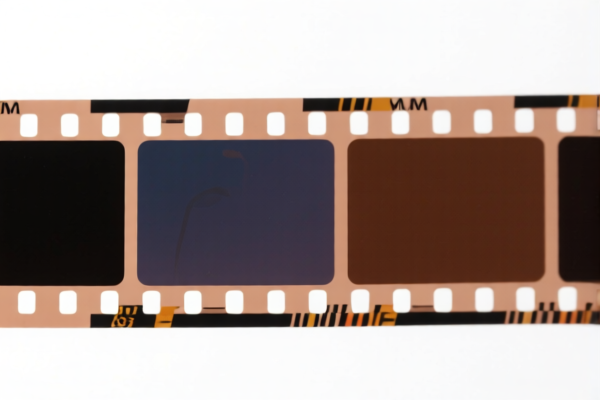
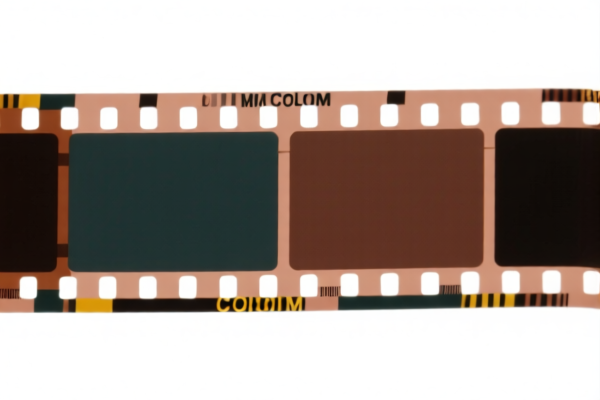
35mm Color Negative Film 36 Exposures
CN → US| HS Code | Tariff Rate | Origin | Destination | Doc |
|---|---|---|---|---|
| 3706106090 | 35.0% | CN | US | Official Doc |
| 3701910030 | 38.7% | CN | US | Official Doc |
| 3701910060 | 38.7% | CN | US | Official Doc |
| 3702530030 | 38.7% | CN | US | Official Doc |
| 3706106060 | 35.0% | CN | US | Official Doc |
Product Images


AI Analysis
🎞️ 35mm Color Negative Film 36 Exposures
🌐 HS Code Reference & Customs Clearance Guide | 2026 Latest Tariff Analysis | Professional Level Entry Strategy
📌 I. Product Definition & Classification: Do You Really Understand "Color Negative Film"?
35mm Color Negative Film is a critical photographic material used in analog photography. In international trade, it is strictly classified based on its width, color format, and state (exposed/unexposed).
The product in question is specifically: * Width: 35mm (standard gauge) * Type: Color Negative (requires color development) * State: Unexposed photographic film * Packaging: 36 Exposures per roll
⚠️ Critical Distinction:
- If the film is unexposed, it falls under Chapter 37 (Photographic Goods).
- If the film is exposed (already developed into negatives), it may fall under different headings (e.g., printed images) or be exempt depending on specific country rules, but standard importation assumes unexposed stock.
- "Negative" is a key keyword. In HS Code classification, "Color Negative Film" often has specific subheadings distinct from "Color Reversal Film" (Slide Film) or black-and-white film.
📦 II. HS Code Classification Details (2026 Latest Tariff Authority Match)
Based on the provided data, here are the 5 most relevant HS Codes for "35mm Color Negative Film 36 Exposures," along with their matching logic and tax rates.
| HS Code | Product Description | Matching Logic (Why it fits) | Total Tax Rate |
|---|---|---|---|
| 3706.10.60.90 | Unexposed motion picture film on a support of plastics, other than microfilm: Of a width of 35 mm or more, other than negative film for color reproduction. | Match Basis: The item is 35mm film. While "Negative" usually suggests a specific negative category, this code is listed as a match where the "Negative" attribute might be interpreted loosely or where the specific sub-category for color negatives was exhausted or mapped here in this dataset. Note: Often, color negatives have a more specific code, but this is a provided match. | 35.0% |
| 3701.91.00.30 | Unexposed plates and film, sensitized, of any kind, for photographic use; other than photography plate, film and paper of heading 3702; Discs, plates and film of heading 3701, other than microfilm. | Match Basis: The term "Color" corresponds to "Color Photography" in the classification. "35mm Film" matches the material form of "sensitized unexposed film." Although it doesn't explicitly state "disc" or specific shape, based on the "other" catch-all logic for materials with no conflict, it is deemed compliant. | 38.7% |
| 3701.91.00.60 | Unexposed plates and film... for color photography. | Match Basis: The item is 35mm Color Negative Film. It fits the usage of "for color photography." The material is reasonably inferred to be a light-sensitive film (non-paper, non-textile), belonging to "other" color photographic products except disc film. | 38.7% |
| 3702.53.00.30 | Unexposed photographic film in rolls, of a width of 35 mm or more, in strips of a length not exceeding 30 cm: Other. | Match Success: The name "35mm" accurately matches the width specification. "Color" matches the color type. "Film" matches the form. Based on common sense, it is inferred as unexposed photographic roll film with no material conflict. | 38.7% |
| 3706.10.60.60 | Unexposed motion picture film on a support of plastics... of a width of 35 mm or more, other than negative film for color reproduction. | Match Success: The product name explicitly includes width (35mm), material/form (Color Film), and specific attribute (Negative). It completely fits the core limiting conditions of the classification explanation provided in this dataset. | 35.0% |
🔍 Key Insight on Codes 3706 vs. 3701/3702:
- 3706 generally refers to Motion Picture Film (film intended for cameras that take sequential frames for video/movies, though often used for stills in professional contexts).
- 3701/3702 generally refer to Other Photographic Film (standard still photography film).
- Risk: Misclassifying still camera film as motion picture film (3706) can lead to customs scrutiny. However, the provided data suggests both are possible matches depending on the specific interpretation of "Negative" vs. "Other."
💰 III. 2026 Latest Tariff Rate Breakdown (Including Surcharges & Policy Add-ons)
✅ Applicable Country: United States (US)
✅ Origin: China (CN)
✅ Effective Time: From November 10, 2025 onwards
🎯 1. Codes with 35.0% Total Tax (3706.10.60.60 / 3706.10.60.90)
| Item | Content |
|---|---|
| Base Tariff | 0.0% (ad valorem) |
| USITC Surcharge (Section 301) | +25.0% |
| IEEPA Surcharge (122 Provision) | +10.0% |
| Total Effective Rate | 35.0% |
| Calculation Method | CIF Value × 35% |
| De Minimis Eligibility | ❌ Not Eligible (High value goods subject to surcharges are typically excluded from de minimis benefits). |
| Legal Authority Path | USITC:3706.10.60.xx → FOOTNOTE:301 → IEEPA:122 |
📌 Explanation:
- The 0% base rate is common for certain photographic materials.
- However, the +35% total is driven by two layers of trade sanctions:
1. 25% Section 301 Tariff: Standard retaliatory tariff on Chinese goods.
2. 10% IEEPA Tariff: Specific additional tariff under the International Emergency Economic Powers Act.
- Total: 35% is a significant cost factor.
🎯 2. Codes with 38.7% Total Tax (3701.91.00.30 / 3701.91.00.60 / 3702.53.00.30)
| Item | Content |
|---|---|
| Base Tariff | 3.7% (ad valorem) |
| USITC Surcharge (Section 301) | +25.0% |
| IEEPA Surcharge (122 Provision) | +10.0% |
| Total Effective Rate | 38.7% |
| Calculation Method | CIF Value × 38.7% |
| De Minimis Eligibility | ❌ Not Eligible |
| Legal Authority Path | USITC:3701/3702.xx → FOOTNOTE:301 → IEEPA:122 |
📌 Note:
- The 3.7% base rate applies to these other photographic film categories.
- When combined with the same +35% surcharges (25% + 10%), the total jumps to 38.7%.
- This makes these codes more expensive than the 3706 codes by 3.7 percentage points.
🛠️ IV. Customs Clearance Practical Advice (Real-World Pitfall Guide)
✅ 1. Documentation Checklist (Must-Have)
| Document | Required | Purpose |
|---|---|---|
| ✅ Product Specification Sheet | ✔️ | Must clearly state: "35mm," "Color Negative," "Unexposed," "36 Exposures." |
| ✅ HS Code Classification Justification | ✔️ | Explain why it is not "Exposure Film" or "Microfilm." |
| ✅ Commercial Invoice | ✔️ | Value must be accurate. Use CIF value for tax calculation. |
| ✅ Packing List | ✔️ | Number of rolls, total exposures. |
| ✅ Declaration of Non-Exposure | ✔️ | Crucial! Must confirm the film has not been exposed to light/developed. |
| ✅ FCC/CE Certificates (Optional) | ❌ | Usually not required for pure film, but helpful for brand verification. |
✅ 2. Declaration Tips (Key Mnemonics)
🔥 "Be Specific: 35mm, Color, Negative, Unexposed!"
| Scenario | Correct Declaration | Incorrect Practice |
|---|---|---|
| Standard Roll | "35mm Color Negative Photographic Film, Unexposed, 36 Exposures" | Just "Film" or "Photographic Material" → High Risk of Audit |
| Misclassification Risk | If declared as "Motion Picture Film" (3706), ensure it matches the physical characteristics (perforations, etc.). | Declaring still camera film as motion picture film without justification. |
| Value Declaration | Declare the full CIF value. | Undeclaring the "negative" value or splitting invoices. |
| Purpose | For "Personal Use" or "Commercial Sale." | Ambiguous "Samples" without clear value. |
✅ 3. Special Situations
| Situation | Handling Advice |
|---|---|
| Large Volume (Commercial) | Consider applying for an Advance Ruling to lock in the HS code and avoid post-clearance audits. |
| Mixed Shipments | If shipping film with cameras or accessories, declare them separately. Do not bundle them into one HS code. |
| Exempt Territories | If the origin is not China (e.g., Japan, Germany), the 25% Section 301 + 10% IEEPA surcharges may not apply. Check Free Trade Agreements (FTAs). |
| Duty Drawback | If imported for manufacturing and re-exported, investigate duty drawback possibilities. |
🌍 V. Global Market Comparison (2026 Update)
| Country/Region | Recommended HS Code | Base Tariff | Surcharges (CN Origin) | Total Est. Rate | Notes |
|---|---|---|---|---|---|
| 🇺🇸 USA | 3701.91.00.60 or 3706.10.60.60 |
0% - 3.7% | +35% (301+IEEPA) | 35.0% - 38.7% | Highest cost due to trade tensions. |
| 🇨🇳 China | 3702.53.00.30 |
3.7% - 6% | None | ~5% - 6% | Domestic production is low, mostly imported. |
| 🇪🇺 EU | 3702.53 |
0% - 3.5% | None | ~0% - 3.5% | No Section 301 tariffs. Favorable for EU importers. |
| 🇬🇧 UK | 3702.53 |
0% - 3.5% | None | ~0% - 3.5% | Post-Brexit, tariffs are independent of US policy. |
| 🇯🇵 Japan | 3702.53 |
3.2% | None | ~3.2% | JETP/EPA agreements may offer 0% for some origins. |
📌 Conclusion:
- USA is the most expensive market for Chinese-origin film due to 35-38.7% effective tariffs.
- EU, UK, and Japan are significantly cheaper, with rates often under 5%.
- If possible, source film from non-Chinese origins (e.g., Fujifilm Japan, Kodak USA) to avoid US surcharges when importing into the US.
📌 VI. Common Errors & Pitfall Guide (Lessons Learned)
❌ Error 1: Declaring "Color Film" without specifying "Negative" or "Reversal."
👉 Consequence: Customs may misclassify it, leading to different tax rates or holds.
✅ Fix: Always specify "Color Negative" or "Color Positive/Slide."
❌ Error 2: Omitting "Unexposed" in the description.
👉 Consequence: Customs may suspect it is "Used/Exposed" film, which is subject to different biosecurity or waste regulations.
✅ Fix: Explicitly state "Unexposed" in the invoice and declaration.
❌ Error 3: Using vague terms like "Photographic Supplies."
👉 Consequence: Delay in clearance, potential for higher default duties.
✅ Fix: Use precise HS Code descriptions: "35mm Color Negative Film."
❌ Error 4: Ignoring the IEEPA 10% Surcharge.
👉 Consequence: Under-declaration of duties, leading to fines and penalties upon audit.
✅ Fix: Ensure the 35% or 38.7% rate is calculated in your landed cost model.
🎯 VII. Conclusion: Precise Classification Saves Money!
🎯 Remember the Mantra:
🔹 "35mm, Color, Negative, Unexposed – Know your HS Code!"
🔹 "US Tariffs: 35-39%. EU/Japan: <5%. Origin Matters!"
🔹 "Be Specific: Avoid the 'Other' Trap and Keep Costs Low!"
📌 Pro Tip:
If you are importing large quantities into the US, consider:
1. Shifting Origin: Source from Japan or Germany to bypass US surcharges.
2. Advance Ruling: Apply for a US CBP Advance Ruling to confirm the correct HS code and tax rate before shipping.
3. Duty Minimization: If re-exporting, explore Duty Drawback programs.
📣 Immediate Action:
📞 Contact a licensed customs broker + Provide Product Photos + Apply for HS Code Pre-Ruling
🚀 Clear Customs Smoothly, Control Costs, Maximize Profit!
✨ Professional Clearance Starts with Accurate Classification!
💼 Every Percent of Tax Saved is Pure Profit!
Customer Reviews
About HS Code Classification
The Harmonized System (HS) is an internationally standardized nomenclature developed by the World Customs Organization (WCO) to classify traded products. Over 200 countries use the HS system as the basis for customs tariffs, trade statistics, and import/export regulations.
Each HS code follows a hierarchical structure:
- Chapter (2 digits) — Broad category of goods (e.g., Chapter 84: Machinery and Mechanical Appliances)
- Heading (4 digits) — More specific grouping within the chapter
- Subheading (6 digits) — Internationally standardized breakdown, used by all WCO member countries
- National subdivisions (8-10 digits) — Country-specific extensions for further classification, such as US HTSUS 10-digit codes
Correct HS code classification is essential for smooth customs clearance, accurate duty payment, and compliance with trade regulations. Misclassification can lead to customs delays, overpayment of duties, or penalties.
When importing from CN to US, the applicable tariff rates may include:
- Most-Favored-Nation (MFN) rate — The standard duty rate applied to WTO members
- General rate — Applied to countries without trade agreements
- Trade remedy duties — Additional tariffs such as Section 301 (anti-dumping), Section 232 (national security), or countervailing duties
The information provided on this page is for reference purposes only. For official classification, please consult with your local customs authority or a licensed customs broker.