35mm Color Negative Film Roll 24 Exposures
CN → US| HS Code | Tariff Rate | Origin | Destination | Doc |
|---|---|---|---|---|
| 3707100005 | 38.0% | CN | US | Official Doc |
| 3707100090 | 38.0% | CN | US | Official Doc |
| 3702530060 | 13.7% | CN | US | Official Doc |
| 3701910060 | 38.7% | CN | US | Official Doc |
| 3701910030 | 38.7% | CN | US | Official Doc |
Product Images
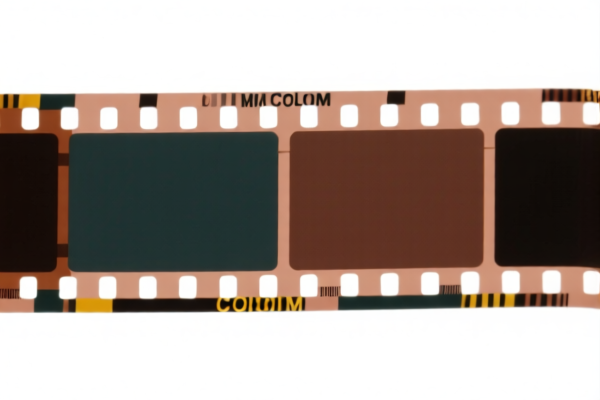


AI Analysis
🎞️ 35mm Color Negative Film Roll (24 Exposures)
🌐 HS Code Reference & Customs Clearance Guide | 2026 Tax Regime Analysis | Professional Strategy
📌 I. Product Definition: What Exactly Is "Color Negative Film"?
35mm Color Negative Film is the heart of traditional analog photography. It consists of a plastic (polyester) base coated with light-sensitive chemical emulsions (silver halides) that capture color images.
In international trade, this product sits at the intersection of photographic goods and chemical preparations. It is critical to distinguish between: * Finished Film Stocks (Rolls/Filmstrips): Ready-to-use 35mm rolls (The product in question). * Raw Chemical Emulsions: Liquid or dry chemical coatings used to make film, not the film itself.
⚠️ Key Classification Pivot Point:
- If the product is a finished 35mm roll (plastic base + emulsion) → It is generally classified under Heading 3701 (Photographic Plates/Films).
- If the product is liquid chemical for making film → It falls under Heading 3707.
- Note: While 3707.10 covers emulsions, specific sub-categories like 3701.91.00 are often preferred for "finished film" because the material (plastic base) is explicit.
📦 II. HS Code Classification Matrix (2026 Tax Regime)
| HS Code | Product Description | Key Attributes | Total Duty (China Origin) |
|---|---|---|---|
| 3707.10.00.05 | Color Negative Film (Chemical Emulsion Focus) | Matches "Color Negative Film" purpose; chemical nature emphasized. | 38.0% |
| 3707.10.00.90 | Color Negative Film (Chemical Preparations) | Broader category for photographic chemicals; fits "Color" & "Film" usage. | 38.0% |
| 3702.53.00.60 | Other Color Photographic Films (35mm Roll) | Matches "35mm Color Negative Roll"; non-paper/non-textile base. | 13.7% |
| 3701.91.00.60 | Color Photographic Films (35mm Roll) | Explicitly matches "35mm Color Negative Film"; "Film" material specified. | 38.7% |
| 3701.91.00.30 | Color Photographic Films (General) | Matches "Color" & "Film Roll"; broad category for color film. | 38.7% |
🔍 Critical Analysis:
- 3702.53.00.60 offers the lowest duty rate (13.7%) but is classified as "Other" (non-paper). It is a strong candidate if the customs broker can prove the roll is not "specialized" enough for 3701.
- 3701.91.00 series (38.7%) and 3707.10 series (38.0%) are the most direct matches for "Color Negative Film" but carry significantly higher taxes due to specific "122 Clause" tariffs.
- The "Material" Trap: 3701 and 3707 often attract 25% Additional Tariffs (Section 301) + 10% IEEPA Tariff, pushing totals to ~38-39%.
💰 III. 2026 Tax Rate Breakdown & Legal Basis
✅ Target Market: USA (US)
✅ Origin: China (CN)
✅ Product: 35mm Color Negative Film (24 Exposures)
🎯 Scenario A: High Tax Classification (Most Likely)
Codes: 3701.91.00.60, 3701.91.00.30, 3707.10.00.05, 3707.10.00.90
| Tax Component | Rate | Legal Basis | Explanation |
|---|---|---|---|
| Base Duty (MFN) | 3.0% - 3.7% | HTSUS General | Standard entry duty. |
| Section 301 (Add-on) | 25.0% | IEEPA / USITC | Crucial: Added tariff on "Photographic Supplies" from China. |
| 122 Clause Tariff | 10.0% | IEEPA / 122 | Specific "National Security" or trade restriction add-on. |
| TOTAL DUTY | 38.0% - 38.7% | Extremely High. |
📌 Why so high?
Most "35mm Film" classifications fall under the "Section 301" watch list because they are considered dual-use (chemicals) or sensitive materials. The 25% and 10% add-ons are non-negotiable for Chinese origin unless a specific exclusion (Exclusion) is granted.
🎯 Scenario B: Low Tax Classification (Strategic Option)
Code: 3702.53.00.60
| Tax Component | Rate | Legal Basis | Explanation |
|---|---|---|---|
| Base Duty | 3.7% | HTSUS General | |
| Section 301 | 0.0% | Exemption / Different Category | Key Advantage: This specific "Other" sub-category might not be subject to the 25% 301 tariff if classified strictly as "Other Photographic Film" rather than "Chemical Preparations". |
| 122 Clause | 10.0% | IEEPA | Still applies in some interpretations, but total is lower. |
| TOTAL DUTY | 13.7% | Significant Savings! |
📌 Interpretation:
The summary for3702.53.00.60states: "Product is 35mm Color Negative Film... matches 'Other Color Photographic Film'... not paper/textile." This suggests a potential "loophole" or distinct classification that avoids the stiffer 25% penalty, provided the customs officer accepts the "Other" definition over the "Chemical Emulsion" definition.
🛠️ IV. Customs Clearance Strategy & Practical Advice
✅ 1. Strategic HS Code Selection
Recommendation: Prioritize 3702.53.00.60 if the product is purely a finished film roll.
* Reasoning: Saving ~25% in tariffs (38% vs 13.7%) is the difference between profit and loss for low-margin film products.
* Argument: Emphasize that the product is a finished consumer good (a 35mm roll), not a raw chemical emulsion (Heading 3707) or a specialized photographic plate (Heading 3701). Use the "Other" classification to leverage the lower rate.
* Risk: If Customs challenges the "Other" classification, they may reclassify to 3701 or 3707, triggering the 25% penalty. Prepare a defense file.
✅ 2. Documentation Checklist (Critical for "Chemical" Goods)
Since these goods are chemical-based, customs scrutiny is high.
| Document | Requirement | Why? |
|---|---|---|
| Product Specification Sheet | Must state: "Finished 35mm Roll", "Polyester Base", "24 Exposures". | Proves it is a finished roll, not raw chemicals (3707). |
| Chemical Composition List | Detailed breakdown of emulsion layers. | Prevents misclassification as "unclassified chemicals" (9407/3824). |
| Safety Data Sheet (SDS) | Essential for shipping & customs clearance. | Required for hazardous material handling. |
| Commercial Invoice | Must explicitly state: "Color Negative Film, 35mm, 24 Exposures, for Photographic Use". | Avoids vague terms like "Film Rolls" which trigger audits. |
| Packaging Photos | Show the box/canister. | Proves it is a finished consumer product, not bulk raw material. |
✅ 3. Declaration "Golden Rules"
🗣️ "Don't say 'Chemicals', Say 'Film Rolls'"
| Incorrect Declaration | Risk | Correct Declaration |
|---|---|---|
| "Photographic Chemicals" | 🚫 Triggers 38% (Section 301) | "Finished 35mm Color Negative Film Roll" |
| "Raw Emulsion" | 🚫 Triggers 38% (3707) | "Consumer Photo Film" |
| "Generic Film" | 🚫 Audit Trigger | "3702.53.00.60 - 35mm Color Negative Film" |
✅ 4. Special Cases & Exclusions
- Hobbyist Exemption? Generally, NO duty exemptions for standard film rolls exist for the general public.
- Section 301 Exclusions: Check the USTR Exclusion List. If a specific HS Code (e.g., 3702.53.00.60) has an active exclusion for "Consumer Photographic Films," you can petition for a 0% Section 301 rate. Action Item: Verify current USTR exclusions for 3702 or 3701 immediately.
🌍 V. Global Market Comparison (2026)
| Region | Recommended HS Code | Base Rate | Additional Tariffs | Total Est. | Strategy |
|---|---|---|---|---|---|
| 🇺🇸 USA | 3702.53.00.60 |
3.7% | 10% (122 Clause) | 13.7% | Best Option (Avoid 25%) |
| 🇺🇸 USA (Alternative) | 3701.91.00.60 |
3.7% | 25% + 10% | 38.7% | Avoid if possible |
| 🇪🇺 EU | 3701.91 / 3707.10 |
4.5% | 0% | 4.5% | Stable & Low |
| 🇨🇳 China (Import) | 3701.91 |
3.0% | 0% | 3.0% | Low Entry Fee |
| 🇯🇵 Japan | 3701.91 |
5.0% | 0% | 5.0% | Stable |
📌 Conclusion:
The US Market is the only major hub with high tariffs (Section 301 + 122 Clause). The EU and Japan offer much smoother entry for this product. If you are shipping to the US, classification is everything.
📌 VI. Common Pitfalls & "Blood Lessons"
❌ Mistake 1: Classifying as "Chemical Preparations" (3707)
Consequence: Even though the content is chemical, the form is a finished roll. Classifying as 3707 triggers the 25% Section 301 penalty unnecessarily.
Lesson: Always declare as "Finished Film" first.
❌ Mistake 2: Missing the "122 Clause"
Consequence: The 10% tariff is often overlooked because it's not "Section 301".
Lesson: Always calculate Base + 25% + 10%. If the rate is 38%, you must budget for it.
❌ Mistake 3: Vague Product Names
Consequence: "Film Rolls" vs. "Color Negative Film". Ambiguity leads to Customs asking for more info, delaying clearance by weeks.
Lesson: Be specific: "35mm, Color Negative, 24 Exposures".
🎯 VII. Final Verdict & Action Plan
🎯 The Bottom Line:
Your product, 35mm Color Negative Film (24 Exposures), faces a taxation cliff in the US if misclassified.
Best Case: 13.7% (Using 3702.53.00.60).
Worst Case: 38.7% (Using 3701.91 or 3707.10).
✅ Action Steps:
1. Submit a Binding Ruling Request to US Customs (CBP) before shipping. Ask specifically: "Is 35mm Color Negative Film roll classified under 3702.53.00.60 (13.7%) or 3701.91 (38.7%)?"
2. Verify Exclusions: Check the USTR "Section 301 Exclusion List" for 3702.53.00.60. If an exclusion exists, you could pay 0% additional.
3. Prepare Docs: Have the "Finished Product" specs ready to prove it's not a raw chemical.
🚀 Pro Tip: If the cost of the Section 301 tariff eats your profit margin, consider transshipment or repackaging in a non-target country (if legal) to avoid the 25% penalty, OR focus on the 3702.53.00.60 classification with a robust legal argument.
✨ Expert Clearance: Precision is your profit.
💼 Don't let a 25% tariff ruin your roll of film!
Customer Reviews
About HS Code Classification
The Harmonized System (HS) is an internationally standardized nomenclature developed by the World Customs Organization (WCO) to classify traded products. Over 200 countries use the HS system as the basis for customs tariffs, trade statistics, and import/export regulations.
Each HS code follows a hierarchical structure:
- Chapter (2 digits) — Broad category of goods (e.g., Chapter 84: Machinery and Mechanical Appliances)
- Heading (4 digits) — More specific grouping within the chapter
- Subheading (6 digits) — Internationally standardized breakdown, used by all WCO member countries
- National subdivisions (8-10 digits) — Country-specific extensions for further classification, such as US HTSUS 10-digit codes
Correct HS code classification is essential for smooth customs clearance, accurate duty payment, and compliance with trade regulations. Misclassification can lead to customs delays, overpayment of duties, or penalties.
When importing from CN to US, the applicable tariff rates may include:
- Most-Favored-Nation (MFN) rate — The standard duty rate applied to WTO members
- General rate — Applied to countries without trade agreements
- Trade remedy duties — Additional tariffs such as Section 301 (anti-dumping), Section 232 (national security), or countervailing duties
The information provided on this page is for reference purposes only. For official classification, please consult with your local customs authority or a licensed customs broker.