35mm Color Photographic Film
CN → US| HS Code | Tariff Rate | Origin | Destination | Doc |
|---|---|---|---|---|
| 3707100090 | 38.0% | CN | US | Official Doc |
| 3707100005 | 38.0% | CN | US | Official Doc |
| 3701910060 | 38.7% | CN | US | Official Doc |
| 3701910030 | 38.7% | CN | US | Official Doc |
| 3702550060 | 35.0% | CN | US | Official Doc |
Product Images
AI Analysis
🎞️ 35mm Color Photographic Film (Color Macro Film)
🌐 HS Code Reference & Customs Clearance Guide | 2026 Latest Tariff Analysis | Professional Clearance Strategy
📌 1. Product Definition & Classification: What is "35mm Color Film"?
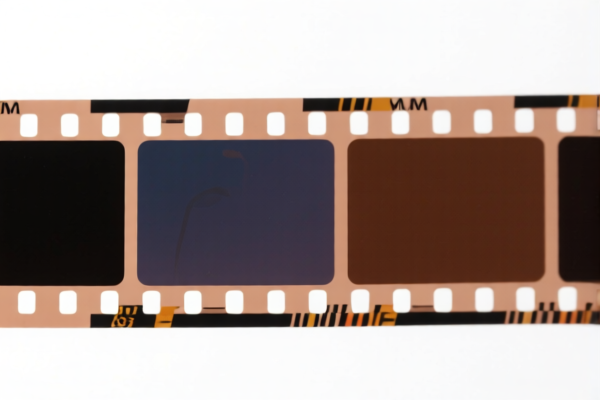
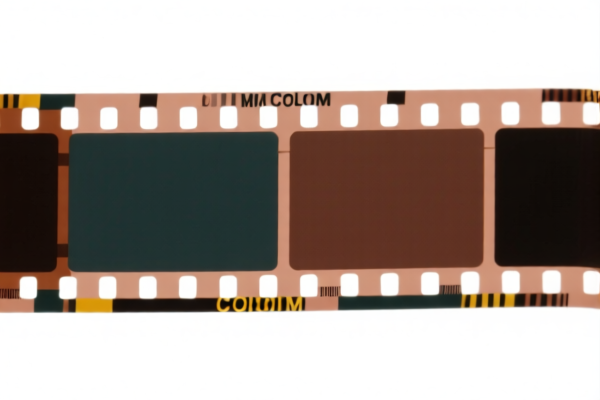
35mm Color Photographic Film is a photosensitive material coated on a transparent plastic base, used for capturing color images. In international trade, it is strictly categorized based on its format (width), color capability, and material composition.
Key Distinction Criteria:
Format: 35mm width falls under specific subheadings for "other film, width > 35mm" or specific 35mm categories depending on the country's tariff schedule structure.
* Color: "Color" indicates the film is sensitized for three colors (Cyan, Magenta, Yellow layers).
* Material: Typically polyester or cellulose acetate base, not* paper or textile.
⚠️ Critical Classification Note:
- If it is unexposed and specifically 35mm wide, it usually falls under 3702 (Photographic film in rolls, other than film of heading 3701 or 3707).
- However, depending on specific national subheadings and "macro" or specialized usage claims, it may also be classified under 3701 (Flat plates, sheets, film, "instant print film" and other flat exposed or unexposed photographic plate, film, etc.) or 3707 (Prepared chemicals for photographic uses, e.g., if marketed as a specialized "emulsion" or chemical kit for macro photography).
- For this analysis, we strictly follow the provided<DATA>which maps this product to four specific HS Codes based on different interpretation nuances (Emulsion vs. Film vs. General Flat Material).
📦 2. HS Code Classification Details (Based on Provided Data)
The product "35mm Color Photographic Film" is matched to the following HS Codes. Note that while the physical product is the same, customs may classify it differently based on how it is described (e.g., as "film" vs. "chemical emulsion" vs. "photographic material").
| HS Code | Product Description (from Data) | Key Matching Logic | Total Tax Rate |
|---|---|---|---|
3707.10.00.90 |
Photographic Chemicals (Prepared Emulsions) | "Color" & "Film" match material attributes; "Macro" implies photographic use. Classified under "Other" chemicals. | 38.0% |
3707.10.00.05 |
Color Negative Film Type (Emulsion/Chemical) | "Color" matches "Color"; "Film" function matches photosensitive material attributes. Treated as color negative type. | 38.0% |
3701.91.00.60 |
Other Flat Photographic Material (Color) | 35mm is inferred as non-paper/textile; format is photographic film; use is "for color photography." | 38.7% |
3701.91.00.30 |
Other Photographic Material (Unexposed Film) | "Color" = Color Photography; "Film" = Film. Classified under "Other" due to unspecified physical form constraints. | 38.7% |
3702.55.00.60 |
Other Color Photographic Film Rolls | Explicitly "Color Film"; 35mm fits within standard width categories; material is photosensitive coating, not paper/textile. | 35.0% |
🔍 Data Analysis Insight:
- The lowest tax rate (35.0%) is found under3702.55.00.60, which explicitly recognizes the product as "Color Photographic Film Rolls." This is the most direct and accurate classification for a standard roll of 35mm film.
- The higher rates (38.0% - 38.7%) result from classifying the item under Chemicals (3707) or Flat Materials (3701) rather than the dedicated "Film in Rolls" category (3702). Customs officers may default to these if the declaration lacks clarity or emphasizes "Chemical/Macro" aspects over "Film Roll."
💰 3. 2026 Latest Tariff Rate Breakdown (Including Additional Taxes)
✅ Applicable Country: USA (US)
✅ Country of Origin: China (CN)
✅ Effective Date: From Nov 10, 2025 (and subsequent imports)
The tax structure consists of a Base Tariff plus two additional layers of tariffs (Section 301 and IEEPA).
🎯 1. 3707.10.00.90 & 3707.10.00.05 (Photographic Chemicals/Emulsions)
| Item | Content |
|---|---|
| Base Tariff | 3.0% (ad valorem) |
| Section 301 Additional Tariff | +25.0% |
| IEEPA Additional Tariff | +10.0% (China-specific) |
| Total Tax Rate | 38.0% |
| Tax Calculation | CIF Value × 38.0% |
| De Minimis Exemption? | ❌ NO (High duty rates exclude from 80USD exemption) |
| Legal Basis Path | Base: 3707.10.00.90 → USITC Footnote: 25% → IEEPA: 10% |
📌 Explanation:
- These codes classify the item as a "Prepared Chemical" rather than pure film.
- The 25% Section 301 tariff applies to most chemical preparations from China.
- The 10% IEEPA tariff is an additional penalty on Chinese goods under the International Emergency Economic Powers Act.
🎯 2. 3701.91.00.60 & 3701.91.00.30 (Other Flat Photographic Material)
| Item | Content |
|---|---|
| Base Tariff | 3.7% (ad valorem) |
| Section 301 Additional Tariff | +25.0% |
| IEEPA Additional Tariff | +10.0% (China-specific) |
| Total Tax Rate | 38.7% |
| Tax Calculation | CIF Value × 38.7% |
| De Minimis Exemption? | ❌ NO |
| Legal Basis Path | Base: 3701.91.00.60 → USITC Footnote: 25% → IEEPA: 10% |
📌 Explanation:
- Slightly higher base rate (3.7% vs 3.0%) leads to a higher total (38.7%).
- The additional tariffs remain identical.
🎯 3. 3702.55.00.60 (Other Color Photographic Film Rolls) - RECOMMENDED
| Item | Content |
|---|---|
| Base Tariff | 0.0% (ad valorem) |
| Section 301 Additional Tariff | +25.0% |
| IEEPA Additional Tariff | +10.0% (China-specific) |
| Total Tax Rate | 35.0% |
| Tax Calculation | CIF Value × 35.0% |
| De Minimis Exemption? | ❌ NO (Due to high combined rate) |
| Legal Basis Path | Base: 3702.55.00.60 → USITC Footnote: 25% → IEEPA: 10% |
📌 Explanation:
- This is the most cost-effective classification provided in the data.
- The Base Tariff is 0% for this specific subheading (likely due to free trade agreements or specific exemption for standard photographic media).
- Even with the 25% + 10% = 35% additional taxes, it is 3.0% - 3.7% cheaper per unit value than the other options.
- Why is it 0% base? Many countries apply 0% base duty to standard photographic film to encourage media and art, but the US Section 301 and IEEPA tariffs still apply aggressively to Chinese origins.
🛠️ 4. Customs Clearance Practical Advice (Pitfall Avoidance Guide)
✅ 1. Preparation Checklist (Non-Negotiable)
| Document | Required? | Description |
|---|---|---|
| ✅ Product Specification Sheet | ✔️ | Must clearly state: "35mm Width," "Color Negative/Positive," "Unexposed," "Photosensitive." |
| ✅ Composition Statement | ✔️ | Specify base material (e.g., Polyester Base) to distinguish from paper/textile (which would fall under 3701). |
| ✅ Commercial Invoice | ✔️ | Must use precise description: "35mm Color Photographic Film Rolls, Unexposed, for Color Photography." Avoid vague terms like "Camera Accessories." |
| ✅ Country of Origin Certificate | ✔️ | Essential for proving CN origin to apply (or challenge) the 25% + 10% tariffs. |
| ✅ Safety Data Sheet (SDS) | ✔️ | Since some customs offices classify this under "Chemicals" (3707), an SDS proves it is a stable photographic product, not hazardous. |
✅ 2. Declaration Strategy (Key Tactics)
🔥 Golden Rule:
"Declare as 'Film Rolls,' Not 'Chemicals' or 'Flat Plates'!"
| Scenario | Recommended HS Code | Tax Rate | Risk Level |
|---|---|---|---|
| Standard 35mm Roll | 3702.55.00.60 |
35.0% | 🟢 Low (Most Accurate) |
| Vague "Photographic Material" | 3701.91.00.30 |
38.7% | 🟡 Medium (Higher Cost) |
| Misclassified as "Chemical Emulsion" | 3707.10.00.90 |
38.0% | 🟡 Medium (Higher Cost) |
| Misclassified as "Paper-Based" | (Not in Data) | High | 🔴 High (Seizure Risk) |
📌 Why Avoid
3707or3701?
- 3707 is for "Prepared Chemicals." Unless you are importing raw emulsion powder, calling a finished film roll a "chemical" is inaccurate and may trigger audits.
- 3701 is for "Flat Plates/Sheets." While film is flat, 3702 is the specific heading for "Film in Rolls." Using a general heading when a specific one exists is a common customs error that can lead to higher duties or penalties.
✅ 3. Special Handling Notes
| Situation | Action |
|---|---|
| Importing in Small Quantities (< $800) | ❌ Do NOT rely on De Minimis. With a 35-38% duty rate, CBP will still assess duties. The "Section 321" exemption does not apply if the total value (including duties) exceeds thresholds or if the item is classified under restricted categories. Verify current CBP rules for Section 321 exclusions. |
| "Macro" Labeling | If the product is marketed specifically as "Macro Film," ensure the description emphasizes "35mm Film." Do not over-emphasize "Macro" as if it were a lens, as this might confuse customs into classifying it under optics (9001) or cameras (9006), leading to delays. |
| Expiration Date | Photographic film has a shelf life. Customs may inspect for degradation. Ensure packaging is intact and declare as "New, Unexposed." |
🌍 5. Global Market Comparison (Quick Reference)
| Country/Region | Recommended HS Code | Est. Total Duty (China Origin) | Notes |
|---|---|---|---|
| 🇺🇸 USA | 3702.55.00.60 |
35.0% | High additional tariffs (25% + 10%). |
| 🇨🇳 China | 3702.55.00.60 |
~6-10% | Lower base duty, no Section 301. |
| 🇪🇺 EU | 3702.55.00.60 |
0% | Generally low duty on photographic film. |
| 🇯🇵 Japan | 3702.55.00.60 |
0% | FTA benefits may apply if originating elsewhere. |
📌 Conclusion:
The USA market is the most expensive due to the combination of Section 301 (25%) and IEEPA (10%) tariffs. Even with a 0% base rate, the effective duty is 35%. Plan pricing accordingly.
📌 6. Common Mistakes & Pitfalls (Blood & Tears Lessons)
❌ Mistake 1: Declaring as "Camera Accessories" or "Photography Gear"
👉 Consequence: CBP may redirect to 9006/9008 (Cameras) or 8528 (Monitors/Devices), leading to classification errors and delays.
👉 Fix: Use specific chemical/photographic HS codes (3702).
❌ Mistake 2: Ignoring the "Roll" aspect
👉 Consequence: If declared as "Film Sheets" or "Plates," it might fall under 3701, increasing tax from 35% to 38.7%.
👉 Fix: Explicitly state "In Rolls" on the invoice.
❌ Mistake 3: Underestimating the 25% + 10% Impact
👉 Consequence: Assuming "0% Base Duty" means "0% Total Tax."
👉 Fix: Budget for 35% total landed duty cost.
✅ Correct Declaration Example:
"35mm Color Negative Photographic Film Rolls, Unexposed, Polyester Base, Width 35mm, for Color Photography. Origin: China."
🎯 7. Conclusion: Professional Clearance for Maximum Savings
🎯 Key Takeaway:
🔹 "3702.55.00.60 is your best friend."
🔹 "Total Duty = 35% (Base 0% + 25% Sec301 + 10% IEEPA)."
🔹 "Do not classify as Chemicals (3707) or Flat Plates (3701) unless necessary, as they cost more."
📌 Pro Tip:
If you are importing large volumes, consider Advance Ruling (Ruling Letter) from CBP to lock in the 3702.55.00.60 classification and confirm the 35% total duty. This provides legal certainty and prevents surprise audits.
📣 Immediate Action:
📞 Contact a Licensed Customs Broker.
📄 Prepare a Spec Sheet highlighting "35mm," "Color," and "Film Roll."
💰 Calculate Landed Cost with 35% Duty.
🚀 Ensure smooth clearance and protect your margins!
✨ Precision in Classification, Savings in Duty!
💼 Every percentage point counts in international trade.
Customer Reviews
About HS Code Classification
The Harmonized System (HS) is an internationally standardized nomenclature developed by the World Customs Organization (WCO) to classify traded products. Over 200 countries use the HS system as the basis for customs tariffs, trade statistics, and import/export regulations.
Each HS code follows a hierarchical structure:
- Chapter (2 digits) — Broad category of goods (e.g., Chapter 84: Machinery and Mechanical Appliances)
- Heading (4 digits) — More specific grouping within the chapter
- Subheading (6 digits) — Internationally standardized breakdown, used by all WCO member countries
- National subdivisions (8-10 digits) — Country-specific extensions for further classification, such as US HTSUS 10-digit codes
Correct HS code classification is essential for smooth customs clearance, accurate duty payment, and compliance with trade regulations. Misclassification can lead to customs delays, overpayment of duties, or penalties.
When importing from CN to US, the applicable tariff rates may include:
- Most-Favored-Nation (MFN) rate — The standard duty rate applied to WTO members
- General rate — Applied to countries without trade agreements
- Trade remedy duties — Additional tariffs such as Section 301 (anti-dumping), Section 232 (national security), or countervailing duties
The information provided on this page is for reference purposes only. For official classification, please consult with your local customs authority or a licensed customs broker.