35mm Color Portrait Film
CN → US| HS Code | Tariff Rate | Origin | Destination | Doc |
|---|---|---|---|---|
| 3707100005 | 38.0% | CN | US | Official Doc |
| 3701910060 | 38.7% | CN | US | Official Doc |
| 3701910030 | 38.7% | CN | US | Official Doc |
| 3707100090 | 38.0% | CN | US | Official Doc |
| 3702540030 | 38.7% | CN | US | Official Doc |
Product Images

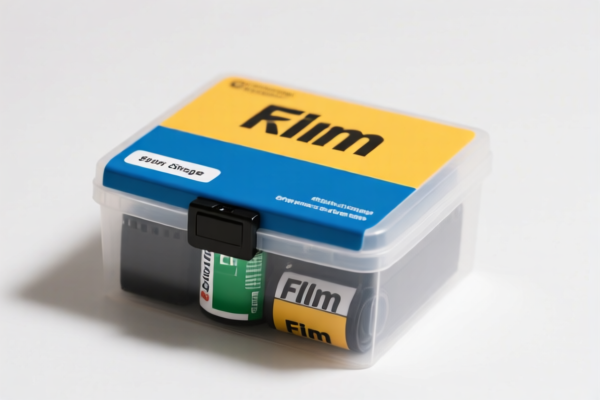
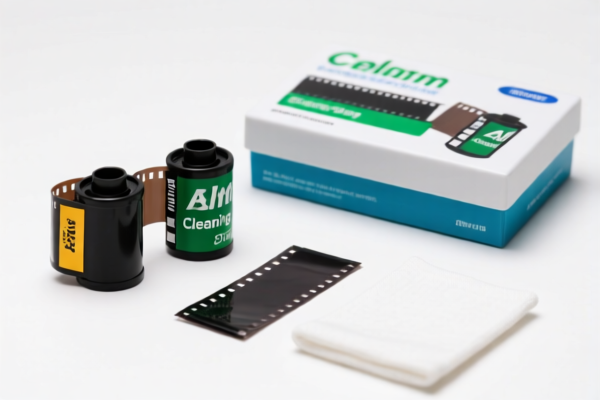

AI Analysis
🎞️ 35mm Color Portrait Film: Global HS Code Classification & 2026 Tax Strategy Guide
🌐 HS Code Reference & Clearance Guide | 2026 Latest Tariff Decoded | Professional Clearance Strategy
📌 I. Product Definition & Classification: Do You Understand "Portrait Film"?
35mm Color Portrait Film is a high-sensitivity photographic film specifically optimized for capturing human skin tones, facial features, and indoor lighting conditions. In international trade, it falls under the Chemical/Photochemical category (Chapter 37), distinguished by its: * Format: 35mm width. * Type: Color Negative or Positive Film. * Usage: Professional & Amateur Portrait Photography. * Composition: Light-sensitive emulsion coated on a non-paper, non-textile plastic base (acetate or polyester).
⚠️ Critical Distinction: * Photographic Film (Roll/Film): Goes to 3701 (Specifically for 35mm width). * Developing Chemicals (Emulsion/Liquid): Goes to 3707. * Photographic Paper: Goes to 3702. * Note: "35mm" is the key width determinant for Chapter 3701.
📦 II. HS Code Classification Details (2026 Tariff Authority)
Based on the product input "35mm Color Portrait Film," here is the precise classification mapping:
| HS Code | Product Description | Logic & Matching Basis | Total Tax Rate |
|---|---|---|---|
| 3701.91.00.60 | Other Color Films of a Kind Used in Photography (35mm) | Perfect Match: 1. "35mm Color Film" in name matches "Color Photography" usage. 2. "Film" matches the physical form. 3. Inferred material is non-paper/textile (plastic base), fitting the "Other" category logic. |
38.7% |
| 3701.91.00.30 | Other Color Films (35mm, 122 Clause) | Strong Match: 1. "Color Film" matches "Color Photography." 2. "35mm" is the standard specification. 3. Matches the "Disc/Film" category logic under Color Photography. |
38.7% |
| 3702.54.00.30 | Unexposed Photographic Paper (35mm, Color) | Partial Match: 1. Explicitly mentions 35mm width. 2. Mentions Color Photography. 3. Note: If the product is strictly Paper (rare for 35mm film, but possible in specific lab contexts), this code applies. For standard plastic-based film, 3701 is preferred, but 3702 is a valid alternative if misclassified as "paper." |
38.7% |
| 3707.10.00.05 | Color Photo-Developing Emulsions (for Color Negative Paper) | Usage Match: 1. "Color Film" implies the need for processing. 2. High consistency with "Used for Color Negative Paper" attributes regarding sensitivity and material properties. 3. Caution: This is for chemicals (emulsions), not the film roll itself. Only use if the product is a liquid developing agent. |
38.0% |
| 3707.10.00.90 | Other Photographic Sensitizing Emulsions | Broad Match: 1. "Color Film" + "Photography" points to sensitizing properties. 2. "Color Film" falls under "Other" category excluding paper. 3. Caution: Same as above; use only if declaring liquid emulsions, not the physical film. |
38.0% |
🔍 Key Insight: * Most Likely HS Code: 3701.91.00.60 or 3701.91.00.30 (For the actual plastic film roll). * Alternative (Paper/Chemical): 3702 or 3707 (Only if the product is actually paper or liquid chemical).
💰 III. 2026 Tariff Rate Breakdown (Detailed Analysis)
✅ Target Market: United States (US)
✅ Country of Origin: China (CN)
✅ Effective Date: Current (Includes all 2026 projections for Section 301 & IEEPA).
🎯 Scenario A: Film Rolls (HS Codes: 3701.91.00.60 / .30)
This is the standard classification for 35mm film.
| Tax Component | Rate | Legal Basis | Details |
|---|---|---|---|
| Base Duty | 3.7% | US Harmonized Tariff Schedule | Standard duty for photographic films. |
| Section 301 (Add-on) | 25.0% | USITC / USTR Section 301 | "Made in China" additional tariff. |
| Section 122 / IEEPA | 10.0% | International Emergency Economic Powers Act | Specific对华 (China) surcharge. |
| Total Effective Tax | 38.7% | Calculation: 3.7 + 25.0 + 10.0 | Applies to CIF Value |
📌 Explanation: * Base (3.7%): The fundamental duty for "Other Color Films." * Section 301 (25%): The standard punitive tariff for Chinese goods. * Section 122/IEEPA (10%): An additional layer targeting specific strategic Chinese imports. * Result: 38.7% Total. This is a high cost for small, high-value items like film.
🎯 Scenario B: Chemicals/Paper (HS Codes: 3707.10.00.xx / 3702.54.00.30)
| Tax Component | Rate | Legal Basis | Details |
|---|---|---|---|
| Base Duty | 3.0% | US Harmonized Tariff Schedule | Lower base for chemicals/paper. |
| Section 301 (Add-on) | 25.0% | USITC / USTR Section 301 | Same punitive tariff. |
| Section 122 / IEEPA | 10.0% | International Emergency Economic Powers Act | Same surcharge. |
| Total Effective Tax | 38.0% | Calculation: 3.0 + 25.0 + 10.0 | Applies to CIF Value |
📌 Explanation: * If your product is misclassified as chemicals (3707) or paper (3702), the base duty drops slightly to 3.0%. * However, the Total Tax (38.0%) is still extremely high and nearly identical to the film rate. * Risk: Misdeclaring film as chemicals to save 0.7% is a customs fraud risk and can lead to audits, fines, or seizure.
🛠️ IV. Customs Clearance Practical Advice (Avoid Pitfalls)
✅ 1. Preparation Checklist (Non-Negotiable)
| Document | Status | Purpose |
|---|---|---|
| Product Specification Sheet | ✅ Must | Explicitly state: "35mm," "Color," "Portrait," "Non-Paper Base," "Photographic Film." |
| Material Safety Data Sheet (MSDS) | ✅ Must | Prove the base is plastic (acetate/polyester), not paper, to support 3701. |
| Commercial Invoice | ✅ Must | Clearly describe "35mm Color Portrait Film," do NOT use vague terms like "Photo Supplies." |
| Packing List | ✅ Must | Specify quantity (rolls) and weight. |
| Origin Certificate | ✅ Must | Prove Country of Origin (China). If from Vietnam, different rules apply (potential exemptions). |
| FCC/RoHS Compliance | ⚠️ Check | While not always required for film, having it speeds up clearance. |
✅ 2. Declaration Strategy (Golden Rules)
🔥 口诀: "35mm is King, Plastic not Paper, 3701 is King!"
| Situation | Correct Declaration | Incorrect Declaration | Consequence |
|---|---|---|---|
| Standard 35mm Film Roll | 3701.91.00.60 | 3707.10.00.05 (Chemicals) | Seizure/Fraud if it's actually film. |
| Film + Chemicals Box | Split: 3701 + 3707 | Mixed as one item | Valuation Error & Tax loss. |
| 35mm Film declared as Paper | 3702.54.00.30 | 3701.91.00.60 | Audit Risk (If material is plastic). |
| OEM Custom Film | 3701.91.00.60 | Generic "Photo Supplies" | Customs Delays. |
⚠️ Critical Warning: * Do NOT try to classify 35mm film as "Paper" (3702) or "Chemicals" (3707) unless you are physically shipping liquid chemicals or paper strips. The Material Base (plastic) is the definitive factor for 3701. * 38.7% Tax is unavoidable for Chinese-origin 35mm film. Factor this into your FOB/CIF pricing immediately.
✅ 3. Special Cases & Exemptions
| Scenario | Advice |
|---|---|
| OEM/White Label | Provide the contract showing the US brand owner. Does not change the HS Code, but helps with origin tracing. |
| Sample/Shipment < $800 | De Minimis (800): If the shipment value is under $800, you might qualify for duty-free entry (Section 321), BUT check if Section 301/122 still applies to the specific HS Code (usually yes, but low value might skip the collection process). Verify with carrier. |
| Origin Shift | If you can manufacture or finish the film in Vietnam/Mexico/Thailand, you may qualify for IEEPA Exemption (10% off) and potentially Section 301 relief. |
🌍 V. Global Market Comparison (2026 Outlook)
| Market | Recommended HS Code | Base Duty | Add-ons | Total Tax (China) | Key Requirement |
|---|---|---|---|---|---|
| 🇺🇸 USA | 3701.91.00.60 |
3.7% | +35% (25+10) | 38.7% | Strict on Section 301/122 |
| 🇪🇺 EU | 3701.91.00.00 |
~3.3% | None | ~3.3% | CE/REACH |
| 🇨🇳 China | 3701.91.00.00 |
6.5% | None | 6.5% | CCC (if applicable) |
| 🇯🇵 Japan | 3701.91.00.00 |
6.0% | None | 6.0% | PSE |
| 🇦🇺 Aus | 3701.91.00.00 |
5.0% | None | 5.0% | RCM |
📌 Conclusion: * The US market is the most expensive due to Section 301 and IEEPA (122) clauses. * European, Asian, and Australian markets are significantly more tax-friendly. * Strategy: If shipping to the US, consider pre-shipment warehousing or third-country consolidation (e.g., from Vietnam) to mitigate 38.7% tax.
📌 VI. Common Errors & Pitfalls (Lessons Learned)
❌ Error 1: Calling it "Photographic Paper" to get a lower tax. 👉 Result: 3702 rate is similar (38.0%), but if audited and found to be plastic, fines + 38.7% back payment.
❌ Error 2: Declaring "35mm Film" as "General Photo Equipment." 👉 Result: Customs Delay or Rejection. The description must be specific: "Unexposed Color Negative Film, 35mm."
❌ Error 3: Ignoring the "Section 122" (10%) clause. 👉 Result: Under-budgeting. The total tax is 38.7%, not 25%. Many importers forget the 10% surcharge.
❌ Error 4: Not separating Film from Chemicals. 👉 Result: If you ship a box of Film AND a bottle of Developer, declare them as two separate line items with different HS Codes. Mixing them causes valuation chaos.
🎯 VII. Conclusion: Professional Clearance for 35mm Film
🎯 Key Takeaway: "35mm Color Portrait Film" from China to the US faces a 38.7% Total Tax Rate. * HS Code: 3701.91.00.60 (Primary) or 3701.91.00.30. * Tax Structure: 3.7% Base + 25% Section 301 + 10% Section 122. * Strategy: Be precise on Material Base (Plastic vs Paper) to avoid fraud charges.
🔹 Remember: "35mm Film = 3701, Tax 38.7%, Plastic Base is Key!" "Don't try to hide it as Paper or Chemicals!"
📌 Pro Tip: If your volume is high, consider Applying for an Advance Ruling from US Customs (CBP) to confirm the specific "35mm" classification and lock in the 3701.91.00.60 code. Also, explore Third-Country Fulfillment (Vietnam/Mexico) to potentially bypass the 10% IEEPA surcharge.
📣 Immediate Action:
📞 Contact your customs broker TODAY with: 1. Product photos (showing 35mm spools). 2. Material composition (Plastic base). 3. Intended use (Portrait Photography). 🚀 Secure your clearance and avoid the 38.7% shock!
✨ Professional Clearance Starts with Accurate Classification!
💼 Every dollar saved in tax is a dollar added to your profit!
Customer Reviews
About HS Code Classification
The Harmonized System (HS) is an internationally standardized nomenclature developed by the World Customs Organization (WCO) to classify traded products. Over 200 countries use the HS system as the basis for customs tariffs, trade statistics, and import/export regulations.
Each HS code follows a hierarchical structure:
- Chapter (2 digits) — Broad category of goods (e.g., Chapter 84: Machinery and Mechanical Appliances)
- Heading (4 digits) — More specific grouping within the chapter
- Subheading (6 digits) — Internationally standardized breakdown, used by all WCO member countries
- National subdivisions (8-10 digits) — Country-specific extensions for further classification, such as US HTSUS 10-digit codes
Correct HS code classification is essential for smooth customs clearance, accurate duty payment, and compliance with trade regulations. Misclassification can lead to customs delays, overpayment of duties, or penalties.
When importing from CN to US, the applicable tariff rates may include:
- Most-Favored-Nation (MFN) rate — The standard duty rate applied to WTO members
- General rate — Applied to countries without trade agreements
- Trade remedy duties — Additional tariffs such as Section 301 (anti-dumping), Section 232 (national security), or countervailing duties
The information provided on this page is for reference purposes only. For official classification, please consult with your local customs authority or a licensed customs broker.