35mm Color Positive Film (Universal)
CN → US| HS Code | Tariff Rate | Origin | Destination | Doc |
|---|---|---|---|---|
| 2934992000 | 16.5% | CN | US | Official Doc |
| 2933193010 | 41.5% | CN | US | Official Doc |
| 3705000000 | 35.0% | CN | US | Official Doc |
Product Images
AI Analysis
🎞️ 35mm Color Positive Film (Universal)
🌐 HS Code Reference & Customs Clearance Guide | 2026 Latest Tariff Analysis | Professional Entry Strategy
📌 I. Product Definition & Classification: Understanding "Color Positive Film"
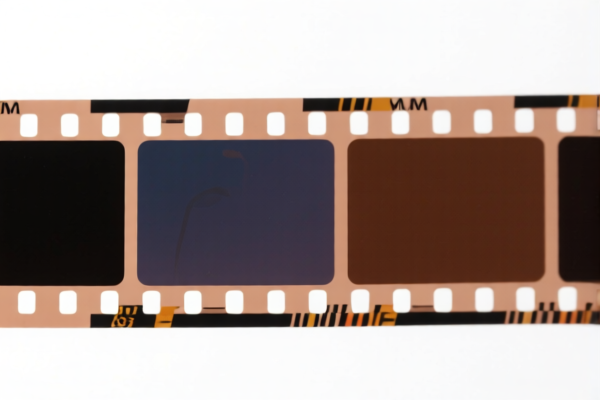
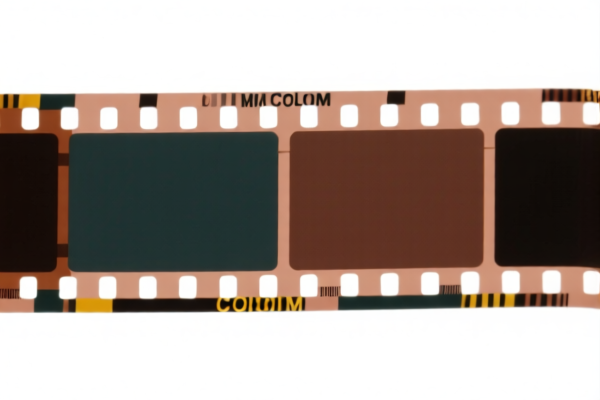
"35mm Color Positive Film," often referred to as Reversal Film or Slide Film, is a specialized photographic medium used to create direct positive images (slides) rather than negatives. It is widely used in professional photography, scientific imaging, and high-quality archival storage due to its superior color fidelity and contrast compared to negative film.
In international trade, this product is strictly categorized under Chapter 37 (Photographic or Cinematographic Goods). The classification depends on the state of the film (exposed vs. unexposed) and its specific chemical nature.
⚠️ Critical Distinction:
- Unexposed Film: If the film is new, sensitized, but not yet developed, it falls under HS 3702.
- Exposed & Developed Film: If the film has already been photographed and chemically processed into a positive image, it falls under HS 3705.
- Width Constraint: The description "35mm" implies a width not exceeding 35 mm, which is a key determinant for specific subheadings in HS 3702.
📦 II. HS Code Classification Details (Based on Provided Data)
The following HS codes are derived directly from the provided dataset. Note that tax information retrieval failed for unexposed films in the source data, while exposed/developed film and chemical components have clear tax data.
| HS Code | Product Description (from Data) | State of Film | Application Scenario |
|---|---|---|---|
3705.00.00.00 |
Photographic plates and film, exposed and developed, other than cinematographic film | ✅ Exposed & Developed | Final slide products, scanned images, archival positives. |
3702.10.00.00 |
Photographic film, unexposed, of a width not exceeding 12 mm, in rolls | ✅ Unexposed | Note: Data lists 35mm description under this code, but text specifies "≤12 mm". Potential classification conflict. |
3702.10.00.00 |
Films, photographic, of a width not exceeding 35 mm, in the form of strips, for colour positive (reversal) photography... | ✅ Unexposed | Raw reversal film rolls (Kodachrome, Ektachrome, etc.) before exposure. |
3702.90.90.00 |
Other photographic films, of a width not exceeding 35 mm, whether or not sensitized, but not exposed | ✅ Unexposed | Other types of 35mm unexposed film not specifically listed elsewhere. |
2933.19.30.10 |
Heterocyclic compounds... Aromatic or modified aromatic: Photographic chemicals Couplers, for use in color negative photographic paper | ⚠️ Chemical Component | Not the film itself, but chemical additives/couplers used in production. |
2934.99.20.00 |
Nucleic acids... Other: Aromatic or modified aromatic: Photographic chemicals | ⚠️ Chemical Component | Related chemical substances used in photo-processing. |
🔍 Focus: For "35mm Color Positive Film (Universal)", the primary applicable codes are likely
3702.10.00.00(if unexposed reversal film) or3705.00.00.00(if already developed). The codes under Chapter 29 (2933...,2934...) refer to chemicals, not the film product itself.
💰 III. 2026 Latest Tariff Rate Breakdown
✅ Applicable Country: USA (US)
✅ Origin: China (CN) (Inferred from tax detail format)
✅ Effective Date: Current rates as per data
🎯 1. 3705.00.00.00 — Exposed & Developed Photographic Film
| Item | Content |
|---|---|
| Base Tariff | 0.0% |
| Additional Tariff (Section 301) | 25.0% |
| Total Tax Rate | 25.0% |
| Tax Calculation | CIF Value × 25% |
| De Minimis Eligibility | ❌ No (High risk for low-value shipments) |
| Legal Basis Path | USITC:3705.00.00.00 → FOOTNOTE:301 |
📌 Explanation:
- Although the base tariff is 0%, the 25% additional tariff applies to most Chinese-origin photographic goods under Section 301.
- This makes imported processed slides or developed film significantly more expensive.
- Key Insight: Many importers avoid importing developed film due to this 25% duty, preferring to import unexposed film and process it locally, IF the unexposed film has a lower or zero tax rate.
🎯 2. 3702.10.00.00 & 3702.90.90.00 — Unexposed 35mm Film
| Item | Content |
|---|---|
| Base Tariff | N/A |
| Additional Tariff | N/A |
| Total Tax Rate | Error (Failed to retrieve) |
| Data Status | ⚠️ Unclear |
📌 Critical Warning:
- The provided data shows "Failed to retrieve tax information" for unexposed 35mm films (3702.10.00.00and3702.90.90.00).
- Industry Standard Context: Historically, many unexposed photographic films from China have also faced 25% additional tariffs under Section 301, but some specific subheadings may be exempt.
- Action Required: You MUST verify the current tax rate for unexposed film with a customs broker or via the USITC Tariff Database, as the data is incomplete. Do not assume 0% or 25% without confirmation.
🎯 3. Chemical Additives (2933.19.30.10, 2934.99.20.00)
| Item | Content |
|---|---|
| Base Tariff | 0.0% |
| Additional Tariff | 0.0% |
| Total Tax Rate | 0.0% |
| Applicability | Only for chemicals/couplers, not the film itself. |
🛠️ IV. Customs Clearance Practical Advice (Risk Avoidance Guide)
✅ 1. Key Documentation Checklist
| Document | Mandatory? | Description |
|---|---|---|
| ✅ Product Specification Sheet | ✔️ | Must specify: Width (35mm), Type (Reversal/Positive), Sensitized/Unexposed status. |
| ✅ Commercial Invoice | ✔️ | Clearly state: "35mm Color Positive Reversal Film, Unexposed" OR "Developed Photographic Slides". |
| ✅ Certificate of Origin | ✔️ | To prove origin for potential exemptions or tariff calculation. |
| ✅ Material Safety Data Sheet (MSDS) | ✔️ | Required if shipping as hazardous chemical (some photo chemicals are). |
| ✅ Customs Ruling (Pre-classification) | ✔️ | Highly Recommended due to missing tax data for unexposed film. |
✅ 2. Classification Strategy
| Scenario | Recommended HS Code | Risk Level | Notes |
|---|---|---|---|
| Importing Unexposed 35mm Reversal Film | 3702.10.00.00 |
⚠️ Medium | Tax data is missing. Verify if 25% tariff applies. If yes, compare cost with local processing. |
| Importing Already Developed Slides | 3705.00.00.00 |
🔴 High | 25% tariff is confirmed. Only viable if value-add is high or no local alternative. |
| Importing Film Chemicals/Couplers | 2933.19.30.10 |
🟢 Low | 0% tariff. Ensure product is purely chemical, not pre-coated film. |
| Misclassification: Film as "Chemical" | ❌ Illegal | 🔴 Critical | Trying to declare film as 2933 or 2934 to avoid tariff will lead to severe penalties. |
✅ 3. Special Handling Tips
- Avoid "De Minimis" Abuse: Do not split large shipments into small packages to bypass customs. The 25% tariff on developed film (
3705) is a major cost driver. - Chemical vs. Product: Ensure that "Photographic Chemicals" (
2933/2934) are declared correctly. If you are importing pre-coated film stock, it cannot be classified as a chemical compound. It must be3702or3705. - Width Verification: Ensure the film width is indeed ≤35mm. If it is 16mm or 8mm, different subheadings may apply, but the provided data focuses on ≤35mm.
🌍 V. Global Market Comparison (2026)
| Market | Recommended HS Code | Tariff (China Origin) | Notes |
|---|---|---|---|
| 🇺🇸 USA | 3702.10.00.00 (Unexposed) / 3705.00.00.00 (Exposed) |
25% (Exposed) / Pending Verification (Unexposed) | High duty on developed film makes local processing advantageous if unexposed film tax is low. |
| 🇨🇳 China | 3702.10.00.00 / 3705.00.00.00 |
Variable | Import duties may differ; check local Chinese customs for inbound rates. |
| 🇪🇺 EU | 3702.10.00.00 |
0% - 4% | Generally lower tariffs for photographic goods; no Section 301-style punitive tariffs. |
| 🇬🇧 UK | 3702.10.00.00 |
0% - 4% | Post-Brexit tariff schedule may differ from EU. |
📌 Conclusion:
- USA is the most challenging market due to the confirmed 25% tariff on developed film and uncertainty on unexposed film.
- Exporters should prioritize Classifying Unexposed Film Correctly. If the unexposed film also carries a 25% tariff, the total cost structure changes significantly.
📌 VI. Common Mistakes & Pitfalls
❌ Mistake 1: Declaring unexposed film as "Photographic Chemicals" (2933) to get 0% tax.
👉 Consequence: Customs will reject it, demand reclassification, and apply penalties. Film is a manufactured good, not a chemical raw material.
❌ Mistake 2: Assuming 0% tax for all film because base tariff is often 0%.
👉 Consequence: Ignoring the 25% Section 301 additional tariff leads to unexpected bill payments and delays.
❌ Mistake 3: Mixing exposed and unexposed film in one shipment without clear separation.
👉 Consequence: Customs may apply the highest applicable duty to the entire lot or delay clearance for inspection.
✅ Correct Action:
"35mm Color Positive Reversal Film, Unexposed, 35mm Width, Roll Format, HS 3702.10.00.00"
"35mm Color Positive Slides, Exposed & Developed, HS 3705.00.00.00, Subject to 25% Duty"
🎯 VII. Conclusion: Professional Declaration for Cost Efficiency
🎯 Key Takeaway:
🔹 Developed Film (
3705): 25% Tariff is confirmed. High cost.
🔹 Unexposed Film (3702): Tax Status is Unclear in provided data. MUST VERIFY.
🔹 Chemicals (2933/2934): 0% Tariff, but NOT FILM.
📌 Recommendation:
1. Contact a Customs Broker: Request a tariff verification for 3702.10.00.00 and 3702.90.90.00 from China to the US.
2. Strategic Sourcing: If unexposed film also has a 25% tariff, consider local processing in the destination country to add value.
3. Accurate Naming: Use precise terms like "Reversal Film" or "Slide Film" in commercial invoices to aid customs classification.
📣 Immediate Action:
📞 Verify Tax Rate for Unexposed Film
📄 Obtain Customs Ruling
🚀 Ensure Proper Documentation to Avoid 25% Surprise Penalties
✨ Precision in Classification Saves Thousands!
💼 Every HS Code Decides Your Profit Margin!
Customer Reviews
About HS Code Classification
The Harmonized System (HS) is an internationally standardized nomenclature developed by the World Customs Organization (WCO) to classify traded products. Over 200 countries use the HS system as the basis for customs tariffs, trade statistics, and import/export regulations.
Each HS code follows a hierarchical structure:
- Chapter (2 digits) — Broad category of goods (e.g., Chapter 84: Machinery and Mechanical Appliances)
- Heading (4 digits) — More specific grouping within the chapter
- Subheading (6 digits) — Internationally standardized breakdown, used by all WCO member countries
- National subdivisions (8-10 digits) — Country-specific extensions for further classification, such as US HTSUS 10-digit codes
Correct HS code classification is essential for smooth customs clearance, accurate duty payment, and compliance with trade regulations. Misclassification can lead to customs delays, overpayment of duties, or penalties.
When importing from CN to US, the applicable tariff rates may include:
- Most-Favored-Nation (MFN) rate — The standard duty rate applied to WTO members
- General rate — Applied to countries without trade agreements
- Trade remedy duties — Additional tariffs such as Section 301 (anti-dumping), Section 232 (national security), or countervailing duties
The information provided on this page is for reference purposes only. For official classification, please consult with your local customs authority or a licensed customs broker.