35mm Color Positive Film 24 Exposures
CN → USProduct Images


AI Analysis
🎞️ 35mm Color Positive Film (24 Exposures)
🌐 HS Code Reference & Customs Clearance Guide | 2026 Latest Tariff Analysis | Professional Clearance Strategy
📌 I. Product Definition & Classification: Do You Really Understand "Color Positive Film"?
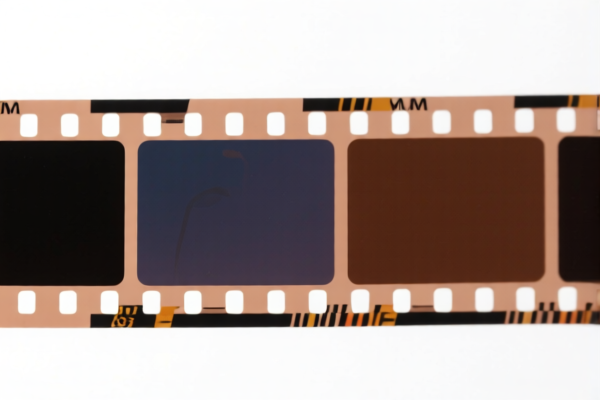
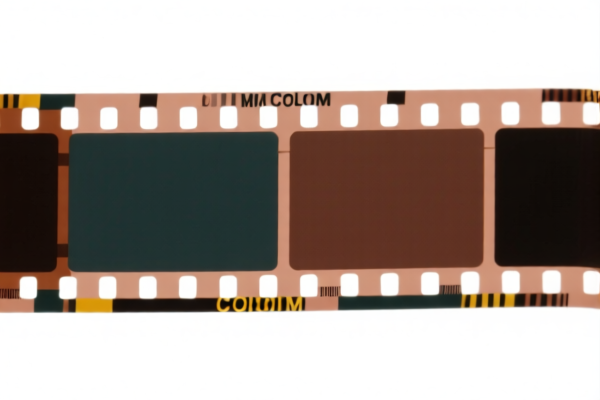
35mm Color Positive Film (also known as Reversal Film or Slide Film) is a special type of photographic film used to produce direct positive images, typically for slides, transparencies, or artistic prints. Unlike negative film, it is not intended for standard darkroom printing but for projection or scanning.
In international trade, it is strictly distinguished from negative film and digital imaging devices:
Color Positive Film (Reversal): Chemical-based emulsion on a polyester or cellulose acetate base, designed to create positive images directly during development. Color Negative Film: Designed to create negative images for later printing.
⚠️ Key Distinction Point:
- If the product is chemical photographic film (unexposed rolls), it falls under Chapter 37;
- If it is digital memory cards or cameras, it falls under Chapter 85;
- 35mm film specifically refers to the 35mm width standard, widely used in analog photography.
📦 II. HS Code Classification Details (2026 Latest Tariff Authority Comparison)
| HS Code | Product Description | Application Scenario | Material Basis |
|---|---|---|---|
3702.32.00.00 |
Color positive film, 35mm, in rolls, not perforated | Slide film, Ektachrome, Velvia, artistic reversal film | Polyester/Acetate Base |
3702.33.00.00 |
Color positive film, 35mm, in rolls, perforated | Perforated slide film for still cameras | Polyester/Acetate Base |
3702.54.00.00 |
Color negative film, 35mm, in rolls | Standard negative film (Kodak Portra, Fujifilm Pro) | ❌ Not applicable (Negative) |
3707.10.00.00 |
Prepared chemicals for photographic use | Film developers, fixers, processors | Chemical Solutions |
3703.90.00.00 |
Color sensitized paper, paperboard, textiles | Photographic paper, not film | ❌ Not applicable (Paper) |
🔍 Key Reminder:
- Perforated vs. Non-Perforated: Most standard 35mm camera films are perforated (3702.33.00.00). If sold as cine film or special rolls without holes, it may be3702.32.00.00.
- Positive vs. Negative: The key is the emulsion type. Positive (Reversal) film creates direct positives. Negative film creates negatives. Misclassification leads to incorrect duty rates.
- Exposure Count: "24 Exposures" is a commercial packaging detail, not a classification factor. HS codes classify by physical form and chemical nature, not user count.
💰 III. 2026 Latest Tariff Rate Details (Including Surcharges, Policy Surcharges)
✅ Applicable Country: United States (US)
✅ Origin: China (CN)
✅ Effective Date: From November 10, 2025 (including subsequent imports)
🎯 1. 3702.33.00.00 – Color Positive Film, 35mm, Perforated (Most Common)
| Item | Content |
|---|---|
| Base Tariff Rate | 5.3% (ad valorem) |
| USITC Surcharge | +25% (Under USITC Footnote 9903.88.01) |
| IEEPA Surcharge | +10% (For China/HK products, effective Nov 10, 2025) |
| Total Tariff Rate | 40.3% |
| Tax Calculation | CIF Value × 40.3% |
| De Minimis Eligibility | ❌ Not Eligible (deny_de_minimis) |
| Legal Basis Path | IEEPA:9903.01.25 → IEEPA:9903.01.24 → USITC:3702.33.00.00 → FOOTNOTE:9903.88.01 |
📌 Explanation:
- "USITC Surcharge 25%" comes from the Section 301 tariffs;
- "IEEPA 10%" is the additional tariff under the International Emergency Economic Powers Act;
- Total 40.3% is considered high for consumer goods. Cost planning is essential!
🎯 2. 3702.32.00.00 – Color Positive Film, 35mm, Non-Perforated
| Item | Content |
|---|---|
| Base Tariff Rate | 5.3% |
| USITC Surcharge | +25% |
| IEEPA Surcharge | +10% |
| Total Tariff Rate | 40.3% |
| Tax Calculation | CIF × 40.3% |
| De Minimis Eligibility | ❌ Not Eligible |
| Legal Basis Path | IEEPA:9903.01.25 → IEEPA:9903.01.24 → USITC:3702.32.00.00 → FOOTNOTE:9903.88.01 |
📌 Note:
- Same tariff rate as perforated film;
- Applies to cine film rolls or special non-perforated rolls;
- Even if marketed as "Art Film" or "Professional Reversal," the HS code remains the same if it meets the physical description.
🛠️ IV. Customs Clearance Practical Advice (Battlefield Pit-Avoidance Guide)
✅ 1. Required Document Checklist (None of the Above are Optional)
| Document | Must Provide | Description |
|---|---|---|
| ✅ Product Specification Sheet | ✔️ | Brand, type (Positive/Negative), format (35mm), exposure count, chemical base (Polyester vs. Acetate) |
| ✅ Ingredient/Chemical List | ✔️ | List of silver halides and emulsion layers, for safety and chemical classification |
| ✅ Product Photos (Including Packaging) | ✔️ | Clear view of label, warning symbols, exposure count, and roll type |
| ✅ MSDS (Material Safety Data Sheet) | ✔️ | Required for shipping chemicals; confirms flammability and toxicity |
| ✅ Commercial Invoice | ✔️ | Clearly state "Color Positive Film, 35mm, Perforated, Not for Commercial Printing" |
| ✅ Certificate of Origin (CO) | ✔️ | If not Chinese origin, may qualify for preferential rates |
| ✅ Packing List | ✔️ | Detail number of rolls, gross/net weight, and packaging type |
✅ 2. Declaration Tips (Key Mnemonic)
🔥 "Film Type is Key, Perforation Matters, Name Precision, Duty Halves!"
| Scenario | Correct Declaration | Wrong Practice |
|---|---|---|
| Standard 35mm Slide Film | 3702.33.00.00 (Perforated) |
Misreport as "Negative Film" → Lower duty but illegal |
| Cine Film (Non-perforated) | 3702.32.00.00 |
Misreport as "Negative" → Audit risk |
| Photographic Paper | 3703.90.00.00 |
Misreport as "Film" → Classification error |
| Digital Camera | 9009.12.00.00 |
Misreport as "Film" → Major violation |
✅ 3. Special Case Handling
| Scenario | Handling Advice |
|---|---|
| OEM/Private Label Film | Provide brand authorization or contract, avoid being flagged as "Counterfeit" |
| Film with Digital Accessories | If sold as a kit (Film + SD Card), declare separately or as a set based on essential character |
| Expired Film | Declare as "Used/Expired," may face restrictions or higher inspection rates |
| Artistic/Experimental Film | Provide detailed chemical description, as emulsion types vary |
🌍 V. Global Major Market Clearance Comparison (2026 Latest)
| Country/Region | Recommended HS Code | Tariff | Certification Requirements | Notes |
|---|---|---|---|---|
| 🇺🇸 USA | 3702.33.00.00 |
40.3% (China Origin) | MSDS + Safe Packaging | High due to Section 301 |
| 🇨🇳 China | 3702.33.00.00 |
5.3% | None | No additional surcharges |
| 🇪🇺 EU | 3702.33.00.00 |
6.5% | REACH Compliance | No Section 301-like surcharges |
| 🇦🇺 Australia | 3702.33.00.00 |
5% | GST + Border Force Check | No high surcharges |
| 🇯🇵 Japan | 3702.33.00.00 |
5.3% | PSE (if electronic accessories) | No high surcharges |
📌 Conclusion:
- USA is the only major market with severe additional tariffs (40.3%) for Chinese-origin film;
- EU, Australia, and Japan maintain standard MFN rates (~5-6.5%), making them more cost-effective for importers;
- Consider supply chain diversification (e.g., produce in Vietnam or India) to mitigate US tariff risks.
📌 VI. Common Mistakes & Pit-Avoidance Guide (Blood & Tears Lessons)
❌ Mistake 1: Declaring "Positive Film" as "Negative Film"
👉 Consequence: Underpayment of duty → Back taxes + Fines + Penalty!
❌ Mistake 2: Ignoring "Perforated vs. Non-Perforated" distinction
👉 Consequence: Customs may delay clearance for re-classification → Storage Fees!
❌ Mistake 3: Not providing MSDS for chemical film
👉 Consequence: Shipment held at border or returned → Logistics Nightmare!
❌ Mistake 4: Using generic "Photographic Material" as description
👉 Consequence: Customs inspection triggered → Uncertainty + Delay!
✅ Correct Practice:
"35mm Color Reversal Film, Perforated, 24 Exposures, Silver Halide Emulsion on Polyester Base, Brand XYZ, For Artistic/Professional Use"
🎯 VII. Conclusion: Professional Declaration, Time-Saving, Cost-Effective!
🎯 Remember the Mnemonic:
🔹 "Positive vs Negative, Perforation Defines Code, US Duty 40%, EU Duty 6.5%, Declare Accurate, Avoid Penalty!"
🔹 "HS Code Determines Duty, Tariff Difference 34%, Declaration One Step Wrong, Fines Ten Thousand!"
📌 Tips:
- If your film is originated from Vietnam, India, Thailand, or Malaysia, you may apply for IEEPA Exemption, reducing the duty to 0-6.5%;
- Recommend applying for an Advance Ruling from US Customs (CBP) to confirm classification before shipment.
📣 Take Action Now:
📞 Contact Professional Customs Broker + Provide Product Specs + Apply for HS Code Advance Ruling
🚀 Let your film, Clear Customs Smoothly, Efficiently Go Global, Maximize Profits!
✨ Professional Clearance Starts with Accurate Classification!
💼 Every Penny of Your Cost Deserves Precise Calculation!
Customer Reviews
About HS Code Classification
The Harmonized System (HS) is an internationally standardized nomenclature developed by the World Customs Organization (WCO) to classify traded products. Over 200 countries use the HS system as the basis for customs tariffs, trade statistics, and import/export regulations.
Each HS code follows a hierarchical structure:
- Chapter (2 digits) — Broad category of goods (e.g., Chapter 84: Machinery and Mechanical Appliances)
- Heading (4 digits) — More specific grouping within the chapter
- Subheading (6 digits) — Internationally standardized breakdown, used by all WCO member countries
- National subdivisions (8-10 digits) — Country-specific extensions for further classification, such as US HTSUS 10-digit codes
Correct HS code classification is essential for smooth customs clearance, accurate duty payment, and compliance with trade regulations. Misclassification can lead to customs delays, overpayment of duties, or penalties.
When importing from CN to US, the applicable tariff rates may include:
- Most-Favored-Nation (MFN) rate — The standard duty rate applied to WTO members
- General rate — Applied to countries without trade agreements
- Trade remedy duties — Additional tariffs such as Section 301 (anti-dumping), Section 232 (national security), or countervailing duties
The information provided on this page is for reference purposes only. For official classification, please consult with your local customs authority or a licensed customs broker.