35mm Color Positive Film Roll
CN → US| HS Code | Tariff Rate | Origin | Destination | Doc |
|---|---|---|---|---|
| 3702530030 | 38.7% | CN | US | Official Doc |
| 3701910030 | 38.7% | CN | US | Official Doc |
| 3701910060 | 38.7% | CN | US | Official Doc |
| 3702540030 | 38.7% | CN | US | Official Doc |
| 3704000000 | 35.0% | CN | US | Official Doc |
Product Images
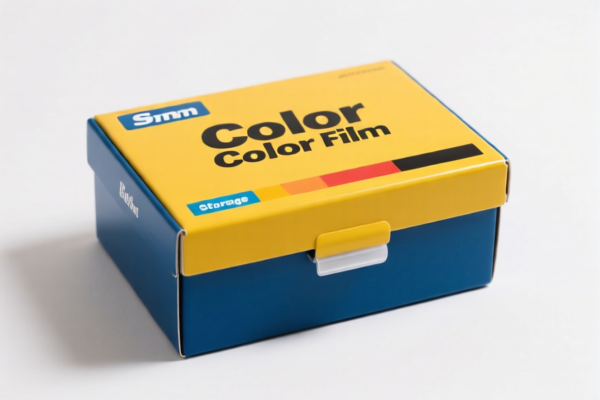
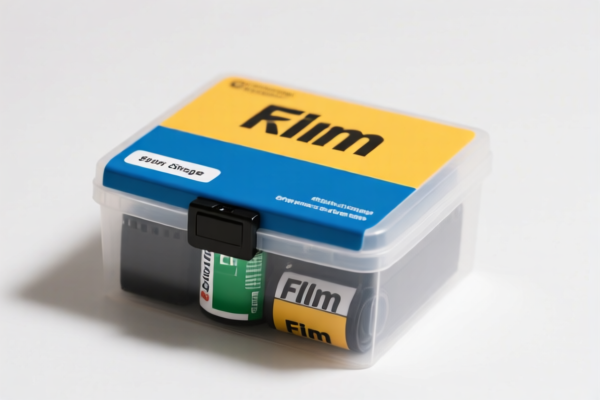

AI Analysis
🎞️ 35mm Color Positive Film Roll (Exposed Negative)
🌐 HS Code Reference & Customs Clearance Guide | 2026 Latest Tariff Analysis | Professional-Level Entry Strategy
📌 I. Product Definition & Classification: Do You Really Understand "Photographic Film"?
Photographic film is a light-sensitive material used in photography. In international trade, it is strictly divided based on its state (unexposed vs. exposed), color type (color vs. black & white), and physical form (roll, sheet, disc).
For the product "35mm Color Positive Film Roll", we must look closely at the description. While the name says "Positive Film" (Slide Film), the dataset provides specific matching logic for variants like "Exposed 35mm Negative Roll" and "Color Film". The classification depends entirely on whether the film is unexposed (raw material) or exposed (used material), and whether it fits the "short roll" or specific width criteria.
⚠️ Key Distinction Point:
- Unexposed Color Film (Raw): If the film is new, unused, and intended for shooting → It is classified under 3701 or 3702 series.
- Exposed Film (Used): If the film has been shot and is "Negative Roll" (as noted in the data) → It falls under 3704.00.00.00.
- Physical Form: "35mm" refers to the width. "Short roll" or continuous roll affects the sub-heading (3702.53 vs 3702.54).
📦 II. HS Code Classification Details (2026 Latest Tariff Authority Comparison)
Based on the provided <DATA>, here are the potential HS Codes and their matching logic:
| HS Code | Product Description | Matching Logic & Key Features | Tax Status |
|---|---|---|---|
3702.53.00.30 |
Color Slide Film (Positive), 35mm width | ✅ Match: Specs (35mm) + Material (Color Film/Photo-sensitive) perfectly match the requirements for width and color slide film characteristics. | 38.7% |
3701.91.00.30 |
Other Color Photographic Plates/Films | ✅ Match: "Color film" maps to "Color Photography"; "35mm" and "Short roll" fit the morphology of flat/rolled films; non-paper/textile material. | 38.7% |
3701.91.00.60 |
Other Color Photographic Plates/Films | ✅ Match: Similar to above. "Short roll" fits the "flat" physical characteristic; inferred as "Other" category for color photo film. | 38.7% |
3702.54.00.30 |
Color Negative Film, 35mm width | ✅ Match: 35mm color photography film + "Short roll" morphology; non-paper/textile light-sensitive material. No material conflict. | 38.7% |
3704.00.00.00 |
Exposed Photographic Film (Neg/Pos) | ✅ Match: Specifically for "Exposed 35mm Negative Roll". Matches "Exposed but undeveloped" criteria. Material/State: Used film. | 35.0% |
🔍 Critical Note:
- The dataset includes both unexposed (3701/3702) and exposed (3704) codes.
- If your product is new/unexposed: Choose from3702.53.00.30,3701.91.00.30,3701.91.00.60, or3702.54.00.30.
- If your product is already exposed/shot: Only3704.00.00.00applies.
- Tax Difference: Unexposed film has a higher total tax (38.7%) compared to exposed film (35.0%) due to different base tariffs.
💰 III. 2026 Latest Tariff Rate Details (Including Surtaxes & Policy Add-ons)
✅ Applicable Country: United States (US)
✅ Origin: China (CN)
✅ Effective Date: November 10, 2025 (and subsequent imports)
🎯 1. Unexposed Color Film (3702.53.00.30, 3701.91.00.30, 3701.91.00.60, 3702.54.00.30)
| Item | Detail |
|---|---|
| Base Tariff | 3.7% (ad valorem) |
| USITC Surtax (Section 301) | +25.0% |
| 122 Clause Tariff (IEEPA) | +10.0% |
| Total Tax Rate | 38.7% |
| Tax Calculation | CIF Value × 38.7% |
| De Minimis Eligibility | ❌ Not Eligible (Denied) |
| Legal Basis Path | USITC:3702.53.00.30 → FOOTNOTE:9903.88.01 → IEEPA:9903.01.24 |
📌 Explanation:
- Base 3.7%: Standard MFN tariff for photographic films.
- 25% Surtax: Applied under USITC Footnote 9903.88.01 for Section 301 duties on Chinese goods.
- 10% IEEPA: Additional tariff under the International Emergency Economic Powers Act for specific Chinese imports.
- Total 38.7%: This is a high-cost item for importers. Budget accordingly.
🎯 2. Exposed Film (3704.00.00.00)
| Item | Detail |
|---|---|
| Base Tariff | 0.0% (ad valorem) |
| USITC Surtax (Section 301) | +25.0% |
| 122 Clause Tariff (IEEPA) | +10.0% |
| Total Tax Rate | 35.0% |
| Tax Calculation | CIF Value × 35.0% |
| De Minimis Eligibility | ❌ Not Eligible (Denied) |
| Legal Basis Path | USITC:3704.00.00.00 → FOOTNOTE:9903.88.01 → IEEPA:9903.01.24 |
📌 Note:
- Even though the base tariff is 0%, the 25% + 10% surtaxes still apply.
- The total rate (35.0%) is slightly lower than unexposed film (38.7%) because the base is lower.
- Important: If you import used/exposed film (e.g., from film photography services), ensure it is clearly declared as "Exposed" to potentially save 3.7% on the base, but be prepared for strict customs scrutiny to prove it is not "new" stock.
🛠️ IV. Customs Clearance Practical Advice (Battle-Tested Pitfall Guide)
✅ 1. Required Documentation Checklist (Missing Items = Delay)
| Document | Mandatory? | Description |
|---|---|---|
| ✅ Product Specification Sheet | ✔️ | Must specify: Width (35mm), Type (Color Positive/Negative), State (Exposed/Unexposed). |
| ✅ Product Photos | ✔️ | Clear images of the film roll, packaging, and label showing "35mm" and "Color". |
| ✅ Commercial Invoice | ✔️ | Must explicitly state: "35mm Color Film Roll" or "Exposed 35mm Negative Roll". Avoid vague terms like "Camera Accessories". |
| ✅ Packing List | ✔️ | Detail quantity, weight, and number of rolls. |
| ✅ Country of Origin Certificate | ✔️ | Essential for verifying China origin (triggering the 35-38.7% taxes). |
| ✅ Declaration of Non-Military Use | ✔️ | Often required for optical/chemical products. |
✅ 2. Declaration Tips (Key Mnemonic)
🔥 “State Matters: Exposed vs. Unexposed!”
- If Unexposed: Use 3702.53.00.30 (most common for new slide film) or 3702.54.00.30 (negative film).
- If Exposed: Use 3704.00.00.00.
- Do NOT mix exposed and unexposed in one line item if they have different HS codes.
| Scenario | Correct Declaration | Wrong Practice |
|---|---|---|
| New, unexposed 35mm Color Slide Film | 3702.53.00.30 |
Declaring as 3704.00.00.00 (Exposed) → High risk of penalty |
| Used/Exposed 35mm Negative Film | 3704.00.00.00 |
Declaring as 3702.54.00.30 (Unexposed) → Overpaying taxes + Risk |
| Film + Camera Body | Split Declaration | Combining them → Camera part may be rejected or taxed incorrectly |
✅ 3. Special Circumstances Handling
| Situation | Handling Advice |
|---|---|
| OEM/White Label Film | Provide manufacturer’s proof that the product is purely photographic film, not a composite device. |
| Mixed Box (Exposure + Unexposed) | Must separate. Declaring a mix leads to classification disputes and potential seizure. |
| "Kodak/Fuji" Branded | Ensure the brand matches the importer’s authorization to avoid IP issues. |
| Small Samples | Even small quantities are subject to the 38.7% tax; no de minimis exemption for this HS code. |
🌍 V. Global Market Comparison (2026 Latest)
| Country/Region | Recommended HS Code | Tariff (China Origin) | Certification | Notes |
|---|---|---|---|---|
| 🇺🇸 USA | 3702.53.00.30 / 3704.00.00.00 |
38.7% (Unexposed) 35.0% (Exposed) |
FDA (if applicable) | Highest tax burden due to 301 + IEEPA tariffs. |
| 🇨🇳 China | 3702.53.00.00 |
3.7% (Import) | CCC (if electronic) | Low base tariff, no surtaxes. |
| 🇪🇺 EU | 3702.53.00 |
0% - 4% | CE (if devices) | No major surtaxes for film. |
| 🇯🇵 Japan | 3702.53.00 |
3.8% | PSE (if devices) | Moderate tariffs, no 301 surtax. |
📌 Conclusion:
- USA is the most expensive market for importing photographic film from China.
- The 3.7% difference between exposed and unexposed is significant for large volumes.
- No de minimis exemption means even small shipments are heavily taxed.
📌 VI. Common Mistakes & Pitfalls (Lessons Learned)
❌ Mistake 1: Declaring "Color Film" without specifying "Exposed" or "Unexposed"
👉 Result: Customs will flag for classification error. Fix: Be explicit in the description.
❌ Mistake 2: Assuming all "35mm Film" has the same tax rate
👉 Result: Confusion between 3702 (Roll Film) and 3704 (Exposed). Fix: Match the physical state (shooting status) to the HS code.
❌ Mistake 3: Ignoring the 122 Clause (IEEPA 10%)
👉 Result: Underestimating landed cost by 10%. Fix: Budget for the full 38.7% (unexposed) or 35.0% (exposed).
✅ Best Practice:
Description Example:
"35mm Color Positive Film Roll, Unexposed, 24 Exposures, 35mm Width, Kodak Ektar 100 Style, Made in China"
OR
"Exposed 35mm Color Negative Film Roll, Used, Unprocessed, 35mm Width"
🎯 VII. Conclusion: Professional Declaration Saves Money!
🎯 Remember the Mnemonic:
🔹 "Unexposed: 38.7% (3.7+25+10)"
🔹 "Exposed: 35.0% (0+25+10)"
🔹 "State Defines State of Tax: Be Precise!"
🔹 "No De Minimis: Every Dollar Counts!"
📌 Pro Tip:
If you are importing small quantities for personal use or sampling, consider if the value justifies the high tax rate. For commercial imports, pre-classification ruling with CBP is highly recommended to avoid post-clearance audits.
📣 Immediate Action:
📞 Contact your customs broker with product specs + photos.
🚀 Verify the state (Exposed vs. Unexposed) to choose the correct HS Code.
💼 Calculate Landed Cost including 38.7% or 35.0% tax to protect your margins!
✨ Professional Clearance Starts with Accurate Classification!
💼 Every Percent of Tax Saved is Pure Profit!
Customer Reviews
About HS Code Classification
The Harmonized System (HS) is an internationally standardized nomenclature developed by the World Customs Organization (WCO) to classify traded products. Over 200 countries use the HS system as the basis for customs tariffs, trade statistics, and import/export regulations.
Each HS code follows a hierarchical structure:
- Chapter (2 digits) — Broad category of goods (e.g., Chapter 84: Machinery and Mechanical Appliances)
- Heading (4 digits) — More specific grouping within the chapter
- Subheading (6 digits) — Internationally standardized breakdown, used by all WCO member countries
- National subdivisions (8-10 digits) — Country-specific extensions for further classification, such as US HTSUS 10-digit codes
Correct HS code classification is essential for smooth customs clearance, accurate duty payment, and compliance with trade regulations. Misclassification can lead to customs delays, overpayment of duties, or penalties.
When importing from CN to US, the applicable tariff rates may include:
- Most-Favored-Nation (MFN) rate — The standard duty rate applied to WTO members
- General rate — Applied to countries without trade agreements
- Trade remedy duties — Additional tariffs such as Section 301 (anti-dumping), Section 232 (national security), or countervailing duties
The information provided on this page is for reference purposes only. For official classification, please consult with your local customs authority or a licensed customs broker.