35mm Color Reversal Film (Artistic Creation)
CN → US| HS Code | Tariff Rate | Origin | Destination | Doc |
|---|---|---|---|---|
| 3703906000 | 37.8% | CN | US | Official Doc |
| 3703206000 | 38.1% | CN | US | Official Doc |
| 3701910030 | 38.7% | CN | US | Official Doc |
| 3702530060 | 38.7% | CN | US | Official Doc |
| 3701910060 | 38.7% | CN | US | Official Doc |
Product Images
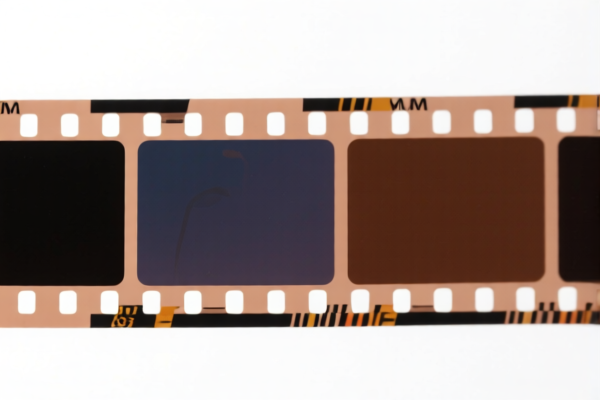
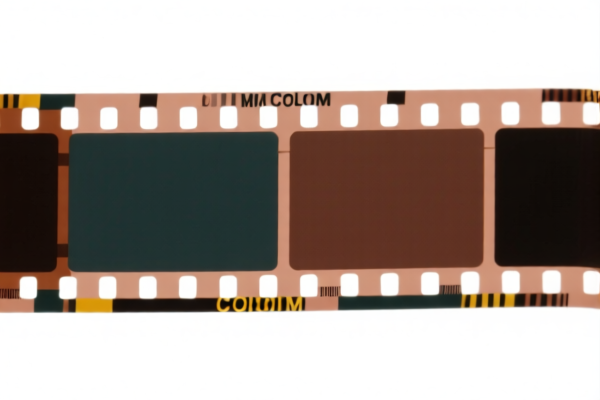

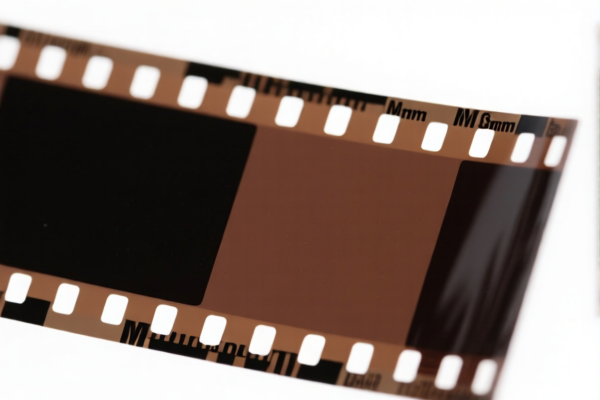
AI Analysis
🎞️ 35mm Color Reversal Film (Artistic Creation)
🌐 HS Code Reference & Customs Clearance Guide | 2026 Latest Tariff Analysis | Professional通关策略
📌 1. Product Definition & Classification: What Exactly Is "Reversal Film"?
Color Reversal Film (also known as Slide Film or E-6 Film) is a specialized photographic medium used to produce positive images (slides) directly, rather than the negative images produced by standard print film. In the context of "Artistic Creation," this implies high-grade, professional-grade film used by photographers for color accuracy, saturation, and dynamic range.
In international trade, these are classified under Chapter 37 (Photographic or Cinematographic Goods). The key distinction lies in the format (35mm) and the color type (Color vs. Black & White).
⚠️ Key Distinction:
- If the film is unexposed and generic, it may fall under general photographic paper/film categories.
- If specified as "35mm Color Film" for photography, it falls under specific subheadings for exposed or unexposed color negative/reversal film.
- Crucial Note: "Reversal" film is often grouped with color photographic materials. While some codes specify "Negative," many general "Color" codes encompass both negative and reversal unless explicitly excluded. However, customs often scrutinize whether the film is "Exposure Ready" (unexposed) or "Processed."
📦 2. HS Code Classification Details (Based on Provided Data)
Note: The following analysis is strictly derived from the provided <DATA> JSON, which maps the input "35mm Color Reversal Film" to five possible HS Codes based on varying interpretations of "exposed/unexposed" status and specific material descriptions.
| HS Code | Product Description & Matching Logic | Tax Rate |
|---|---|---|
| 3703.90.60.00 | Matching Logic: The product is considered a photosensitive material that fits under "Other" categories for unexposed film/paper. Note: This is a broad "catch-all" for other photosensitive goods. |
37.8% |
| 3703.20.60.00 | Matching Logic: The term "Color" matches "Color" in the classification, and "Film" is the form of photosensitive material. This aligns with the purpose of color photographic materials. Most direct match for "Color Film". |
38.1% |
| 3701.91.00.30 | Matching Logic: "Color" matches "Color Photography," and "Film" matches the material/form "Film." Based on material consistency, it is classified as other color photographic products. | 38.7% |
| 3702.53.00.60 | Matching Logic: The attributes "35mm" and "Color" align with the logic of "Color Photographic Roll Film" and "Slide Film." The material meets the requirements for photosensitive roll film. Strong match for 35mm Roll Film. |
38.7% |
| 3701.91.00.60 | Matching Logic: "Color" matches the use "Color Photography," and "35mm Film" is the photographic film form. It falls under "Other Color Photography Products" in this code. | 38.7% |
🔍 Critical Analysis:
- 3703 and 3702 are the most specific to "Film" (Roll/Strip). 3703.90.60.00 is the cheapest (37.8%) but is a "Other" category, which may face stricter scrutiny for "miscellaneous" goods.
- 3702.53.00.60 explicitly mentions "35mm" and "Color," making it a very strong logical fit for "35mm Color Reversal Film."
- 3701 codes refer to "Other" photographic goods, which might include flat sheets or less common forms, but the data maps 35mm film to these codes as well, likely due to broad classification rules in specific jurisdictions.
💰 3. 2026 Latest Tariff Rate Breakdown (Including Surcharges)
✅ Applicable Country: United States (US)
✅ Origin: China (CN)
✅ Effective Date: From November 10, 2025 (including subsequent imports)
🎯 1. HS Code 3703.90.60.00 – Other Photosensitive Materials
| Item | Content |
|---|---|
| Base Tariff | 2.8% (ad valorem) |
| Section 301 Surcharge | +25.0% (USITC Footnote related to China-origin goods) |
| IEEPA Surcharge (Section 122) | +10.0% (Specific surcharge for Chinese goods) |
| Total Tariff Rate | 37.8% |
| Tax Calculation | CIF Value × 37.8% |
| De Minimis Exemption | ❌ Not Eligible (High tariff rates disqualify from de minimis relief) |
| Legal Basis Path | Base: 3703.90.60.00 → Section 301: 25% → IEEPA: 10% |
📌 Explanation:
- This code offers the lowest total tax (37.8%) among the options.
- However, using a "Other" category code carries a higher risk of customs inspection if the product description doesn't perfectly match the "Other" definition.
🎯 2. HS Code 3703.20.60.00 – Color Photographic Materials
| Item | Content |
|---|---|
| Base Tariff | 3.1% (ad valorem) |
| Section 301 Surcharge | +25.0% |
| IEEPA Surcharge (Section 122) | +10.0% |
| Total Tariff Rate | 38.1% |
| Tax Calculation | CIF Value × 38.1% |
| De Minimis Exemption | ❌ Not Eligible |
| Legal Basis Path | Base: 3703.20.60.00 → Section 301: 25% → IEEPA: 10% |
📌 Explanation:
- 38.1% is very close to the lowest rate.
- This code is more descriptive for "Color" film, reducing the risk of misclassification errors compared to "Other" codes.
🎯 3. HS Codes 3701.91.00.30, 3702.53.00.60, 3701.91.00.60 – Specific Film Types
| Item | Content |
|---|---|
| Base Tariff | 3.7% (ad valorem) |
| Section 301 Surcharge | +25.0% |
| IEEPA Surcharge (Section 122) | +10.0% |
| Total Tariff Rate | 38.7% |
| Tax Calculation | CIF Value × 38.7% |
| De Minimis Exemption | ❌ Not Eligible |
| Legal Basis Path | Base: [Specific Code] → Section 301: 25% → IEEPA: 10% |
📌 Explanation:
- These codes have the highest base rate (3.7%), leading to a 38.7% total.
- 3702.53.00.60 is likely the most accurate for "35mm Color Roll Film," but at a higher cost.
- If the film is considered "Slide/Reversal" specifically, some customs interpretations might push it here, but the data shows it maps to 38.7%.
🛠️ 4. Customs Clearance Practical Advice (Pitfall Avoidance Guide)
✅ 1. Document Checklist (Essential)
| Document | Required | Description |
|---|---|---|
| ✅ Product Specification Sheet | ✔️ | Must clearly state "Color Reversal Film," "35mm," "Unexposed," and ISO speed (e.g., ISO 100). |
| ✅ Composition/Material Details | ✔️ | Describe the photosensitive emulsion layer, base material (triacetate/polyester), and dimensions (35mm width). |
| ✅ Product Photos | ✔️ | Include images of the cartridge, label, and the film strip (if unexposed roll). |
| ✅ Commercial Invoice | ✔️ | Must clearly describe the goods as "35mm Color Reversal Film for Photographic Use." Avoid vague terms like "Art Supplies." |
| ✅ Packing List | ✔️ | Detail the number of rolls, weight, and dimensions. |
| ✅ Origin Certificate | ✔️ | If applicable, for any potential preferential treatment (though unlikely for US/China in this context). |
✅ 2. Declaration Tips (Key Strategies)
🔥 "Be Precise, Declare Color, Specify 35mm, Avoid Ambiguity!"
| Scenario | Correct Declaration | Wrong Practice |
|---|---|---|
| Standard 35mm Color Reversal Film | 3702.53.00.60 or 3703.20.60.00 |
Declaring as "Printing Materials" → Higher scrutiny |
| Film for Artistic/Photographic Use | Specify "Photographic Reversal Film" | Declaring as "Paper" or "Other Chemicals" → Misclassification |
| Bulk Import | Declare per roll/carton | Vague "Photographic Goods" → Customs may seize for inspection |
| Unexposed Film | Clearly state "UNEXPOSED" | Not specifying → May be confused with "Processed Film" (different duty) |
✅ 3. Special Cases Handling
| Scenario | Handling Advice |
|---|---|
| Reversal vs. Negative | If the customs officer questions "Reversal," explain that it is a type of "Color Photographic Material" and fits under 3703 or 3702 as "Other" or "Color Film." |
| Artistic Creation Packaging | Ensure the packaging does not imply it is "Printed Material" (like posters). It must be clearly "Raw Material" for photography. |
| Multiple Formats | If importing both 35mm and Medium Format, declare separately to avoid confusion. |
🌍 5. Global Market Comparison (2026 Latest)
| Country/Region | Recommended HS Code | Tariff | Certification | Remarks |
|---|---|---|---|---|
| 🇺🇸 United States | 3703.20.60.00 or 3702.53.00.60 |
37.8% - 38.7% | No special certs | High tariff due to Section 301 & IEEPA. |
| 🇨🇳 China | 3703.20.60.00 |
~3-5% | None | Low tariff for domestic use. |
| 🇪🇺 European Union | 3702.53.00 |
~0-4% | CE (if packaging) | No major surcharges on film. |
| 🇬🇧 United Kingdom | 3702.53.00 |
~0-4% | UKCA | Post-Brexit rules apply, but film remains low tariff. |
📌 Conclusion:
- The US is the most challenging market due to the 25% Section 301 + 10% IEEPA surcharges on Chinese-origin goods.
- Total tariffs range from 37.8% to 38.7%, which significantly impacts profit margins for artistic supply imports.
- Cost Optimization Tip: If possible, source film from non-China origins (e.g., Japan, Germany) to avoid the 35%+ surcharges, though "Color Reversal Film" production is highly concentrated in Japan (Fujifilm, Kodak).
📌 6. Common Errors & Pitfalls (Lessons Learned)
❌ Error 1: Declaring "Color Film" as "Photographic Paper"
👉 Consequence: Wrong HS Code, potential penalty, and delayed clearance. Paper and Film have different physical properties and duties.
❌ Error 2: Omitting "Reversal" or "Slide" in Description
👉 Consequence: Customs may treat it as standard "Negative Film" or "General Film," leading to queries or reclassification.
❌ Error 3: Not Specifying "Unexposed"
👉 Consequence: "Exposed Film" is a used good and may fall under different regulations or be prohibited. Always state "Unexposed."
❌ Error 4: Using Vague Terms like "Art Supplies"
👉 Consequence: High risk of inspection and reclassification to a higher duty rate. Be specific: "35mm Color Reversal Film, Unexposed, ISO 100."
✅ Correct Practice:
"35mm Color Reversal Film, Unexposed, 36 Exposures per Roll, ISO 100, for Artistic Photographic Creation, HS Code 3702.53.00.60"
🎯 7. Conclusion: Professional Declaration, Cost Control, and Efficiency!
🎯 Remember the Key Points:
🔹 "Specify 35mm, Color, Reversal, and Unexposed!"
🔹 "Tariff is ~38% for US Origin China – Budget Accordingly!"
🔹 "Avoid 'Art Supplies' – Use Precise Photographic Terminology!"
📌 Pro Tip:
If the volume is significant, consider applying for a Pre-Ruling (Advance Ruling) from US Customs and Border Protection (CBP) to confirm the HS Code (e.g.,
3702.53.00.60vs.3703.90.60.00) before shipment. This can prevent costly delays and ensure you are using the most accurate (and potentially lowest) duty rate.
📣 Immediate Action:
📞 Consult with a Customs Broker + Provide Product Specs + Apply for Pre-Ruling
🚀 Ensure Smooth Clearance, Avoid Surprises, and Protect Your Margins!
✨ Professional Customs Clearance Starts with Accurate Classification!
💼 Every Dollar Saved in Duty is Pure Profit!
Customer Reviews
About HS Code Classification
The Harmonized System (HS) is an internationally standardized nomenclature developed by the World Customs Organization (WCO) to classify traded products. Over 200 countries use the HS system as the basis for customs tariffs, trade statistics, and import/export regulations.
Each HS code follows a hierarchical structure:
- Chapter (2 digits) — Broad category of goods (e.g., Chapter 84: Machinery and Mechanical Appliances)
- Heading (4 digits) — More specific grouping within the chapter
- Subheading (6 digits) — Internationally standardized breakdown, used by all WCO member countries
- National subdivisions (8-10 digits) — Country-specific extensions for further classification, such as US HTSUS 10-digit codes
Correct HS code classification is essential for smooth customs clearance, accurate duty payment, and compliance with trade regulations. Misclassification can lead to customs delays, overpayment of duties, or penalties.
When importing from CN to US, the applicable tariff rates may include:
- Most-Favored-Nation (MFN) rate — The standard duty rate applied to WTO members
- General rate — Applied to countries without trade agreements
- Trade remedy duties — Additional tariffs such as Section 301 (anti-dumping), Section 232 (national security), or countervailing duties
The information provided on this page is for reference purposes only. For official classification, please consult with your local customs authority or a licensed customs broker.