35mm Color Reversal Film (High Sensitivity)
CN → US| HS Code | Tariff Rate | Origin | Destination | Doc |
|---|---|---|---|---|
| 3703906000 | 37.8% | CN | US | Official Doc |
| 3703206000 | 38.1% | CN | US | Official Doc |
| 3701910030 | 38.7% | CN | US | Official Doc |
| 3702530060 | 38.7% | CN | US | Official Doc |
| 3701910060 | 38.7% | CN | US | Official Doc |
Product Images
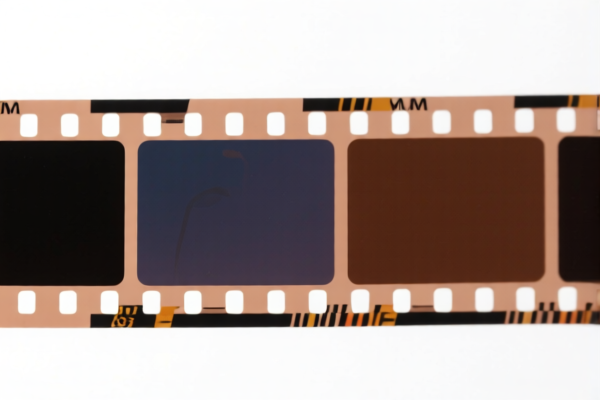
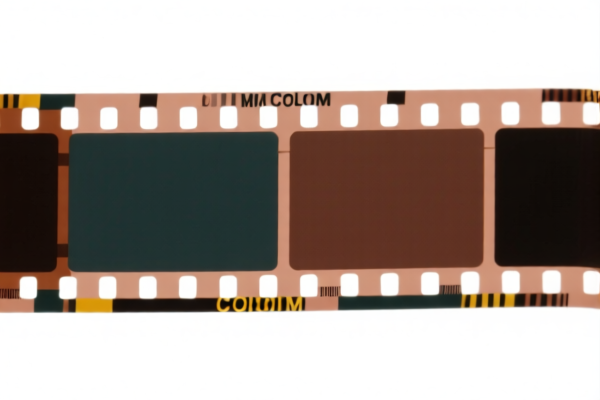

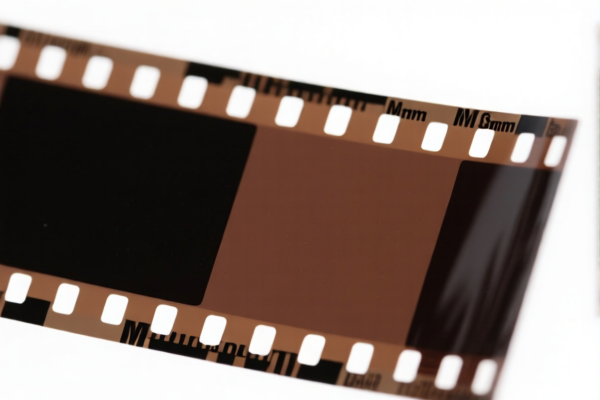
AI Analysis
🎞️ 35mm Color Reversal Film (High Sensitivity)
🌐 HS Code Reference & Customs Clearance Guide | 2026 Latest Tariff Analysis | Professional Clearance Strategy
📌 I. Product Definition & Classification: Do You Really Understand "Reversal Film"?
Color Reversal Film (Slide Film) is a specialized type of photographic film that produces positive images (slides) directly, rather than negatives. It is widely used in professional photography, slide projection, and high-end archival photography due to its superior color saturation and contrast compared to negative film.
In international trade, it is categorized under Chapter 37: Photographic or Cinematographic Goods. The key distinction lies in whether the film is: 1. For Color Photography (requiring specific color processes) → Often classified under 3703 or 3701. 2. General Unexposed Sensitized Material → Classified under 3703 as "Other."
⚠️ Key Distinction Point:
- If the film is specifically for Color Photography (creating color slides/negatives) → Look at 3703.20 or 3701.91.
- If it is a General Color Reversal Film not strictly defined as "for color photography" in the specific sub-heading, it may fall under 3703.90 ("Other").
- 35mm refers to the width/format, which is a common dimension for both negative and reversal films.
📦 II. HS Code Classification Details (2026 Latest Tariff Authority Comparison)
Based on the provided data, there are four potential HS Codes. Here is the breakdown of why each was matched:
| HS Code | Product Description | Matching Logic & Summary | Total Tax Rate |
|---|---|---|---|
| 3703.90.60.00 | Other sensitized photographic plate, film, paper... (Color Reversal) | Match Basis: The product is sensitized material ("Color Reversal Film" corresponds to sensitized materials). It falls under the "Other" category for unexposed film/paper. No conflict in material or form. | 37.8% |
| 3703.20.60.00 | For Color Photography, in rolls | Match Basis: "Color" in the name corresponds to "Color Photography"; "Film" matches the format. It fits the usage of sensitized materials for color photography. Material and usage are consistent. | 38.1% |
| 3701.91.00.30 | Other plates, films... (Color Photography, other than motion picture) | Match Basis: "Color" matches "Color Photography"; "Film" matches the format. Although not explicitly a "disk" format, it falls under the "Other" category based on material consistency without conflict. | 38.7% |
| 3702.53.00.60 | For Color Photography, in rolls (Slide Film) | Match Basis: "35mm" and "Color" align with "Color Photography Roll" and "Slide Film" logic. Based on common sense, the material meets sensitized roll requirements. | 38.7% |
| 3701.91.00.60 | Other plates, films... (Color Photography, other than motion picture) | Match Basis: "Color" matches "Color Photography"; "35mm Film" is a photography film format. It is considered an "Other Color Photography Product" under this code. | 38.7% |
🔍 Critical Note:
- The tax rates vary slightly (37.8% to 38.7%) due to differences in Basic Tariff components (2.8% vs 3.1% vs 3.7%).
- 3703.90.60.00 has the lowest total tax (37.8%), likely because "Color Reversal Film" is broadly categorized as "Other" sensitized material rather than strictly "For Color Photography" in some interpretations, leading to a lower basic tariff (2.8% vs 3.7%).
- However, 3703.20.60.00 (38.1%) and 3702.53.00.60 (38.7%) are more specific to "Color Photography" and "Slide Film."
- Customs officers may prefer more specific codes (3703.20 or 3702.53) if the product is explicitly marketed as "Slide Film" or "Color Photography Film."
💰 III. 2026 Latest Tariff Rate Details (Including Surcharges & Policy Add-ons)
✅ Applicable Country: United States (US)
✅ Country of Origin: China (CN)
✅ Effective Date: From November 10, 2025 onwards (including subsequent imports)
🎯 1. 3703.90.60.00 —— Other Sensitized Photographic Film (Color Reversal)
| Item | Content |
|---|---|
| Basic Tariff | 2.8% |
| Section 301 Surcharge | +25.0% |
| Section 122 Tariff | +10.0% |
| Total Tax Rate | 37.8% |
| Tax Calculation | CIF Value × 37.8% |
| De Minimis Exemption Eligible | ❌ No (deny_de_minimis) |
| Legal Basis Path | Section 301: 9903.01.25 → Section 122: 9903.01.24 → USITC: 3703.90.60.00 |
📌 Explanation:
- The 25% Section 301 Surcharge is applied to all Chinese-origin goods in this HS code range under US Trade Law Section 301.
- The 10% Section 122 Tariff is a specific surcharge under the International Emergency Economic Powers Act (IEEPA) for Chinese products.
- Total: 37.8%. This is a high tariff rate. Cost calculation must include this burden.
🎯 2. 3703.20.60.00 —— For Color Photography, in Rolls
| Item | Content |
|---|---|
| Basic Tariff | 3.1% |
| Section 301 Surcharge | +25.0% |
| Section 122 Tariff | +10.0% |
| Total Tax Rate | 38.1% |
| Tax Calculation | CIF Value × 38.1% |
| De Minimis Exemption Eligible | ❌ No |
| Legal Basis Path | Section 301: 9903.01.25 → Section 122: 9903.01.24 → USITC: 3703.20.60.00 |
🎯 3. 3701.91.00.30 / 3701.91.00.60 / 3702.53.00.60 —— Other Specific Subcategories
| Item | Content |
|---|---|
| Basic Tariff | 3.7% |
| Section 301 Surcharge | +25.0% |
| Section 122 Tariff | +10.0% |
| Total Tax Rate | 38.7% |
| Tax Calculation | CIF Value × 38.7% |
| De Minimis Exemption Eligible | ❌ No |
| Legal Basis Path | Section 301: 9903.01.25 → Section 122: 9903.01.24 → USITC: [Relevant Code] |
📌 Note:
- These codes have a higher Basic Tariff (3.7%) compared to3703.90.60.00 (2.8%).
- The Section 301 (25%) and Section 122 (10%) surcharges are constant across all these codes.
- The difference in total tax is entirely due to the basic tariff rate.
🛠️ IV. Customs Clearance Practical Advice (实战避坑指南)
✅ 1. Required Documentation Checklist (Must-Provide)
| Document | Must Provide | Description |
|---|---|---|
| ✅ Product Specification Sheet | ✔️ | Include film type (Reversal/Slide), sensitivity (ISO), format (35mm), color vs. B&W. |
| ✅ Product Photos (Label & Packaging) | ✔️ | Clear image of the box showing "Color Reversal Film," "High Sensitivity," and ISO rating. |
| ✅ Commercial Invoice | ✔️ | Must clearly state "35mm Color Reversal Film" and HS Code. |
| ✅ Packing List | ✔️ | Detail number of rolls, weight, and dimensions. |
| ✅ Certificate of Origin (CO) | ✔️ | If applicable for non-China origins, to potentially claim lower basic tariffs (though surcharges may still apply). |
| ✅ Pre-Import Notification | ✔️ | Required for Section 122 goods. Ensure proper documentation is submitted to CBP. |
✅ 2. Declaration Tips (Key Mantras)
🔥 “Specify ‘Reversal’ Not Just ‘Film’, Clarify ‘Color’, Avoid ‘Negative’ Mistakes!”
| Scenario | Correct Declaration | Wrong Practice |
|---|---|---|
| Explicitly Slide/Reversal Film | 3703.90.60.00 (if "Other") or 3702.53.00.60 (if "Slide Film") |
Misdeclaring as "Negatives" (3702) or "Cinematographic" (3701) → Risk of reclassification & penalties. |
| High Sensitivity Film | Clearly state ISO rating (e.g., ISO 100, 400, 800) | Vague description "Photographic Film" → Customs may choose the highest duty code. |
| 35mm Format | Specify "35mm Roll" | Omitting format → May lead to generic classification with higher basic tariff. |
| Origin: China | Declare "Made in China" | Hiding origin → Severe penalties, seizure, and higher de minimis denial. |
✅ 3. Special Handling Scenarios
| Scenario | Handling Advice |
|---|---|
| Mixed Shipments (Negative + Reversal) | Declare separately. Do not bundle different HS codes. Reversal film has a slightly lower basic tariff (2.8%) than some photography film codes (3.7%). |
| High Sensitivity (ISO 400+) | No special tariff change, but ensure the spec sheet reflects this. High-speed film is still subject to the same Section 301/122 surcharges. |
| Used or Exposed Film | Cannot be imported as "Unexposed Sensitized Material." Must be classified differently (e.g., as waste or recycled material) or prohibited. Ensure it is UNEXPOSED. |
| Pre-Import Notification for Section 122 | Critical. Submit the Section 122 pre-import notification to CBP at least 30 days before shipment (or as required) to avoid delays. |
🌍 V. Global Market Comparison (2026 Latest)
| Country/Region | Recommended HS Code | Basic Tariff | Surcharges (China) | Total Tariff | Notes |
|---|---|---|---|---|---|
| 🇺🇸 USA | 3703.90.60.00 |
2.8% | +25% (301) +10% (122) | 37.8% | Highest duty burden. Section 122 notification required. |
| 🇨🇳 China | 3703.90.00.00 |
~3-4% | None | ~4% | No surcharges. Easy clearance. |
| 🇪🇺 EU | 3703.90.00 |
~4% | None (if origin China) | ~4% | No Section 301/122. Standard MFN rate. |
| 🇬🇧 UK | 3703.90.00 |
~4% | None | ~4% | Post-Brexit tariffs align with EU MFN. |
| 🇯🇵 Japan | 3703.90.00 |
~3% | None | ~3% | Low duty. No surcharges. |
📌 Conclusion:
- USA is the most expensive market for Chinese-origin photographic film due to Section 301 (25%) and Section 122 (10%) surcharges.
- Total tax of 37.8%-38.7% significantly impacts profit margins.
- Consider supply chain diversification (e.g., sourcing from Vietnam, Japan, or Europe) to avoid these surcharges if shipping to the US.
📌 VI. Common Mistakes & Pitfalls (Blood & Tears Lessons)
❌ Mistake 1: Declaring "Reversal Film" as "Cinematographic Film" (3701)
👉 Consequence: Incorrect classification. CBP may reclassify to 3703 with higher duties + penalties.
❌ Mistake 2: Failing to submit Section 122 Pre-Import Notification
👉 Consequence: Shipment delay, storage fees, and potential refusal of entry.
❌ Mistake 3: Not specifying "Unexposed"
👉 Consequence: If film is exposed, it cannot be imported as sensitized material. It may be deemed waste or prohibited.
❌ Mistake 4: Ignoring "High Sensitivity" specs
👉 Consequence: Vague descriptions lead to customs audits and potential misclassification.
✅ Correct Declaration Example:
"35mm Color Reversal Film, Unexposed, High Sensitivity (ISO 400), for Photographic Use, Made in China. HS Code: 3703.90.60.00. Section 122 Notification Submitted."
🎯 VII. Conclusion: Precise Classification, Cost Control, Smooth Clearance!
🎯 Remember the Mantra:
🔹 “Specify ‘Reversal’, Not Just ‘Film’”
🔹 “Section 122 Notification is a MUST for US Imports”
🔹 “Basic Tariff 2.8% vs 3.7% Matters – Choose Wisely”
🔹 “Total Tax ~38% is High – Plan Your Supply Chain!”
📌 Pro Tip:
If your film is originated from Vietnam, Japan, or Europe, you can avoid Section 301 and Section 122 surcharges, reducing the total tax to just the Basic Tariff (2.8%-3.7%).
Recommend applying for an Advance Ruling from CBP for large shipments to ensure classification accuracy and avoid clearance delays.
📣 Immediate Action:
📞 Consult a professional customs broker + Provide product specs + Submit Section 122 Pre-Import Notification
🚀 Let your film clear customs smoothly, control costs, and maximize profits!
✨ Professional Clearance Starts with Precise Classification!
💼 Every cent of cost deserves precise calculation!
Customer Reviews
About HS Code Classification
The Harmonized System (HS) is an internationally standardized nomenclature developed by the World Customs Organization (WCO) to classify traded products. Over 200 countries use the HS system as the basis for customs tariffs, trade statistics, and import/export regulations.
Each HS code follows a hierarchical structure:
- Chapter (2 digits) — Broad category of goods (e.g., Chapter 84: Machinery and Mechanical Appliances)
- Heading (4 digits) — More specific grouping within the chapter
- Subheading (6 digits) — Internationally standardized breakdown, used by all WCO member countries
- National subdivisions (8-10 digits) — Country-specific extensions for further classification, such as US HTSUS 10-digit codes
Correct HS code classification is essential for smooth customs clearance, accurate duty payment, and compliance with trade regulations. Misclassification can lead to customs delays, overpayment of duties, or penalties.
When importing from CN to US, the applicable tariff rates may include:
- Most-Favored-Nation (MFN) rate — The standard duty rate applied to WTO members
- General rate — Applied to countries without trade agreements
- Trade remedy duties — Additional tariffs such as Section 301 (anti-dumping), Section 232 (national security), or countervailing duties
The information provided on this page is for reference purposes only. For official classification, please consult with your local customs authority or a licensed customs broker.