35mm Color Roll Film
CN → US| HS Code | Tariff Rate | Origin | Destination | Doc |
|---|---|---|---|---|
| 3702530030 | 38.7% | CN | US | Official Doc |
| 3701910030 | 38.7% | CN | US | Official Doc |
| 3701910060 | 38.7% | CN | US | Official Doc |
| 3702540030 | 38.7% | CN | US | Official Doc |
| 3707100090 | 38.0% | CN | US | Official Doc |
Product Images
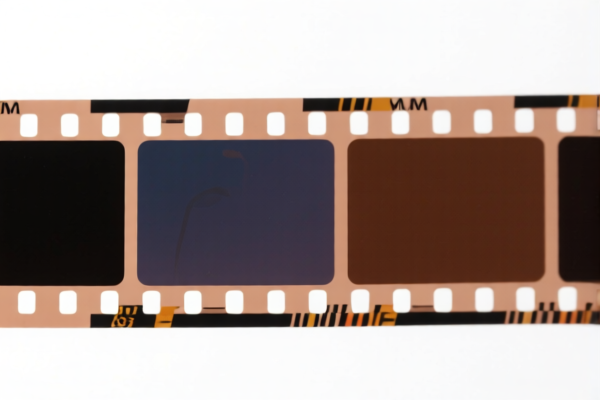
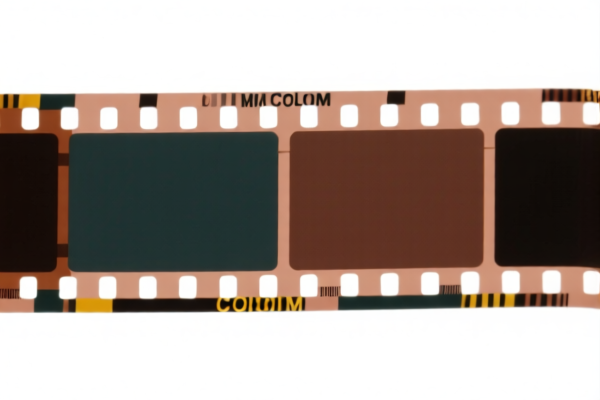
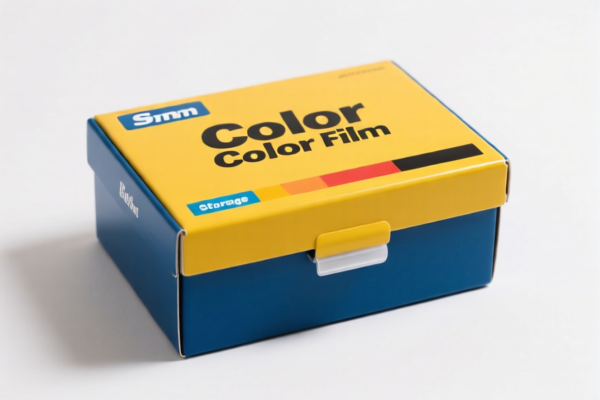
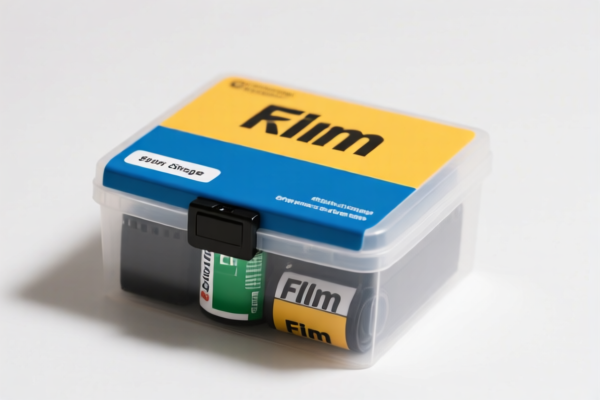
AI Analysis
🎞️ 35mm Color Roll Film (Photographic Film)
🌐 HS Code Reference & Customs Clearance Guide | 2026 Latest Tariff Analysis | Professional Strategy
35mm Color Roll Film is the lifeblood of analog photography. In international trade, it is classified under Chapter 37 (Photographic or Cinematographic Goods). However, precise classification depends on whether it is treated as a "slide" film or a general "photographic film," and critically, it is subject to significant punitive tariffs if originating from China and imported into the United States.
⚠️ Key Distinction:
- "Color Film" (35mm Roll): Generally falls under 3701.91 (Flat-rolled, for color photography) or 3702.53/54 (Other film).
- "Slide Film" (Reversal): Specifically 3702.53 (for slides) or 3701.91 if generic.
- Chemical Preparations: If marketed as a "macro" chemical aid rather than the film itself, it might fall under 3707.10.
📦 HS Code Classification Details (Based on Provided Data)
Based on the provided data, the following HS Codes are potential matches. The choice depends on the specific physical form (roll vs. slide) and exact product description.
| HS Code | Product Description / Match Logic | Physical/Material Match |
|---|---|---|
| 3702.53.00.30 | Color Slide Film (35mm) Match Logic: Specs (35mm) and Material (Color Film) perfectly match the width and color reversal film characteristics. |
✅ 35mm Width ✅ Color Reversal Characteristic |
| 3701.91.00.30 | Other Flat-Rolled Color Photographic Film Match Logic: "Color Film" = Color Photography; "35mm Short Roll" = Flat/Short Roll Form; Material = Light-sensitive, non-paper/textile. |
✅ "Color Film" Keyword ✅ "Short Roll" Form ✅ Light-sensitive Material |
| 3701.91.00.60 | Other Flat-Rolled Color Photographic Film (Short Roll) Match Logic: "35mm Color Film" fits color photography needs; "Short Roll" fits "Flat" physical trait; Material = Other light-sensitive film. |
✅ "35mm" & "Color" ✅ "Short Roll" = Flat ✅ Non-paper/Textile |
| 3702.54.00.30 | Other Color Photographic Film (35mm) Match Logic: 35mm Spec + Color Category; "Short Roll" fits film characteristics; Material = Non-paper, non-textile light-sensitive film. |
✅ 35mm Spec ✅ Color Category ✅ Light-sensitive Material |
| 3707.10.00.90 | Preparations for Photographic Uses Match Logic: If product is a "Macro" chemical/agent for color film, not the film itself. "Color" + "Film" + "Macro" (photographic use) = Chemical preparations. |
⚠️ Only if Chemical/Agent ❌ Not the physical film strip |
🔍 Important Note:
- Codes 3701.91 and 3702.53/54 are the primary candidates for the physical film.
- Code 3707.10 is a fallback only if the product is a chemical preparation (e.g., developer, stop bath, or a specialized "macro" lens cleaning agent marketed with "color film" in the name), not the film strip itself. Most "35mm Color Roll Film" products are NOT 3707.10.
💰 2026 Latest Tariff Rate Breakdown (Including Surcharges & Policy Surcharges)
✅ Applicable Country: United States (US)
✅ Origin: China (CN) (Inferred from 122 Clause & 301 Tariff context)
✅ Effective Time: Current (Post-2025/2026 Policy)
🎯 1. Standard Photographic Film (HS Codes: 3701.91.00.30 / 3701.91.00.60 / 3702.53.00.30 / 3702.54.00.30)
| Item | Content |
|---|---|
| Base Tariff | 3.7% (Ad Valorem) |
| Section 301 Surcharge | +25.0% (USTR Footnote 9903.88.01) |
| 122 Clause Surcharge | +10.0% (Under IEEPA Authority for Chinese Products) |
| Total Tariff Rate | 38.7% |
| Tax Calculation | CIF Value × 38.7% |
| De Minimis Eligibility | ❌ NOT Eligible (Denied for Section 301/122 goods) |
| Legal Basis Path | IEEPA:122 Clause → USITC:3701/3702 → 301 Tariff: 25% → Total: 38.7% |
📌 Explanation:
- Base 3.7%: Standard MFN rate for photographic films.
- 25%: Section 301 tariffs on Chinese goods.
- 10%: "122 Clause" additional tariff (often associated with IEEPA actions against specific Chinese sectors).
- Total 38.7%: This is a high-cost item for importers. Do not use Section 321 (De Minimis) to avoid these tariffs; customs will seize or backcharge.
🎯 2. Photographic Chemical Preparations (HS Code: 3707.10.00.90)
| Item | Content |
|---|---|
| Base Tariff | 3.0% (Ad Valorem) |
| Section 301 Surcharge | +25.0% |
| 122 Clause Surcharge | +10.0% |
| Total Tariff Rate | 38.0% |
| Tax Calculation | CIF Value × 38.0% |
| De Minimis Eligibility | ❌ NOT Eligible |
| Legal Basis Path | IEEPA:122 Clause → USITC:3707.10 → 301 Tariff: 25% → Total: 38.0% |
📌 Explanation:
- Even if misclassified as a chemical preparation (3707.10), the 38.0% tariff is still prohibitive.
- Risk: Misdeclaring film as "chemical preparation" is smuggling/fraud if the product is physically film. This can lead to penalties, seizures, and criminal charges.
🛠️ Customs Clearance Practical Advice (Battle-Tested Pitfall Guide)
✅ 1. Documentation Checklist (Non-Negotiable)
| Document | Must Provide | Description |
|---|---|---|
| ✅ Product Specification Sheet | ✔️ | Must state: 35mm, Color, Roll/Film, ISO Speed (e.g., 400/24), Format (Short Roll). |
| ✅ Product Photos | ✔️ | Clear image of the film cartridge, label, and emulsion side. |
| ✅ Commercial Invoice | ✔️ | Description must match HS Code logic. GOOD: "35mm Color Negative Film, 135 Format, 400 ISO, 36 Exposures, Short Roll" BAD: "Camera Accessory" or "Photo Chemical". |
| ✅ Certificate of Origin (CO) | ✔️ | To prove origin. If not China, tariffs may differ. |
| ✅ Material Composition Statement | ✔️ | Confirm: Cellulose Acetate/Triacetate Polyester base, Light-sensitive Emulsion. Explicitly state: NOT Paper, NOT Textile, NOT Plastic Electronics. |
✅ 2. Declaration Tactics (Critical Mantras)
🔥 “Be Precise: 35mm Color Roll, Not Chemical, Not Slide (unless it is)”
| Scenario | Correct Declaration | Wrong Practice | Consequence |
|---|---|---|---|
| Standard Color Negative Film | HS: 3701.91.00.30 or 3701.91.00.60 |
Misclassifying as 3707.10 (Chemical) |
Fraud Risk, 38.7% vs 38.0% (minor diff, but legal risk is huge) |
| Color Reversal (Slide) Film | HS: 3702.53.00.30 |
Misclassifying as general film | May trigger additional scrutiny, but rate is same (38.7%) |
| Film + Camera Kit | Split Declaration | Declaring whole kit as one item | Camera (8525) and Film (3701) have different tariffs. Split them! |
| "Macro" Film Product | Clarify Product | If it's film, use 3701/3702. If it's a chemical, use 3707. | Do not use "Macro" to mask film as chemical. |
✅ 3. Special Case Handling
| Situation | Handling Advice |
|---|---|
| "Macro" Label on Film | If the product is film with "Macro" branding, use 3701/3702. The word "Macro" refers to the lens/photo style, not the material. Do not use 3707.10. |
| Short Roll vs. Long Roll | "Short Roll" typically fits 3701.91 (Flat/Short Roll). "Long Roll" might fit 3702. Ensure the physical form matches the code. |
| Origin Not China | If origin is Japan (Fujifilm/Kodak Japan), check for USMCA or Japan-US Trade Agreement benefits. Tariffs may be 0% or significantly lower. |
| De Minimis (Section 321) | DO NOT USE. 38.7% tariffs cannot be avoided via de minimis for Chinese-origin goods. Customs will assess duties retroactively. |
🌍 Global Market Comparison (2026 Latest)
| Country/Region | Recommended HS Code | Tariff (China Origin) | Certification | Remarks |
|---|---|---|---|---|
| 🇺🇸 USA | 3701.91.00.30 / 3702.53.00.30 |
38.7% | None typically | High tariff due to 301 + 122 Clause. |
| 🇨🇳 China | 3701.91.00 |
~6% | CCC (if electronic, but film usually not) | Domestic consumption. |
| 🇪🇺 EU | 3701.91 / 3702.53 |
0% (Most WFOE) | CE (Not for film) | Free Trade in most cases. |
| 🇬🇧 UK | 3701.91 / 3702.53 |
0% (Post-Brexit TARIFF) | UKCA (Not for film) | Post-Brexit trade deal favorable. |
| 🇯🇵 Japan | 3701.91 / 3702.53 |
0% (JTEPA) | PSE (Not for film) | Zero Duty under Japan-US Trade Agreement. |
📌 Conclusion:
- USA is the only major market with punitive tariffs for Chinese-origin photographic film.
- EU, UK, and Japan offer 0% duty for Chinese film.
- Strategy: If importing to the US, consider shifting sourcing to Japan (Fujifilm) or South Korea to avoid 38.7% tariff, or use a Foreign Trade Zone (FTZ).
📌 Common Errors & Pitfall Guide (Blood Lessons)
❌ Error 1: Declaring "35mm Color Film" as "Camera Accessories" (HS 9006/9007)
👉 Consequence: Customs flags it for misclassification. If corrected, 38.7% tariff + penalties apply.
❌ Error 2: Using "Macro Film" to justify HS 3707.10 (Chemicals)
👉 Consequence: If audited and product is physical film, fraud charges and seizure. Tariff difference (38.0% vs 38.7%) is negligible; legal risk is not.
❌ Error 3: Assuming De Minimis (Section 321) works for film
👉 Consequence: Seizure. US Customs has explicitly excluded film from de minimis if subject to 301/122 tariffs.
❌ Error 4: Confusing "Slide Film" (3702.53) with "Negative Film" (3701.91)
👉 Consequence: Rate is the same (38.7%), but misclassification can delay clearance if customs asks for "Reversal" proof.
✅ Correct Practice:
"35mm Color Negative Film, 135 Format, 400 ISO, 36 Exposures, Polyester Base, Short Roll" → HS 3701.91.00.30
🎯 Conclusion: Professional Declaration, Save Time & Money!
🎯 Remember Mantras:
🔹 "Film is Film, Not Chemical, Not Accessory!"
🔹 "35mm Color = 38.7% Tax for China-US!"
🔹 "De Minimis is Dead for Film!"
📌 Pro Tip:
If your film is originally from Japan or Korea, declare the Correct Country of Origin to get 0% Tariff in the US (if under trade agreement) or lower rates.
Always apply for a Pre-Ruling (CBP Ruling) if the product form is ambiguous (e.g., "Short Roll" vs "Standard Roll") to avoid clearance delays.
📣 Immediate Action:
📞 Contact Customs Broker + Provide Product Photos + Verify Origin Country
🚀 Clear Customs Smoothly, Avoid Seizure, Protect Margins!
✨ Professional Customs Clearance Starts with Accurate Classification!
💼 Every Dollar of Tariff Should Be Precisely Calculated!
Customer Reviews
About HS Code Classification
The Harmonized System (HS) is an internationally standardized nomenclature developed by the World Customs Organization (WCO) to classify traded products. Over 200 countries use the HS system as the basis for customs tariffs, trade statistics, and import/export regulations.
Each HS code follows a hierarchical structure:
- Chapter (2 digits) — Broad category of goods (e.g., Chapter 84: Machinery and Mechanical Appliances)
- Heading (4 digits) — More specific grouping within the chapter
- Subheading (6 digits) — Internationally standardized breakdown, used by all WCO member countries
- National subdivisions (8-10 digits) — Country-specific extensions for further classification, such as US HTSUS 10-digit codes
Correct HS code classification is essential for smooth customs clearance, accurate duty payment, and compliance with trade regulations. Misclassification can lead to customs delays, overpayment of duties, or penalties.
When importing from CN to US, the applicable tariff rates may include:
- Most-Favored-Nation (MFN) rate — The standard duty rate applied to WTO members
- General rate — Applied to countries without trade agreements
- Trade remedy duties — Additional tariffs such as Section 301 (anti-dumping), Section 232 (national security), or countervailing duties
The information provided on this page is for reference purposes only. For official classification, please consult with your local customs authority or a licensed customs broker.