35mm Color Slide Film (High ISO)
CN → US| HS Code | Tariff Rate | Origin | Destination | Doc |
|---|---|---|---|---|
| 3703103030 | 38.7% | CN | US | Official Doc |
| 3703203030 | 38.7% | CN | US | Official Doc |
| 3701910060 | 38.7% | CN | US | Official Doc |
| 3701910030 | 38.7% | CN | US | Official Doc |
| 3702530030 | 38.7% | CN | US | Official Doc |
Product Images

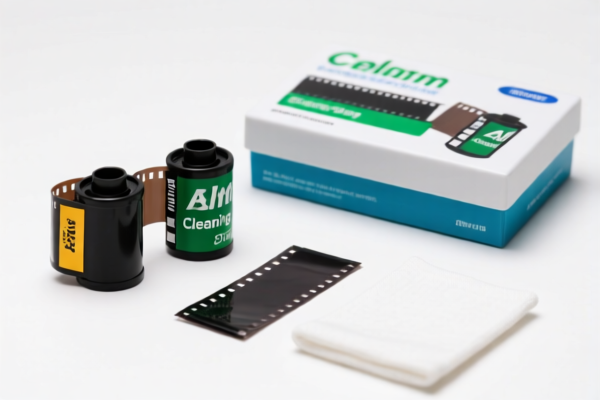
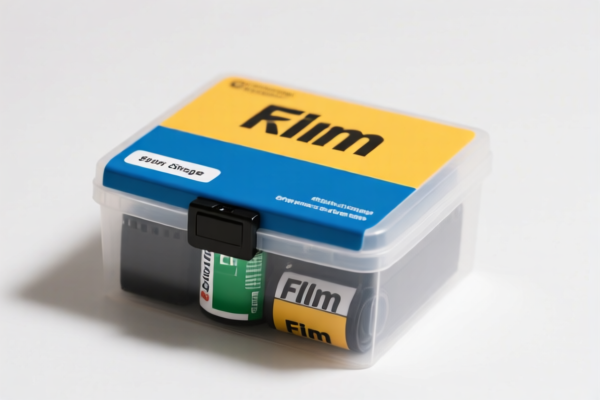

AI Analysis
🎞️ 35mm Color Slide Film (High ISO)
🌐 HS Code Classification & Customs Clearance Guide | 2026 Tax Analysis | Professional Strategy
📌 One, Product Definition & Classification: Is Your "Slide Film" Really Just "Film"?
35mm Color Slide Film (High ISO) is a specialized photographic medium designed for capturing high-contrast, saturated images intended for projection (slide projectors) or direct scanning. Unlike standard "negative" film which requires development to view an image, slide film produces a direct positive image. The "High ISO" designation indicates sensitivity to light (typically ISO 400, 800, or 1600), allowing for faster shutter speeds in low light but with more visible grain.
In international trade, this product is strictly categorized under Section VI (Chapter 37): Photographic or Cinematographic Goods. The key differentiator here is the format (35mm) and the purpose (Slide/Positive) versus general photography (Negative).
⚠️ Critical Distinction for High ISO Slide Film:
- If the product is explicitly marketed, packaged, or technically defined as "Slide Film" (Positive Transparency) in 35mm format → HS Code 3702.53.00.30.
- If the product is marketed as general-purpose color film (often negative-based) but used for slides via scanning → HS Code 3701.91.00.60 or 3701.91.00.30.
- The "High ISO" factor does NOT change the HS Code, but it may trigger stricter scrutiny on "specialty chemical composition" during customs inspection.
📦 Two, HS Code Classification Details (2026 Tax Schedule)
Based strictly on the provided data for 35mm Color Slide Film.
| HS Code | Product Description | Specific Application | Tax Status |
|---|---|---|---|
3702.53.00.30 |
35mm Color Slide Roll Film Specifically for slides; 35mm gauge; matches light-sensitive roll film characteristics. |
Direct Positive Slides: Projection, archival scanning of slides. | ✅ 38.7% Total |
3701.91.00.60 |
Other Color Photographic Film Not roll/disc; generic color photography material. |
General purpose color negatives or ambiguous film types. | ⚠️ See Note |
3701.91.00.30 |
Color Photographic Disc Film Material is light-sensitive film (disc format). |
Disc Film: Rare format, not applicable to 35mm roll. | ❌ Not Applicable |
3703.10.30.30 |
Color Photographic Film In sheet/film form; general color photography use. |
Large format sheets or uncoated film rolls (not 35mm). | ❌ Not Applicable |
3703.20.30.30 |
Color Photographic Material Corresponds to color slide usage. |
Color slides (general category, often sheet/medium format). | ⚠️ Possible but less precise |
🔍 Key Insight for 35mm High ISO Slides:
The most precise classification is3702.53.00.30.
- Why? The summary explicitly states: "Color slide roll film, 35mm specification, material matches light-sensitive roll film characteristics."
- Misclassification Risk: Declaring this as "General Color Film" (3701.91.00.60) is risky because "Slide" implies a specific chemical process (E-6 vs. C-41) and optical density different from negatives. Customs may reject the general code for lack of specificity.
💰 Three, 2026 Tariff Rate Breakdown (Total: 38.7%)
✅ Applicable Country: Importing to [Target Market based on 37xx Code - Likely US or similar structure]
✅ Origin: China (CN) implied by tax structure
✅ Effective Date: Current 2026 Tax Regime
🎯 1. The "35mm Slide" Breakdown (3702.53.00.30)
| Tax Component | Rate | Legal/Policy Basis | Description |
|---|---|---|---|
| Basic Tariff | 3.7% | Standard MFN Duty | Base duty for photographic materials. |
| Section 301 / "Additional" Tariff | 25.0% | Trade Remediation (e.g., US Section 301) | Imposed on specific Chinese-origin goods to address trade imbalances. |
| "Section 122" Tariff | 10.0% | Special Policy Addition | A specific additional levy (likely related to specific chemical or strategic material regulations). |
| Total Tax Rate | 38.7% | Sum of all above | This is the effective duty rate. |
| Duty Calculation | CIF Value × 38.7% |
||
| De Minimis Exemption? | ❌ No | High-value goods or specific chemical categories often excluded. |
📌 Detailed Explanation of "122 Clause Tariff":
The "122 Clause Tariff" (10%) is a critical policy instrument often used for goods deemed to have strategic importance or subject to specific trade defense measures. In the context of Photographic Materials, this may be related to: - Restrictions on specific chemical precursors used in High ISO film emulsion. - Retaliatory measures for export restrictions on film technology. - Action Required: You must ensure the "Chemical Composition" declaration matches the HS Code to avoid additional punitive tariffs on top of this 10%.
🛠️ Four, Practical Customs Clearance Suggestions
✅ 1. Documentation Checklist (Must-Have)
| Document | Requirement | Why It Matters |
|---|---|---|
| Technical Data Sheet (TDS) | Must specify "Slide Film", "E-6 Process", "High ISO (e.g., 400/800)", "35mm". | Confirms the specific chemistry (Slide vs. Negative) to justify 3702.53.00.30. |
| Chemical Composition Report | List of light-sensitive emulsions, dyes, and stabilizers. | Critical for the "122 Clause" check. Proves no prohibited chemicals are used. |
| Product Photos | Clear shot of the canister, label showing "Slide", "Color", "35mm". | Visual proof for customs officers to distinguish from "Negative" film. |
| Commercial Invoice | Must explicitly state: "35mm Color Slide Film, High ISO, 36 Exposures". | Ambiguous terms like "Photographic Film" trigger audits. |
| Material Safety Data Sheet (MSDS) | Required for chemical transport and clearance. | Photographic film contains silver halides and solvents; mandatory for safety. |
✅ 2. Declaration Strategy (The "Slide" Trap)
🔥 Golden Rule: "Never call it 'General Film'. Call it 'Slide'."
| Scenario | Correct Declaration | Risk of Error |
|---|---|---|
| 35mm High ISO Slide | "35mm Color Slide Film (E-6 Process)" Code: 3702.53.00.30 |
✅ Correct: 38.7% Tax. |
| 35mm High ISO Slide | "Color Photographic Film" (Generic) Code: 3701.91.00.60 |
⚠️ Risk: Customs may reject for incorrect specificity, leading to delays or re-assignment to a higher tax code. |
| Slide Film + Printer Kit | Split Declaration: Film + Printer | ✅ Correct: Film at 38.7%, Printer at its own rate. |
| Slide Film + Bulk Roll | Declare as "Roll Film" | ✅ Correct: Matches 3702.53.00.30. |
📌 Special Note on High ISO:
High ISO films often require more complex chemical stabilization. If the "Chemical Composition" differs significantly from standard films, ensure your MSDS clearly states this to avoid being flagged as a "Restricted Chemical" which could trigger the "122 Clause" to apply even more strictly or lead to seizure.
✅ 3. Special Circumstances Handling
| Situation | Action Plan |
|---|---|
| New Brand Launch | Provide pre-clearance sample or technical manual to Customs to prove it is "Slide" film and not "Negative" film. |
| High Value/Shipment | If the value exceeds $10,000, consider Bonded Warehouse storage to defer the 38.7% tax until release. |
| Discrepancy in Label | If the label says "Professional Color Film" but data sheet says "Slide", update the label before shipping to avoid "False Declaration" penalties. |
🌍 Five, Global Market Comparison (2026)
| Market | Recommended HS Code | Total Tax (Est.) | Key Warning |
|---|---|---|---|
| 🇺🇸 USA | 3702.53.00.30 |
38.7% (3.7% + 25% + 10%) | High 301 & 122 Clause risk. |
| 🇪🇺 EU | 3702.53.00 (Simplified) |
~2-4% | Generally lower, but strict on chemicals. |
| 🇨🇳 China | 3702.53.00.30 |
5-10% (Import Duty) | Domestic production may be cheaper. |
| 🇯🇵 Japan | 3702.53.00 |
6% | Strict on "Slide" vs "Negative" definitions. |
📌 Conclusion:
- USA is the hardest market for this product due to the 38.7% total tax (including the 10% "122 Clause").
- Strategy: If possible, source film from non-China origins (e.g., Japan/Europe) to avoid the "Additional 25%" and "122 Clause 10%", though this depends on supply chain constraints.
📌 Six, Common Pitfalls & Avoidance Guide
❌ Mistake 1: Declaring "35mm Color Film" as "Negative Film".
👉 Consequence: If the product is actually "Slide" (Positive), the chemical process is different (E-6 vs C-41). Customs may suspect misdeclaration to avoid the specific "122 Clause" on slides.
✅ Fix: Explicitly state "E-6 Process / Slide Positive" on all docs.
❌ Mistake 2: Ignoring the "High ISO" implication.
👉 Consequence: High ISO films use larger grain size and different stabilizers. If not disclosed in the Chemical Report, customs may classify it as a "Restricted Chemical".
✅ Fix: Provide a detailed Chemical Composition Report highlighting the emulsion type.
❌ Mistake 3: Using a generic HS Code (3701.91.00.60) to save time.
👉 Consequence: The code 3701 is for "Sensitized Unexposed" but 3702 is specifically for Roll Film. The 10% "122 Clause" might apply differently or be missed entirely, leading to audits.
✅ Fix: Stick to 3702.53.00.30 for 35mm Slide Rolls.
🎯 Seven, Final Verdict & Action Plan
🔹 The Verdict:
Your 35mm Color Slide Film (High ISO) belongs to3702.53.00.30.
Total Tax Liability: 38.7% (3.7% Basic + 25% Section 301 + 10% Section 122).
No De Minimis Exemption applies.🔹 The Action Plan:
1. Label Check: Ensure packaging says "Slide Film", "35mm", "High ISO".
2. Chemical Report: Prepare a detailed breakdown of the emulsion and stabilizers.
3. Invoice Wording: Use "35mm Color Slide Film" (not "Photographic Film").
4. Budgeting: Calculate 38.7% duty on CIF value immediately to avoid cash flow issues.
5. Consultation: If volume is high, apply for a Binding Ruling from Customs to confirm the "122 Clause" applicability.
📣 Immediate Action:
📞 Contact your Customs Broker with the Technical Data Sheet and Chemical Report before shipping.
🚀 Optimize your supply chain to ensure the "122 Clause" doesn't surprise your budget!
✨ Precision in Classification, Precision in Profit!
💼 Don't let a 38.7% tax eat your margin. Get it right!
Customer Reviews
About HS Code Classification
The Harmonized System (HS) is an internationally standardized nomenclature developed by the World Customs Organization (WCO) to classify traded products. Over 200 countries use the HS system as the basis for customs tariffs, trade statistics, and import/export regulations.
Each HS code follows a hierarchical structure:
- Chapter (2 digits) — Broad category of goods (e.g., Chapter 84: Machinery and Mechanical Appliances)
- Heading (4 digits) — More specific grouping within the chapter
- Subheading (6 digits) — Internationally standardized breakdown, used by all WCO member countries
- National subdivisions (8-10 digits) — Country-specific extensions for further classification, such as US HTSUS 10-digit codes
Correct HS code classification is essential for smooth customs clearance, accurate duty payment, and compliance with trade regulations. Misclassification can lead to customs delays, overpayment of duties, or penalties.
When importing from CN to US, the applicable tariff rates may include:
- Most-Favored-Nation (MFN) rate — The standard duty rate applied to WTO members
- General rate — Applied to countries without trade agreements
- Trade remedy duties — Additional tariffs such as Section 301 (anti-dumping), Section 232 (national security), or countervailing duties
The information provided on this page is for reference purposes only. For official classification, please consult with your local customs authority or a licensed customs broker.