35mm Color Slide Film Universal
CN → US| HS Code | Tariff Rate | Origin | Destination | Doc |
|---|---|---|---|---|
| 3703103030 | 38.7% | CN | US | Official Doc |
| 3703203030 | 38.7% | CN | US | Official Doc |
| 3701910060 | 38.7% | CN | US | Official Doc |
| 3701910030 | 38.7% | CN | US | Official Doc |
| 3702530030 | 38.7% | CN | US | Official Doc |
Product Images
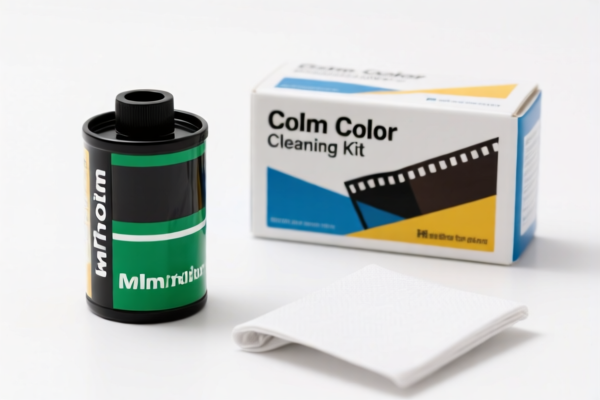
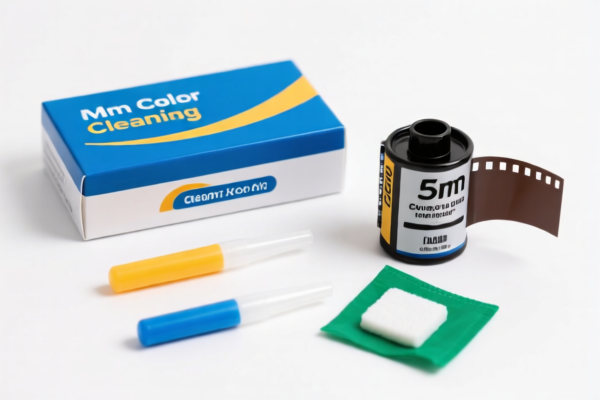
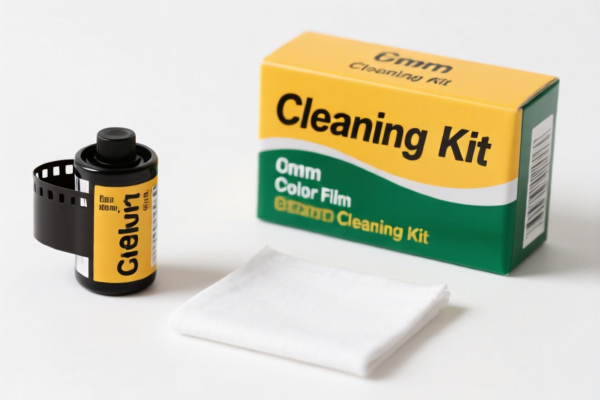
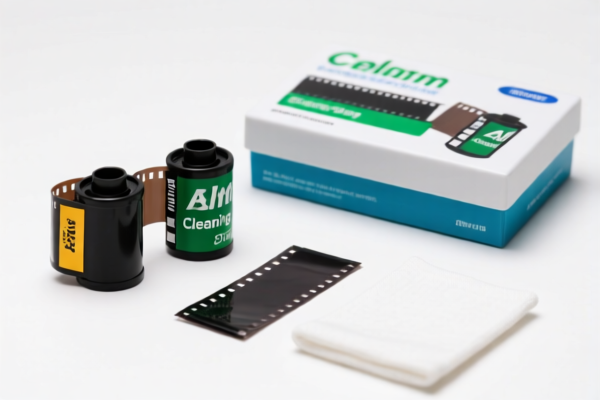
AI Analysis
🎞️ 35mm Color Slide Film (Universal/General Purpose)
🌐 HS Code Reference & Customs Clearance Guide | 2026 Updated Tariff Analysis | Professional Entry Strategy for Photographic Media
📌 I. Product Definition & Classification: What Exactly is "35mm Color Slide Film"?
35mm Color Slide Film (also known as Reversal Film or Transparency Film) is a high-precision photographic medium used to create positive images (slides) directly from exposure. Unlike negative film, it is developed to produce a positive image on the film base, typically used for projection, archival, or high-end scanning.
In international trade, these films are strictly categorized under Chapter 37 (Photographic or Cinematographic Goods). The classification depends heavily on the specific form (roll, disc, cut sheet) and chemical structure, though most standard 35mm rolls fall under specific subheadings for photographic plates/films.
⚠️ Key Distinction:
- Standard 35mm Roll: Falls under 3701.91 (Other photographic plates and film, color) or 3703/3702 depending on specific formatting (e.g., slide strips vs. raw rolls).
- Pre-cut Slide Strips: If pre-cut into slide mounts or specific strip formats for projection, it may fall under 3702 (Photographic film in rolls, other than cinematographic film).
- Disc Format (less common for 35mm): If it were a different format (like 110 or APS), it would differ, but 35mm is strictly roll-based.
📦 II. HS Code Classification Details (Based on Provided Data)
The following HS Codes are derived from the provided dataset. All items share the same tax structure due to their nature as Colored/Sensitized Photographic Materials.
| HS Code | Product Description (from Data) | Application/Format | Key Characteristics |
|---|---|---|---|
3703.10.30.30 |
Color Sensitized Film | Standard Color Photography | Form: Film strips/rolls. General color photography use. |
3703.20.30.30 |
Color Photography Film | Color Slides (Transparencies) | Material: Halide-based. Specifically for color slide purposes. |
3701.91.00.60 |
Other Color Photography Film | 35mm Non-Drum Film | Sensitized material. Specific 35mm roll format. |
3701.91.00.30 |
Color Photography Disc/Strip Film | Photographic Strips/Discs | Material: Sensitized film. Purpose-matched for photography. |
3702.53.00.30 |
Color Slide Roll | 35mm Specification | Sensitized roll. Matches slide film characteristics. |
🔍 Critical Note on Classification:
- Although the descriptions vary slightly (e.g., "Slide" vs. "General Color"), all listed HS Codes attract the SAME total tax rate (38.7%).
- The distinction matters for customs declaration accuracy and product specification matching.
- 3703 generally covers sensitized plates/film for specific uses (like slides), while 3701/3702 covers broader sensitized film categories.
- Do not mix "Negative Film" (3702.56/57) with "Slide Film" (3702.53 or 3703). This dataset only includes Color Slide/Sensitized variants.
💰 III. 2026 Latest Tariff Rate Breakdown (Detailed Tax Clauses)
✅ Applicable Country: United States (US)
✅ Origin: China (CN) (Implied by the 122 Clause and Section 301 references)
✅ Effective Date: Current rates apply as per the 38.7% total.
🎯 Uniform Tax Structure for ALL Listed HS Codes
| Component | Rate | Legal/Policy Basis |
|---|---|---|
| Base Tariff | 3.7% | Most Favored Nation (MFN) rate under HTSUS. |
| Section 301 Tariff | 25.0% | U.S. Trade Act Section 301 (China-origin goods). |
| Section 122 Tariff | 10.0% | Specific duty on certain photographic materials (often referenced in HTSUS notes for sensitive goods). |
| TOTAL EFFECTIVE RATE | 38.7% | Sum of Base + 301 + 122. |
📌 Explanation of Clauses:
- Base Tariff (3.7%): The standard duty for photographic films under Chapter 37.
- Section 301 (25%): This is the primary punitive tariff against Chinese-manufactured goods. It applies broadly to most industrial and consumer goods, including sensitive optical/photographic materials.
- Section 122 / Additional Duties (10%): Some photographic films are subject to additional duties under specific HTSUS footnotes or trade agreements related to "sensitive items" or historical trade remedies. In this dataset, it is explicitly listed as a 10% component.
- No De Minimis Exemption: ❌ Not eligible. Photographic film is a high-value, regulated good. Shipments under $800 (Section 321) do not automatically exempt these goods from full duty assessment, especially when Section 301 applies.
🛠️ IV. Customs Clearance Practical Advice
✅ 1. Required Documentation Checklist
| Document | Must Provide | Reason |
|---|---|---|
| Product Data Sheet | ✔️ | Must specify "Color Reversal Film" or "Slide Film," ISO speed, exposure latitude, and Halide composition. |
| Commercial Invoice | ✔️ | Must clearly state: "35mm Color Slide Film, HS Code [Insert Correct Code], Origin: China." |
| Certificate of Origin (CO) | ✔️ | Essential to confirm China origin, triggering the 301 tariff accurately. |
| Safety Data Sheet (MSDS) | ✔️ | Photographic film contains chemicals (silver halides, gelatin). Airlines and customs may require MSDS for transport compliance. |
| Photographs of Product | ✔️ | Show packaging, label, and product type to prove it is not "Cinematographic Film" (which may have different tax rates). |
✅ 2. Declaration Tips (Crucial for Avoiding Delays)
🔥 Golden Rule: "Be Precise on Format and Purpose!"
| Scenario | Correct Declaration | Risk of Error |
|---|---|---|
| Standard 35mm Slide Roll | Use 3702.53.00.30 or 3703.20.30.30 |
If declared as "Negative Film" (3702.56), customs may flag for misclassification, leading to audits. |
| Bulk Raw Film | Use 3701.91.00.60 |
If declared as "Print Film," it may be rejected as it’s for slides. |
| Pre-cut Slide Strips | Use 3703.10.30.30 |
Ensure it matches the "Slide" description. |
| Incorrect Description | "Photographic Film" | Too vague. Customs may assign a default higher rate or hold shipment for classification review. |
✅ 3. Special Considerations for Slide Film
- Chemical Sensitivity: Ensure packaging is airtight and light-tight. Moisture damage can lead to claims of "non-conforming goods."
- Value Declaration: Slide film is often high-value per meter. Ensure CIF Value (Cost + Insurance + Freight) is accurate. The 38.7% tax is calculated on the total declared value, so under-declaring value is a major red flag.
- No VAT/GST Exemption: Unlike some personal-use items, commercial imports of photographic film rarely qualify for tax exemptions in the US.
🌍 V. Global Market Comparison (2026 Outlook)
| Region | Typical HS Code | Est. Total Duty (China Origin) | Notes |
|---|---|---|---|
| 🇺🇸 USA | 3702.53.00.30 / 3703.20.30.30 |
38.7% | High barrier due to 301 + 122 clauses. |
| 🇨🇳 China (Import) | 3702.53 |
~3.7% | Lower duty, no Section 301 applies to imports into China. |
| 🇪🇺 EU | 3702.53 |
~0-6.5% | No Section 301 equivalent, but may have environmental regulations (REACH) for chemical components. |
| 🇯🇵 Japan | 3702.53 |
~0-6.0% | Generally lower tariffs on photographic goods. |
📌 Conclusion:
The USA is the most challenging market for this product due to the 38.7% effective duty rate. Importers must factor this into their landed cost calculation.
📌 VI. Common Pitfalls & How to Avoid Them
❌ Pitfall 1: Misidentifying as "Cinematographic Film" (3706)
👉 Consequence: Cinematographic film often has different tax rates (sometimes lower or higher). If misclassified, customs may issue a Notice of Liquidation Adjustment requiring back payment + interest.
❌ Pitfall 2: Ignoring the "Slide" vs. "Negative" Distinction
👉 Consequence: While the dataset shows similar rates, regulatory scrutiny on "Slide Film" (often associated with artistic/professional use) may be higher. Accurate description prevents manual inspection delays.
❌ Pitfall 3: Assuming De Minimis ($800) Exemption Applies
👉 Consequence: Section 301 duties often do not apply to de minimis shipments in the same way, but base duties might still apply, or the shipment may be rejected entirely if not properly declared. For commercial bulk, always declare fully.
✅ Correct Action:
Label shipment clearly:
"35mm COLOR REVERSAL SLIDE FILM, HALIDE TYPE, FOR PHOTOGRAPHIC USE, HS CODE 3702.53.00.30, ORIGIN: CHINA"
🎯 VII. Final Recommendation
🎯 For Importers into the USA:
1. Calculate Landed Cost: Include the 38.7% duty in your pricing model.
2. Pre-Ruling: If importing in large volumes, consider applying for a Customs Ruling from CBP to confirm the specific HS code (3702.53.00.30 vs 3703.20.30.30) to ensure consistency.
3. Supplier Communication: Ensure the supplier provides accurate MSDS and Product Specifications to match the HS code description exactly.
📣 Immediate Action Steps:
📞 Contact your customs broker with the product spec sheet.
📄 Verify the HS Code matches the exact film type (Slide vs. Negative).
💰 Budget for 38.7% Duty in your financial planning.
✨ Precision in Classification = Savings in Time and Money!
💼 Don't let hidden tariffs erode your profit margins!
Customer Reviews
About HS Code Classification
The Harmonized System (HS) is an internationally standardized nomenclature developed by the World Customs Organization (WCO) to classify traded products. Over 200 countries use the HS system as the basis for customs tariffs, trade statistics, and import/export regulations.
Each HS code follows a hierarchical structure:
- Chapter (2 digits) — Broad category of goods (e.g., Chapter 84: Machinery and Mechanical Appliances)
- Heading (4 digits) — More specific grouping within the chapter
- Subheading (6 digits) — Internationally standardized breakdown, used by all WCO member countries
- National subdivisions (8-10 digits) — Country-specific extensions for further classification, such as US HTSUS 10-digit codes
Correct HS code classification is essential for smooth customs clearance, accurate duty payment, and compliance with trade regulations. Misclassification can lead to customs delays, overpayment of duties, or penalties.
When importing from CN to US, the applicable tariff rates may include:
- Most-Favored-Nation (MFN) rate — The standard duty rate applied to WTO members
- General rate — Applied to countries without trade agreements
- Trade remedy duties — Additional tariffs such as Section 301 (anti-dumping), Section 232 (national security), or countervailing duties
The information provided on this page is for reference purposes only. For official classification, please consult with your local customs authority or a licensed customs broker.