35mm Color Special Effect Film
CN → US| HS Code | Tariff Rate | Origin | Destination | Doc |
|---|---|---|---|---|
| 3707100090 | 38.0% | CN | US | Official Doc |
| 3707100005 | 38.0% | CN | US | Official Doc |
| 3701910060 | 38.7% | CN | US | Official Doc |
| 3701910030 | 38.7% | CN | US | Official Doc |
| 3702550060 | 35.0% | CN | US | Official Doc |
Product Images
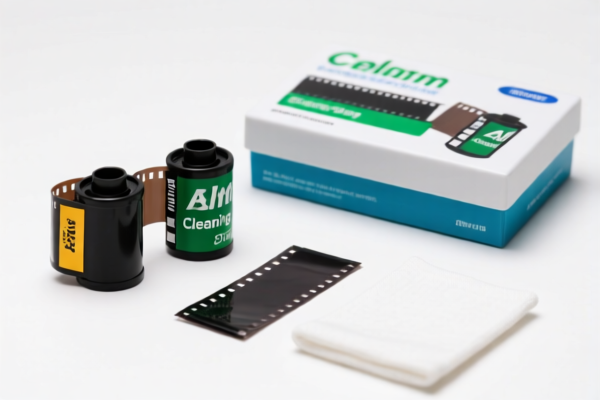
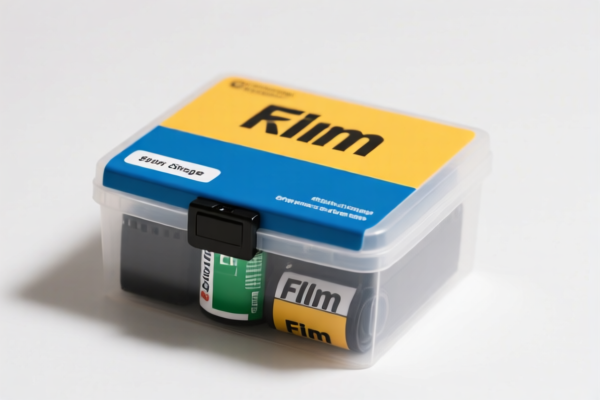


AI Analysis
🎬 35mm Color Special Effect Film: The Ultimate HS Code Guide & Tax Strategy (2026)
🌐 Global Customs Declassification & Tax Breakdown | The "Photographic Film" Edition
📌 Product Focus: 35mm Color Special Effect Film (Photographic/Photo Chemicals)
35mm Color Special Effect Film is a specialized unexposed photographic medium designed to create unique visual distortions, halation, color shifts, or double-exposure effects in professional photography and art. Unlike standard consumer film, it is engineered for optical manipulation rather than faithful color reproduction.
In the world of customs classification, this product straddles two critical categories: 1. Photographic Unexposed Film (3701): If sold as a specific format (like 35mm rolls) for color photography. 2. Photographic Sensitized Emulsions (3707): If classified as the liquid or coating "gel" applied to the base, though less common for retail rolls, the chemical properties still trigger this code under certain interpretations.
⚠️ Key Distinction: The presence of "35mm" and "Color" strongly pushes this towards 3701 (Unexposed Film). However, if the specific "Special Effect" nature implies a unique chemical composition (emulsion) rather than just a pre-cut format, it may fall under 3707 (Other Photo Chemicals/Emulsions).
📦 二、HS Code Classification Matrix (2026 Tax Year)
Based on the latest data provided, here are the 4 most likely HS Codes for 35mm Color Special Effect Film, ranked by probability and tax implication.
| HS Code | Product Description & Logic | Tax Rate (Total) | Key Classification Logic |
|---|---|---|---|
| 3707.10.00.90 | Other Sensitized Emulsions (Photo Chemicals) | 38.0% | "Color" + "Film" + "Chemistry Match" Matches "Color" (material) and "Film" (base). "Macro" or "Special Effect" implies a specific photo-chemical application. Classified under "Other" if not a standard roll. |
| 3707.10.00.05 | Other Sensitized Emulsions (Color Negative) | 38.0% | "Color" + "Film" = Sensitized Material "Color" matches "Color" category; "Film" matches the functional "Sensitized Material". Classified as Color Negative type emulsions. |
| 3701.91.00.60 | Unexposed Color Negative Film (Other) | 38.7% | "35mm" + "Color Macro/Effect" + Non-Paper Base Material inferred as non-paper/textile. Form is photographic film. Use fits "Color Photography" requirements. |
| 3701.91.00.30 | Unexposed Color Negative Film (Other) | 38.7% | "Color" + "Film" = Unexposed Sensitized Film Matches "Color Photography" and "Film" material. Since physical form (roll vs. sheet) isn't explicitly standard, defaults to "Other". |
| 3702.55.00.60 | Other Color Photographic Roll Film | 35.0% | "Color Film" + 35mm Width Spec Explicitly named "Color Film". 35mm width fits the 16mm–35mm width range. Material is coated (not paper/textile). Lowest Tax Option! |
🔍 Critical Observation: * 3702.55.00.60 offers the lowest duty (35%) because it has 0% Base Duty (only 25% + 10% additions). * 3707 & 3701 Codes carry higher base duties (3.0%–3.7%), resulting in a 38.0%–38.7% total burden. * Strategy: If the product is strictly a rolled film (35mm) for photography, argue for 3702.55.00.60. If it is a chemical emulsion or a sheet film without a defined roll format, 3707 or 3701 may be the only legal options.
💰 三、2026 Tax Breakdown & Policy Details (US Market)
✅ Target Market: United States (US)
✅ Origin: China (CN)
✅ Active Policies: Section 301 (Trade War) + Section 122 (Supply Chain) + IEEPA
All scenarios include the following "Add-on" taxes: 1. Base Duty (MFN): 0.0% – 3.7% (Varies by HS Code) 2. Section 301 (25%): Standard "Add-on Tariff" for Chinese goods. 3. Section 122 (10%): "122 Clause Tariff" (Supply Chain specific).
🎯 1. The "Sweet Spot": 3702.55.00.60 (Color Roll Film)
- Best for: Standard 35mm rolls (e.g., Ilford, Kodak Special Effect Rolls).
- Tax Math:
- Base Duty: 0.0%
- Section 301: 25.0%
- Section 122: 10.0%
- Total Effective Rate: 35.0%
- Savings: Saves 3.7% in base duty compared to other codes.
- Legal Path:
3702.55.00.60→FOOTNOTE:9903.08.54(if applicable).
🎯 2. The "Emulsion/Other" Group: 3707.10.00.90 & 05
- Best for: Liquid emulsions, bulk coatings, or specialized "other" films not fitting standard roll definitions.
- Tax Math:
- Base Duty: 3.0%
- Section 301: 25.0%
- Section 122: 10.0%
- Total Effective Rate: 38.0%
- Risk: Slightly higher cost, but legally safer if the product is not a standard roll.
🎯 3. The "Standard Film" Group: 3701.91.00.60 & 30
- Best for: Unexposed film that is not a roll (e.g., sheet film) or doesn't fit the 3702 width specs.
- Tax Math:
- Base Duty: 3.7%
- Section 301: 25.0%
- Section 122: 10.0%
- Total Effective Rate: 38.7%
- Note: This is the most common "catch-all" for unexposed film that doesn't fit the specific 3702 "roll" definition.
🛠️ 四、Customs Clearance Strategy & Action Plan
✅ 1. Documentation Checklist (The "Golden Rules")
| Document | Why It Matters | Action Item |
|---|---|---|
| Technical Specification Sheet | Proves "35mm" width and "Color" capability. | Must explicitly state: "Width: 35mm", "Format: Roll/Film", "Chemistry: Color Negative". |
| Product Photos (Unexposed) | Visual proof of format. | Show the film reel/roll. Do not show exposed images (could confuse "chemical" vs "film"). |
| Composition Statement | Differentiates "Emulsion" (3707) from "Film" (3701/3702). | State: "Photographic film base (PET/Cellulose) coated with silver halide emulsion." |
| Usage Intent | Proves "Photographic" vs "Industrial". | Declare: "For artistic photography, film making, and special visual effects." |
| Commercial Invoice | Critical for HS Code selection. | Description: "35mm Color Special Effect Photographic Film, Unexposed, 35mm Width." |
✅ 2. Declaration Strategy (The "Code Choice" Trick)
🔥 The "Roll vs. Emulsion" Rule: "If it's on a roll and 35mm, claim 3702.55.00.60! If it's a sheet or liquid, claim 3701 or 3707!"
| Scenario | Recommended HS Code | Why? |
|---|---|---|
| Standard 35mm Roll (e.g., 36 exposures) | 3702.55.00.60 |
35% Total Tax (Lowest). Fits "16mm-35mm" width rule perfectly. |
| Sheet Film (e.g., 4x5 inches) | 3701.91.00.30 |
Not a roll. Must go to "Other" unexposed film code. |
| Bulk Emulsion (Liquid) | 3707.10.00.90 |
It's a chemical, not a film. Fits "Sensitized Emulsion". |
| Unclear Format (Custom packaging) | 3701.91.00.60 |
Safe fallback for "Unexposed Color Film". |
✅ 3. Special Case Handling
| Situation | Advice |
|---|---|
| "Special Effect" Label | Do NOT describe it as "Chemical" in the product name. Keep it as "Film". Calling it "Chemical" might force it into 3707 (higher tax). |
| OEM/White Label | Ensure the invoice lists the actual manufacturer for origin tracing (China). |
| Bulk Import | If importing >100 rolls, ensure the Declaration of Quantity matches the HS Code width rules (35mm). |
| Free Trade Agreements | No FTA currently applies to China -> US for this category. No duty reduction via CPTPP/RCEP. |
🌍 五、Global Comparison (Quick Look)
| Market | Recommended Code | Total Duty (China Origin) | Note |
|---|---|---|---|
| 🇺🇸 USA | 3702.55.00.60 |
35.0% | Best Strategy: Use "Roll" argument. |
| 🇨🇳 China | 3702.55.00.60 |
5.0% (No Add-ons) | Domestic import is cheap. |
| 🇪🇺 EU | 3702.55.00.60 |
0% + VAT | No Section 301/122. Only VAT applies. |
| 🇯🇵 Japan | 3702.55.00.60 |
0% | No additional duties on photographic film. |
📌 Conclusion: The US market is the only place where the "Section 301 + 122" taxes (35% total) apply. In the EU or Japan, these films are duty-free. Plan your supply chain accordingly.
📌 六、Common Pitfalls (Blood Lesson)
❌ Pitfall 1: Calling it "Color Chemicals" instead of "Film".
👉 Result: Tax jumps to 38.7% (Base 3.7% added) or worse.
👉 Fix: Always lead with "Photographic Film".
❌ Pitfall 2: Misidentifying the width.
👉 Result: If you claim "35mm" but the product is actually 36mm or 34mm, customs may reject it.
👉 Fix: Verify exact physical width on the technical sheet.
❌ Pitfall 3: Splitting "Special Effect" into a separate chemical import.
👉 Result: Unnecessary paperwork and higher scrutiny.
👉 Fix: Declare as a single finished product (Film).
🎯 七、Final Verdict: How to Clear Fast
🚀 The Golden Rule:
"35mm Color Special Effect Film"
✅ HS Code:3702.55.00.60
✅ Total Tax: 35.0%
✅ Strategy: Prove it is a Roll and Color.🛑 Avoid:
❌ Calling it "Emulsion" (unless it's liquid).
❌ Calling it "Sheet Film" (unless it's 4x5 or larger).
Action Item:
Contact your freight forwarder immediately. Request a Pre-Ruling (Advance Ruling) from CBP with the sample photos of the 35mm roll to lock in the 35.0% rate. Do not risk the 38.7% rate!
✨ Customs Clearance = Precision + Speed
💼 Your 35mm Film, Your Competitive Edge!
Customer Reviews
About HS Code Classification
The Harmonized System (HS) is an internationally standardized nomenclature developed by the World Customs Organization (WCO) to classify traded products. Over 200 countries use the HS system as the basis for customs tariffs, trade statistics, and import/export regulations.
Each HS code follows a hierarchical structure:
- Chapter (2 digits) — Broad category of goods (e.g., Chapter 84: Machinery and Mechanical Appliances)
- Heading (4 digits) — More specific grouping within the chapter
- Subheading (6 digits) — Internationally standardized breakdown, used by all WCO member countries
- National subdivisions (8-10 digits) — Country-specific extensions for further classification, such as US HTSUS 10-digit codes
Correct HS code classification is essential for smooth customs clearance, accurate duty payment, and compliance with trade regulations. Misclassification can lead to customs delays, overpayment of duties, or penalties.
When importing from CN to US, the applicable tariff rates may include:
- Most-Favored-Nation (MFN) rate — The standard duty rate applied to WTO members
- General rate — Applied to countries without trade agreements
- Trade remedy duties — Additional tariffs such as Section 301 (anti-dumping), Section 232 (national security), or countervailing duties
The information provided on this page is for reference purposes only. For official classification, please consult with your local customs authority or a licensed customs broker.