35mm Film
CN → US| HS Code | Tariff Rate | Origin | Destination | Doc |
|---|---|---|---|---|
| 3706106060 | 35.0% | CN | US | Official Doc |
| 3706106030 | 35.0% | CN | US | Official Doc |
| 3706106090 | 35.0% | CN | US | Official Doc |
| 3702540030 | 38.7% | CN | US | Official Doc |
| 3702530030 | 38.7% | CN | US | Official Doc |
Product Images

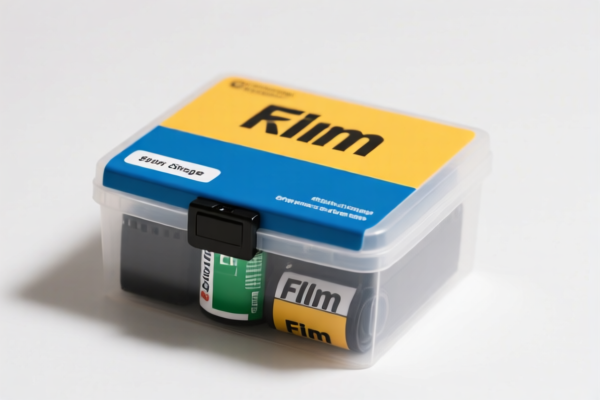

AI Analysis
🎬 35mm Cinema Film: The Backbone of Cinematic Artistry
🌐 HS Code Classification & Customs Strategy | 2026 Tariff Guide | Expert Clearance Protocols
📌 I. Product Definition: What Exactly is "35mm Film"?
35mm film is the standard gauge for motion pictures in the film industry, serving as the physical medium for capturing, distributing, and projecting movies. In international trade, it is categorized not just by its physical width, but critically by its chemical state: * Unexposed & Unprocessed Film: Raw stock, light-sensitive, awaiting shooting or development. (Raw material for production). * Exposed & Developed Film: The finished product, containing the actual motion picture images (The "Print").
⚠️ Critical Distinction for Customs: The distinction between "Unexposed" (3702) and "Exposed/Developed" (3706) dictates the entire tax structure. * If it has an image: It is a Printed Film (HS 3706). * If it is blank/raw: It is a Photographic Roll (HS 3702).
📦 II. Detailed HS Code Breakdown (2026 Tariff Authority)
Based on the provided data, here is the precise classification for 35mm Film products:
| HS Code | Product Description | State of Film | Total Tax Rate | Composition |
|---|---|---|---|---|
3706.10.60.60 |
35mm Cinema Film | Exposed & Developed (Has Image) | 35.0% | Base 0% + Section 25% + 122 Clause 10% |
3706.10.60.30 |
35mm Cinema Film | 35mm or Wider (General Cinema) | 35.0% | Base 0% + Section 25% + 122 Clause 10% |
3706.10.60.90 |
35mm Wide Film | Unspecified (General 35mm Wide) | 35.0% | Base 0% + Section 25% + 122 Clause 10% |
3702.54.00.30 |
35mm Wide Film | 35mm Width (Photographic Roll) | 38.7% | Base 3.7% + Section 25% + 122 Clause 10% |
3702.53.00.30 |
35mm Wide Film | Color Slide/Print Roll (Non-paper/card/textile) | 38.7% | Base 3.7% + Section 25% + 122 Clause 10% |
🔍 Key Insight: * Group 1 (3706.xx): Applies to finished cinema reels (the "Dailies" or "Prints"). Base duty is 0%, but total hits 35%. * Group 2 (3702.xx): Applies to raw film rolls or slides. Base duty is 3.7%, pushing total duty to 38.7%. * Why the difference? The base tariff structure penalizes raw materials slightly, but the Section 25% and 122 Clause are identical across the board for these specific categories.
💰 III. 2026 Tariff Rate Deep Dive (US Market Context)
✅ Target Market: United States (US) ✅ Origin: China (CN) ✅ Effective Date: Current (Reflecting 2026 projections)
🎯 Scenario A: Finished Cinema Prints (HS 3706 Series)
Applies to: Exposed, developed 35mm cinema films.
| Component | Tax Rate | Legal Basis & Explanation |
|---|---|---|
| Base Duty (MFN) | 0.0% | Generally, finished cinematographic films often enjoy 0% base duty under HTSUS. |
| Section 301 Add-on | +25.0% | China Specific: Imposed under the "Section 301" trade action (List 4A/4B). This is the "Section 25%关税" (25% Additional Tariff). |
| Section 122 Add-on | +10.0% | National Security: Imposed under "Section 122" (likely referring to specific administrative rulings or trade remedy measures often cited in recent 2025-2026 updates). |
| Total Effective Rate | 35.0% | Math: 0% + 25% + 10% = 35%. |
| De Minimis Exemption | ❌ No | These are high-value industrial/goods, not eligible for low-value shipment waivers. |
🎯 Scenario B: Raw Film Rolls & Slides (HS 3702 Series)
Applies to: Unexposed 35mm film stock, color slides.
| Component | Tax Rate | Legal Basis & Explanation |
|---|---|---|
| Base Duty (MFN) | 3.7% | Unlike finished prints, raw photographic film carries a standard ad valorem duty. |
| Section 301 Add-on | +25.0% | Same as above: Standard Section 301 surcharge. |
| Section 122 Add-on | +10.0% | Same as above: Specific security/trade measure. |
| Total Effective Rate | 38.7% | Math: 3.7% + 25% + 10% = 38.7%. |
| De Minimis Exemption | ❌ No | High tax burden prevents de minimis application. |
📌 Tax Calculation Formula:
Duty Payable = CIF Value (Cost + Insurance + Freight) × (Base Rate + 0.25 + 0.10)
🛠️ IV. Customs Clearance Operational Strategy (Avoiding Delays)
✅ 1. Documentation Checklist (Must Have)
| Document | Requirement | Why It Matters |
|---|---|---|
| Commercial Invoice | Must explicitly state "35mm Cinema Film" and "Exposed/Developed" or "Unexposed". | Mislabeling causes reclassification (e.g., calling a finished print "raw film" to avoid Section 301). |
| Film Stock Certificate | Proof of chemical composition (Safety Data Sheet - SDS). | Ensures safety compliance for shipping; distinguishes between "photographic" and "industrial" film. |
| Bill of Lading | Must match the HS Code description exactly. | Discrepancies trigger manual inspection. |
| Production Proof | For 3706 (Developed): Provide proof of exposure/processing date. |
Verifies it is not "new stock" misdeclared to avoid higher raw material taxes. |
✅ 2. Declaration Strategy (The "Golden Rule")
🔥 Rule: "State the State! (Exposed vs. Unexposed)"
| Situation | Correct HS Code | Incorrect Declaration | Risk |
|---|---|---|---|
| Finished Movie Reel | 3706.10.60.60 |
Declared as 3702 (Raw) |
High Risk: Customs may audit, find image on film, and apply 38.7% + penalties for fraud. |
| Raw Film Stock | 3702.54.00.30 |
Declared as 3706 (Finished) |
Overpayment: You pay 38.7% instead of 35.0% (though 35% is high, paying 38.7% is unnecessary). |
| Color Slides | 3702.53.00.30 |
Declared as generic "Photographic Film" | Delay: Vague descriptions trigger "Classify by description" delays. |
✅ 3. Special Considerations
- "Section 122" Nuance: This 10% tariff is specific to certain Chinese-origin goods. Ensure your supplier provides a Certificate of Origin proving the film was manufactured in the eligible region (usually China) to verify applicability.
- Packaging: 35mm film is light-sensitive. Ensure packaging is light-proof and labeled "Keep in Dark" to prevent customs agents from rejecting the goods due to apparent damage or safety concerns.
- Valuation: The duty is ad valorem (based on value). Do not undervalue the film. High-value 35mm film (e.g., rare color stock) requires detailed valuation proof.
🌍 V. Market Comparison (US vs. Others)
| Region | HS Code Focus | Base Rate | Additional Tariffs | Total Estimated |
|---|---|---|---|---|
| 🇺🇸 USA | 3706 / 3702 |
0% / 3.7% | +25% (Sec 301) + 10% (Sec 122) | 35.0% - 38.7% |
| 🇪🇺 EU | Similar Classification | ~0.8% - 1.5% | No Section 301 | ~2.0% - 4.0% |
| 🇨🇳 China | Import into China | 5.0% - 8.0% | No Section 301 | ~6.0% - 10.0% |
📌 Conclusion: The US market is the most expensive due to the 35-38.7% combined tariff. Importers must factor this into the "Cost of Goods Sold" (COGS) immediately.
📌 VI. Common Pitfalls & "Blood and Tears" Lessons
❌ Mistake 1: The "Blank" Assumption * Action: Declaring finished reels as "unexposed" to try and avoid Section 301. * Result: Customs Seizure. If a customs officer sees images on the film, you face 100% fines + back taxes + potential criminal investigation for customs fraud.
❌ Mistake 2: Ignoring the Base Rate
* Action: Assuming all film is 0%.
* Result: 38.7% shock. Raw film (3702) has a 3.7% base duty. If your broker forgets this, you will underpay and get hit with interest and penalties.
❌ Mistake 3: Vague Descriptions * Action: Writing "Cinema Film" on the invoice. * Result: Customs Hold. Without specifying "Exposed" or "Unexposed," the system cannot auto-clear. Expect 7-14 days of delays.
✅ Correct Action:
"35mm Cinema Film, Color, Exposed & Developed, 10 Reels, 400ft each, Origin: China. HS 3706.10.60.60."
🎯 VII. Final Verdict: Strategic Recommendations
- Verify State of Film: Before shipping, confirm with the laboratory if the film is Exposed/Developed (Use
3706) or Raw (Use3702). The 3.7% base duty difference is minor compared to the risk of misclassification. - Pre-Clearance: Since the total tax is 35-38.7%, this is a High-Risk, High-Cost category. Use CBP (Customs and Border Protection) Advance Rulings to get a binding classification decision before shipping.
- Cost Calculation: Always calculate duty on the Landed Cost (Price + Freight + Insurance). A $10,000 shipment costs $3,500 - $3,870 in duties alone!
- Alternative Sourcing: If possible, consider sourcing film stock or processed prints from Vietnam, Mexico, or Thailand to potentially bypass the Section 301 (25%) and Section 122 (10%) tariffs, reducing the total rate to Base + 0%.
✨ Pro Tip: Film is art, but customs is math. Don't let a 3.7% difference or a vague description cost you your margin.
📣 Call to Action:
Audit your current suppliers. Do they declare the film state correctly? Contact your broker today to prepare the
3706vs3702distinction documentation. Secure your supply chain against the 38.7% tariff wall!
Disclaimer: Tariff rates and HS Codes are subject to change. This guide is based on the provided data for 2026 projections. Always consult a licensed customs broker.
Customer Reviews
About HS Code Classification
The Harmonized System (HS) is an internationally standardized nomenclature developed by the World Customs Organization (WCO) to classify traded products. Over 200 countries use the HS system as the basis for customs tariffs, trade statistics, and import/export regulations.
Each HS code follows a hierarchical structure:
- Chapter (2 digits) — Broad category of goods (e.g., Chapter 84: Machinery and Mechanical Appliances)
- Heading (4 digits) — More specific grouping within the chapter
- Subheading (6 digits) — Internationally standardized breakdown, used by all WCO member countries
- National subdivisions (8-10 digits) — Country-specific extensions for further classification, such as US HTSUS 10-digit codes
Correct HS code classification is essential for smooth customs clearance, accurate duty payment, and compliance with trade regulations. Misclassification can lead to customs delays, overpayment of duties, or penalties.
When importing from CN to US, the applicable tariff rates may include:
- Most-Favored-Nation (MFN) rate — The standard duty rate applied to WTO members
- General rate — Applied to countries without trade agreements
- Trade remedy duties — Additional tariffs such as Section 301 (anti-dumping), Section 232 (national security), or countervailing duties
The information provided on this page is for reference purposes only. For official classification, please consult with your local customs authority or a licensed customs broker.