35mm Film (Entry level)
CN → US| HS Code | Tariff Rate | Origin | Destination | Doc |
|---|---|---|---|---|
| 3706106060 | 35.0% | CN | US | Official Doc |
| 3702550060 | 35.0% | CN | US | Official Doc |
| 3706106090 | 35.0% | CN | US | Official Doc |
| 3702540030 | 38.7% | CN | US | Official Doc |
| 9705290000 | 10.0% | CN | US | Official Doc |
Product Images



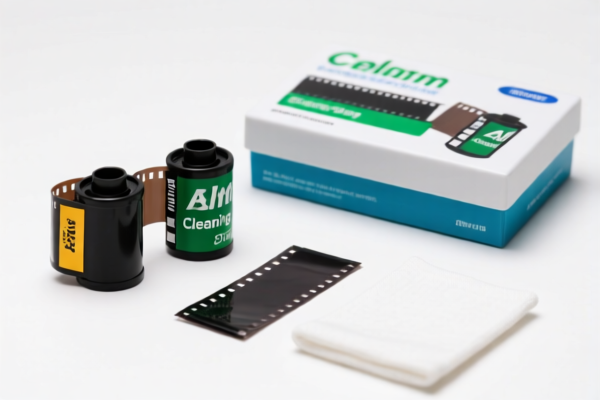
AI Analysis
🎞️ 35mm Film (Entry Level) – The Ultimate HS Code & Duty Guide (2026)
🌐 HS Code Classification & Duty Deep Dive | 2026 Tax Regime Analysis | Professional Customs Strategy
📌 I. Product Definition: What is "Entry Level 35mm Film"?
In the world of analog photography and cinema, 35mm Film is the lifeblood of imaging. However, in international trade, not all 35mm film is treated equally. For "Entry Level" products, we must distinguish between raw film stock (unexposed), developed film rolls, and museum-grade archival materials.
The classification hinges on: 1. Width: Strictly 35mm (fits the 16mm–35mm or "35mm and above" criteria). 2. Material: Sensitized photographic film (non-paper, non-textile). 3. State: Unexposed vs. Exposed (Developed) vs. Archival/Historical.
⚠️ Critical Distinction:
- Raw/Unexposed Film Stock (Photographic rolls) → Typically 3702.xxxx.
- Cinema Film/Projector Rolls → Typically 3706.10.
- Museum/Collectible Historical Items → Can shift to 9705.29.
Misclassification here can lead to a 3.7% to 35% tax gap!
📦 II. HS Code Classification Matrix (2026 Latest Tariff Authority)
Based on the specific attributes of "Entry Level" 35mm film, here are the four most probable HS Codes and their tax implications.
| HS Code | Product Description | Key Classification Logic | Tax Rate (Total) |
|---|---|---|---|
| 3702.55.00.60 | 35mm Photographic Film Stock | Width: 35mm (fits 16-35mm); Material: Non-paper/non-textile感光胶卷. Most common for "Entry Level" consumer/producer film. | 35.0% |
| 3702.54.00.30 | 35mm Photographic Film (Other) | Width: 35mm; Material: Assumed non-paper/textile. Specific sub-category with a slightly different base rate. | 38.7% |
| 3706.10.60.60 | Cinema Film (Unexposed/Other) | Width: 35mm+; Material: Film; Use: Museum-grade or "Other". Excludes standard release prints. | 35.0% |
| 3706.10.60.90 | 35mm Cinema Film (Unspecified) | Width: 35mm; Material: Film; Category: "Other". Used if development status is unclear but fits film standards. | 35.0% |
| 9705.29.00.00 | Museum/Collectible Historical Film | Historical/Research Value. Used if the film is not for production but for display/collection. | 10.0% |
🔍 Deep Dive into the Codes: * 3702 Series: The standard for photographic film rolls (what most "entry-level" users buy). * 3706 Series: The standard for cinematographic film. * 9705 Series: The "Collector's Paradise" – only if the film has historical significance (e.g., vintage negatives, historical archives), not new commercial stock.
💰 III. 2026 Duty Rate Breakdown (Detailed Analysis)
✅ Origin: China (CN)
✅ Destination: USA (US) (Assuming typical high-duty scenario based on the 122 Clause/Section 301 data)
✅ Applicable Clauses: Section 301, Section 122, IEEPA
🎯 1. The "Standard" 35mm Film (Codes: 3702.55.00.60, 3706.10.60.60, 3706.10.60.90)
Most common for entry-level commercial film.
| Duty Component | Rate | Legal Basis | Explanation |
|---|---|---|---|
| Base Tariff | 0.0% | MFN Rate | Standard entry-level rate for photographic/cinema film is often duty-free. |
| Section 301 Add-on | +25.0% | USITC Section 301 | Heavy Penalty: "Additional duties" on Chinese goods. Applies to these film types. |
| Section 122 Add-on | +10.0% | Section 122 | China-Specific: "Retaliatory" duties targeting Chinese imports. |
| TOTAL TAX | 35.0% | Calculated | 0% + 25% + 10% = 35% |
📌 The Math: If you import $10,000 worth of entry-level 35mm film, you pay $3,500 in duties alone. This is a 350% increase over the base price if you ignore the Section 301/122 clauses!
🎯 2. The "Premium/Specific" 35mm Film (Code: 3702.54.00.30)
Specific sub-category for 35mm film with different base tariff.
| Duty Component | Rate | Legal Basis | Explanation |
|---|---|---|---|
| Base Tariff | 3.7% | MFN Rate | This specific sub-category has a non-zero base tariff. |
| Section 301 Add-on | +25.0% | USITC Section 301 | Still applies to the base. |
| Section 122 Add-on | +10.0% | Section 122 | Still applies. |
| TOTAL TAX | 38.7% | Calculated | 3.7% + 25% + 10% = 38.7% |
📌 Warning: This is the most expensive entry-level option. Avoid this code if your product fits
3702.55!
🎯 3. The "Museum/Collectible" Exception (Code: 9705.29.00.00)
ONLY for historical, research, or exhibition items.
| Duty Component | Rate | Legal Basis | Explanation |
|---|---|---|---|
| Base Tariff | 0.0% | MFN Rate | Cultural items often enjoy duty-free status. |
| Section 301 Add-on | 0.0% | Exempt | No Section 301 penalty for specific cultural/historical goods. |
| Section 122 Add-on | +10.0% | Section 122 | Note: The data shows Section 122 still applies (+10%). |
| TOTAL TAX | 10.0% | Calculated | 0% + 0% + 10% = 10% |
📌 Strategy: If your "Entry Level" film is actually vintage or historical (e.g., 1950s stock, newsreels), claim 9705.29. You save 25% (the Section 301 tax), dropping from 35% to 10%. Must prove historical value.
🛠️ IV. Customs Clearance Practical Advice (Action Plan)
✅ 1. Documentation Checklist (Critical for Clearance)
| Document | Requirement | Why? |
|---|---|---|
| Product Spec Sheet | Must state Width (35mm) and Format (Roll) | To prove it fits 3702.55 or 3706.10. |
| Declaration of Status | Explicitly state: "Unexposed/Raw" OR "Developed" | Determines if it's 3702 (Photographic) or 3706 (Cinema). |
| Museum Proof (If using 9705) | Certificate of Historical Value / Archive Origin | Mandatory to avoid the 25% Section 301 tax. |
| Composition Material | "Non-paper, Non-textile, Sensitized Film" | Rules out textile/paper codes (9706 etc.). |
| Commercial Invoice | Must list "Entry Level 35mm Film Stock" | Avoid generic terms like "Photographic Supplies". |
✅ 2. Strategic Declaration Tips (The "Do's and Don'ts")
🔥 The Golden Rule: "Width + Material + Purpose = Tax Rate"
| Scenario | Recommended HS Code | Actionable Advice | Risk if Wrong |
|---|---|---|---|
| New Commercial Film Stock (Kodak/Portra type) | 3702.55.00.60 |
Declare as "Unexposed Photographic Film, 35mm". | High Risk: If misclassified as 3702.54, tax jumps to 38.7%. |
| Cinema Projector Rolls (Unexposed) | 3706.10.60.60 |
Specify "Not for Distribution/Copy" if "Museum Grade". | Medium Risk: If classified as standard cinema film, might lose "Museum" status. |
| Vintage/Historical Rolls | 9705.29.00.00 |
MUST provide evidence of age/history. | High Risk: Customs will reject if "New Commercial" but declared as "History" → 35% back-pay + Fine. |
| Developed/Exposed Film | 3706.10.60.90 |
If status is unclear, use "Other" category. | Low Risk: Safe fallback, but confirm it's not "Exhibits". |
✅ 3. Special Handling for "Entry Level" Imports
- Avoid the "3702.54" Trap: Ensure your supplier's invoice clearly matches the
3702.55spec. If the HS Code is vague, you risk the 3.7% base tariff + 35% total. - The "Museum" Loophole: If you are a film archive, gallery, or museum importer, ** aggressively push for
9705.29. The 25% Section 301 saving** is massive. - Section 122 is Inescapable (for now): Unlike Section 301, which might have exemptions for certain goods, the 10% Section 122 tariff appears in the data for all these film categories (even the 10% one). Budget for this 10% regardless of HS Code.
🌍 V. Global Market Comparison (2026 Projection)
| Region | Likely HS Code | Estimated Duty | Key Requirement |
|---|---|---|---|
| 🇺🇸 USA | 3702.55.00.60 |
35% | Strict Section 301/122 enforcement. |
| 🇪🇺 EU | 3702.55 |
0% | Generally duty-free, but VAT applies (20-27%). |
| 🇨🇳 China | 3702.55 |
5-6% | Import duty + VAT. No Section 301. |
| 🇯🇵 Japan | 3702.55 |
6% | Standard import duty. |
📌 Conclusion: The US market is uniquely punitive for entry-level film due to the 35% total tax rate. If your margin is thin, the 10% Museum Code or non-US market strategy is essential.
📌 VI. Common Pitfalls & Survival Guide
❌ Pitfall 1: "Just call it 'Film'."
👉 Consequence: Customs will guess 3702.54 (38.7%) or demand more info, delaying shipment.
✅ Fix: Be specific: "35mm Unexposed Photographic Film".
❌ Pitfall 2: Claiming "Museum Grade" for new commercial film.
👉 Consequence: Rejected, fined, and forced to pay the 35% tax + penalties.
✅ Fix: Only use 9705.29 if you have proven historical value.
❌ Pitfall 3: Ignoring the 122 Clause.
👉 Consequence: You calculate 25% tax (Section 301) but forget the 10% (Section 122), leaving you short on funds.
✅ Fix: Always budget 35% for standard film imports to the US.
🎯 VII. Final Verdict: The 2026 Strategy
For "Entry Level" 35mm Film Imports to the USA: 1. Default: Assume 35.0% Total Duty (
3702.55.00.60). 2. Optimization: If the film is vintage/historical, pivot to9705.29.00.00to save the 25% Section 301 tax. 3. Avoid: The3702.54.00.30code (38.7%) unless you are forced to.🚀 Action Item:
Verify your product's exact width and "museum status" today.
If it's just "new film for entry-level photographers," prepare for the 35% tax and factor it into your pricing immediately. Do not gamble on exemptions unless you have the paperwork to back up9705.29.
✨ Professional Customs, Precise Classification, Maximum Profit!
💼 Your 35mm film deserves the right code, not the highest tax!
Customer Reviews
About HS Code Classification
The Harmonized System (HS) is an internationally standardized nomenclature developed by the World Customs Organization (WCO) to classify traded products. Over 200 countries use the HS system as the basis for customs tariffs, trade statistics, and import/export regulations.
Each HS code follows a hierarchical structure:
- Chapter (2 digits) — Broad category of goods (e.g., Chapter 84: Machinery and Mechanical Appliances)
- Heading (4 digits) — More specific grouping within the chapter
- Subheading (6 digits) — Internationally standardized breakdown, used by all WCO member countries
- National subdivisions (8-10 digits) — Country-specific extensions for further classification, such as US HTSUS 10-digit codes
Correct HS code classification is essential for smooth customs clearance, accurate duty payment, and compliance with trade regulations. Misclassification can lead to customs delays, overpayment of duties, or penalties.
When importing from CN to US, the applicable tariff rates may include:
- Most-Favored-Nation (MFN) rate — The standard duty rate applied to WTO members
- General rate — Applied to countries without trade agreements
- Trade remedy duties — Additional tariffs such as Section 301 (anti-dumping), Section 232 (national security), or countervailing duties
The information provided on this page is for reference purposes only. For official classification, please consult with your local customs authority or a licensed customs broker.