35mm Film (Low Contrast)
CN → US| HS Code | Tariff Rate | Origin | Destination | Doc |
|---|---|---|---|---|
| 3707100090 | 38.0% | CN | US | Official Doc |
| 3707100005 | 38.0% | CN | US | Official Doc |
| 3701996060 | 35.0% | CN | US | Official Doc |
| 3701910060 | 38.7% | CN | US | Official Doc |
| 3702540030 | 38.7% | CN | US | Official Doc |
Product Images

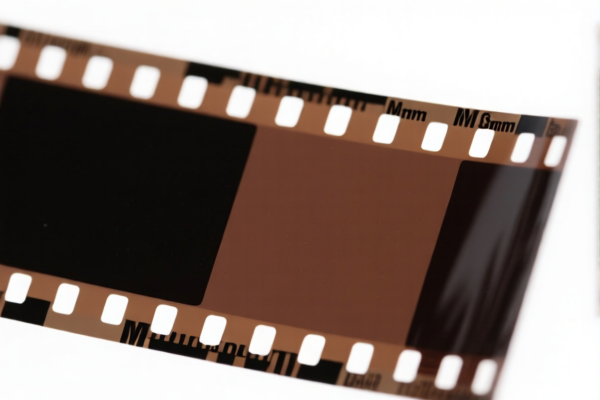


AI Analysis
🎞️ 35mm Film (Low Contrast) – Precision Classification Guide 2026
🌐 HS Code Reference & Clearance Strategy | High-Precision Tariff Analysis | Professional Customs Compliance
📌 一、Product Definition: What is "Low Contrast 35mm Film"?
35mm Film (Low Contrast) refers to photographic light-sensitive material (typically black and white or specific color reversal/positive film) characterized by a shallow tonal range. It is primarily used in fine art photography, high-end portraiture, and scientific imaging where soft gradations and reduced shadow/highlight differentiation are desired.
In international trade, this product falls under Chapter 37: Photographic or Cinematographic Goods. Specifically, it is classified based on whether it is:
1. In Emulsion Form (Unexposed/Ready-to-use strips) → HS Code 3702 (Rolls/Films).
2. As Chemical Emulsion (Liquid/Ready for coating) → HS Code 3707 (Sensitized Emulsions).
⚠️ Critical Distinction:
- If the product is finished photographic film (strip, packaged for immediate use) → Goes to 3702.
- If the product is sensitized emulsion liquid/paste (sold to labs or manufacturers for coating) → Goes to 3707.
- Note: The data provided in includes both categories. We must map the specific physical form to the correct HS Code.
📦 二、HS Code Classification Details (Based on Provided Data)
| HS Code | Product Description (from Data) | Application Scenario | Key Identifier |
|---|---|---|---|
3702.54.00.30 |
Sensitized film rolls – Categorized under "Other film rolls" via fallback logic | Standard 35mm photographic film rolls (unexposed) | ✅ Finished Film Rolls |
3707.10.00.90 |
Photographic light-sensitive materials – "Other" class sensitized emulsions | Liquid/Paste emulsions for coating or industrial use | ✅ Liquid Emulsion |
3707.10.00.05 |
Sensitized emulsion category – Suitable for unspecified color films | General chemical emulsion for film manufacturing | ✅ Chemical Emulsion |
3701.99.60.60 |
Non-paper/non-textile light-sensitive film – "Other light-sensitive films" | Large format sheets or specific non-standard substrates | ✅ Flat Sheets/Non-Standard |
3701.91.00.60 |
Color photographic category – Light-sensitive film meeting other material requirements | Color film strips meeting specific material specs | ✅ Color Film Strips |
🔍 Key Insight:
- Most Common: For standard retail/wholesale 35mm film rolls (including low contrast B&W or Color),3702.54.00.30is the most likely fit.
- Industrial/Chemical: If you are shipping the raw chemical emulsion to coat the film, use3707.10.00.90or3707.10.00.05.
- Color vs. B&W: If the "Low Contrast" refers to Color Reversal (Slide) Film, it may fall under3701.91.00.60. If it is Black & White, it usually falls under3702(as B&W film is typically treated as "other" unless specified as color).
💰 三、2026 Tariff Rate Breakdown (Including Surcharges)
✅ Applicable Country: United States (US)
✅ Country of Origin: China (CN)
✅ Effective Date: 2025–2026 (Current Trade Policy)
All items in the provided data share a similar tax structure due to the Section 301 Tariffs and IEEPA Surcharges.
🎯 1. 3702.54.00.30 – Sensitized Film Rolls (Most Likely for 35mm Rolls)
| Item | Details |
|---|---|
| Base Tariff | 3.7% (ad valorem) |
| Section 301 Surcharge | +25.0% |
| Section 122 Tariff | +10.0% |
| Total Tax Rate | 38.7% |
| Tax Calculation | CIF Value × 38.7% |
| De Minimis Eligibility | ❌ No (High tariff threshold blocks de minimis) |
| Legal Basis | USITC:3702.54.00.30 + Section 301 Footnote + Section 122 |
📌 Explanation:
- 3.7% Base: Standard MFN tariff for "Other photographic film rolls."
- 25% Section 301: Added tariffs on Chinese goods affecting Chapter 37 items.
- 10% Section 122: National security tariffs applied to certain imports.
- Total 38.7%: This is a high-cost entry. Must be accounted for in pricing strategy.
🎯 2. 3707.10.00.90 & 3707.10.00.05 – Sensitized Emulsions
| Item | Details |
|---|---|
| Base Tariff | 3.0% (ad valorem) |
| Section 301 Surcharge | +25.0% |
| Section 122 Tariff | +10.0% |
| Total Tax Rate | 38.0% |
| Tax Calculation | CIF Value × 38.0% |
| De Minimis Eligibility | ❌ No |
📌 Explanation:
- Slightly lower base rate (3.0% vs 3.7%) due to classification as "chemicals/emulsions" rather than "finished goods."
- Still subject to full surcharges.
🎯 3. 3701.91.00.60 – Color Photographic Film
| Item | Details |
|---|---|
| Base Tariff | 3.7% (ad valorem) |
| Section 301 Surcharge | +25.0% |
| Section 122 Tariff | +10.0% |
| Total Tax Rate | 38.7% |
| Tax Calculation | CIF Value × 38.7% |
🎯 4. 3701.99.60.60 – Other Non-Paper/Non-Textile Film
| Item | Details |
|---|---|
| Base Tariff | 0.0% (ad valorem) |
| Section 301 Surcharge | +25.0% |
| Section 122 Tariff | +10.0% |
| Total Tax Rate | 35.0% |
| Tax Calculation | CIF Value × 35.0% |
📌 Note: This code has 0% base, resulting in the lowest total rate (35%), but it applies only to non-standard formats (e.g., large sheets, industrial plates), not standard 35mm rolls.
🛠️ 四、Customs Clearance Practical Advice (Avoid Pitfalls)
✅ 1. Document Checklist (Mandatory)
| Document | Required? | Purpose |
|---|---|---|
| ✅ Product Specification Sheet | ✔️ | Must state: "35mm Film," "Low Contrast," "Black & White" or "Color," "Sensitized." |
| ✅ Chemical Composition (for Emulsions) | ✔️ | For 3707 codes, provide exact emulsion type (AgBr, AgCl, etc.). |
| ✅ Commercial Invoice | ✔️ | Clearly describe as "Photographic Film Roll" or "Sensitized Emulsion," NOT generic "Chemicals." |
| ✅ Packaging Photos | ✔️ | Show 35mm canisters, reels, or flat packaging to prove form factor. |
| ✅ Safety Data Sheet (SDS) | ✔️ | Required for chemical handling, especially for emulsions (3707). |
✅ 2. Declaration Tips (Key Mnemonic)
🔥 “Form Determines Code, Description Must Match!”
| Scenario | Correct HS Code | Why? |
|---|---|---|
| Standard 35mm Roll (B&W or Color) | 3702.54.00.30 |
It’s a "roll" of sensitized film. |
| Liquid Emulsion (for coating) | 3707.10.00.90 |
It’s a "chemical emulsion," not a film roll. |
| Large Format Sheets | 3701.99.60.60 |
Not a roll; falls under "other." |
| Color Reversal Film | 3701.91.00.60 |
Specific color category. |
❌ Common Mistake:
- Describing 35mm rolls as "Photographic Paper" → Wrong Chapter (3701 vs 3702).
- Describing liquid emulsion as "Film" → Misclassification Risk.
- Using generic "Optical Materials" → Customs will reject and request correction.
✅ 3. Special Cases
| Case | Handling Advice |
|---|---|
| Low Contrast B&W Film | Classify under 3702 (B&W is often grouped with "other" unless specified as color negative). |
| Low Contrast Color Slide Film | Classify under 3701.91.00.60 (Color category). |
| Raw Chemical Emulsion | Provide SDS and chemical formula. Customs may inspect for hazardous materials. |
| Kit (Film + Developer) | If sold together, the film usually determines the classification, but declare items separately if possible to avoid confusion. |
🌍 五、Global Market Comparison (2026)
| Country/Region | Recommended HS Code | Tariff Rate | Notes |
|---|---|---|---|
| 🇺🇸 USA | 3702.54.00.30 |
38.7% | High due to Section 301 + 122. |
| 🇨🇳 China | 3702.54.00.30 |
5–7% | Standard import duty. No surcharges. |
| 🇪🇺 EU | 3702.54.00.00 |
0% | No additional tariffs if origin compliant. |
| 🇬🇧 UK | 3702.54.00.00 |
0% | Post-Brexit tariff. |
| 🇯🇵 Japan | 3702.54.00.00 |
0–3% | Low tariff for photographic goods. |
📌 Conclusion:
- USA is the most expensive market for this product due to 38.7% total tax.
- EU/UK/Japan offer significant cost advantages (0–3%).
- Consider supply chain diversification if targeting the US market.
📌 六、Common Errors & Pitfalls (Lessons Learned)
❌ Error 1: Declaring 35mm film as "Optical Fiber" or "Computer Parts"
👉 Result: Customs detention, fines, and retroactive tariff application.
❌ Error 2: Missing "Sensitized" Keyword in Description
👉 Result: Customs may classify as "Unexposed Plastic Film" (3920) → Lower tariff but incorrect legal status.
❌ Error 3: Confusing "Low Contrast" with "Unexposed/Blank"
👉 Result: "Low Contrast" is a photographic characteristic, not a raw material state. Must declare as sensitized.
❌ Error 4: Ignoring Section 122 Tariff
👉 Result: Underpayment by 10% → Back taxes + Penalties.
✅ Correct Declaration Example:
"35mm Black & White Photographic Film, Low Contrast, Sensitized, Roll Format, 36 Exposures, Model LC-35"
🎯 七、Conclusion: Precision Classification for Cost Efficiency
🎯 Key Takeaway:
🔹 35mm Film Rolls →
3702.54.00.30→ 38.7% Total Tax
🔹 Liquid Emulsions →3707.10.00.90→ 38.0% Total Tax
🔹 Large Sheets →3701.99.60.60→ 35.0% Total Tax (Best Rate if applicable)
📌 Pro Tip:
If your product is large-format sheets (not rolls), use 3701.99.60.60 to save 3.7% in base tax.
For standard 35mm rolls, the 38.7% rate is unavoidable under current US policy. Build this cost into your pricing.
📣 Immediate Action:
📞 Consult a Licensed Customs Broker for pre-classification ruling.
📄 Prepare Detailed Specs including "Sensitized," "35mm," and "Low Contrast."
🚀 Plan for High US Tariffs: Consider pricing strategies or alternative markets (EU/Asia).
✨ Professional Clearance Starts with Accurate Classification!
💼 Your Profit Margin Depends on the Right HS Code!
Customer Reviews
About HS Code Classification
The Harmonized System (HS) is an internationally standardized nomenclature developed by the World Customs Organization (WCO) to classify traded products. Over 200 countries use the HS system as the basis for customs tariffs, trade statistics, and import/export regulations.
Each HS code follows a hierarchical structure:
- Chapter (2 digits) — Broad category of goods (e.g., Chapter 84: Machinery and Mechanical Appliances)
- Heading (4 digits) — More specific grouping within the chapter
- Subheading (6 digits) — Internationally standardized breakdown, used by all WCO member countries
- National subdivisions (8-10 digits) — Country-specific extensions for further classification, such as US HTSUS 10-digit codes
Correct HS code classification is essential for smooth customs clearance, accurate duty payment, and compliance with trade regulations. Misclassification can lead to customs delays, overpayment of duties, or penalties.
When importing from CN to US, the applicable tariff rates may include:
- Most-Favored-Nation (MFN) rate — The standard duty rate applied to WTO members
- General rate — Applied to countries without trade agreements
- Trade remedy duties — Additional tariffs such as Section 301 (anti-dumping), Section 232 (national security), or countervailing duties
The information provided on this page is for reference purposes only. For official classification, please consult with your local customs authority or a licensed customs broker.