35mm Film (Specialized)
CN → US| HS Code | Tariff Rate | Origin | Destination | Doc |
|---|---|---|---|---|
| 3706106060 | 35.0% | CN | US | Official Doc |
| 3702550060 | 35.0% | CN | US | Official Doc |
| 3706106090 | 35.0% | CN | US | Official Doc |
| 3702540030 | 38.7% | CN | US | Official Doc |
| 9705290000 | 10.0% | CN | US | Official Doc |
Product Images

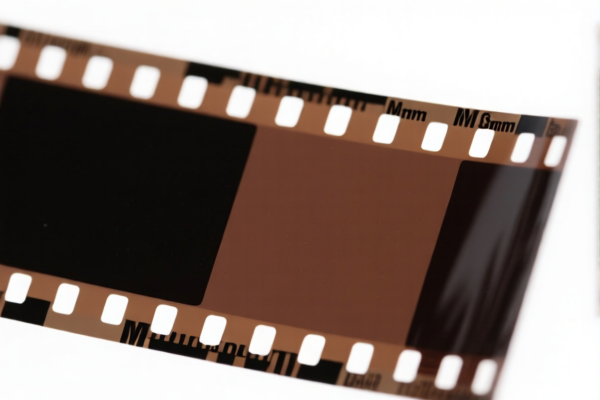


AI Analysis
🎞️ 35mm Film (Specialized) – Museum Grade & Professional Cinematography
🌐 HS Code Reference & Customs Clearance Guide | 2026 Latest Tariff Analysis | Expert-Level Clearance Strategy
📌 I. Product Definition & Classification: Do You Truly Understand "35mm Film"?
35mm Film, particularly the specialized variants mentioned in your query, refers to high-precision photographic or cinematographic media. In international trade, the classification hinges on three critical factors: 1. Width: Strictly 35mm. 2. State: Unexposed (raw film stock) vs. Exposed (already developed/shootable footage). 3. Purpose: Commercial distribution, artistic archive, or museum-grade preservation.
⚠️ Key Distinction:
- Raw/Unexposed Film: Classified under Chapter 37 (Photographic or Cinematographic Goods). The destination code depends on whether it fits specific width/grade definitions (e.g., 3702 for photographic film, 3706 for cinematographic film).
- Exposed/Developed Film: If already processed and intended for projection/archive, it may fall under Chapter 97 (Works of Art, Collectors' Pieces) if deemed of historical/scientific value.
📦 II. HS Code Classification Details (2026 Latest Tariff Authority Comparison)
| HS Code | Product Description | Application Scenario | Key Classification Feature |
|---|---|---|---|
3706.10.60.60 |
Cinematographic film, 35mm+, for museum-grade preservation, not for commercial distribution | Archival projects, museum collections, non-commercial scientific use | Purpose-driven: "Other" category for non-distribution copies |
3702.55.00.60 |
Photographic/Scientific film roll, 35mm width (16mm-35mm range), non-paper/non-textile base | Laboratory analysis, scientific imaging, specialized photography | Width-driven: Fits 3702.55 "Other" subheading for width |
3706.10.60.90 |
Cinematographic film, 35mm, "Other" category (unexposed), no material conflict | General professional cinematography, unexposed stock | State-driven: Unexposed, generic "Other" classification |
3702.54.00.30 |
Photographic film, 35mm, standard commercial grade | Standard commercial photography, high-volume production | Standard Grade: Subject to higher base tariff due to commercial nature |
9705.29.00.00 |
Museum-grade film, historical/scientific value, collectors' item | Historical archives, museum exhibits, rare film stock | Value-driven: Classified as "Works of Art/Collectibles" |
🔍 Critical Note:
- Unexposed vs. Exposed: If the film is exposed (already shot and developed) and has historical/scientific significance, it shifts from Chapter 37 to 9705. - Material Assumption: All Chapter 37 codes assume a non-paper, non-textile base (cellulose acetate or polyester), which is standard for 35mm film.
💰 III. 2026 Latest Tariff Rate Breakdown (Including Surtaxes & Policy Add-ons)
✅ Applicable Country: United States (US)
✅ Origin: China (CN)
✅ Effective Date: November 10, 2025 (and onwards)
🎯 1. 3706.10.60.60 & 3702.55.00.60 & 3706.10.60.90 – Specialized/Non-Commercial Film
| Item | Content |
|---|---|
| Base Tariff | 0% (ad valorem) |
| USITC Surtax | +25% (from USITC Footnote 9903.88.01) |
| IEEPA Surtax | +10% (针对中国/香港产品, starting Nov 10, 2025) |
| Total Rate | 35.0% |
| Tax Calculation | CIF Value × 35% |
| De Minimis Eligibility | ❌ No (deny_de_minimis) |
| Legal Path | IEEPA:9903.01.25 → IEEPA:9903.01.24 → USITC:3706.10.60.60 / 3702.55.00.60 / 3706.10.60.90 |
📌 Explanation:
- 35% Total is a high barrier for non-commercial imports. - The 25% USITC rate applies to most photographic/cinematographic goods of Chinese origin. - The 10% IEEPA rate is the additional layer for China-specific tariffs effective late 2025.
🎯 2. 3702.54.00.30 – Standard Commercial Film
| Item | Content |
|---|---|
| Base Tariff | 3.7% (ad valorem) |
| USITC Surtax | +25% (from USITC Footnote 9903.88.01) |
| IEEPA Surtax | +10% (针对中国/香港产品) |
| Total Rate | 38.7% |
| Tax Calculation | CIF Value × 38.7% |
| De Minimis Eligibility | ❌ No (deny_de_minimis) |
| Legal Path | IEEPA:9901.25 → IEEPA:9903.01.24 → USITC:3702.54.00.30 |
📌 Note:
- This code carries a higher total rate (38.7%) because it has a 3.7% base tariff instead of 0%. - Applies to standard commercial-grade film, not specialized/museum-grade.
🎯 3. 9705.29.00.00 – Museum-Historical/Collectible Film
| Item | Content |
|---|---|
| Base Tariff | 0% (ad valorem) |
| USITC Surtax | 0% (Exempted for certain works of art/collectibles) |
| IEEPA Surtax | +10% (Applicable to China-origin goods) |
| Total Rate | 10.0% |
| Tax Calculation | CIF Value × 10% |
| De Minimis Eligibility | ❌ No (deny_de_minimis) |
| Legal Path | IEEPA:9903.01.24 → USITC:9705.29.00.00 |
📌 Strategic Advantage:
- Only 10% Total! This is the lowest tariff among all options. - Condition: The film must be explicitly declared as "Museum-grade," "Historical," or "For Scientific Research" to qualify for Chapter 97. It cannot be used for new commercial photography.
🛠️ IV. Customs Clearance Practical Advice (Real-World Pitfall Avoidance)
✅ 1. Documentation Checklist (Mandatory)
| Document | Required | Explanation |
|---|---|---|
| ✅ Product Specification Sheet | ✔️ | Must explicitly state "35mm," "Unexposed/Exposed," "Museum-Grade." |
| ✅ Letter of Intent/Usage Statement | ✔️ | For 9705: Must confirm use in museums, archives, or research. |
| ✅ Commercial Invoice | ✔️ | Clearly describe item as "Cinematographic Film" or "Historical Film Collectible." |
| ✅ Origin Certificate | ✔️ | To prove Chinese origin (triggers IEEPA surtax). |
| ✅ Packaging List | ✔️ | Detail number of rolls, width, and chemical composition (base material). |
✅ 2. Declaration Tips (Key Mantra)
🔥 "Purpose Dictates Code, Museum Saves 25%!"
| Scenario | Correct Declaration | Wrong Practice |
|---|---|---|
| New, unexposed film for archives | 9705.29.00.00 (if historical/value-added) |
Misdeclare as 3706 → Pay 35% instead of 10% |
| Raw film for commercial shoot | 3706.10.60.90 or 3702.54.00.30 |
Misdeclare as 9705 → Customs seizure for false declaration |
| Mixed shipment (Art + Commercial) | Split HS Codes | Single code → High risk of audit & penalty |
| Exposure Status | Clearly state "Unexposed" | Ambiguous description → Delays & re-inspection |
✅ 3. Special Cases Handling
| Case | Handling Advice |
|---|---|
| OEM Custom Film | Provide design specs; still likely 3706 unless historical. |
| Developed/Exposed Film | If not historical, may face complex classification; lean towards 9705 only if true art/historic value. |
| Museum Imports | Request Advance Ruling for 9705.29.00.00 to lock in 10% rate. |
| Small Quantity Samples | Still subject to tariffs; no de minimis exemption for Chinese origin in these categories. |
🌍 V. Global Market Comparison (2026 Latest)
| Country/Region | Recommended HS Code | Tariff (China Origin) | Certifications | Notes |
|---|---|---|---|---|
| 🇺🇸 USA | 9705.29.00.00 (if eligible) |
10% | None usually | If 3706, rate is 35% |
| 🇨🇳 China | 3706.10.60.90 |
~3-5% | CCC (if applicable) | Low base tariff, no IEEPA |
| 🇪🇺 EU | 3706.10.60 |
0-5% | REACH | No surtaxes, but strict chemical compliance |
| 🇬🇧 UK | 3706.10.60 |
0-5% | UKCA | Post-Brexit rules may vary slightly |
📌 Conclusion:
- USA is the most expensive market due to IEEPA + USITC surcharges. - Optimizing for9705.29.00.00can save 25% compared to standard film codes, provided the product meets "museum/historical" criteria.
📌 VI. Common Errors & Pitfalls (Lessons Learned)
❌ Error 1: Declaring commercial film as "Museum Archive" without proof
👉 Consequence: Customs rejects 9705, reclassifies to 3706 → Back taxes + penalties!
❌ Error 2: Using 3702 (Photographic) for Cinematographic Film
👉 Consequence: Classification error, possible detention. 35mm cinematic film is typically 3706.
❌ Error 3: Ignoring the 10% IEEPA Surtax
👉 Consequence: Underpayment → Seizure at border. Even 9705 is 10%, not 0%.
❌ Error 4: Vague Descriptions like "Film Roll"
👉 Consequence: Customs assumes worst-case scenario or delays for inspection.
✅ Correct Approach:
"35mm Cinematographic Film, Unexposed, Museum-Grade Preservation Stock, for Historical Archive Use, HS Code 9705.29.00.00"
🎯 VII. Conclusion: Smart Classification for Cost Efficiency
🎯 Remember the Mantra:
🔹 "Museum Status = 10% Tariff"
🔹 "Commercial Grade = 35-38.7% Tariff"
🔹 "Don't Guess, Declare Clearly!"
📌 Pro Tip:
If your 35mm film is truly historical, rare, or for museum exhibition, strongly consider applying for Advance Ruling to classify under 9705.29.00.00. This can save you 25 percentage points in tariffs compared to standard film codes.
📣 Immediate Action:
📞 Consult a licensed customs broker for HS Code Pre-Ruling.
📄 Prepare Museum/Institutional Letters of Intent to support9705classification.
🚀 Optimize your supply chain costs with precise classification!
✨ Professional Clearance Starts with Accurate Classification!
💼 Your cost savings depend on the HS Code you choose!
Customer Reviews
About HS Code Classification
The Harmonized System (HS) is an internationally standardized nomenclature developed by the World Customs Organization (WCO) to classify traded products. Over 200 countries use the HS system as the basis for customs tariffs, trade statistics, and import/export regulations.
Each HS code follows a hierarchical structure:
- Chapter (2 digits) — Broad category of goods (e.g., Chapter 84: Machinery and Mechanical Appliances)
- Heading (4 digits) — More specific grouping within the chapter
- Subheading (6 digits) — Internationally standardized breakdown, used by all WCO member countries
- National subdivisions (8-10 digits) — Country-specific extensions for further classification, such as US HTSUS 10-digit codes
Correct HS code classification is essential for smooth customs clearance, accurate duty payment, and compliance with trade regulations. Misclassification can lead to customs delays, overpayment of duties, or penalties.
When importing from CN to US, the applicable tariff rates may include:
- Most-Favored-Nation (MFN) rate — The standard duty rate applied to WTO members
- General rate — Applied to countries without trade agreements
- Trade remedy duties — Additional tariffs such as Section 301 (anti-dumping), Section 232 (national security), or countervailing duties
The information provided on this page is for reference purposes only. For official classification, please consult with your local customs authority or a licensed customs broker.