35mm Film (Surveillance)
CN → US| HS Code | Tariff Rate | Origin | Destination | Doc |
|---|---|---|---|---|
| 3706106090 | 35.0% | CN | US | Official Doc |
| 3702540030 | 38.7% | CN | US | Official Doc |
| 9705290000 | 10.0% | CN | US | Official Doc |
| 3706106060 | 35.0% | CN | US | Official Doc |
| 3702550060 | 35.0% | CN | US | Official Doc |
Product Images

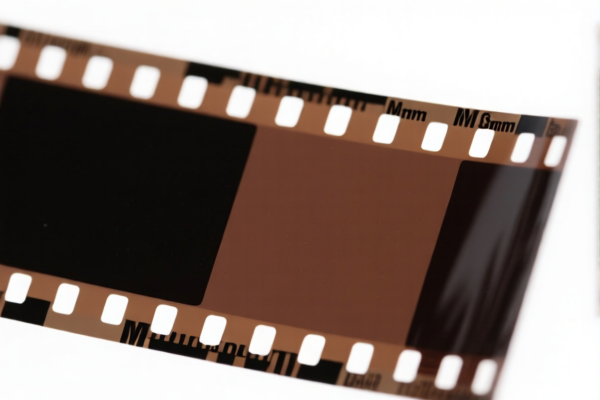


AI Analysis
🎞️ 35mm Film (Surveillance)
🌐 HS Code Reference & Customs Clearance Guide | 2026 Latest Tariff Analysis | Professional Clearance Strategy
📌 1. Product Definition & Classification: What is “35mm Surveillance Film”?
35mm film is a standard photographic film format widely used in cinema, photography, and specialized industrial applications. When labeled as “Surveillance Film”, it typically refers to:
- High-sensitivity or high-resolution photographic film used for security monitoring, covert operations, or archival documentation.
- Not digital: It is an analog, light-sensitive chemical medium, not a digital sensor or electronic device.
- Key distinction: It is not a video tape, digital recorder, or electronic surveillance equipment. It is purely photosensitive material.
⚠️ Critical Classification Point:
- If the film is unexposed (raw) and intended for recording images → falls under Chapter 37 (Photographic Goods).
- If it is exposed (developed) and used as historical/archival material → may fall under 9705 (Collectibles).
- Never classify as electronic surveillance equipment (e.g., cameras, DVRs) unless it includes active electronic components.
📦 2. HS Code Classification Details (2026 Latest Tariff Authority Cross-Reference)
| HS Code | Product Description | Application Scenario | Key Classification Basis |
|---|---|---|---|
3706.10.60.90 |
Other cinematographic film, unexposed, 35mm or wider, for motion pictures | Raw film for cinema or surveillance recording (unexposed) | Format: 35mm film; Material: Plastic base; Use: Cinematic/Surveillance |
3702.54.00.30 |
Other photographic film, unexposed, of a width of 105 mm or more | Less likely for 35mm; provided for comparison | Width mismatch (35mm < 105mm) |
9705.29.00.00 |
Collectors’ pieces of a kind identified as museum grade | Exposed/historical 35mm film with archival value | Historical/research value; Museum-grade collectible |
3706.10.60.60 |
Other cinematographic film, unexposed, 35mm or wider, for motion pictures | Same as 3706.10.60.90; alternative subheading | Same as above; “Other” category for non-standard use |
3702.55.00.60 |
Other photographic film, unexposed, 16mm–35mm wide | General-purpose unexposed 35mm film | Width: 16mm–35mm; Material: Non-paper/non-textile |
🔍 Key Notes:
- Unexposed film (raw, chemical-sensitive) → Chapter 37 (3706 or 3702).
- Exposed/developed film with historical value → 9705 (Collectibles).
- Surveillance is a use case, not a material characteristic. Customs classifies based on physical form and material, not end-use alone.
💰 3. 2026 Latest Tariff Rate Breakdown (Including Surtaxes, Policy Add-ons)
✅ Applicable Country: United States (US)
✅ Country of Origin: China (CN)
✅ Effective Date: From November 10, 2025 (including subsequent imports)
🎯 1. 3706.10.60.90 — Cinematographic Film, Unexposed, 35mm+
| Item | Details |
|---|---|
| Base Tariff | 0% (ad valorem) |
| USITC Surtax | +25% (from USITC Footnote 9903.88.01) |
| IEEPA Surtax | +10% (on China/HK products, effective Nov 10, 2025) |
| Total Tariff | 35% |
| Tax Calculation | CIF Value × 35% |
| De Minimis Eligibility | ❌ No (deny_de_minimis) |
| Legal Basis Path | IEEPA:9903.01.25 → IEEPA:9903.01.24 → USITC:3706.10.60.90 → FOOTNOTE:9903.88.01 |
📌 Explanation:
- 25% USITC Surtax: From Section 301 of the US Trade Act.
- 10% IEEPA Surtax: From the International Emergency Economic Powers Act.
- Total 35% is very high. Must be factored into landed cost.
🎯 2. 3702.54.00.30 — Other Photographic Film, Unexposed, 105mm+
| Item | Details |
|---|---|
| Base Tariff | 3.7% |
| USITC Surtax | +25% |
| IEEPA Surtax | +10% |
| Total Tariff | 38.7% |
| Tax Calculation | CIF Value × 38.7% |
| De Minimis Eligibility | ❌ No |
| Legal Basis Path | IEEPA:9903.01.25 → IEEPA:9903.01.24 → USITC:3702.54.00.30 → FOOTNOTE:9903.88.01 |
📌 Note:
- Less likely for 35mm due to width requirement (≥105mm).
- Provided for comparison only. Misclassification here leads to higher tax.
🎯 3. 9705.29.00.00 — Collectors’ Pieces (Museum Grade)
| Item | Details |
|---|---|
| Base Tariff | 0% |
| USITC Surtax | 0% |
| IEEPA Surtax | +10% |
| Total Tariff | 10% |
| Tax Calculation | CIF Value × 10% |
| De Minimis Eligibility | ❌ No |
| Legal Basis Path | IEEPA:9901.25 → USITC:9705.29.00.00 |
📌 Note:
- Only applies if film is exposed, historical, and museum-grade.
- Lower tax (10%) but strict documentation required.
- Not for raw/surveillance film.
🎯 4. 3706.10.60.60 — Cinematographic Film, Unexposed, 35mm+
| Item | Details |
|---|---|
| Base Tariff | 0% |
| USITC Surtax | +25% |
| IEEPA Surtax | +10% |
| Total Tariff | 35% |
| Tax Calculation | CIF Value × 35% |
| De Minimis Eligibility | ❌ No |
| Legal Basis Path | IEEPA:9903.01.25 → IEEPA:9903.01.24 → USITC:3706.10.60.60 → FOOTNOTE:9903.88.01 |
📌 Note:
- Same tax as 3706.10.60.90.
- Difference is subheading nuance (e.g., “other” vs. specific category).
- 35% total remains high.
🎯 5. 3702.55.00.60 — Other Photographic Film, Unexposed, 16mm–35mm
| Item | Details |
|---|---|
| Base Tariff | 0% |
| USITC Surtax | +25% |
| IEEPA Surtax | +10% |
| Total Tariff | 35% |
| Tax Calculation | CIF Value × 35% |
| De Minimis Eligibility | ❌ No |
| Legal Basis Path | IEEPA:9903.01.25 → IEEPA:9903.01.24 → USITC:3702.55.00.60 → FOOTNOTE:9903.88.01 |
📌 Note:
- Most accurate for 35mm surveillance film if not classified as cinematographic.
- 35% total tax.
- Widely accepted for general-purpose 35mm film.
🛠️ 4. Customs Clearance Practical Advice (Real-World Pitfall Guide)
✅ 1. Required Documentation Checklist (All Must Be Provided)
| Document | Mandatory | Explanation |
|---|---|---|
| ✅ Product Specification Sheet | ✔️ | Includes film type, sensitivity, width, base material, expiration date |
| ✅ Certificate of Analysis (COA) | ✔️ | Confirms chemical composition, absence of prohibited substances |
| ✅ Product Photos (including packaging) | ✔️ | Shows label, barcode, manufacturer info |
| ✅ Commercial Invoice | ✔️ | Must state “35mm Unexposed Photographic Film for Surveillance Use” |
| ✅ Packing List | ✔️ | Details quantities, weights, and packaging units |
| ✅ Third-Party Test Report | ✔️ | If applicable (e.g., RoHS, REACH compliance) |
| ✅ Origin Certificate (CO) | ✔️ | If non-China origin, may qualify for lower tariffs |
| ✅ Pre-Ruling Decision | ✔️ | Recommended to avoid classification disputes |
✅ 2. Declaration Tips (Key Mnemonics)
🔥 “Raw Film = Chapter 37; Museum Grade = 9705; Don’t Split, Don’t Guess!”
| Scenario | Correct Declaration | Wrong Action |
|---|---|---|
| Unexposed 35mm film | 3706.10.60.90 or 3702.55.00.60 |
Misclassify as “surveillance equipment” → 80%+ tax |
| Exposed historical film | 9705.29.00.00 |
Declare as raw film → 35% instead of 10% |
| Film + Camera Kit | Declare separately | Bundle → Complex classification, higher risk |
| Digital Surveillance System | Not 35mm Film | Mislabel digital as film → Severe penalty |
✅ 3. Special Cases Handling
| Scenario | Recommendation |
|---|---|
| OEM Surveillance Film | Provide client contract + design specs to avoid “non-standard” label |
| Film with Sensitive Content | Declare as “Photographic Film” only; avoid “surveillance” in description if unnecessary |
| Museum/Archival Film | Submit provenance, historical value proof for 9705 classification |
| Mixed Shipments (Film + Digital Gear) | Separate lines on invoice; different HS codes |
🌍 5. Global Market Clearance Comparison (2026 Latest)
| Country/Region | Recommended HS Code | Tariff | Certification Requirement | Notes |
|---|---|---|---|---|
| 🇺🇸 USA | 3702.55.00.60 |
35% (China) | No specific | 10% if museum-grade |
| 🇨🇳 China | 3702.55.00.60 |
5% | CCC (if applicable) | No surtax |
| 🇪🇺 EU | 3702.55.00.60 |
4.5% | CE (if electronic parts) | No surtax |
| 🇬🇧 UK | 3702.55.00.60 |
4.5% | UKCA | Post-Brexit rules |
| 🇦🇺 Australia | 3702.55.00.60 |
5% | RCM | No surtax |
📌 Conclusion:
- USA imposes the highest effective tariff (35%) due to Section 301 and IEEPA surtaxes.
- Other markets are significantly cheaper (4.5%–5%).
- Strategic sourcing from non-China origins can reduce costs dramatically.
📌 6. Common Errors & Pitfall Guide (Lessons Learned)
❌ Error 1: Declaring “35mm Film” without specifying exposed vs. unexposed
👉 Consequence: Customs may classify as 9705 (10%) or 3702 (35%) arbitrarily → delay or penalty
❌ Error 2: Using “Surveillance Equipment” in declaration for film only
👉 Consequence: Misclassification → tariff jump to 80%+ for electronic goods
❌ Error 3: Bundling film with cameras in one HS code
👉 Consequence: Complex clearance, potential audit → higher duties
❌ Error 4: Omitting “unexposed” in description
👉 Consequence: Customs assumes developed film → potential 9705 misclassification
✅ Correct Declaration Example:
“35mm Unexposed Photographic Film, Plastic Base, For Surveillance Archival Use, Model XYZ, Raw Chemical Medium, Non-Digital”
🎯 7. Conclusion: Precision in Classification Saves Money!
🎯 Key Takeaways:
🔹 “Unexposed Film = Chapter 37 (35% Tax)”
🔹 “Museum Grade = 9705 (10% Tax)”
🔹 “Surveillance = Use Case, Not Classification Basis”
🔹 “Declare ‘Unexposed Photographic Film’, Not ‘Surveillance Gear’”
📌 Pro Tip:
If your film is originating from Vietnam, Mexico, Thailand, or Malaysia, you may avoid IEEPA surtax → Tariff drops to 25%.
Apply for Advance Ruling before shipment to lock in classification.
📣 Immediate Action Steps:
📞 Contact a licensed customs broker
📦 Provide product images + specification sheet
📄 Request HS Code Advance Ruling from US CBP
🚀 Ensure smooth clearance, minimize duty costs, maximize profit!
✨ Professional clearance starts with accurate classification!
💼 Every cent saved is a cent earned!
Customer Reviews
About HS Code Classification
The Harmonized System (HS) is an internationally standardized nomenclature developed by the World Customs Organization (WCO) to classify traded products. Over 200 countries use the HS system as the basis for customs tariffs, trade statistics, and import/export regulations.
Each HS code follows a hierarchical structure:
- Chapter (2 digits) — Broad category of goods (e.g., Chapter 84: Machinery and Mechanical Appliances)
- Heading (4 digits) — More specific grouping within the chapter
- Subheading (6 digits) — Internationally standardized breakdown, used by all WCO member countries
- National subdivisions (8-10 digits) — Country-specific extensions for further classification, such as US HTSUS 10-digit codes
Correct HS code classification is essential for smooth customs clearance, accurate duty payment, and compliance with trade regulations. Misclassification can lead to customs delays, overpayment of duties, or penalties.
When importing from CN to US, the applicable tariff rates may include:
- Most-Favored-Nation (MFN) rate — The standard duty rate applied to WTO members
- General rate — Applied to countries without trade agreements
- Trade remedy duties — Additional tariffs such as Section 301 (anti-dumping), Section 232 (national security), or countervailing duties
The information provided on this page is for reference purposes only. For official classification, please consult with your local customs authority or a licensed customs broker.