35mm Film ISO 800
CN → US| HS Code | Tariff Rate | Origin | Destination | Doc |
|---|---|---|---|---|
| 3707100090 | 38.0% | CN | US | Official Doc |
| 3707100005 | 38.0% | CN | US | Official Doc |
| 3701996060 | 35.0% | CN | US | Official Doc |
| 3701910060 | 38.7% | CN | US | Official Doc |
| 3702540030 | 38.7% | CN | US | Official Doc |
Product Images

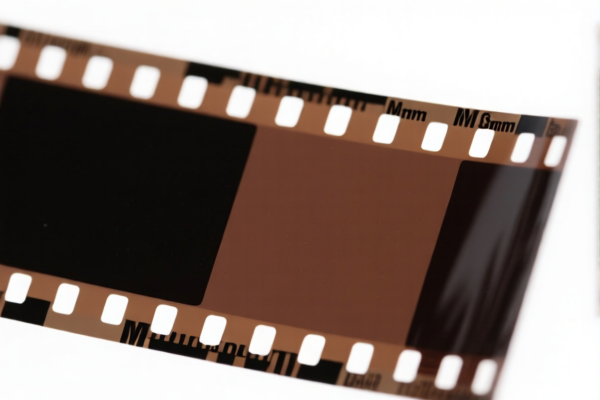


AI Analysis
🎞️ 35mm Film ISO 800 (Photographic Sensitized Materials)
🌐 HS Code Reference & Customs Clearance Guide | 2026 Latest Tariff Analysis | Professional Clearance Strategy
📌 I. Product Definition & Classification: Do You Really Understand "35mm Film"?
35mm Film ISO 800 is a classic sensitized photographic material widely used in professional photography, film cameras, and creative arts. In international trade, it falls under Chapter 37 (Photographic or Cinematographic Goods).
Depending on the specific chemical composition, state of sensitization (exposed vs. unexposed), and packaging, it may be classified into several subheadings within HS Codes 3701 and 3707.
⚠️ Key Distinction Points:
- Color vs. Black & White: Color film generally has stricter chemical classifications.
- Exposed vs. Unexposed: "ISO 800" implies a light-sensitive emulsion ready for use (typically unexposed when sold).
- Substrate Material: The base is usually plastic (cellulose acetate or polyester), not paper or textile.
📦 II. HS Code Classification Details (2026 Latest Tariff Authority Cross-Reference)
Based on the provided data, here are the potential HS Codes for 35mm Film ISO 800:
| HS Code | Product Description | Applicability Scenario | Key Classification Feature |
|---|---|---|---|
3707.10.00.90 |
Other sensitized materials (for photographic use) | General-purpose 35mm film, fitting "other categories" | Broad category for sensitized materials |
3707.10.00.05 |
Sensitized materials matching photographic chemical agents | Chemical emulsion-based film, fits photographic reagent category | Focus on chemical emulsion properties |
3701.99.60.60 |
Other sensitized materials (non-paper, non-textile base) | Plastic-base film (acetate/polyester), not paper or textile | Substrate: Non-paper/non-textile |
3701.91.00.60 |
Sensitized flat film, unexposed (color photographic type) | Color film, unexposed, fits color photographic features | Color + Unexposed + Flat Film |
3702.54.00.30 |
Sensitized film in rolls (color photographic) | Roll film format, color photography, non-paper/non-textile | Roll Format + Color + Sensitized |
🔍 Critical Reminder:
- 3701 typically refers to flat sheets or specific unexposed color film.
- 3702 typically refers to roll film (like standard 35mm rolls).
- 3707 is a broader category for other sensitized materials not specified elsewhere.
- Most 35mm rolls are likely3702.54.00.30(Color Roll Film) or3707variants.
💰 III. 2026 Latest Tariff Rate Breakdown (Including Surcharges & Policy Add-ons)
✅ Applicable Country: United States (US)
✅ Country of Origin: China (CN)
✅ Effective Time: Post-November 2025 (Subject to ongoing trade policies)
🎯 1. 3707.10.00.90 & 3707.10.00.05 – Sensitized Materials (General)
| Item | Content |
|---|---|
| Base Tariff | 3.0% (ad valorem) |
| Section 301 Additional Tariff | +25.0% (USITC Footnote for Chinese goods) |
| Section 122 Tariff | +10.0% (Specific trade provision) |
| Total Tariff Rate | 38.0% |
| Tax Calculation | CIF Value × 38% |
| De Minimis Eligibility | ❌ Not Eligible (High-value chemical/materials often excluded) |
| Legal Basis Path | Base: 3.0% → 301: 25.0% → Sec 122: 10.0% |
📌 Explanation:
- The 3.0% is the standard MFN (Most Favored Nation) duty.
- The 25% is the heavy burden from Section 301 tariffs on Chinese manufactured goods.
- The 10% is an additional levy under Section 122.
- Total: 38% – This is a high-cost category for imports from China.
🎯 2. 3701.99.60.60 – Other Sensitized Materials (Non-Paper/Non-Textile)
| Item | Content |
|---|---|
| Base Tariff | 0.0% |
| Section 301 Additional Tariff | +25.0% |
| Section 122 Tariff | +10.0% |
| Total Tariff Rate | 35.0% |
| Tax Calculation | CIF Value × 35% |
| De Minimis Eligibility | ❌ Not Eligible |
| Legal Basis Path | Base: 0.0% → 301: 25.0% → Sec 122: 10.0% |
📌 Note:
- Although the base tariff is 0%, the add-ons push it to 35%.
- This code applies if the film is classified under "other sensitized materials" (Chapter 3701) and is not specifically defined as color roll film (3702).
🎯 3. 3701.91.00.60 & 3702.54.00.30 – Color Photographic Film (Unexposed/Roll)
| Item | Content |
|---|---|
| Base Tariff | 3.7% |
| Section 301 Additional Tariff | +25.0% |
| Section 122 Tariff | +10.0% |
| Total Tariff Rate | 38.7% |
| Tax Calculation | CIF Value × 38.7% |
| De Minimis Eligibility | ❌ Not Eligible |
| Legal Basis Path | Base: 3.7% → 301: 25.0% → Sec 122: 10.0% |
📌 Explanation:
-3701.91.00.60: Applies to unexposed color film (flat or specific type).
-3702.54.00.30: Applies to color roll film (standard 35mm format).
- Both have a higher base rate (3.7%) compared to general sensitized materials (0% or 3%), resulting in the highest total rate of 38.7%.
- Most standard 35mm color film rolls (ISO 800) will likely fall here.
🛠️ IV. Customs Clearance Practical Advice (Avoid Pitfalls)
✅ 1. Documentation Checklist (Essential)
| Document | Required | Notes |
|---|---|---|
| ✅ Product Specification Sheet | ✔️ | Must specify: Format (35mm), Speed (ISO 800), Type (Color/B&W), Emulsion details |
| ✅ Composition Analysis | ✔️ | Proves it's a sensitized chemical material, not a finished consumer good |
| ✅ Photos (Packaging & Label) | ✔️ | Show "ISO 800", "35mm", "Color Negative/Slide", and origin |
| ✅ Commercial Invoice | ✔️ | Must clearly state "Sensitized Photographic Film" |
| ✅ Certificate of Origin (CO) | ✔️ | Critical for determining Section 301 applicability |
| ✅ Packaging List | ✔️ | Detail quantity per box, total boxes |
✅ 2. Classification Strategy (Key Tips)
🔥 “Know Your Base: Paper? No. Textile? No. Plastic? Yes. Color? Likely 38.7%.”
| Scenario | Correct HS Code | Estimated Total Tariff |
|---|---|---|
| Standard Color 35mm Roll (ISO 800) | 3702.54.00.30 |
38.7% |
| Black & White 35mm Roll | 3707.10.00.90 or 3702.54.00.30 (if B&W is classified similarly) |
38.0% - 38.7% |
| Unexposed Color Film Sheets | 3701.91.00.60 |
38.7% |
| General Sensitized Material (Unclear) | 3707.10.00.90 |
38.0% |
📌 Warning:
- Do not misclassify as "Office Supplies" or "Camera Accessories" to avoid tariffs.
- Do not under-declare value. Customs closely monitors photographic materials due to chemical content.
- Base tariff differences matter:3701.99.60.60(35%) vs3702.54.00.30(38.7%). Ensure accurate classification based on form (roll vs. sheet) and color.
✅ 3. Special Cases
| Case | Handling Advice |
|---|---|
| Bulk Import for Processing | Consider if any duty drawback or special zone applies (rare for consumer film) |
| Sample Imports | Still subject to tariffs if value exceeds de minimis limits; declare accurately |
| Expired Film | May be subject to waste disposal regulations; declare as "expired" if applicable |
| Digital vs. Analog | Ensure no digital components (e.g., QR codes, NFC chips) are included that could shift classification |
🌍 V. Global Market Comparison (2026 Latest)
| Country/Region | Recommended HS Code | Tariff (China Origin) | Certification Required | Notes |
|---|---|---|---|---|
| 🇺🇸 USA | 3702.54.00.30 |
38.7% | None specific | High tariffs due to Sec 301 + Sec 122 |
| 🇨🇳 China | 3702.54.00.30 |
~5-7% | None | Domestic consumption, lower tariffs |
| 🇪🇺 EU | 3702.54.00 |
~0-2% | CE (if applicable) | Lower tariffs, but strict chemical regulations (REACH) |
| 🇬🇧 UK | 3702.54.00 |
~0-2% | UKCA | Post-Brexit rules may vary slightly |
| 🇯🇵 Japan | 3702.54.00 |
~0-5% | None | FTA benefits possible if origin certified |
📌 Conclusion:
- The US is the most expensive market for importing 35mm film from China due to 38.7% total tariffs.
- EU and Japan offer significantly lower tariff burdens but require strict chemical compliance.
- Cost-Benefit Analysis: Importing film to the US from China is highly cost-prohibitive. Consider sourcing from non-China origins (e.g., Japan, EU) to avoid Section 301 tariffs.
📌 VI. Common Errors & Pitfalls (Lessons Learned)
❌ Error 1: Classifying film as "Camera Accessories" (e.g., 9006/9007)
👉 Consequence: Tariffs may be lower, but customs will reclassify and impose back-taxes + penalties.
❌ Error 2: Declaring "Photo Paper" instead of "Film"
👉 Consequence: Wrong HS code, potential seizure if material mismatch is detected.
❌ Error 3: Ignoring Section 122 Tariff
👉 Consequence: Underpayment of 10% → Debt accumulation + interest.
❌ Error 4: Not declaring "Sensitized" nature
👉 Consequence: Customs may flag as "unknown chemical" → Inspection delay.
✅ Correct Practice:
"35mm Color Negative Film, ISO 800, Roll Format, Sensitized Photographic Material, Chemical Emulsion, Origin: China"
🎯 VII. Conclusion: Precise Classification Saves Money!
🎯 Remember the Key:
🔹 "35mm Color Roll = 3702.54.00.30 = 38.7% Total Tariff"
🔹 "Sec 301 (25%) + Sec 122 (10%) + Base (3.7%) = High Cost"
🔹 "De Minimis Excluded – Declare Everything Accurately"
📌 Pro Tip:
If your film is originating from Japan, Germany, or the US, you may avoid Section 301 tariffs, reducing the total cost significantly.
Always apply for Advance Rulings if importing large volumes to lock in classification and liability.
📣 Immediate Action:
📞 Consult a Customs Broker + Provide Product Specs + Verify Origin
🚀 Optimize Supply Chain to minimize tariff impact on your photographic materials!
✨ Professional Clearance Starts with Accurate Classification!
💼 Your Cost Efficiency Depends on Getting the HS Code Right!
Customer Reviews
About HS Code Classification
The Harmonized System (HS) is an internationally standardized nomenclature developed by the World Customs Organization (WCO) to classify traded products. Over 200 countries use the HS system as the basis for customs tariffs, trade statistics, and import/export regulations.
Each HS code follows a hierarchical structure:
- Chapter (2 digits) — Broad category of goods (e.g., Chapter 84: Machinery and Mechanical Appliances)
- Heading (4 digits) — More specific grouping within the chapter
- Subheading (6 digits) — Internationally standardized breakdown, used by all WCO member countries
- National subdivisions (8-10 digits) — Country-specific extensions for further classification, such as US HTSUS 10-digit codes
Correct HS code classification is essential for smooth customs clearance, accurate duty payment, and compliance with trade regulations. Misclassification can lead to customs delays, overpayment of duties, or penalties.
When importing from CN to US, the applicable tariff rates may include:
- Most-Favored-Nation (MFN) rate — The standard duty rate applied to WTO members
- General rate — Applied to countries without trade agreements
- Trade remedy duties — Additional tariffs such as Section 301 (anti-dumping), Section 232 (national security), or countervailing duties
The information provided on this page is for reference purposes only. For official classification, please consult with your local customs authority or a licensed customs broker.