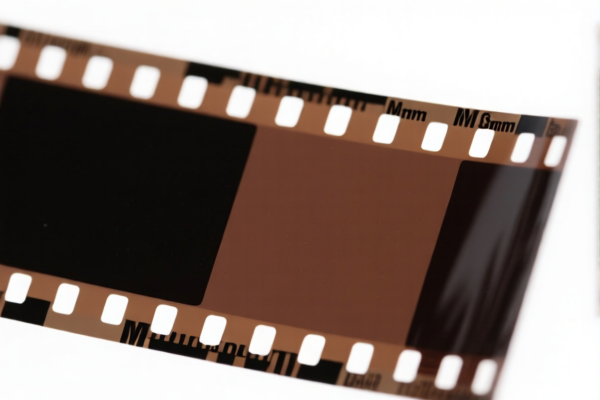
35mm Film Roll (Black and White)
CN → US| HS Code | Tariff Rate | Origin | Destination | Doc |
|---|---|---|---|---|
| 3702530030 | 38.7% | CN | US | Official Doc |
| 3702540030 | 38.7% | CN | US | Official Doc |
| 3701996060 | 35.0% | CN | US | Official Doc |
| 3702390100 | 38.7% | CN | US | Official Doc |
Product Images



AI Analysis
🎞️ 35mm Film Roll (Black and White)
🌐 HS Code Reference & Customs Clearance Guide | 2024-2025 Latest Tariff Analysis | Professional Strategy for Photographic Materials
📌 I. Product Definition & Classification: Do You Really Understand "Black and White Film"?
35mm Black and White Film is a classic photographic medium consisting of light-sensitive emulsion coated on a flexible transparent base. In international trade, it is strictly categorized under Chapter 37 (Photographic or Cinematographic Goods). The critical distinction lies in the width, format, and sensitivity characteristics, which determine the specific HS Code and corresponding tariff rates.
⚠️ Key Classification Points:
- Format: Must be 35mm width (standard for photography).
- Chemical Sensitivity: Black and White (B&W) specific emulsion, distinct from color negative/positive films.
- Packaging: Typically supplied in rolls or cassettes for 35mm cameras.
📦 II. HS Code Classification Details (Based on Provided Data)
| HS Code | Product Description | Key Characteristics | Total Tax Rate |
|---|---|---|---|
3702.53.00.30 |
35mm B&W Film, matches 3702.50 category specs | Standard 35mm B&W roll, physical attributes align with subheading 53 | 38.7% |
3702.54.00.30 |
35mm B&W Film, physical attributes fit 3702.54 | Alternative B&W classification based on specific physical/speed attributes | 38.7% |
3701.99.60.60 |
B&W Film, categorized as "Other Photosensitive Material" | Fits "Other" categories under 3701, often used for non-standard or specific B&W formulations | 35.0% |
3702.39.01.00 |
B&W Film, inferred as non-paper/non-textile photosensitive material | Broad category for B&W film not explicitly detailed in 3702.53/54 | 38.7% |
🔍 Critical Insight:
- Most standard 35mm B&W rolls fall under 3702.53 or 3702.54.
- 3701.99 is a "catch-all" for other photosensitive plates/film, potentially offering a lower base tax (0%) but still subject to heavy surcharges.
- Always verify the exact physical specification (e.g., ISO speed, emulsion type) to avoid misclassification penalties.
💰 III. Detailed Tariff Rate Breakdown (Including Surcharges)
✅ Applicable Country: United States (US)
✅ Origin: China (CN) (Implied by "122 Clause" and specific surcharge structure)
✅ Effective Date: Current trade policy framework
🎯 1. Standard Classification: 3702.53.00.30 & 3702.54.00.30
| Item | Details |
|---|---|
| Base Tariff | 3.7% (MFN Rate for photographic film) |
| Section 301 Surcharge | +25.0% (USITC Footnote 3702.53/54) |
| Section 122 Surcharge | +10.0% (Additional tariff for specific Chinese goods) |
| Total Effective Rate | 38.7% |
| Calculation Basis | CIF Value × 38.7% |
| De Minimis Exemption | ❌ Not Eligible (High value/category) |
| Legal Reference Path | HTS:3702.53.00.30 → USITC Footnote: 3702.53 → IEEPA/Trade Act: Sec 301 → Sec 122 |
📌 Explanation:
- The 3.7% is the standard Most Favored Nation (MFN) rate for photographic film.
- The +25% is the Section 301 tariff applied to a wide range of Chinese-manufactured goods, including certain photographic materials.
- The +10% is the "Section 122" tariff, specifically targeting goods from China under different trade authority provisions.
- Total: 38.7% makes this a high-cost import category.
🎯 2. Alternative Classification: 3701.99.60.60 (Other Photosensitive Material)
| Item | Details |
|---|---|
| Base Tariff | 0.0% (For certain "Other" plates/film) |
| Section 301 Surcharge | +25.0% |
| Section 122 Surcharge | +10.0% |
| Total Effective Rate | 35.0% |
| Calculation Basis | CIF Value × 35.0% |
| De Minimis Exemption | ❌ Not Eligible |
📌 Advantage:
- If your B&W film qualifies under 3701 (e.g., large format, specific scientific use, or non-standard roll format), the base rate drops to 0%, saving 3.7% compared to the 3702 categories.
- Risk: Must provide strong technical justification to avoid reclassification by CBP.
🎯 3. Broad Classification: 3702.39.01.00
| Item | Details |
|---|---|
| Base Tariff | 3.7% |
| Section 301 Surcharge | +25.0% |
| Section 122 Surcharge | +10.0% |
| Total Effective Rate | 38.7% |
| Legal Reference | Inferred as non-paper/non-textile photosensitive film under 3702.39 |
📌 Note:
- This code is less common for standard 35mm rolls but may apply if the film is not classified under the specific 3702.5x subheadings.
- Same total tax as 3702.53/54.
🛠️ IV. Customs Clearance Practical Advice (Real-World Pitfall Guide)
✅ 1. Required Documentation Checklist (Mandatory)
| Document | Required | Notes |
|---|---|---|
| ✅ Product Specification Sheet | ✔️ | Must clearly state: Width (35mm), Format (Roll), Emulsion Type (B&W), ISO Speed, Base Material |
| ✅ Commercial Invoice | ✔️ | Must accurately describe as "35mm Black and White Photographic Film Roll" |
| ✅ Packing List | ✔️ | Detail number of rolls, units per carton, gross/net weight |
| ✅ Certificate of Origin | ✔️ | Required to determine applicability of Section 301/122 surcharges |
| ✅ Customs Bond | ✔️ | Required for formal entry |
| ✅ FDA Registration | ⚠️ | If applicable for certain chemical components, though film is generally exempt from strict FDA drug device rules, some emulsions may require notification |
✅ 2. Declaration Strategy (Key Rules)
🔥 "Be Precise, Avoid Ambiguity, Don't Split"
| Scenario | Correct Declaration | Wrong Practice | Consequence |
|---|---|---|---|
| Standard 35mm B&W Roll | 3702.53.00.30 |
Declare as "Photographic Supplies" | Misclassification → Audit/Fine |
| Large Format B&W Sheet | 3702.55.00.30 (if applicable) |
Declare as 35mm Roll | Value/Rate Error |
| Mixed Shipment (B&W + Color) | Separate entries per HS Code | Combine into one generic line | CBP Rejection |
| B&W Film for Laboratory Use | 3701.99.60.60 (if justified) |
Declare as consumer B&W film | Potential rate change from 35% to 38.7% |
✅ 3. Special Considerations
| Situation | Handling Advice |
|---|---|
| OEM/Private Label | Provide brand authorization and manufacturing specs to prove origin and material consistency |
| Expired or Near-Expiry Film | Declare accurately; CBP may still assess duties but can reject if deemed "unmarketable" |
| Chemical Emulsion Sensitivity | Ensure packaging meets hazardous materials guidelines if any flammable solvents are used in coating (rare for final product) |
| Sample Shipments | Still subject to duties; no de minimis exemption for commercial samples |
🌍 V. Global Market Comparison (2024-2025 Context)
| Country/Region | Recommended HS Code | Base Tariff | Surcharges | Total Rate | Notes |
|---|---|---|---|---|---|
| 🇺🇸 USA | 3702.53.00.30 |
3.7% | +35% (301+122) | 38.7% | Highest barrier due to dual surcharges |
| 🇨🇳 China | 3702.53.00.00 |
~3-5% | None | ~3-5% | Import duty for China-made film re-imported is low |
| 🇪🇺 EU | 3702.53.00 |
0% | None | 0% | No anti-dumping/surcharge on photographic film |
| 🇬🇧 UK | 3702.53.00 |
0% | None | 0% | Post-Brexit trade deals may favor non-China origin |
📌 Conclusion:
- The US market is extremely costly for importing Chinese-made B&W film due to 38.7% total duty.
- EU/UK offer zero tariffs, making them more attractive for distributors if supply chain can be adjusted.
- Strategy: Consider sourcing from non-China origins (e.g., Germany, Japan, India) to avoid Section 301/122 surcharges, or utilize bonded warehouses for deferred duty payment.
📌 VI. Common Mistakes & Pitfalls (Lessons Learned)
❌ Mistake 1: Declaring "Film" generically without specifying "35mm B&W"
👉 Result: CBP may assign highest general rate or request detailed documentation, causing delays.
❌ Mistake 2: Ignoring Section 122 Tariff
👉 Result: Underpayment of duties by 10%, leading to penalties and interest upon audit.
❌ Mistake 3: Mixing B&W and Color Film in One Entry Without Clear Separation
👉 Result: Color film may have different subheadings (e.g., 3702.31-3702.69), complicating duty calculation.
❌ Mistake 4: Assuming De Minimis Exemption Applies
👉 Result: All commercial imports are subject to duty; no $800 exemption for B2B shipments.
✅ Correct Practice:
"35mm Black and White Photographic Film Roll, ISO 400, Acetate Base, 36 Exposures, Model XYZ, Manufactured in China"
🎯 VII. Conclusion: Precision in Classification Saves Money!
🎯 Remember:
🔹 "35mm B&W Film: 38.7% Duty in US – Plan Ahead!"
🔹 "HS Code Choice: 3702.53 vs 3701.99 Can Save 3.7% Base Rate"
🔹 "Always Check Section 301 & 122 Applicability – It Adds 35%!"
📌 Pro Tip:
- If your film is not from China, verify if it qualifies for Section 301 Exclusions (check USTR list).
- For high-volume importers, consider Advanced Customs Rulings (ACR) to lock in the HS Code and duty rate before shipment.
📣 Immediate Action:
📞 Consult a Licensed Customs Broker + Provide Detailed Product Specs + Verify Origin Documentation
🚀 Optimize Your Supply Chain to Navigate High US Tariffs!
✨ Professional Customs Clearance Starts with Accurate Classification!
💼 Every Percent of Duty Counts – Get It Right from the Start!
Customer Reviews
About HS Code Classification
The Harmonized System (HS) is an internationally standardized nomenclature developed by the World Customs Organization (WCO) to classify traded products. Over 200 countries use the HS system as the basis for customs tariffs, trade statistics, and import/export regulations.
Each HS code follows a hierarchical structure:
- Chapter (2 digits) — Broad category of goods (e.g., Chapter 84: Machinery and Mechanical Appliances)
- Heading (4 digits) — More specific grouping within the chapter
- Subheading (6 digits) — Internationally standardized breakdown, used by all WCO member countries
- National subdivisions (8-10 digits) — Country-specific extensions for further classification, such as US HTSUS 10-digit codes
Correct HS code classification is essential for smooth customs clearance, accurate duty payment, and compliance with trade regulations. Misclassification can lead to customs delays, overpayment of duties, or penalties.
When importing from CN to US, the applicable tariff rates may include:
- Most-Favored-Nation (MFN) rate — The standard duty rate applied to WTO members
- General rate — Applied to countries without trade agreements
- Trade remedy duties — Additional tariffs such as Section 301 (anti-dumping), Section 232 (national security), or countervailing duties
The information provided on this page is for reference purposes only. For official classification, please consult with your local customs authority or a licensed customs broker.