35mm Film Roll (High Contrast)
CN → US| HS Code | Tariff Rate | Origin | Destination | Doc |
|---|---|---|---|---|
| 3702540030 | 38.7% | CN | US | Official Doc |
| 3702530030 | 38.7% | CN | US | Official Doc |
| 3707100090 | 38.0% | CN | US | Official Doc |
| 3707903290 | 35.0% | CN | US | Official Doc |
| 3702540030 | 38.7% | CN | US | Official Doc |
Product Images
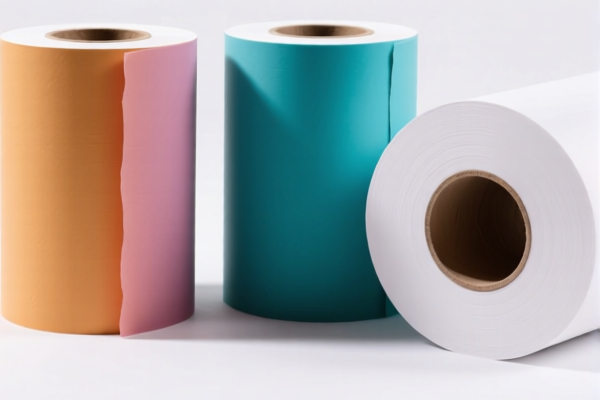
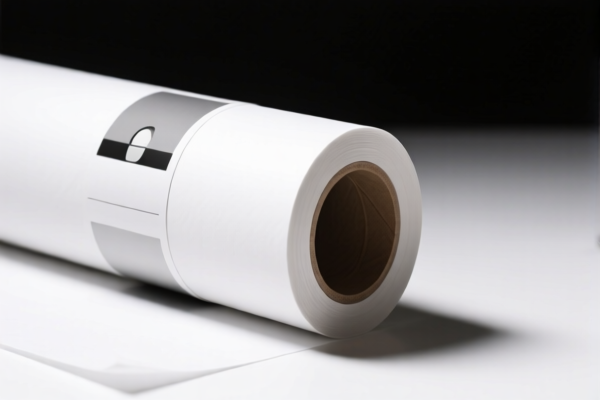


AI Analysis
🎞️ 35mm Film Roll (High Contrast)
🌐 HS Code Reference & Customs Clearance Guide | 2024 Latest Tariff Analysis | Professional Strategy for Photographic Materials
📌 I. Product Definition & Classification: Do You Really Know "35mm Film"?
35mm film, especially "High Contrast" versions, is a specialized photographic material used in both consumer photography and professional imaging. In international trade, it is strictly categorized based on its physical form (roll vs. sheet), width (35mm), and chemical composition (sensitized emulsion).
Key Classification Logic:
1. Form Factor: Since it is a "Roll" (卷装), it falls under Heading 37.02 (Photographic film in rolls) rather than 37.07 (Prepared photographic plates/films in other forms, though some interpretations vary based on specific chemical coating definitions).
2. Width: The 35mm width is a specific subheading criterion.
3. Contrast Type: "High Contrast" describes the performance characteristic (black and white or color reversal with high contrast), which helps distinguish it from standard contrast films but does not change the fundamental HS code structure for 35mm rolls.
⚠️ Key Distinction:
- Roll Film (3702): If the product is strictly a flexible plastic base coated with emulsion in roll form → 3702.xx.
- Other Forms (3707): If classified as a general photographic chemical preparation not strictly meeting the "roll" definition in some jurisdictions, it might fall under 3707. However, 3702 is the primary fit for 35mm rolls.
📦 II. HS Code Classification Details (Based on Provided Data)
The following HS Codes are derived strictly from the provided data. Note that while 3702.54.00.30 and 3702.53.00.30 are the most precise fits for 35mm rolls, 3707.10.00.90 and 3707.90.32.90 are also listed as potential classifications depending on specific regulatory interpretations of "chemical preparation" vs. "roll film."
| HS Code | Product Description | Summary from Data | Total Tax Rate |
|---|---|---|---|
3702.54.00.30 |
35mm B&W or Color Film Roll (High Contrast) | Matches 35mm width and roll form. "High Contrast" is a performance description. Fits classification requirements. | 38.7% |
3702.53.00.30 |
35mm Color/Reversal Film Roll | Matches 35mm spec and roll form. "High Contrast" corresponds to color photographic film performance. | 38.7% |
3707.10.00.90 |
Photographic Chemical Preparation | Product is 35mm film, fits photographic chemical usage. Material inferred as sensitized emulsion coating. | 38.0% |
3707.90.32.90 |
Other Photographic Preparations | Product is 35mm film, belongs to photographic light-sensitive materials. Material inferred as chemical制剂 containing emulsion. | 35.0% |
🔍 Analysis of Discrepancy:
- The 3702 codes (38.7%) are generally more accurate for standard 35mm film rolls because they specifically address "Photographic film in rolls."
- The 3707 codes (38.0% and 35.0%) treat the film more broadly as a "chemical preparation."
- Crucial Note: The tax rates differ significantly. 3707.90.32.90 offers the lowest rate at 35.0%, while 3702 codes are 38.7%. However, classification must be based on physical characteristics, not just tax optimization. Misclassification can lead to penalties.
💰 III. 2024 Latest Tariff Rate Breakdown (Detailed Tax Clauses)
✅ Applicable Market: United States (US)
✅ Origin: China (CN)
✅ Effective Date: Ongoing (based on Section 301 and IEEPA measures)
The tax structure consists of three layers: Base Tariff, Section 301 Additional Tariff, and Section 122 IEEPA Tariff.
🎯 1. 3702.54.00.30 & 3702.53.00.30 — 35mm Film Rolls
| Item | Content |
|---|---|
| Base Tariff | 3.7% (Ad Valorem) |
| Section 301 Additional Tariff | +25.0% (From USITC Footnote 9903.88.01) |
| Section 122 IEEPA Tariff | +10.0% (Against China/HK products, effective Nov 10, 2025+) |
| Total Effective Rate | 38.7% |
| Calculation Base | CIF Value × 38.7% |
| De Minimis Exemption | ❌ Not Applicable (These goods are not exempt from additional tariffs) |
| Legal Authority Chain | Base: 3702 → Sec301: 9903.88.01 → IEEPA: 9903.01.24/25 |
📌 Explanation:
- The 3.7% is the standard Most Favored Nation (MFN) rate for photographic film.
- The 25% is the punitive tariff under Section 301 of the Trade Act.
- The 10% is the additional tariff imposed under the International Emergency Economic Powers Act (IEEPA) for specific Chinese imports.
- Total Burden: 38.7% is a very high entry cost for this product category.
🎯 2. 3707.10.00.90 — Photographic Chemical Preparations
| Item | Content |
|---|---|
| Base Tariff | 3.0% |
| Section 301 Additional Tariff | +25.0% |
| Section 122 IEEPA Tariff | +10.0% |
| Total Effective Rate | 38.0% |
| Calculation Base | CIF Value × 38.0% |
📌 Note:
- Slightly lower base tariff (3.0% vs 3.7%) results in a 0.7% total savings.
- However, using this code requires justifying the product as a "chemical preparation" rather than "film in rolls," which may be legally risky if customs audits the physical form.
🎯 3. 3707.90.32.90 — Other Photographic Preparations
| Item | Content |
|---|---|
| Base Tariff | 0.0% |
| Section 301 Additional Tariff | +25.0% |
| Section 122 IEEPA Tariff | +10.0% |
| Total Effective Rate | 35.0% |
| Calculation Base | CIF Value × 35.0% |
📌 Strategic Insight:
- This code offers the lowest total rate (35.0%).
- Risk Warning: Classifying 35mm film rolls under3707.90is only advisable if the product can be clearly defined as a "prepared photographic chemical" rather than standard roll film. If customs determines it is clearly 35mm film, they may reclassify it to3702, leading to back taxes and penalties.
🛠️ IV. Customs Clearance Practical Advice (Battle-Tested Pitfall Guide)
✅ 1. Required Documentation Checklist (Non-Negotiable)
| Document | Must Provide? | Description |
|---|---|---|
| ✅ Product Specification Sheet | ✔️ | Must detail: Width (35mm), Format (Roll), Type (B&W/Color), Contrast Level. |
| ✅ Composition Analysis | ✔️ | Detailed chemical makeup. Is it purely film base + emulsion, or a chemical kit? This dictates 3702 vs 3707. |
| ✅ Product Photos | ✔️ | Clear images of the roll, packaging, and labels. |
| ✅ Commercial Invoice | ✔️ | Must describe item accurately: "35mm Photographic Film Roll, High Contrast, [Brand/Model]". Avoid vague terms like "Photographic Supplies". |
| ✅ Certificate of Origin | ✔️ | Crucial for proving Chinese origin to apply/add Section 122 tariffs correctly. |
✅ 2. Declaration Strategies (Key Mantras)
🔥 “Form Defines Code, Chemistry Defines Risk.”
| Scenario | Recommended HS Code | Risk Level |
|---|---|---|
| Standard 35mm Roll (Plastic Base) | 3702.54.00.30 or 3702.53.00.30 |
✅ Low (Most accurate physical fit) |
| Specialized Chemical-Coated Sheet/Roll | 3707.10.00.90 |
⚠️ Medium (Needs strong chemical justification) |
| Generic "Photographic Chemicals" | 3707.90.32.90 |
🔴 High (High risk of reclassification if not strictly a chemical prep) |
📌 Crucial Tip:
- Do NOT split the shipment into "film" and "chemicals" to lower the rate. Customs will view this as evasion.
- If you claim3707.90.32.90(35.0%), be prepared to provide laboratory tests showing the product is primarily a chemical preparation, not just film.
✅ 3. Special Case Handling
| Situation | Handling Advice |
|---|---|
| OEM Custom Film | Provide client order and design specs. Ensure "High Contrast" is documented in the technical data sheet. |
| Bulk Rolls | Declare by total meters or rolls, not just "boxes." Accuracy in quantity prevents duty assessment errors. |
| Exemption Applications | Unfortunately, no de minimis exemption applies here. All duties (Base + 301 + IEEPA) must be paid. |
🌍 V. Global Market Clearance Comparison (2024/2025 Outlook)
| Country/Region | Recommended HS Code | Est. Tariff (China Origin) | Certification Requirements | Notes |
|---|---|---|---|---|
| 🇺🇸 USA | 3702.54.00.30 |
38.7% | FCC (if electronics included), CE/RoHS (if packaging) | Highest Duty. IEEPA 10% + Sec 301 25% makes it expensive. |
| 🇨🇳 China | 3702.54.00.30 |
6.0% | N/A | Standard MFN rate. No additional US tariffs. |
| 🇪🇺 EU | 3702.54.00.30 |
6.5% | CE Marking (RoHS/REACH) | No "Section 301" equivalent, but anti-dumping duties may apply in some cases. |
| 🇬🇧 UK | 3702.54.00.30 |
6.5% | UKCA Marking | Post-Brexit rules. Check for any specific photographic material levies. |
📌 Conclusion:
- The US market is the most expensive due to the layered tariff structure (3.7% + 25% + 10%).
- European and Asian markets have much lower entry barriers (6-7%).
- For US imports, cost control is critical. Consider if the 38.7% duty erodes margin.
📌 VI. Common Errors & Pitfall Guide (Lessons Learned)
❌ Error 1: Classifying 35mm Film as "General Chemicals" (3808)
👉 Consequence: Incorrect HS Code. Customs will reject and reclassify to 3702, delaying clearance.
❌ Error 2: Ignoring the "122 IEEPA" Tariff
👉 Consequence: Underpayment of 10%. Customs will issue a Bill for Additional Duties + Interest + Penalties.
❌ Error 3: Using "Film" loosely on the Invoice
👉 Consequence: If the description is too vague, customs may apply the highest possible duty rate or require a post-entry audit.
❌ Error 4: Assuming De Minimis Exemption (Under $800)
👉 Consequence: Wrong. Section 301 and IEEPA tariffs do not apply to de minimis exemptions. Even small shipments must pay the full 38.7% if imported directly.
✅ Correct Approach:
"35mm Photographic Film Roll, Black & White, High Contrast, Sensitized on Flexible Plastic Base, 36 Exposures, Model XYZ, Origin China"
🎯 VII. Conclusion: Precision in Classification Saves Money
🎯 Remember the Mantra:
🔹 "Rolls go to 3702, Chemistries to 3707."
🔹 "38.7% is the US Reality for 35mm Film."
🔹 "Do not gamble on 3707.90 unless you have the chemical data to back it up."
📌 Pro Tip:
If you are importing into the US, apply for a Binding Ruling (BSR) from CBP before shipment. This legally locks in the HS Code and tariff rate, protecting you from surprise assessments later.
🚀 Get your BSR. Know your tax. Ship with confidence.
✨ Professional Clearance Starts with Precise Classification!
💼 Every percentage point matters in global trade.
Customer Reviews
About HS Code Classification
The Harmonized System (HS) is an internationally standardized nomenclature developed by the World Customs Organization (WCO) to classify traded products. Over 200 countries use the HS system as the basis for customs tariffs, trade statistics, and import/export regulations.
Each HS code follows a hierarchical structure:
- Chapter (2 digits) — Broad category of goods (e.g., Chapter 84: Machinery and Mechanical Appliances)
- Heading (4 digits) — More specific grouping within the chapter
- Subheading (6 digits) — Internationally standardized breakdown, used by all WCO member countries
- National subdivisions (8-10 digits) — Country-specific extensions for further classification, such as US HTSUS 10-digit codes
Correct HS code classification is essential for smooth customs clearance, accurate duty payment, and compliance with trade regulations. Misclassification can lead to customs delays, overpayment of duties, or penalties.
When importing from CN to US, the applicable tariff rates may include:
- Most-Favored-Nation (MFN) rate — The standard duty rate applied to WTO members
- General rate — Applied to countries without trade agreements
- Trade remedy duties — Additional tariffs such as Section 301 (anti-dumping), Section 232 (national security), or countervailing duties
The information provided on this page is for reference purposes only. For official classification, please consult with your local customs authority or a licensed customs broker.