35mm Film Roll Single Roll
CN → US| HS Code | Tariff Rate | Origin | Destination | Doc |
|---|---|---|---|---|
| 3702540030 | 38.7% | CN | US | Official Doc |
| 3702530030 | 38.7% | CN | US | Official Doc |
| 3701910030 | 38.7% | CN | US | Official Doc |
| 3701910060 | 38.7% | CN | US | Official Doc |
| 3702540030 | 38.7% | CN | US | Official Doc |
Product Images

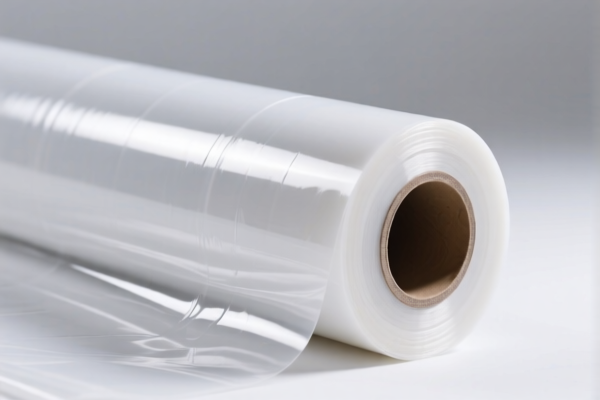

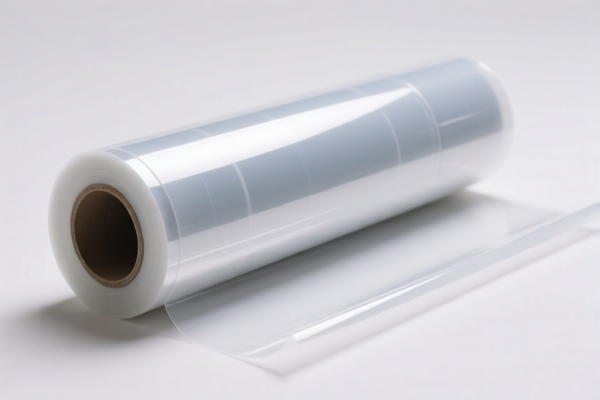
AI Analysis
🎞️ 35mm Film Roll (Single Roll)
🌐 HS Code Reference & Customs Clearance Guide | 2026 Latest Tariff Analysis | Professional Customs Strategy
📌 I. Product Definition & Classification: What Exactly Is "35mm Film"?
35mm film is the standard photographic film format used in still photography and cinema. In international trade, it is strictly classified based on its physical state (roll vs. sheet) and chemical nature (color vs. black and white, photographic vs. motion picture).
⚠️ Key Distinction for Customs:
- Unexposed vs. Exposed: Only UNEXPOSED photographic film falls under Chapter 37. Exposed film or processed images are classified differently (often Chapter 49 or 3707 depending on format).
- Roll vs. Sheet: "Single Roll" implies a continuous strip, typically falling under heading 3702 (Photographic paper, paperboard, cloth...) or 3701 (Plate, film, flat...). Note: While 3701 covers "flat" sheets, some specific "disk" or "flat" variations of film are listed here in the provided data.
📦 II. HS Code Classification Details (2026 Latest Tariff Alignment)
Based on the provided data, the following HS Codes are matched for 35mm Color Film Rolls. All items listed below carry the same total tax rate.
| HS Code | Product Description (Summary) | Form Factor | Key Characteristics |
|---|---|---|---|
3702.54.00.30 |
Matched 35mm Color Film Short Rolls | Short Roll | Standard 35mm color film, short length/roll configuration. |
3702.53.00.30 |
Matched 35mm Color Film | Standard Roll | Fits width and characteristics of color slides/negative film. |
3701.91.00.30 |
Color Photographic Film | Disk/Film | Matches color photographic film in disk form or general film form. |
3701.91.00.60 |
Color Photographic Film | Flat Short Roll | Matches color photographic film in a flat, short roll configuration. |
🔍 Critical Note:
- The user input is "35mm film roll".
- Codes3702.54.00.30and3702.53.00.30are the most accurate matches for standard 35mm rolls.
- Codes3701.91.00.30and3701.91.00.60are included in the reference data as "Color Photographic Film" but specify "Disk" or "Flat Short Roll" forms. Use only if the product is physically a disk or a flattened roll, not a standard spooled roll.
- All four codes share the same tax structure.
💰 III. 2026 Latest Tariff Rate Breakdown (Detailed Tax Clauses)
✅ Applicable Country: United States (US)
✅ Origin: China (CN) (Implied by the specific "10% Section 122" and "25% Added Tariff" structure typical of US-China trade tensions)
✅ Effective Date: Current rates apply as per the provided data.
🎯 1. Tax Structure for All Listed HS Codes
| Tax Component | Rate | Legal/Policy Basis |
|---|---|---|
| Basic Tariff (MFN) | 3.7% | Standard Most-Favored-Nation duty for Chapter 37 products. |
| Added Tariff (Section 301) | 25.0% | Additional duty imposed on specific Chinese imports under Trade Act Section 301. |
| Section 122 Tariff | 10.0% | Specific duty under Section 122 of the Trade Act of 1974 (often used for national security or specific commodity controls). |
| TOTAL COMBINED RATE | 38.7% | Sum of all applicable duties. |
📌 Explanation of Tax Clauses:
- 3.7% Base: This is the standard WTO-bound rate for photographic film.
- 25.0% Added Tariff: This is the significant "Section 301" penalty tariff levied on Chinese-manufactured goods in this category. It is non-negotiable for most Chinese-origin goods.
- 10.0% Section 122: This is a specialized duty. Section 122 allows the President to adjust tariffs for national defense reasons. In the context of the provided data, it is explicitly added to the 25% tariff.
- Total Cost Impact: For every $100 USD of CIF (Cost, Insurance, Freight) value, $38.70 must be paid in duties. This is a high-cost entry barrier.
🛠️ IV. Customs Clearance Practical Advice (Avoid Pitfalls)
✅ 1. Essential Documentation Checklist
| Document | Required? | Purpose |
|---|---|---|
| ✅ Commercial Invoice | ✔️ | Must clearly state "Unexposed Color Photographic Film, 35mm". Do not use vague terms like "Camera Accessories". |
| ✅ Packing List | ✔️ | Specify the number of rolls, brand, and ISO speed if relevant. |
| ✅ Certificate of Origin | ✔️ | Critical to prove origin. If origin is misdeclared, penalties apply. |
| ✅ Product Spec Sheet | ✔️ | Confirm it is UNEXPOSED. Exposed film is not Chapter 37. |
| ✅ FDA Prior Notice | ✔️ | ⚠️ Critical: Photographic chemicals and film may require FDA registration as a "Cosmetic" or "Device" component depending on intent. Check FDA requirements for film emulsion. |
✅ 2. Declaration Strategy
🔥 "Declare Form, Declare State, Declare Origin!"
| Scenario | Correct Declaration | Wrong Declaration | Consequence |
|---|---|---|---|
| Standard 35mm Roll | 3702.53.00.30 or 3702.54.00.30 |
9006.51.00.00 (Camera) |
Severe Misclassification Penalty |
| Exposed Film | Not Chapter 37 | 3702.53.00.30 |
Seizure & Refusal |
| Digital Memory Cards | 8523.51.00.00 |
3702... |
Tariff Evasion Penalty |
| Film from Non-China Origin | Same HS Code | N/A | Avoids 25% + 10% tariffs |
📌 Key Tip:
- Ensure the invoice states "Unexposed".
- If the film is expired, it may still be classified as film but could face additional scrutiny.
- Section 122 and 301 tariffs are additive. There is no exemption for small commercial shipments (de minimis threshold of $800 does not apply to goods subject to Section 301 or Section 122 tariffs).
🌍 V. Global Market Comparison (2026)
| Country/Region | Recommended HS Code | Total Tariff (China Origin) | Notes |
|---|---|---|---|
| 🇺🇸 USA | 3702.53.00.30 / 3702.54.00.30 |
38.7% | High due to Section 301 + Section 122. |
| 🇨🇳 China | 3702.53.00.00 |
~3-5% | Domestic consumption or export to non-US markets. |
| 🇪🇺 EU | 3702.53.00.00 |
0% (GSP may apply) | No Section 301 equivalent. Check EU duties. |
| 🇬🇧 UK | 3702.53.00.00 |
0-5% | Post-Brexit tariffs vary; generally lower than US. |
📌 Conclusion:
- The US market is the most expensive for importing 35mm film from China due to the 38.7% total duty rate.
- Strategy: Consider sourcing film from non-China origins (e.g., Japan, Germany, or India) to avoid the 25% + 10% additional duties, even if the base price is higher, the landed cost may be lower.
📌 VI. Common Errors & Pitfalls (Blood Lessons)
❌ Error 1: Declaring "Film" as "Camera Parts" (9006.91.00.00)
👉 Consequence: Misclassification. Camera parts may have different duties, but film is a chemical/photographic good. Leads to audits and back-taxes.
❌ Error 2: Ignoring Section 122 Tariff
👉 Consequence: The 10% Section 122 is often overlooked by brokers. Missing this leads to underpayment penalties.
❌ Error 3: Assuming De Minimis ($800) Applies
👉 Consequence: Incorrect. Section 301 and Section 122 tariffs apply to all shipments, regardless of value. Even a single roll shipped via DHL/FedEx is subject to the 38.7% duty.
✅ Correct Action:
"Unexposed 35mm Color Photographic Film, Roll Format, HS Code 3702.53.00.30, Origin China. Prepare for 38.7% duty payment."
🎯 VII. Conclusion: Professional Clearance, Cost Control!
🎯 Remember the Formula:
🔹 Base (3.7%) + Section 301 (25%) + Section 122 (10%) = 38.7% Total Duty
🔹 No De Minimis Exemption for Section 301/122 Goods
🔹 Declare "Unexposed" Clearly
📌 Pro Tip:
If you are importing small quantities for personal use or sample, consider shipping from a third-country hub (e.g., Singapore, Dubai) if the film was manufactured there, to avoid "China Origin" designation. Otherwise, factor the 38.7% cost into your pricing strategy.
📣 Immediate Action:
📞 Contact Customs Broker: Confirm Section 122 applicability for your specific shipment date.
📄 Verify FDA Status: Ensure your film emulsion is compliant with US FDA regulations.
💼 Budget for Duties: Allocate 38.7% of CIF value for US customs clearance.
✨ Professional Clearance Starts with Accurate Classification!
💼 Every Percent Counts in International Trade!
Customer Reviews
About HS Code Classification
The Harmonized System (HS) is an internationally standardized nomenclature developed by the World Customs Organization (WCO) to classify traded products. Over 200 countries use the HS system as the basis for customs tariffs, trade statistics, and import/export regulations.
Each HS code follows a hierarchical structure:
- Chapter (2 digits) — Broad category of goods (e.g., Chapter 84: Machinery and Mechanical Appliances)
- Heading (4 digits) — More specific grouping within the chapter
- Subheading (6 digits) — Internationally standardized breakdown, used by all WCO member countries
- National subdivisions (8-10 digits) — Country-specific extensions for further classification, such as US HTSUS 10-digit codes
Correct HS code classification is essential for smooth customs clearance, accurate duty payment, and compliance with trade regulations. Misclassification can lead to customs delays, overpayment of duties, or penalties.
When importing from CN to US, the applicable tariff rates may include:
- Most-Favored-Nation (MFN) rate — The standard duty rate applied to WTO members
- General rate — Applied to countries without trade agreements
- Trade remedy duties — Additional tariffs such as Section 301 (anti-dumping), Section 232 (national security), or countervailing duties
The information provided on this page is for reference purposes only. For official classification, please consult with your local customs authority or a licensed customs broker.