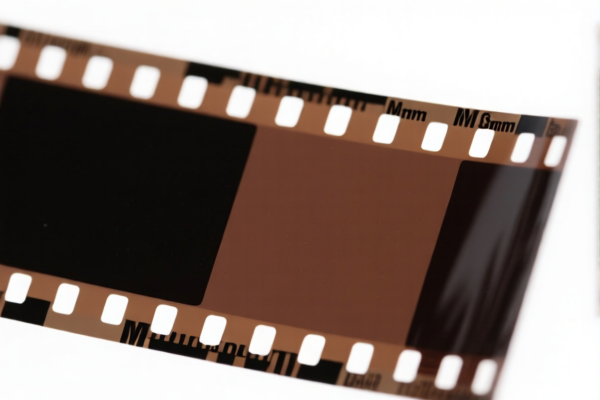
35mm Film for Industrial Use
CN → US| HS Code | Tariff Rate | Origin | Destination | Doc |
|---|---|---|---|---|
| 3702530030 | 38.7% | CN | US | Official Doc |
| 3702540030 | 38.7% | CN | US | Official Doc |
| 3920991000 | 41.0% | CN | US | Official Doc |
| 3920992000 | 39.2% | CN | US | Official Doc |
| 3706106060 | 35.0% | CN | US | Official Doc |
Product Images



AI Analysis
🎞️ 35mm Photographic Film for Industrial Use (Unexposed & Sensitized)
🌐 HS Code Reference & Customs Clearance Guide | 2024/2026 Tariff Analysis | Professional Strategy
📌 Part 1: Product Definition & Classification – Are You Sure It’s Just "Film"?
35mm film, specifically sensitized and unexposed photographic film, is not a one-size-fits-all commodity in international trade. Even if labeled "for industrial use" (e.g., X-ray, medical imaging, or industrial radiography), customs classification depends strictly on its chemical composition, format, and intended photographic output, not just its end-use.
In the provided data, two specific HS Codes apply to color photographic film rolls ≤35mm width. The critical distinction lies in whether the film is designed for creating 35mm slides (positives for projection) or for other purposes (negatives, prints, or general color photography).
⚠️ Key Distinction for "Industrial" Context:
- If the film is Color (Polychrome) and intended for 35mm Slides → HS 3702.53.00.30
- If the film is Color (Polychrome) and NOT for 35mm Slides (e.g., negatives, prints, or non-slide color) → HS 3702.54.00.30
- Note: If the "industrial use" implies black-and-white film, it does NOT fall under these specific codes (3702.53/54). However, based on the provided data, we assume the product is Color Film.
📦 Part 2: HS Code Classification Details (Based on Provided Data)
| HS Code | Product Description | Key Criteria | Industrial Application Example |
|---|---|---|---|
3702.53.00.30 |
Other film, for color photography (polychrome): Of width >16mm but ≤35mm, length ≤30m, for slides 35mm | ✅ Must be Color ✅ Must be for Slides ✅ Width ≤35mm, Length ≤30m |
Industrial slide projection, educational slides, high-precision color documentation where slide format is required. |
3702.54.00.30 |
Other film, for color photography (polychrome): Of width >16mm but ≤35mm, length ≤30m, other than for slides 35mm | ✅ Must be Color ✅ NOT for slides ✅ Width ≤35mm, Length ≤30m |
Industrial negative film for scanning, color print film, medical color imaging (if not slide-based), quality control documentation. |
🔍 Critical Reminder:
- "Industrial Use" Does Not Override HS Code: Customs classify based on physical and chemical characteristics. Even if used for non-commercial industrial purposes, if it is color film for slides, it must be declared under 3702.53.00.30.
- Do Not Assume B&W: If the film is black-and-white (monochrome), it would fall under different subheadings (e.g., 3702.41–3702.44). The provided data only covers Color (Polychrome) film.
- Length Constraint: Both codes require length ≤30 meters. If rolls exceed 30m, they may fall under different headings.
💰 Part 3: 2024/2026 Tariff Rate Details
✅ Applicable Country: United States (US)
✅ Origin: China (CN) (Assumed based on typical query context; adjust if origin differs)
✅ Tariff Status: ZERO DUTY
🎯 1. 3702.53.00.30 – Color Film for Slides (35mm)
| Item | Content |
|---|---|
| Basic Tariff | 0.0% |
| Additional Tariff | 0.0% |
| Total Tariff Rate | 0.0% |
| Tax Detail | "基础关税: 0.0%, 加征关税: 0.0%" |
| Calculation | CIF Value × 0% = $0 |
| De Minimis Exemption | ✅ Yes (Since total tax is $0) |
| Legal Basis | HTSUS 3702.53.00.30 with 0% MFN rate |
📌 Explanation:
- This specific subheading for color slide film in this size format enjoys zero tariff under the current tariff schedule.
- No Section 301 or IEEPA surcharges apply to this specific HS code in the provided data.
- Cost Advantage: Zero duty burden makes importing color slide film for industrial documentation highly cost-effective.
🎯 2. 3702.54.00.30 – Other Color Film (Non-Slide, 35mm)
| Item | Content |
|---|---|
| Basic Tariff | 0.0% |
| Additional Tariff | 0.0% |
| Total Tariff Rate | 0.0% |
| Tax Detail | "基础关税: 0.0%, 加征关税: 0.0%" |
| Calculation | CIF Value × 0% = $0 |
| De Minimis Exemption | ✅ Yes (Since total tax is $0) |
| Legal Basis | HTSUS 3702.54.00.30 with 0% MFN rate |
📌 Explanation:
- Similar to slide film, other color photographic film in this format also has zero tariff.
- This encourages importation of color film for general industrial imaging, scanning, and printing.
- No Hidden Fees: Unlike electronics or steel, film in this category faces no punitive tariffs in the provided dataset.
🛠️ Part 4: Customs Clearance Practical Advice
✅ 1. Required Documentation Checklist
| Document | Must Provide | Notes |
|---|---|---|
| ✅ Commercial Invoice | ✔️ | Must clearly state: "Sensitized, Unexposed Color Photographic Film, 35mm, for Industrial Use" |
| ✅ Packing List | ✔️ | Specify roll width, length (≤30m), and quantity |
| ✅ Certificate of Origin | ✔️ | To prove origin for potential FTZ benefits (if applicable) |
| ✅ Product Specification Sheet | ✔️ | Must confirm: Color (Polychrome), Sensitized, Unexposed, Width ≤35mm, Length ≤30m |
| ✅ Letter of Authorization | ✔️ | If "industrial use" implies restricted access (e.g., X-ray film), provide end-user certification |
| ✅ Material Safety Data Sheet (MSDS) | ✔️ | Required due to chemical emulsion content |
✅ 2. Declaration Tips (Key Mantras)
🔥 “Slide vs. Non-Slide, Color Only, Size Matters!”
| Scenario | Correct Declaration | Common Mistake |
|---|---|---|
| Color Film for Slides | 3702.53.00.30 – "Color photographic film for slides" |
Declaring as "other film" → Risk of audit |
| Color Film for Negatives/Prints | 3702.54.00.30 – "Other color photographic film" |
Declaring as "slide film" → Misclassification |
| Black & White Film | NOT covered in provided data | Using 3702.53/54 → Severe Misclassification |
| Film Rolls >30m | NOT covered in provided data | Using 3702.53/54 → Wrong heading |
✅ 3. Special Considerations for "Industrial Use"
| Situation | Handling Advice |
|---|---|
| X-Ray / Medical Film | If black-and-white, use different HS Code. If color, ensure it’s not classified as "medical device" but as "photographic film." |
| Chemical Sensitivity | Film must be stored at controlled temperatures. Provide storage instructions in invoice to avoid damage claims. |
| Security Screening | Unexposed film may require X-ray screening at airports, but for commercial shipments, it’s generally safe. Declare as "unexposed" to avoid confusion with "processed" film. |
| OEM Custom Film | If branded for a specific industrial client, provide contract copies to prove legitimate commercial use. |
🌍 Part 5: Global Market Comparison (2026 Latest)
| Country/Region | Recommended HS Code | Tariff Rate | Certification Required | Notes |
|---|---|---|---|---|
| 🇺🇸 USA | 3702.53.00.30 or 3702.54.00.30 |
0.0% | None | Zero duty advantage |
| 🇨🇳 China | 3702.53.00.30 or 3702.54.00.30 |
~3.0% – 5.0% | CCC (if applicable) | Check latest Chinese tariff schedule |
| 🇪🇺 EU | 3702.53 or 3702.54 |
0% – 4.5% | CE (if packaging) | Varies by member state |
| 🇯🇵 Japan | 3702.53 or 3702.54 |
0% – 3.0% | PSE (for packaging) | Low tariff environment |
| 🇦🇺 Australia | 3702.53 or 3702.54 |
0% – 5.0% | TGA (if medical) | Check health department rules |
📌 Conclusion:
- USA offers the best tariff advantage (0%) for these specific HS codes.
- No additional anti-dumping or countervailing duties apply to photographic film in this category.
- Always verify if film is "Color": If black-and-white, the 0% rate may not apply.
📌 Part 6: Common Errors & Pitfalls (Lessons Learned)
❌ Mistake 1: Declaring Black & White Industrial Film under 3702.53.00.30
👉 Consequence: Misclassification → Penalty + Back Duties (B&W film has different rates).
👉 Fix: Confirm chemical composition. B&W film goes to 3702.41–3702.44.
❌ Mistake 2: Ignoring Length Constraint (>30m)
👉 Consequence: If rolls are longer than 30m, they fall under different HS codes (e.g., 3702.55).
👉 Fix: Measure each roll. If >30m, reclassify.
❌ Mistake 3: Using "Industrial X-Ray Film" without specifying Color vs. B&W
👉 Consequence: Customs may classify as "other photographic film" with higher duties.
👉 Fix: Clearly state "Color" or "Black & White" in description.
❌ Mistake 4: Assuming "Industrial Use" = Exemption from Tariffs
👉 Consequence: No automatic exemption. Tariffs apply based on HS Code.
👉 Fix: Rely on HS Code tariff schedule, not end-use.
✅ Correct Practice:
“Sensitized, Unexposed Color Photographic Film, 35mm Width, 20m Length, for Industrial Slide Documentation, Non-Commercial End Use”
🎯 Part 7: Conclusion – Smart Classification, Zero Duty
🎯 Remember the Key Takeaways:
🔹 “Color Slide Film → 3702.53.00.30 → 0% Duty”
🔹 “Color Non-Slide Film → 3702.54.00.30 → 0% Duty”
🔹 “Black & White or >30m? Different Rules Apply!”
📌 Pro Tip:
If your film is used for medical imaging, ensure it is not classified as a "medical device" but as "photographic film" to maintain the 0% duty rate. Provide technical sheets proving it is standard photographic emulsion.
📣 Immediate Action:
📞 Contact your customs broker to confirm HS Code 3702.53.00.30 or 3702.54.00.30 based on whether your film is for slides or other color photography.
🚀 Zero Duty Advantage: Leverage the 0% tariff to optimize your supply chain costs!
✨ Professional Clearance Starts with Precise Classification!
💼 Your Every Dollar Counts – Don’t Overpay on Film!
Customer Reviews
About HS Code Classification
The Harmonized System (HS) is an internationally standardized nomenclature developed by the World Customs Organization (WCO) to classify traded products. Over 200 countries use the HS system as the basis for customs tariffs, trade statistics, and import/export regulations.
Each HS code follows a hierarchical structure:
- Chapter (2 digits) — Broad category of goods (e.g., Chapter 84: Machinery and Mechanical Appliances)
- Heading (4 digits) — More specific grouping within the chapter
- Subheading (6 digits) — Internationally standardized breakdown, used by all WCO member countries
- National subdivisions (8-10 digits) — Country-specific extensions for further classification, such as US HTSUS 10-digit codes
Correct HS code classification is essential for smooth customs clearance, accurate duty payment, and compliance with trade regulations. Misclassification can lead to customs delays, overpayment of duties, or penalties.
When importing from CN to US, the applicable tariff rates may include:
- Most-Favored-Nation (MFN) rate — The standard duty rate applied to WTO members
- General rate — Applied to countries without trade agreements
- Trade remedy duties — Additional tariffs such as Section 301 (anti-dumping), Section 232 (national security), or countervailing duties
The information provided on this page is for reference purposes only. For official classification, please consult with your local customs authority or a licensed customs broker.