35mm High Contrast Color Film
CN → US| HS Code | Tariff Rate | Origin | Destination | Doc |
|---|---|---|---|---|
| 3707100090 | 38.0% | CN | US | Official Doc |
| 3707100005 | 38.0% | CN | US | Official Doc |
| 3701910060 | 38.7% | CN | US | Official Doc |
| 3701910030 | 38.7% | CN | US | Official Doc |
| 3702550060 | 35.0% | CN | US | Official Doc |
Product Images
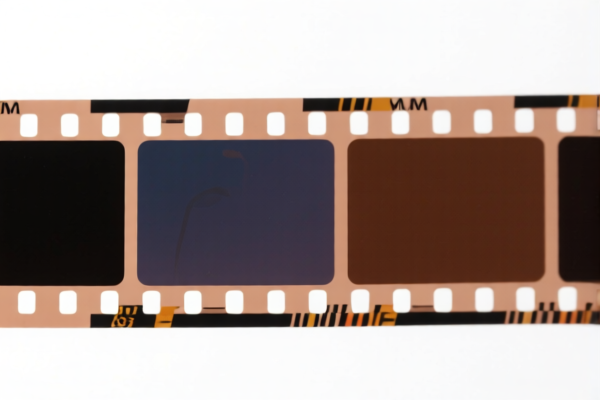
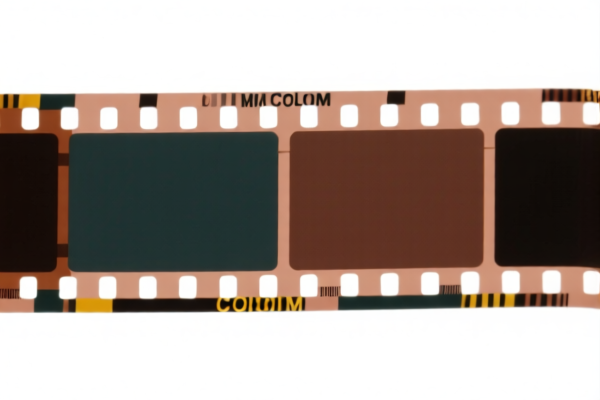
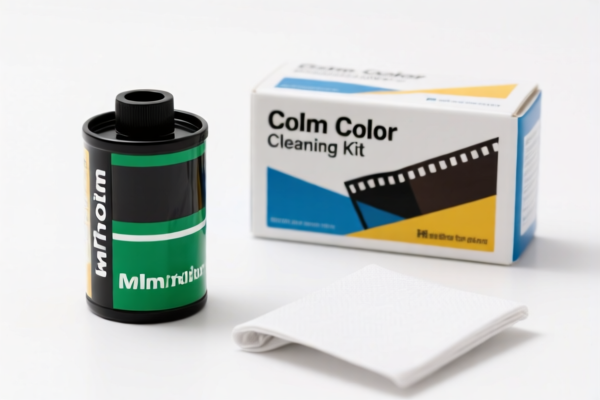
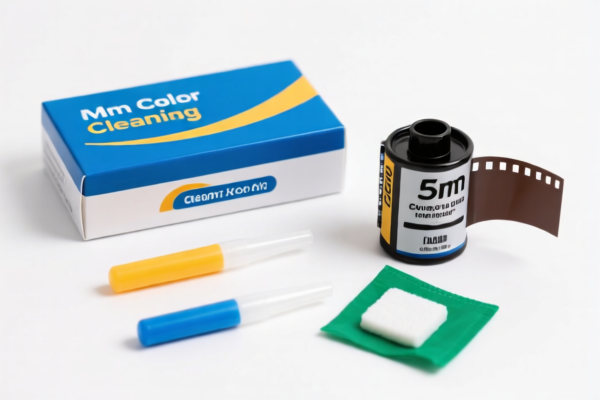
AI Analysis
🎞️ 35mm High Contrast Color Film (Photographic Film)
🌐 HS Code Reference & Customs Clearance Guide | 2026 Updated Tariff Analysis | Professional Clearance Strategy
📌 1. Product Definition & Classification: What Exactly is "35mm High Contrast Color Film"?
35mm High Contrast Color Film is a sensitive photographic material used for capturing high-definition color images. In international trade, it is classified based on its material structure, intended use, and physical form (roll/sheet).
The key characteristics determining its classification are: * Format: 35mm width (fits standard 35mm cameras). * Chemical Property: "Color" (contains color couplers/emulsions) and "High Contrast" (specific sensitivity profile). * State: Unexposed, light-sensitive emulsion coated on a plastic base (usually polyester or cellulose acetate), not paper or textile.
⚠️ Critical Distinction:
- If the film is unexposed, raw stock intended for photography → It falls under Chapter 37 (Photographic Goods).
- If it is developed/processed and contains images → It may fall under different chapters (e.g., Chapter 37.04 for printed films).
- If it is coated on paper → It falls under 37.01/37.02 paper-related codes.
- Our analysis below focuses on the standard unexposed plastic-base photographic film.
📦 2. HS Code Classification Details (Based on Provided Data)
The provided data highlights four potential HS Codes depending on the specific nuance of the product description and customs interpretation.
| HS Code | Product Description / Summary | Applicable Scenario | Tax Rate |
|---|---|---|---|
3707.10.00.90 |
Chemical Preparations for Photographic Use Summary: Matches 'Color' (color) and 'Film' (film), fitting the material attributes of photographic sensitizing emulsions. 'Macro' (if applicable) aligns with photographic chemical products. Classified as "Other" due to lack of material conflict. |
General chemical/photographic preparation classification; often used when specific film format codes are ambiguous. | 38.0% |
3707.10.00.05 |
Color Negative Film (Specific) Summary: 'Color' corresponds to 'Color', 'Film' functions as a light-sensitive material. Classified specifically as color negative light-sensitive material. |
Best fit if the product is explicitly Color Negative Film (used for printing photographs). | 38.0% |
3701.91.00.60 |
Other Light-Sensitive Plates & Film (Non-Paper) Summary: 35mm Color Macro Film. Material inferred as non-paper/non-textile. Form fits "photographic film," use fits "for color photography." |
Best fit for 35mm roll film that is not specifically defined as negative or positive in Chapter 37.07, falling into the "Other" bucket of 37.01. | 38.7% |
3701.91.00.30 |
Other Light-Sensitive Plates & Film (Unspecified Form) Summary: 'Color' = Color Photography, 'Film' = Film. Matches material/usage. Since physical form (disc vs. roll) is unclear, classified under "Other." |
Used when the exact sub-form (roll/sheet) is not explicitly stated, defaulting to "Other." | 38.7% |
3702.55.00.60 |
Other Color Photographic Film (35mm) Summary: Explicitly "Color Film," 35mm width fits 16mm-35mm range. Material is photosensitive coating, not paper/textile. Fits "Other Color Photographic Film." |
Most Precise Fit for standard 35mm unexposed color film rolls, as it specifically addresses the width and color aspect in Chapter 37.02. | 35.0% |
🔍 Key Insight:
-3702.55.00.60offers the lowest total tax rate (35.0%) and is likely the most accurate classification for standard 35mm color film rolls, as it explicitly accounts for the 35mm width and color nature.
-3707.xxxxcodes (38.0% tax) are more generic "chemical preparations" and may be used if customs authorities do not recognize the film as a standard "photographic film" under 37.02.
-3701.91.xxxxcodes (38.7% tax) are fallback options for "other" films not covered by 37.02.
💰 3. 2026 Latest Tariff Rate Breakdown (Including Additional Taxes & Policy Surcharges)
✅ Applicable Country: United States (US)
✅ Origin: China (CN)
✅ Effective Date: From November 10, 2025 (including subsequent imports)
🎯 1. 3702.55.00.60 —— Other Color Photographic Film (35mm) [RECOMMENDED]
| Item | Detail |
|---|---|
| Base Tariff | 0.0% (ad valorem) |
| USITC Surcharge | +25.0% (Under USITC Footnote 9903.88.01) |
| IEEPA Surcharge | +10.0% (For China/HK products, effective from Nov 10, 2025) |
| Total Tariff | 35.0% |
| Tax Calculation | CIF Value × 35.0% |
| De Minimis Exemption | ❌ Not Eligible (deny_de_minimis) |
| Legal Authority Path | IEEPA:9903.01.25 → IEEPA:9903.01.24 → USITC:3702.55.00.60 → FOOTNOTE:9903.88.01 |
📌 Explanation:
- The 0% base rate makes this the most cost-effective option.
- However, the 25% USITC + 10% IEEPA surcharges bring the total to 35%.
- This is 5% cheaper than the3707and3701categories.
🎯 2. 3707.10.00.05 / 3707.10.00.90 —— Color Negative Film / Other Preparations
| Item | Detail |
|---|---|
| Base Tariff | 3.0% (ad valorem) |
| USITC Surcharge | +25.0% |
| IEEPA Surcharge | +10.0% |
| Total Tariff | 38.0% |
| Tax Calculation | CIF Value × 38.0% |
| De Minimis Exemption | ❌ Not Eligible |
| Legal Authority Path | IEEPA:9903.01.25 → IEEPA:9903.01.24 → USITC:3707.10.00.xx → FOOTNOTE:9903.88.01 |
📌 Note:
- Higher base tariff (3%) leads to a higher total burden.
- Only use if customs strictly requires classification under "Chemical Preparations" rather than "Photographic Film."
🎯 3. 3701.91.00.30 / 3701.91.00.60 —— Other Light-Sensitive Film
| Item | Detail |
|---|---|
| Base Tariff | 3.7% (ad valorem) |
| USITC Surcharge | +25.0% |
| IEEPA Surcharge | +10.0% |
| Total Tariff | 38.7% |
| Tax Calculation | CIF Value × 38.7% |
| De Minimis Exemption | ❌ Not Eligible |
| Legal Authority Path | IEEPA:9903.01.25 → IEEPA:9903.01.24 → USITC:3701.91.00.xx → FOOTNOTE:9903.88.01 |
📌 Note:
- Highest total tax rate (38.7%).
- Use only as a last resort if specific film characteristics don't fit3702(e.g., unusual non-35mm formats or special chemical compositions).
🛠️ 4. Customs Clearance Practical Advice (Pitfall Avoidance Guide)
✅ 1. Preparation Checklist (Mandatory)
| Document | Required | Note |
|---|---|---|
| ✅ Product Specification Sheet | ✔️ | Must specify: 35mm width, Color, Emulsion Type, Sensitivity (ISO). |
| ✅ Product Photos | ✔️ | Clear images of the film canister, label, and unexposed film strip. |
| ✅ Commercial Invoice | ✔️ | Must explicitly state "Unexposed Color Photographic Film, 35mm". Avoid vague terms like "Chemical Material." |
| ✅ Packing List | ✔️ | Details number of rolls, weight, and dimensions. |
| ✅ Certificate of Origin | ✔️ | To confirm China origin (triggers surcharges). |
| ✅ Safety Data Sheet (SDS) | ✔️ | For chemical components in the emulsion (required for customs/security checks). |
✅ 2. Declaration Tips (Key Mantra)
🔥 "Specify '35mm', 'Color', 'Unexposed' — Avoid 'Chemical' if 'Film' fits!"
| Scenario | Correct Declaration | Incorrect Approach |
|---|---|---|
| Standard 35mm Color Film Roll | HS: 3702.55.00.60 Description: "35mm Unexposed Color Photographic Film" |
Using "Chemical Preparation" (3707) → 38.0% Tax |
| Unspecified Film Form | HS: 3701.91.00.60 Description: "Other Color Photographic Film" |
Vague description "Film" → 38.7% Tax |
| Color Negative Film for Printing | HS: 3707.10.00.05 Description: "Color Negative Light-Sensitive Material" |
Missing "Negative" keyword → Misclassification |
| OEM/White Label Film | Same as above, but add Client Brand Name | Hiding brand info → Delays/Inspection |
✅ 3. Special Considerations
| Situation | Handling Advice |
|---|---|
| High Contrast Emulsion | If "High Contrast" refers to a specific chemical formula, ensure the SDS reflects this. It doesn't change the HS code but ensures compliance. |
| Bulk vs. Retail | Bulk rolls (e.g., 100ft) vs. Retail cartridges (12 exp, 24 exp) do not change the HS code, but must be clearly described in the invoice. |
| Exempted Countries? | ❌ No Exemptions for China Origin. Even if the film is made in China, it is subject to 35-38.7% tariffs. ✅ Non-China Origin? If made in Vietnam/Thailand, IEEPA surcharge (10%) may be waived, reducing total tax to 25-28.7%. |
| De Minimis (Section 321) | ❌ Not Eligible. All shipments of Chinese origin film are subject to full duty. No $800 exemption. |
🌍 5. Global Market Comparison (2026 Latest)
| Country/Region | Recommended HS Code | Tariff (China Origin) | Certifications | Notes |
|---|---|---|---|---|
| 🇺🇸 USA | 3702.55.00.60 |
35.0% | No specific FDA/CE for film, but SDS required | Highest risk due to 35% total tax. |
| 🇨🇳 China | 3702.55.00.60 |
0-6% (Varies) | CCC (if applicable) | Low import tax, but strict chemical control. |
| 🇪🇺 EU | 3702.55.00.60 |
0% | REACH Registration | No additional surcharges. Ideal market if avoiding US. |
| 🇬🇧 UK | 3702.55.00.60 |
0-5% | UKCA (if applicable) | Post-Brexit rules apply; generally low tax. |
| 🇯🇵 Japan | 3702.55.00.60 |
0-3% | JIS Standards | Low tax, strict quality checks. |
📌 Conclusion:
- USA is the most expensive market due to 25% USITC + 10% IEEPA surcharges.
- EU/UK/Japan are significantly more cost-effective for Chinese-made film.
- If targeting the US, consider supply chain diversification (e.g., production in Vietnam) to save 10% in IEEPA surcharges.
📌 6. Common Errors & Pitfall Avoidance (Lessons Learned)
❌ Error 1: Describing as "Photographic Chemicals" instead of "Film"
👉 Consequence: Misclassified under 3707 → 38.0% Tax (vs. 35.0%).
Fix: Use precise term "Photographic Film".
❌ Error 2: Omitting "Unexposed" status
👉 Consequence: Customs may suspect developed film (Chapter 37.04) or misclassify → Delays.
Fix: Always state "Unexposed" in description.
❌ Error 3: Ignoring IEEPA Surcharge (10%)
👉 Consequence: Unexpected cost increase.
Fix: Budget for 35% total (for 3702.55) or 38%+ (for others).
❌ Error 4: Assuming De Minimis Exemption Applies
👉 Consequence: Small shipments still face full duties + penalties.
Fix: File correct entry immediately; no $800 exemption for CN origin.
✅ Correct Declaration Example:
"35mm Unexposed Color Negative Photographic Film, High Contrast Emulsion, Polyester Base, ISO 400, 24 Exposures, Brand XYZ, Made in China"
🎯 7. Conclusion: Professional Clearance, Cost Efficiency
🎯 Key Takeaways:
🔹 "35mm Color Film" →
3702.55.00.60= 35% Total Tax.
🔹 "Generic Film" →3707/3701= 38-38.7% Total Tax.
🔹 "Non-China Origin" → Save 10% IEEPA Surcharge.
🔹 "No De Minimis" → Always pay full duty.
📌 Pro Tip:
If your film is manufactured in Vietnam, Thailand, or Malaysia, apply for Non-China Origin Certificate to reduce IEEPA surcharge. This can lower total tax from 35% to 25% for US imports.
Recommendation: Request Advance Ruling from US CBP for large volumes to lock in the 3702.55.00.60 classification and avoid disputes.
📣 Immediate Action:
📞 Engage a specialized customs broker.
📄 Provide Product Spec Sheet and SDS.
🚀 Optimize supply chain for non-China origins if targeting the US market.
✨ Precision Classification Saves Money!
💼 Every Percent of Tax Matters in Photographic Trade!
Customer Reviews
About HS Code Classification
The Harmonized System (HS) is an internationally standardized nomenclature developed by the World Customs Organization (WCO) to classify traded products. Over 200 countries use the HS system as the basis for customs tariffs, trade statistics, and import/export regulations.
Each HS code follows a hierarchical structure:
- Chapter (2 digits) — Broad category of goods (e.g., Chapter 84: Machinery and Mechanical Appliances)
- Heading (4 digits) — More specific grouping within the chapter
- Subheading (6 digits) — Internationally standardized breakdown, used by all WCO member countries
- National subdivisions (8-10 digits) — Country-specific extensions for further classification, such as US HTSUS 10-digit codes
Correct HS code classification is essential for smooth customs clearance, accurate duty payment, and compliance with trade regulations. Misclassification can lead to customs delays, overpayment of duties, or penalties.
When importing from CN to US, the applicable tariff rates may include:
- Most-Favored-Nation (MFN) rate — The standard duty rate applied to WTO members
- General rate — Applied to countries without trade agreements
- Trade remedy duties — Additional tariffs such as Section 301 (anti-dumping), Section 232 (national security), or countervailing duties
The information provided on this page is for reference purposes only. For official classification, please consult with your local customs authority or a licensed customs broker.