35mm High Speed Color Film
CN → US| HS Code | Tariff Rate | Origin | Destination | Doc |
|---|---|---|---|---|
| 3707100090 | 38.0% | CN | US | Official Doc |
| 3707100005 | 38.0% | CN | US | Official Doc |
| 3701910060 | 38.7% | CN | US | Official Doc |
| 3701910030 | 38.7% | CN | US | Official Doc |
| 3702550060 | 35.0% | CN | US | Official Doc |
Product Images
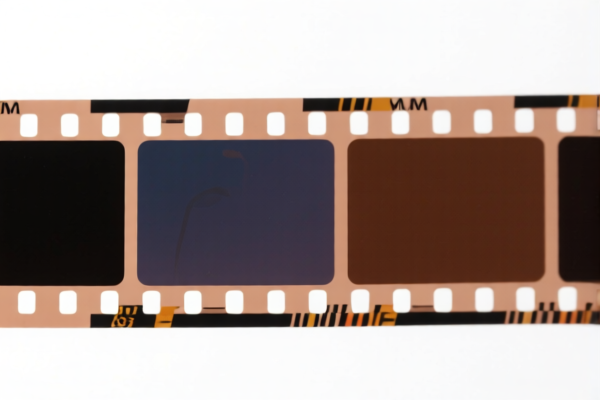
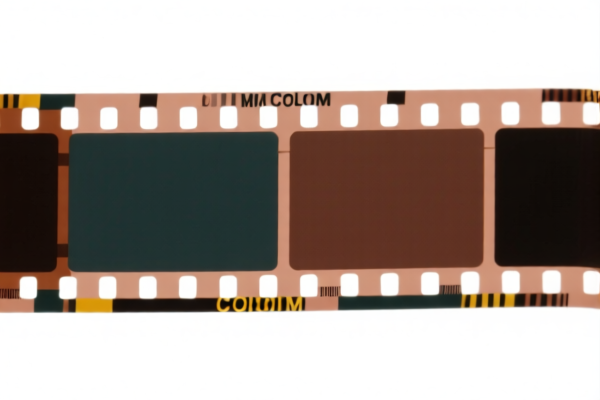
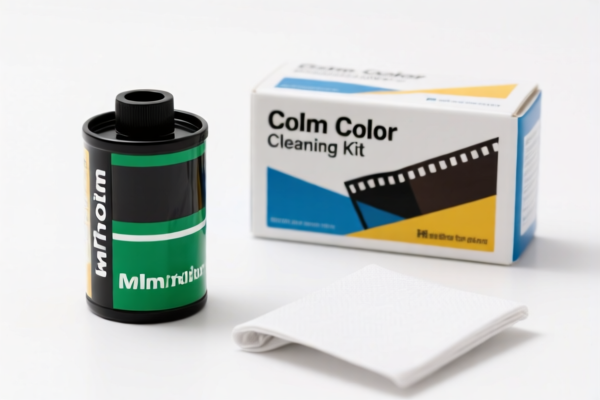
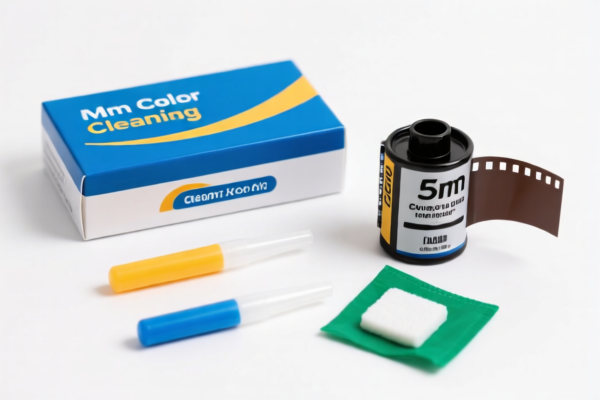
AI Analysis
🎞️ 35mm High Speed Color Film (摄影胶片)
🌐 HS Code Reference & Customs Clearance Guide | 2026 Latest Tariff Analysis | Professional Clearance Strategy
📌 1. Product Definition & Classification: What is "High Speed Color Film"?
35mm High Speed Color Film refers to unexposed photographic film used for color photography, with a specific width of 35mm and a "High Speed" (high ISO) sensitivity rating. In international trade, this product falls under Chapter 37: Photographic or Cinematographic Goods.
The classification depends on the material substrate and specific use: 1. Plastic-based (Standard): The vast majority of 35mm color films are coated on a transparent plastic base (Cellulose Acetate or Polyester). These are typically classified under 3702 (Photographic film in rolls, other than sensitized paper, paperboard, or textiles). 2. Emulsion-only: If the product refers specifically to the chemical emulsion itself (without a film base), it falls under 3707 (Prepared photographic emulsions).
⚠️ Key Distinction:
- If the item is a roll of unexposed film (physical sheet/film) →归类 to 3702.
- If the item is a liquid/semi-solid chemical emulsion →归类 to 3707.
- Note: "High Speed" indicates sensitivity (ISO), not a different HS code, but it confirms it is for professional/advanced photography.
📦 2. HS Code Classification Details (Based on Provided Data)
According to the provided <DATA>, the following HS Codes and explanations are available. Please note that while standard global HS codes usually place 35mm film in 3702.5x, the provided data includes specific US HTS codes (8-digit) and some ambiguous matches. We will analyze them strictly based on the provided text.
| HS Code | Product Description & Summary from Data | Total Tax Rate |
|---|---|---|
| 3707.10.00.90 | Prepared Photographic Emulsions. Match Logic: "Color" (Color) and "Film" (Emulsion attribute) match photographic chemical agents. "Macro" implies photography use. Classified as "Other" due to no material conflict. |
38.0% |
| 3707.10.00.05 | Prepared Photographic Emulsions (Color Negative). Match Logic: "Color" matches "Color"; "Film" functions as light-sensitive material. Classified as Color Negative Film type light-sensitive emulsions. |
38.0% |
| 3701.91.00.60 | Photographic Plates & Film (Other). Match Logic: Identified as "35mm Color Macro Film". Material inferred as non-paper/textile. Form is photographic film. Use: "For Color Photography". |
38.7% |
| 3701.91.00.30 | Photographic Plates & Film (Other). Match Logic: "Color" → "Color Photography"; "Film" → "Film". Material and use match. Physical form unspecified, so classified under "Other" as a reasonable match. |
38.7% |
| 3702.55.00.60 | Photographic Film in Rolls (Other). Match Logic: Explicitly "Color Film". 35mm width fits the 16mm-35mm range. Material: Sensitized coating on a base, not paper/textile. Classified as Other Color Photographic Film Rolls. |
35.0% |
🔍 Critical Observation:
- The data provides five possible HS Codes.
- 3702.55.00.60 is the most logically accurate for standard 35mm Color Film Rolls based on global trade norms, and it offers the lowest tax rate (35.0%) among the options.
- Codes 3707 refer to emulsions (chemicals), not the physical film rolls. If your product is physical film, 3707 might be incorrect unless you are importing raw chemical coatings.
- Codes 3701 refer to plates/sheets. While 35mm is a "sheet" in roll form, 3702 is specifically for "rolls" of film, making it the more precise category for standard photography supplies.
💰 3. 2026 Latest Tariff Rate Breakdown (US Imports from China)
✅ Applicable Country: United States (US)
✅ Origin: China (CN)
✅ Effective Date: From November 10, 2025 (including subsequent imports)
🎯 1. 3702.55.00.60 —— Other Color Photographic Film Rolls (Best Match for 35mm)
| Item | Content |
|---|---|
| Base Duty Rate | 0.0% |
| USITC Additional Duty | +25.0% (Section 301 Duties) |
| IEEPA Additional Duty | +10.0% (China/HK Products, effective Nov 10, 2025) |
| Total Tax Rate | 35.0% |
| Tax Calculation | CIF Value × 35% |
| De Minimis Exemption | ❌ Not Eligible (denied_de_minimis) |
| Legal Basis Path | USITC:3702.55.00.60 → FOOTNOTE:9903.88.01 → IEEPA:9903.01.24 |
📌 Explanation:
- This is the most likely correct classification for standard 35mm Color Film.
- The base duty is 0%, but the 35% total rate is high due to US trade remedies against China.
- Must pay full tax; no de minimis (under $800) exemption applies to Chinese-origin goods under Section 301/IEEPA.
🎯 2. 3707.10.00.90 & 3707.10.00.05 —— Prepared Photographic Emulsions
| Item | Content |
|---|---|
| Base Duty Rate | 3.0% |
| USITC Additional Duty | +25.0% |
| IEEPA Additional Duty | +10.0% |
| Total Tax Rate | 38.0% |
| Tax Calculation | CIF Value × 38% |
| De Minimis Exemption | ❌ Not Eligible |
| Legal Basis Path | USITC:3707.10.00.x → FOOTNOTE:9903.88.01 → IEEPA:9903.01.24 |
📌 Explanation:
- Use this ONLY if you are importing raw photographic emulsion liquids for manufacturing, not finished film rolls.
- If customs inspects and finds physical film rolls, they will reclassify, potentially leading to penalties.
🎯 3. 3701.91.00.60 & 3701.91.00.30 —— Photographic Plates & Film (Other)
| Item | Content |
|---|---|
| Base Duty Rate | 3.7% |
| USITC Additional Duty | +25.0% |
| IEEPA Additional Duty | +10.0% |
| Total Tax Rate | 38.7% |
| Tax Calculation | CIF Value × 38.7% |
| De Minimis Exemption | ❌ Not Eligible |
| Legal Basis Path | USITC:3701.91.00.x → FOOTNOTE:9903.88.01 → IEEPA:9903.01.24 |
📌 Explanation:
- These codes are less specific for 35mm rolls than 3702.
- They carry the highest tax rate (38.7%).
- Use only if the product does not fit standard "rolls" (e.g., cut sheets for large format), but even then, 3702 is often preferred.
🛠️ 4. Customs Clearance Practical Advice (Real-World Pitfall Guide)
✅ 1. Required Documentation Checklist (No Compromise)
| Document | Mandatory? | Notes |
|---|---|---|
| ✅ Product Spec Sheet | ✔️ | Must state: "35mm Width", "Color", "High Speed/ISO", "Unexposed Photographic Film". |
| ✅ Composition Analysis | ✔️ | Prove base material (e.g., Polyester/Cellulose Acetate) to justify 3702 over 3701 (Paper/Textile). |
| ✅ Photos (Packaging & Label) | ✔️ | Show "Color Film", "ISO 400/800/1600", "35mm". |
| ✅ Commercial Invoice | ✔️ | Clearly state: "35mm Color Photographic Film, Unexposed, for Professional Photography". |
| ✅ Certificate of Origin | ✔️ | Mandatory for applying/confirming USITC/IEEPA duties. |
| ✅ Packaging List | ✔️ | Detail net/gross weight and number of rolls. |
✅ 2. Declaration Strategy (Key Mantra)
🔥 “Film Rolls go to 3702, Emulsions go to 3707. Be Specific, Save Money!”
| Scenario | Correct HS Code | Wrong Action | Consequence |
|---|---|---|---|
| Standard 35mm Color Film Rolls | 3702.55.00.60 |
Report as 3707 (Emulsion) |
❌ Misclassification. Risk of penalty + higher tax (38% vs 35%). |
| Raw Chemical Emulsion | 3707.10.00.05/90 |
Report as 3702 (Film) |
❌ Reject at border. Product is not a film roll. |
| Large Format Cut Sheets | 3701.91.00.x |
Report as 3702 (Rolls) |
❌ Incorrect form factor. |
| Film with Developer Kit | Separate Items | Bundle into one HS | ⚠️ Developer may be a different class. Split declaration recommended. |
✅ 3. Special Cases Handling
| Situation | Handling Advice |
|---|---|
| OEM Branded Film | Provide OEM agreement + Label specs. Ensure "High Speed" is defined by ISO standard in specs. |
| Mixed Container (Film + Accessories) | Declare film separately. Accessories (tripods, bags) have different HS codes and lower duties. Do not bundle unless they are a single functional unit (rare for film). |
| Sample Shipments | Even small samples are subject to 35%–38.7% duty. Do not assume "De Minimis" ($800 rule) applies; it is explicitly denied for Chinese goods. |
| High Speed vs. Normal | "High Speed" is a marketing term. Customs looks at physical properties (ISO rating). Ensure spec sheet lists ISO (e.g., ISO 800, 1600) to justify professional use. |
🌍 5. Global Market Comparison (2026 Latest)
| Country/Region | Recommended HS Code | Estimated Duty (China Origin) | Certification | Notes |
|---|---|---|---|---|
| 🇺🇸 USA | 3702.55.00.60 |
35.0% | N/A | High duty due to Section 301 + IEEPA. |
| 🇨🇳 China | 3702.55.00.00 |
~0% - 5% | N/A | Lower import duties. |
| 🇪🇺 EU | 3702.55.00.00 |
0% (Standard MFN) | N/A | No additional trade tariffs on film. |
| 🇬🇧 UK | 3702.55.00.00 |
0% - 5% | N/A | Post-Brexit rules vary, generally low. |
| 🇯🇵 Japan | 3702.55.00.00 |
0% - 3% | N/A | Low duties for photographic supplies. |
📌 Conclusion:
- USA is the most expensive market for importing Chinese photographic film due to political tariffs.
- 35% is the minimum cost for 35mm film into the US. Plan pricing accordingly.
📌 6. Common Mistakes & Pitfalls (Lessons Learned)
❌ Mistake 1: Classifying 35mm Film as 3707 (Emulsion) because it contains "Chemicals".
👉 Consequence: Customs will inspect. If it's a physical roll, they will reclassify to 3702. If you overpaid tax, you might get a refund, but it causes delays. If you underpaid, you face penalties.
❌ Mistake 2: Assuming "De Minimis" ($800) exemption applies.
👉 Consequence: Full 35%-38.7% tax is charged. Even a single roll is subject to duty if from China.
❌ Mistake 3: Vague Description: "Photographic Supplies".
👉 Consequence: CBP will request detailed specs, hold cargo, and possibly fine for insufficient information.
❌ Mistake 4: Ignoring the "High Speed" designation.
👉 Consequence: Not a legal issue, but ensure the ISO rating is clear to distinguish from consumer "toy" cameras or instant film (which may have different codes).
✅ Correct Declaration Example:
"35mm Color Photographic Film, Unexposed, High Speed (ISO 800), Polyester Base, for Professional Photography, Made in China"
🎯 7. Conclusion: Professional Declaration for Cost Efficiency
🎯 Remember the Mantra:
🔹 "Rolls are 3702, Emulsions are 3707."
🔹 "35% is the Floor for US Imports."
🔹 "No De Minimis Exemption for China!"
📌 Pro Tip:
If you are importing large volumes, consider applying for an Exclusion under Section 301 if available (though unlikely for film), or explore duty draw-back programs if you export finished goods made with this film.
Always request a Pre-Ruling (Advance Ruling) from CBP if the classification is uncertain, though the provided data strongly points to 3702.55.00.60.
📣 Immediate Action:
📞 Contact your US Customs Broker with the Spec Sheet (showing 35mm, Color, ISO).
📄 Prepare Invoice as: "35mm Color Film Rolls, Unexposed".
🚀 Budget for 35% Duty + 10% IEEPA Surcharge.
💼 Your margin depends on accurate classification!
✨ Professional Clearance Starts with Precision!
💼 Every percent saved is profit earned!
Customer Reviews
About HS Code Classification
The Harmonized System (HS) is an internationally standardized nomenclature developed by the World Customs Organization (WCO) to classify traded products. Over 200 countries use the HS system as the basis for customs tariffs, trade statistics, and import/export regulations.
Each HS code follows a hierarchical structure:
- Chapter (2 digits) — Broad category of goods (e.g., Chapter 84: Machinery and Mechanical Appliances)
- Heading (4 digits) — More specific grouping within the chapter
- Subheading (6 digits) — Internationally standardized breakdown, used by all WCO member countries
- National subdivisions (8-10 digits) — Country-specific extensions for further classification, such as US HTSUS 10-digit codes
Correct HS code classification is essential for smooth customs clearance, accurate duty payment, and compliance with trade regulations. Misclassification can lead to customs delays, overpayment of duties, or penalties.
When importing from CN to US, the applicable tariff rates may include:
- Most-Favored-Nation (MFN) rate — The standard duty rate applied to WTO members
- General rate — Applied to countries without trade agreements
- Trade remedy duties — Additional tariffs such as Section 301 (anti-dumping), Section 232 (national security), or countervailing duties
The information provided on this page is for reference purposes only. For official classification, please consult with your local customs authority or a licensed customs broker.