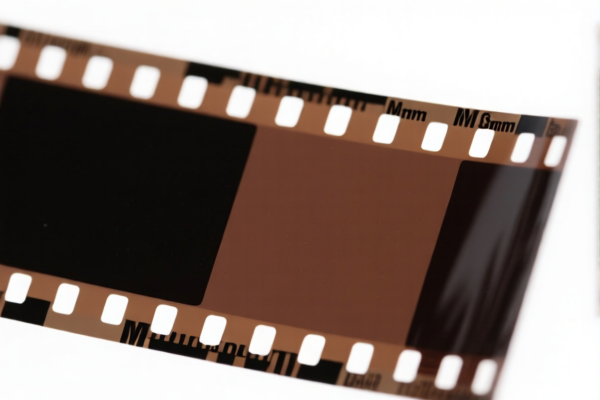
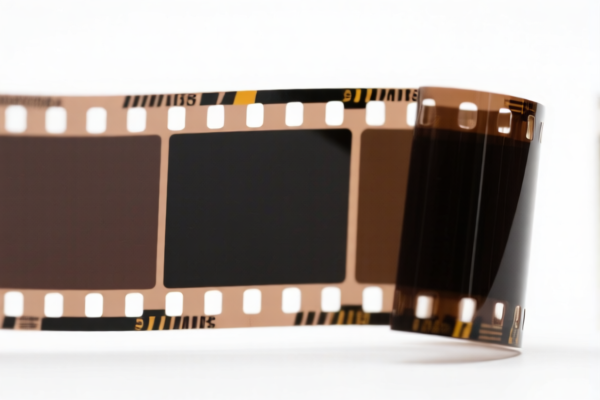
35mm Low Haze Film
CN → US| HS Code | Tariff Rate | Origin | Destination | Doc |
|---|---|---|---|---|
| 3702530030 | 38.7% | CN | US | Official Doc |
| 3702540030 | 38.7% | CN | US | Official Doc |
| 3706106060 | 35.0% | CN | US | Official Doc |
| 3706106030 | 35.0% | CN | US | Official Doc |
| 3702540030 | 38.7% | CN | US | Official Doc |
Product Images


AI Analysis
🎞️ 35mm Low Haze Film (Photographic Film)
🌐 HS Code Reference & Customs Clearance Guide | 2026 Latest Tariff Analysis | Professional Customs Strategy
📌 1. Product Definition: What is "35mm Low Haze Film"?
35mm Low Haze Film refers to photographic film with a width of 35mm, specifically engineered to minimize optical haze (cloudiness or loss of contrast) to ensure high transparency and image clarity. In international trade, this product is classified based on its state of exposure (unexposed vs. exposed/developed) and color type (color vs. black-and-white).
⚠️ Key Distinction Point:
- Unexposed Film: Raw material for photography. Classified under 3702 (Photographic film in rolls, unexposed).
- Exposed & Developed Film: The final image product (movies/photos). Classified under 3706 (Photographic film in rolls, exposed and developed).
📦 2. HS Code Classification Details (2026 Latest Tariff Authority Comparison)
Based on the provided data, here are the four valid classifications for "35mm Low Haze Film":
| HS Code | Product Description | Usage Scenario | Tax Rate (Total) |
|---|---|---|---|
3702.53.00.30 |
Unexposed Color Photographic Film (35mm width) | Raw color negative/positive film for photography | 38.7% |
3702.54.00.30 |
Unexposed Color Photographic Film (35mm width) | Raw color film with "Low Haze" performance feature | 38.7% |
3706.10.60.60 |
Exposed & Developed Cinematographic Film (35mm) | Movie reels that have been shot and developed | 35.0% |
3706.10.60.30 |
Exposed & Developed Cinematographic Film (35mm) | Movie reels that have been shot and developed | 35.0% |
🔍 Critical Note:
- HS 3702: Applies to unexposed film. "Low Haze" is a performance characteristic of the base material. - HS 3706: Applies only if the film has already been exposed and chemically developed into an image (e.g., movie negatives/positives). - Do not confuse "Unexposed Color Slide Film" with general color negative film if specifications differ, but under the provided data,3702.53.00.30covers unexposed color roll film.
💰 3. 2026 Latest Tariff Rate Breakdown (Including Surtaxes)
✅ Applicable Country: United States (US)
✅ Country of Origin: China (CN)
✅ Effective Date: 2025 onwards (Current Trade Regime)
🎯 1. Unexposed Color Film (3702.53.00.30 & 3702.54.00.30)
| Item | Details |
|---|---|
| Base Tariff | 3.7% |
| Section 301 Surtax | +25.0% (USITC Footnote 9903.88.01) |
| Section 122 Tariff | +10.0% (Specific provision for certain goods) |
| Total Tariff Rate | 38.7% |
| Calculation Basis | CIF Value × 38.7% |
| De Minimis Exemption | ❌ Not Applicable (High duty rate excludes small package benefits) |
| Legal Basis Path | USITC:3702.53.00.30 → Section 301: 25% → Section 122: 10% |
📌 Explanation:
- "Unexposed" films are subject to higher base duties (3.7%) compared to developed film.
- Both Section 301 (25%) and Section 122 (10%) surtaxes apply, resulting in a high total cost of 38.7%.
- "Low Haze" is considered a performance feature of the chemical/coating, not a change in classification.
🎯 2. Exposed & Developed Cinematographic Film (3706.10.60.60 & 3706.10.60.30)
| Item | Details |
|---|---|
| Base Tariff | 0.0% |
| Section 301 Surtax | +25.0% |
| Section 122 Tariff | +10.0% |
| Total Tariff Rate | 35.0% |
| Calculation Basis | CIF Value × 35.0% |
| De Minimis Exemption | ❌ Not Applicable |
| Legal Basis Path | USITC:3706.10.60.60 → Section 301: 25% → Section 122: 10% |
📌 Explanation:
- Although the base tariff is 0%, the surtaxes (301 + 122) still apply, leading to a 35.0% total rate.
- This applies specifically to cinematographic film (movie film) that has been exposed and developed.
🛠️ 4. Customs Clearance Practical Advice (Avoiding Pitfalls)
✅ 1. Documentation Checklist (Mandatory)
| Document | Must Provide? | Description |
|---|---|---|
| ✅ Product Specification Sheet | ✔️ | Must explicitly state "35mm Width," "Low Haze," and Exposure Status (Unexposed vs. Exposed/Developed). |
| ✅ Technical Data Sheet (TDS) | ✔️ | To prove "Low Haze" is a physical property (transparency %) and not a different product type. |
| ✅ Commercial Invoice | ✔️ | Clearly describe as "Photographic Film, 35mm, Unexposed, Color" OR "Cinematographic Film, 35mm, Exposed, Developed." |
| ✅ Certificate of Origin (CO) | ✔️ | Required to verify China origin for surtax calculation. |
| ✅ Packing List | ✔️ | Detail roll counts, length, and weight. |
✅ 2. Declaration Tips (Key Mantras)
🔥 “State Exposure Clearly, Width is 35mm, Low Haze is Just a Feature!”
| Scenario | Correct HS Code | Wrong Action |
|---|---|---|
| Unexposed Color Film (Raw rolls) | 3702.53.00.30 or 3702.54.00.30 |
Misdeclare as "Unexposed B&W" → Wrong tax rate |
| Unexposed Film with "Low Haze" | 3702.53.00.30 or 3702.54.00.30 |
Claiming "Low Haze" changes it to electronics → Audit Risk |
| Exposed Movie Reels (Developed) | 3706.10.60.60 or 3706.10.60.30 |
Misdeclare as "Unexposed" → Higher tax (38.7% vs 35.0%) |
| Photographic Negatives (Not Cinematographic) | Check if it fits 3706 vs 3702 | If exposed but not "cinematographic," it may not fit 3706.10. Verify precise use case. |
✅ 3. Special Handling for "Low Haze"
- "Low Haze" is a Performance Descriptor, Not a Classification Driver.
It does not move the product to HS 90 (Optical Instruments) or HS 85 (Electronics). It remains a chemical/photonics product under Chapter 37.- Transparency Proof: Provide lab reports showing haze percentage (e.g., <2%) if questioned by customs to distinguish from standard commercial film.
🌍 5. Global Market Comparison (2026 Update)
| Country/Region | Recommended HS Code | Total Tax (China Origin) | Key Certification | Note |
|---|---|---|---|---|
| 🇺🇸 USA | 3702.53.00.30 / 3706.10.60.30 |
38.7% (Unexposed) 35.0% (Exposed) |
None specific for film | High surtaxes (301+122) apply |
| 🇨🇳 China | 3702.53.00.30 |
~3.7% (Import Duty) | N/A | No Section 301/122 for domestic |
| 🇪🇺 EU | 3702.53.00.30 |
6.5% (Standard MFN) | CE (if electronic components included) | No Section 301 equivalent |
| 🇯🇵 Japan | 3702.53.00.30 |
3.2% (Standard MFN) | PSE (if related electronics) | Lower base rate |
📌 Conclusion:
- The US market is significantly more expensive due to叠加 surtaxes.
- Unexposed film (38.7%) is taxed higher than Developed Cinematographic film (35.0%) because of the 3.7% base duty.
- Ensure the exposure status is correctly declared to avoid over/under-payment.
📌 6. Common Errors & Pitfalls (Lessons Learned)
❌ Error 1: Declaring "Exposed Movie Film" as "Unexposed Film"
👉 Consequence: Overpayment of 3.7% base duty, but more importantly, customs detention if the product doesn't match the declared state (chemical sensitivity differs).
❌ Error 2: Declaring "Low Haze" as a separate product category
👉 Consequence: Customs may request extensive proof of classification, delaying clearance by weeks. "Low Haze" is a quality spec, not a HS driver.
❌ Error 3: Confusing "Photographic Film" (3702) with "Cinematographic Film" (3706) for exposed rolls
👉 Consequence: Misclassification. If it's for movies, it's 3706. If it's for still photography negatives, check specific 3706 subheadings. The provided data links 3706.10.60 to Cinematographic.
✅ Correct Practice:
"35mm Color Photographic Film, Unexposed, Low Haze Specification, Roll Packaging, Model XYZ"
OR
"35mm Cinematographic Film, Exposed and Developed, for Movie Projection, Low Haze"
🎯 7. Conclusion: Precision in Classification Saves Money
🎯 Remember:
🔹 "Unexposed = 38.7% (Base 3.7% + Surtaxes)"
🔹 "Exposed Movie Film = 35.0% (Base 0% + Surtaxes)"
🔹 "Low Haze = No Tax Change, Just a Quality Spec"
📌 Pro Tip:
If you are importing large volumes, consider applying for an HTS Code Exclusion under Section 301 if applicable (though rare for film), or ensure your supplier provides a Duty Drawback opportunity if the film is re-exported.
📣 Immediate Action:
📞 Confirm Exposure Status (Unexposed vs. Exposed) with your supplier.
📄 Prepare Technical Specs highlighting "35mm Width" and "Low Haze."
🚀 File correct HS Code (3702.53.00.30/3702.54.00.30/3706.10.60.30/3706.10.60.60) to avoid $10,000+ in penalties.
✨ Professional Customs Clearance Starts with Accurate Classification!
💼 Your Profit Margin Depends on the Last 3.7% Base Duty!
Customer Reviews
About HS Code Classification
The Harmonized System (HS) is an internationally standardized nomenclature developed by the World Customs Organization (WCO) to classify traded products. Over 200 countries use the HS system as the basis for customs tariffs, trade statistics, and import/export regulations.
Each HS code follows a hierarchical structure:
- Chapter (2 digits) — Broad category of goods (e.g., Chapter 84: Machinery and Mechanical Appliances)
- Heading (4 digits) — More specific grouping within the chapter
- Subheading (6 digits) — Internationally standardized breakdown, used by all WCO member countries
- National subdivisions (8-10 digits) — Country-specific extensions for further classification, such as US HTSUS 10-digit codes
Correct HS code classification is essential for smooth customs clearance, accurate duty payment, and compliance with trade regulations. Misclassification can lead to customs delays, overpayment of duties, or penalties.
When importing from CN to US, the applicable tariff rates may include:
- Most-Favored-Nation (MFN) rate — The standard duty rate applied to WTO members
- General rate — Applied to countries without trade agreements
- Trade remedy duties — Additional tariffs such as Section 301 (anti-dumping), Section 232 (national security), or countervailing duties
The information provided on this page is for reference purposes only. For official classification, please consult with your local customs authority or a licensed customs broker.