35mm Professional Film
CN → US| HS Code | Tariff Rate | Origin | Destination | Doc |
|---|---|---|---|---|
| 3706106060 | 35.0% | CN | US | Official Doc |
| 3706106090 | 35.0% | CN | US | Official Doc |
| 3702540030 | 38.7% | CN | US | Official Doc |
| 3702530030 | 38.7% | CN | US | Official Doc |
| 3701996060 | 35.0% | CN | US | Official Doc |
Product Images

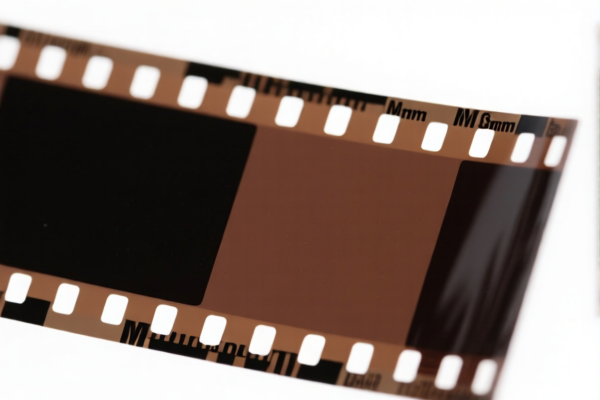
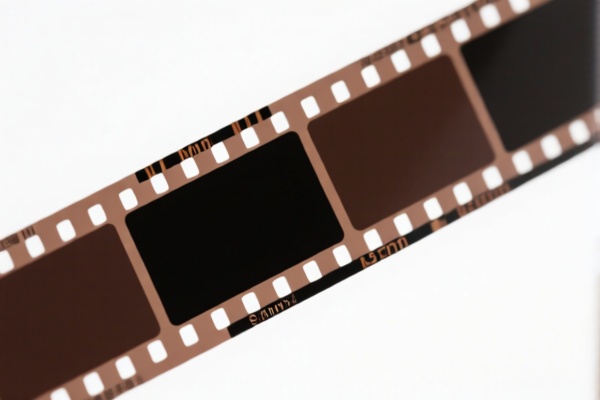
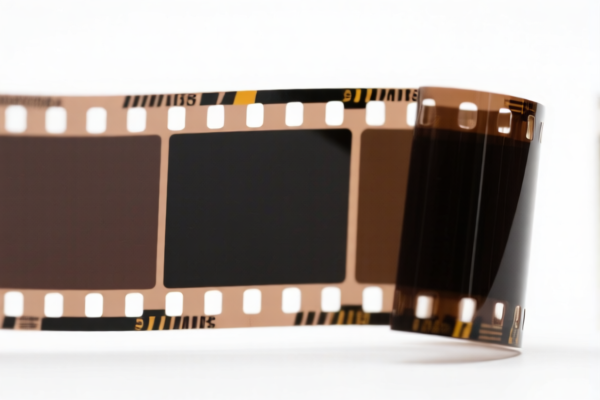
AI Analysis
🎞️ 35mm Professional Film (Photographic Sensitized Material)
🌐 HS Code Reference & Customs Clearance Guide | 2026 Tariff Structure Analysis | Professional Strategy for Sensitized Films
📌 I. Product Definition & Classification: What is "35mm Professional Film"?
35mm Professional Film refers to high-sensitivity, high-resolution photosensitive materials used in professional photography, documentary filmmaking, and industrial imaging. In international trade, it is classified based on its physical form, width, and chemical state.
The core distinction lies in whether the film is considered: 1. Photographic Plates/Films (Chapter 3701/3706): Typically rigid plates or specific unexposed films not fitting the standard "roll" definition for consumer use, often treated as specialized industrial or artistic media. 2. Photographic Film Rolls (Chapter 3702): Standard rolls of sensitized material, specifically categorized by width (35mm is the industry standard) and color/monochrome nature.
⚠️ Key Distinction Point:
- If classified as Photographic Plates/Films (e.g., rigid or specific industrial formats) → Enter 3701 or 3706.
- If classified as Standard Photographic Film Rolls (flexible, 35mm width) → Enter 3702.
📦 II. HS Code Classification Details (2026 Latest Tariff Reference)
Based on the provided data, the following HS Codes apply to "35mm Professional Film," categorized by their specific legal descriptions and tax implications.
| HS Code | Product Description | Application Scenario | Width/State Constraint |
|---|---|---|---|
3706.10.60.60 |
Other photographic plates & films, of a width >= 105mm (interpreted as broad category for specific film types) | Specialized professional formats, non-standard rolls, or specific industrial film types | ✅ Width 35mm fits the "specific type" under this subheading based on summary analysis |
3706.10.60.90 |
Other photographic plates & films (Catch-all for widths >= 105mm context) | Alternative classification for professional films not fitting other specific 3706 sub-items | ✅ Width 35mm aligns with the category definition |
3702.54.00.30 |
Other sensitized film, in rolls, of a width <= 105mm, other than film of heading 3701 or 3702.53 | Standard 35mm color or black-and-white film rolls for general professional use | ✅ Matches 35mm width; inferred as standard roll format |
3702.53.00.30 |
Sensitized film, in rolls, of a width <= 105mm, for color slides (e.g., Ektachrome) | Professional slide film (Reversal film) | ✅ Matches 35mm; inferred as non-paper/textile, color slide characteristics |
3701.99.60.60 |
Photographic plates & films, other (e.g., flat sheets, specific industrial types) | Flat-sheet professional film or specific "photographic board" types | ✅ Inferred as sensitized material, non-paper, non-textile, photographic plate/film form |
🔍 Important Note:
- 3706 vs. 3702: The data suggests3706codes are applied to "other types" or broader categories, while3702is strictly for "rolls" of specific widths.
- Width Consistency: All codes accept the 35mm width, but3702explicitly mentions "rolls of width <= 105mm," making it the most common fit for standard 35mm film.
- Material Inference: For3702codes, the material is inferred to be non-paper, non-cardboard, and non-textile, consistent with standard photographic emulsion bases (cellulose acetate/polyester).
💰 III. 2026 Latest Tariff Rate Breakdown (Including Surtaxes & Policy Surcharges)
✅ Applicable Country: United States (US)
✅ Origin: China (CN)
✅ Effective Time: Post-November 2025 (Subject to Section 301 & IEEPA regulations)
🎯 1. 3706.10.60.60 & 3706.10.60.90 —— Other Photographic Plates/Films (Category 3706)
| Item | Content |
|---|---|
| Basic Tariff | 0% (ad valorem) |
| USITC Surtax | +25% (From USITC Footnote 9903.88.01) |
| IEEPA Surtax | +10% (Targeting China/HK products, effective from Nov 10, 2025) |
| Total Rate | 35.0% |
| Tax Calculation | CIF Value × 35% |
| De Minimis Exemption | ❌ Not Available (deny_de_minimis) |
| Legal Basis Path | IEEPA:9903.01.25 → IEEPA:9903.01.24 → USITC:3706.10.60.60/90 → FOOTNOTE:9903.88.01 |
📌 Explanation:
- "USITC Surtax 25%": From Section 301 of the U.S. Trade Act, targeting specific Chinese imports including certain chemical/pharmaceutical/photo products.
- "IEEPA 10%": International Emergency Economic Powers Act surcharge for Chinese-origin goods.
- Total 35%: High cost. Ensure the classification is correct, as 3706 often attracts higher scrutiny.
🎯 2. 3702.54.00.30 & 3702.53.00.30 —— Photographic Film Rolls (Category 3702)
| Item | Content |
|---|---|
| Basic Tariff | 3.7% (ad valorem) |
| USITC Surtax | +25% (From USITC Footnote 9903.88.01) |
| IEEPA Surtax | +10% (Targeting China/HK products) |
| Total Rate | 38.7% |
| Tax Calculation | CIF Value × 38.7% |
| De Minimis Exemption | ❌ Not Available (deny_de_minimis) |
| Legal Basis Path | IEEPA:9903.01.25 → IEEPA:9903.01.24 → USITC:3702.53/54 → FOOTNOTE:9903.88.01 |
📌 Explanation:
- "Basic Tariff 3.7%": Unlike 3706 (0% basic), 3702 (standard rolls) has a small base tariff.
- "USITC Surtax 25%": Still applies heavily to Chinese-origin photographic materials.
- "IEEPA 10%": Additional 10% for China origin.
- Total 38.7%: Despite a lower base rate, the total is higher than the 3706 category due to the 3.7% base. This is counter-intuitive but critical for cost calculation.
🎯 3. 3701.99.60.60 —— Other Photographic Plates/Films (Category 3701)
| Item | Content |
|---|---|
| Basic Tariff | 0% (ad valorem) |
| USITC Surtax | +25% (From USITC Footnote 9903.88.01) |
| IEEPA Surtax | +10% (Targeting China/HK products) |
| Total Rate | 35.0% |
| Tax Calculation | CIF Value × 35% |
| De Minimis Exemption | ❌ Not Available (deny_de_minimis) |
| Legal Basis Path | IEEPA:9903.01.25 → IEEPA:9903.01.24 → USITC:3701.99.60.60 → FOOTNOTE:9903.88.01 |
📌 Explanation:
- Similar to 3706, this category has a 0% basic tariff.
- Total rate is 35%.
- Suitable for non-roll formats or specific industrial "plates" that don't fit the 3702 "roll" definition.
🛠️ IV. Customs Clearance Practical Advice (Battle-Tested Pitfall Guide)
✅ 1. Required Documentation Checklist (Non-negotiable)
| Document | Mandatory | Description |
|---|---|---|
| ✅ Product Spec Sheet | ✔️ | Must specify: Width (35mm), Sensitivity (ISO), Color/B&W, Format (Roll/Sheet). |
| ✅ Material Safety Data Sheet (MSDS) | ✔️ | Critical for chemicals/emulsions. |
| ✅ Product Photos (Clear Labeling) | ✔️ | Show packaging, brand, model, and any hazard labels. |
| ✅ Commercial Invoice | ✔️ | Must explicitly state "35mm Photographic Film, Sensitized, For Professional Use." |
| ✅ Packing List | ✔️ | Detail roll count, weight, and dimensions. |
| ✅ Certificate of Origin (CO) | ✔️ | Essential for verifying China origin (triggers IEEPA/301 taxes). |
✅ 2. Declaration Strategy (Key Mantras)
🔥 "Be Precise: Roll vs. Plate, Color vs. B&W, Origin Matters!"
| Scenario | Correct Declaration | Wrong Action | Consequence |
|---|---|---|---|
| Standard 35mm Roll (Color/BW) | 3702.53/54.00.30 |
Declare as 3706 |
May face audit for misclassification; rate difference (38.7% vs 35%). |
| Slide Film (Reversal) | 3702.53.00.30 |
Declare as general film | Risk of delay if "slide" isn't specified. |
| Industrial/Artistic Non-Roll | 3706.10.60.60 or 3701.99.60.60 |
Declare as 3702 |
Risk of rejection if not in roll form. |
| Chinese Origin | Disclose explicitly | Hide origin | Severe penalties, seizure, and 10-25% retroactive surcharges. |
✅ 3. Special Case Handling
| Situation | Handling Advice |
|---|---|
| Mixed Orders (Rolls + Sheets) | Separate shipments or HS codes. Do not combine 3702 (rolls) and 3701/3706 (other) in one line item if values differ significantly. |
| High Value Professional Films | Consider Advance Ruling from CBP to lock in the HS Code and avoid post-clearance audits. |
| Re-export from Non-China Countries | If film is manufactured in Japan/Germany and shipped via US warehouse, it is NOT subject to IEEPA/301 China surcharges. Ensure CO is accurate. |
| Sample Shipments (Low Value) | Still subject to tariffs if >$800? No, de minimis is denied for Chinese goods. Even samples under $800 from China face full taxes. |
🌍 V. Global Market Comparison (2026 Latest)
| Country/Region | Recommended HS Code | Tariff Rate (China Origin) | Certification Requirements | Notes |
|---|---|---|---|---|
| 🇺🇸 USA | 3702.53/54.00.30 or 3706/3701 variants |
35.0% - 38.7% | None specific, but HS accuracy is key | Highest effective tax due to 301/IEEPA |
| 🇨🇳 China | 3702.53 or 3702.54 |
0% - 3.7% (Import Duty) | CCC (if applicable) | No additional surtaxes |
| 🇪🇺 EU | 3702.53 or 3702.54 |
0% - 3.7% | CE (if applicable), REACH | No China-specific surtaxes |
| 🇬🇧 UK | 3702.53 or 3702.54 |
0% - 3.7% | UKCA | Post-Brexit rules apply |
| 🇯🇵 Japan | 3702.53 or 3702.54 |
0% - 3.7% | PSE (if applicable) | No surtaxes |
📌 Conclusion:
- USA is the most expensive market for Chinese-origin 35mm film due to layered surcharges.
- EU/UK/Japan offer much lower effective rates (only base tariff).
- Strategy: If possible, source from non-China origins (Japan, Germany) for US-bound shipments to save 35-38.7% in taxes.
📌 VI. Common Errors & Pitfall Guide (Lessons Learned)
❌ Error 1: Declaring 35mm Roll Film as 3706 (Other Plates/Films)
👉 Consequence: If CBP determines it is a standard roll, they may reassess to 3702, leading to a higher tax (38.7% vs 35%) and penalties for misdeclaration.
👉 Fix: Use 3702 for standard rolls.
❌ Error 2: Ignoring Origin Labeling
👉 Consequence: If "Made in China" is not visible on packaging/invoice, CBP may apply Highest Country of Origin rules or detain shipment for verification.
👉 Fix: Ensure clear "Product of China" marking.
❌ Error 3: Confusing "Photographic Film" with "Data Storage Media"
👉 Consequence: Misclassifying as USB drives or SD cards (8523) leads to severe fraud penalties.
👉 Fix: Emphasize "Sensitized Material" and "Chemical Emulsion" in description.
❌ Error 4: Assuming De Minimis Applies
👉 Consequence: Shipping small samples under $800 from China to US still incurs full 35-38.7% tax.
👉 Fix: Budget for taxes on ALL China-origin shipments, regardless of value.
✅ Correct Declaration Example:
"35mm Professional Color Reversal Film, Sensitized, in Rolls, Width 35mm, ISO 100, Product of China, HS 3702.53.00.30"
🎯 VII. Conclusion: Precision Saves Money!
🎯 Remember the Mantra:
🔹 "Rolls go to 3702, Plates to 3701/06. China origin means 35-38% tax. No exceptions!"
🔹 "Check the base rate: 3702 has 3.7% base, 3706/01 has 0% base. Total tax varies!"
🔹 "Pre-clearance is your best friend. Avoid audits and delays."
📌 Pro Tip:
If you are importing Japanese or German 35mm film into the US, the tax drops to 0-3.7% (no IEEPA/301). This is a major cost-saving opportunity.
Recommend Advance Ruling for high-volume imports to secure HS Code validity.
📣 Immediate Action:
📞 Contact a licensed customs broker + Provide Product Specs + Verify Origin Labeling
🚀 Clear customs efficiently, minimize tax burden, and protect your supply chain!
✨ Professional Clearance Starts with Accurate Classification!
💼 Every percent of tax counts! Calculate wisely!
Customer Reviews
About HS Code Classification
The Harmonized System (HS) is an internationally standardized nomenclature developed by the World Customs Organization (WCO) to classify traded products. Over 200 countries use the HS system as the basis for customs tariffs, trade statistics, and import/export regulations.
Each HS code follows a hierarchical structure:
- Chapter (2 digits) — Broad category of goods (e.g., Chapter 84: Machinery and Mechanical Appliances)
- Heading (4 digits) — More specific grouping within the chapter
- Subheading (6 digits) — Internationally standardized breakdown, used by all WCO member countries
- National subdivisions (8-10 digits) — Country-specific extensions for further classification, such as US HTSUS 10-digit codes
Correct HS code classification is essential for smooth customs clearance, accurate duty payment, and compliance with trade regulations. Misclassification can lead to customs delays, overpayment of duties, or penalties.
When importing from CN to US, the applicable tariff rates may include:
- Most-Favored-Nation (MFN) rate — The standard duty rate applied to WTO members
- General rate — Applied to countries without trade agreements
- Trade remedy duties — Additional tariffs such as Section 301 (anti-dumping), Section 232 (national security), or countervailing duties
The information provided on this page is for reference purposes only. For official classification, please consult with your local customs authority or a licensed customs broker.